Mojave Desert Travel Guide
Desert located primarily in southeastern California and southwestern Nevada, is the site of Death Valley, Joshua Tree National Park, and the Mojave National Preserve
Places to See in Mojave National Preserve
Visitor7, CC BY-SA 3.0, via Wikimedia Commons; Image Size Adjusted
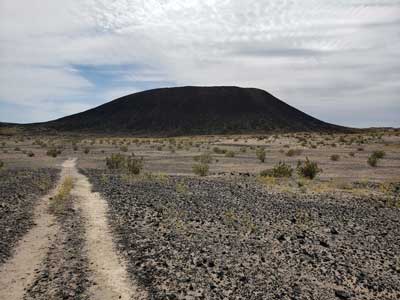
Amboy Crater National Natural Landmark
Example of symmetrical volcanic cinder cone, 250 feet high and 1,500 feet in diameter. The site offers picnic tables, restroom facilities, hiking trail to the rim
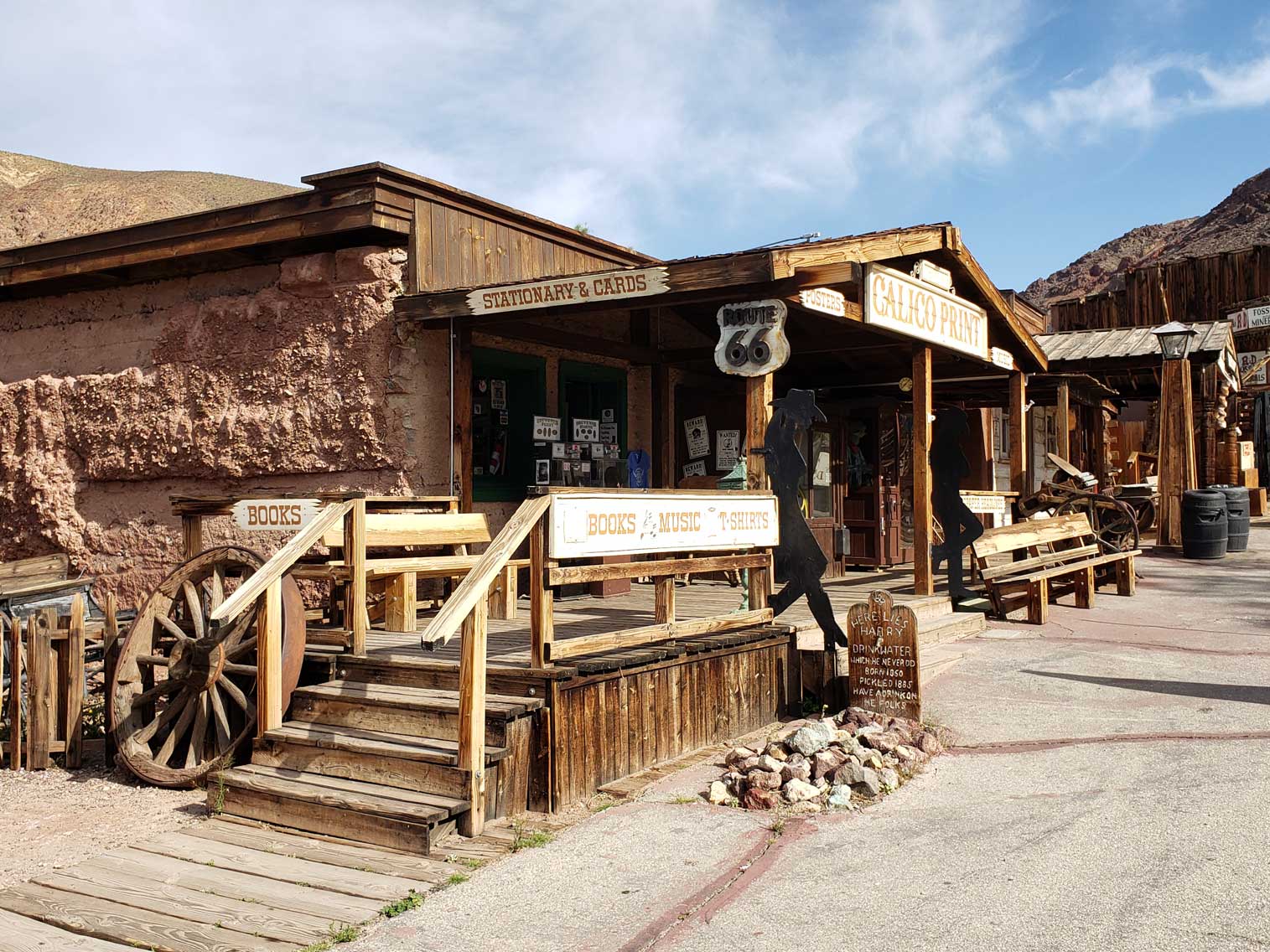
Calico Ghost Town Regional Park
Ghost town and former mining town in the Calico Mountains of the Mojave Desert region founded in 1881
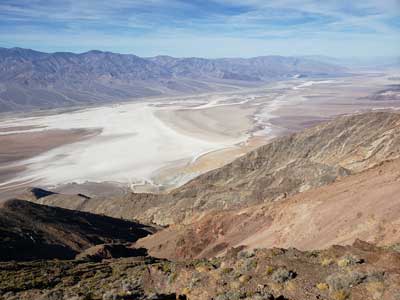
Death Valley National Park
National park straddling the California-Nevada border, protecting the northwest corner of the Mojave Desert and its diverse environment of salt-flats, sand dunes, badlands, valleys, canyons, and mountains
Invertzoo, CC BY-SA 3.0, via Wikimedia Commons; Image Size Adjusted
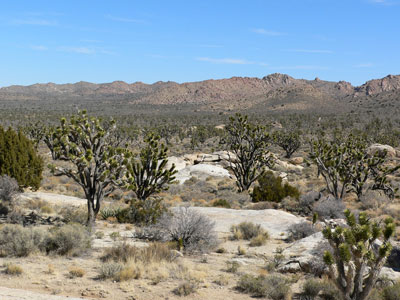
Mojave National Preserve
National Preserve with natural features including the Kelso Dunes, the Marl Mountains and the Cima Dome, as well as volcanic formations Hole-in-the-Wall and the Cinder Cone Lava Beds
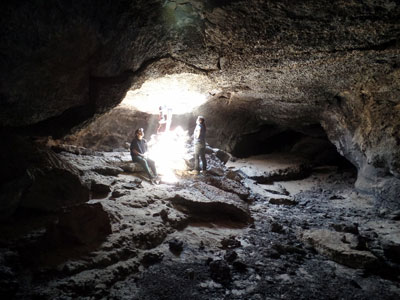


Pisgah Crater
Young volcanic cinder cone rising above a lava plain in the Mojave Desert, between Barstow and Needles, California
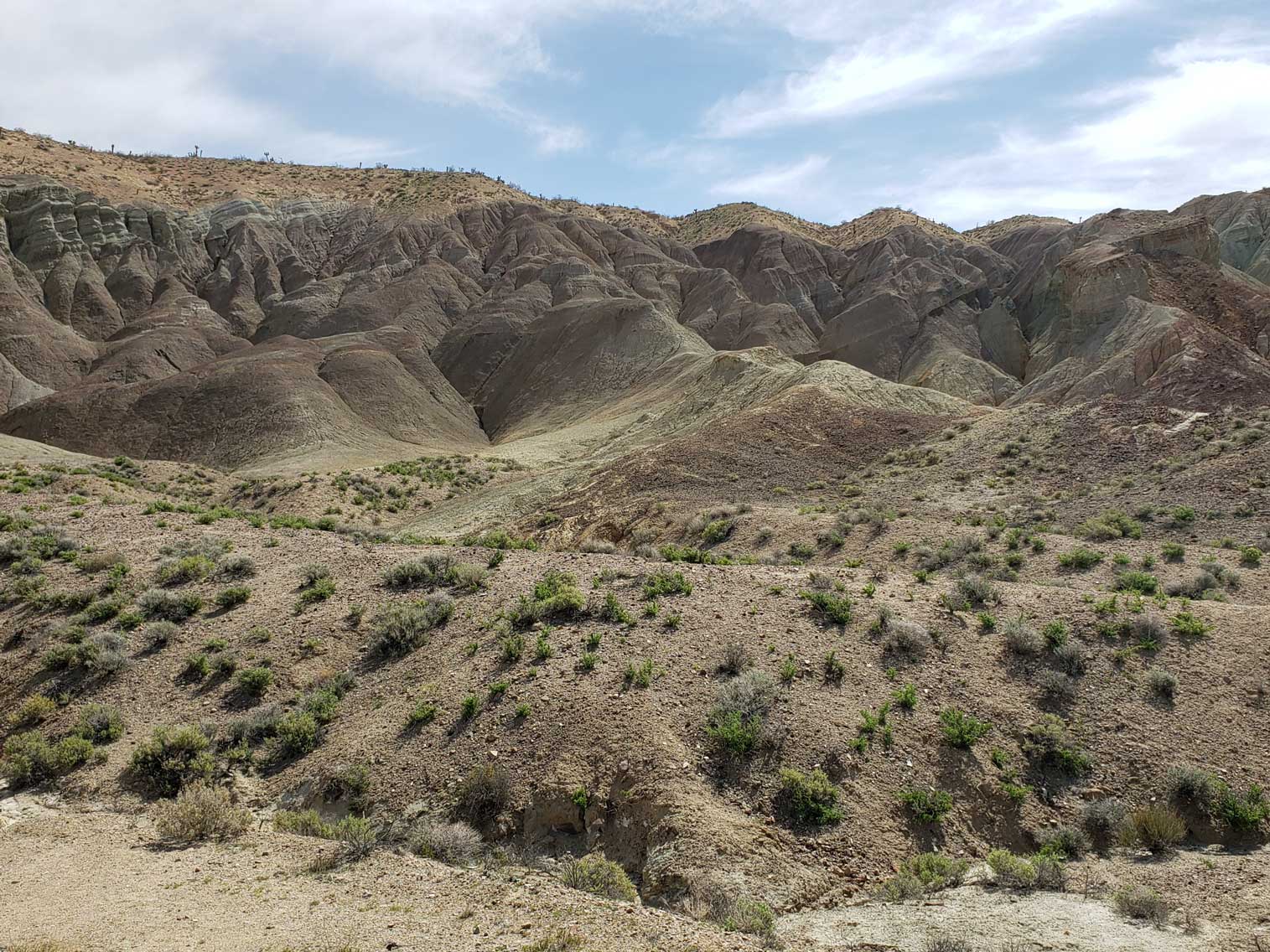
Rainbow Basin Natural Area
Outstanding views and geological and paleontological features including exciting multi-colored rock formations and walks through the scenic canyons with a variety of desert adapted wildlife
Overview
The Mojave Desert is a desert in the rain shadow of the southern Sierra Nevada mountains and Transverse Ranges in the Southwestern United States. Named for the indigenous Mojave people, it is located primarily in southeastern California and southwestern Nevada, with small portions extending into Arizona and Utah.
The Mojave Desert, together with the Sonoran, Chihuahuan, and Great Basin deserts, form a larger North American Desert. Of these, the Mojave is the smallest and driest. It displays typical basin and range topography, generally having a pattern of a series of parallel mountain ranges and valleys. It is also the site of Death Valley, which is the lowest elevation in North America. The Mojave Desert is often colloquially called the "high desert", as most of it lies between 2,000 and 4,000 feet (610 and 1,220 m). It supports a diversity of flora and fauna.
Climate
Extremes in temperatures throughout the seasons characterize the climate of the Mojave Desert. Freezing temperatures as well as strong winds are not uncommon in the winter, as well as precipitation such as rain and snow in the mountains. In contrast, temperatures above 100 °F (38 °C) are not uncommon during the summer months. There is an annual average precipitation of 2 to 6 inches (51 to 152 mm), although regions at high altitudes such as the portion of the Mojave desert in the San Gabriel mountains may receive more rain. Most of the precipitation in the Mojave comes from the Pacific Cyclonic storms that are generally present passing eastward in November to April. Such storms generally bring rain and snow only in the mountainous regions, as a result of the effect of the mountains, which creates a drying effect on its leeward slopes.
While the Mojave Desert is generally sparsely populated, it has increasingly become urbanized in recent years. The metropolitan areas include Las Vegas, the largest urban area in the Mojave and the largest urban area in Nevada with a population of about 2.3 million. St. George, Utah, is the northeasternmost metropolitan area in the Mojave, with a population of around 180,000 in 2020, and is located at the convergence of the Mojave, Great Basin, and Colorado Plateau. The Los Angeles exurban area of Lancaster-Palmdale has more than 400,000 residents, and the Victorville area to its east has more than 300,000 residents. Smaller cities or micropolitan areas in the Mojave Desert include Helendale, Lake Havasu City, Kingman, Laughlin, Bullhead City and Pahrump.
The Mojave Desert has several ghost towns. The most significant are the silver and copper-mining town of Calico, California, and the old railroad depot of Kelso, California. Some of the other ghost towns are more modern, created when U.S. Route 66 (and the lesser-known U.S. Route 91) were abandoned in favor of the construction of Interstates. CA SR 14, Interstate 15, Interstate 40, CA SR 58, CA SR 138, US Route 95, and US Route 395 are the main highways that traverse the Mojave Desert.
Tourism
The Mojave Desert is one of the most popular spots for tourism in North America, primarily because of the international destination of Las Vegas. The Mojave is also known for its scenery, playing host to Death Valley National Park, Joshua Tree National Park, and the Mojave National Preserve. Lakes Mead, Mohave, and Havasu provide water sports recreation, and vast off-road areas entice off-road enthusiasts. The Mojave Desert also includes three California State Parks, the Antelope Valley California Poppy Reserve, in Lancaster, Saddleback Butte State Park, in Hi Vista and Red Rock Canyon State Park. Mojave Narrows Park, is a former ranch along the Mojave River.
Several attractions and natural features are in the Calico Mountains. Calico Ghost Town, in Yermo, has several shops and attractions and inspired Walter Knott to build Knott's Berry Farm. The Bureau of Land Management also administers Rainbow Basin and Owl Canyon.
This article uses material from the Wikipedia article "Mojave Desert", which is released under the Creative Commons Attribution-Share-Alike License 3.0.