South Dakota Travel Guide
State in the North Central region of the United States, is also part of the Great Plains, and named after the Dakota Sioux tribe, which comprises a large portion of the population, and is the 17th-largest by area, but the fifth-least populous, and the fifth-least densely populated where its culture, economy, and geography of western South Dakota have more in common with the West than the Midwest and its history and rural character still strongly influence the state's culture
South Dakota Map
Places to See in South Dakota
Badlands National Park
Badlands National Park
National Protected Areas
Jewel Cave National Monument · Minuteman Missile National Historic Site · Mount Rushmore National Memorial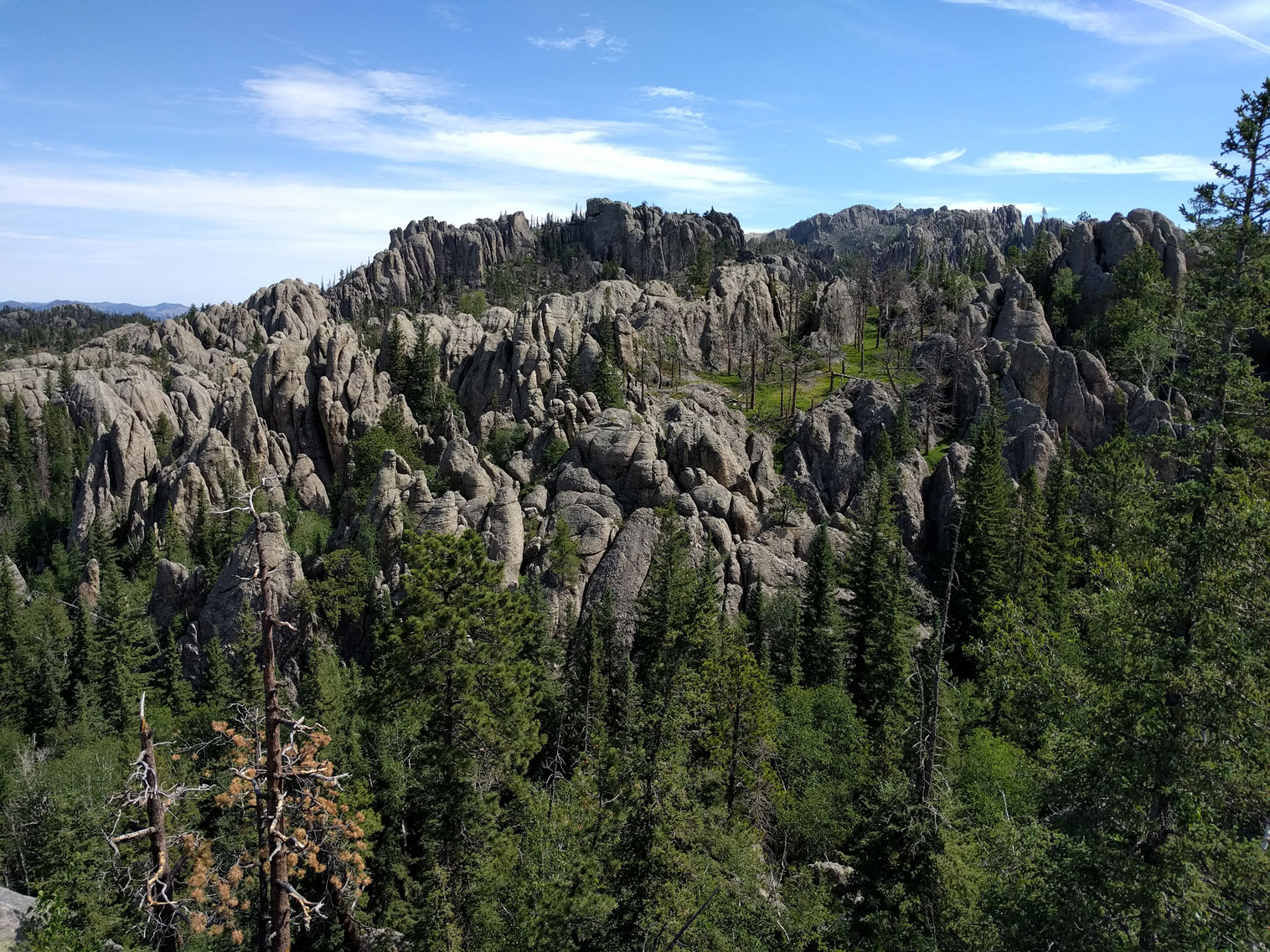
Black Elk Peak
Runner1928, CC BY-SA 4.0, via Wikimedia Commons; Image Size Adjusted
The Black Hills
Black Elk Peak · Crazy Horse Memorial · Custer State Park · Needles of the Black Hills · Needles Highway · Spearfish Canyon · Sylvan Lake
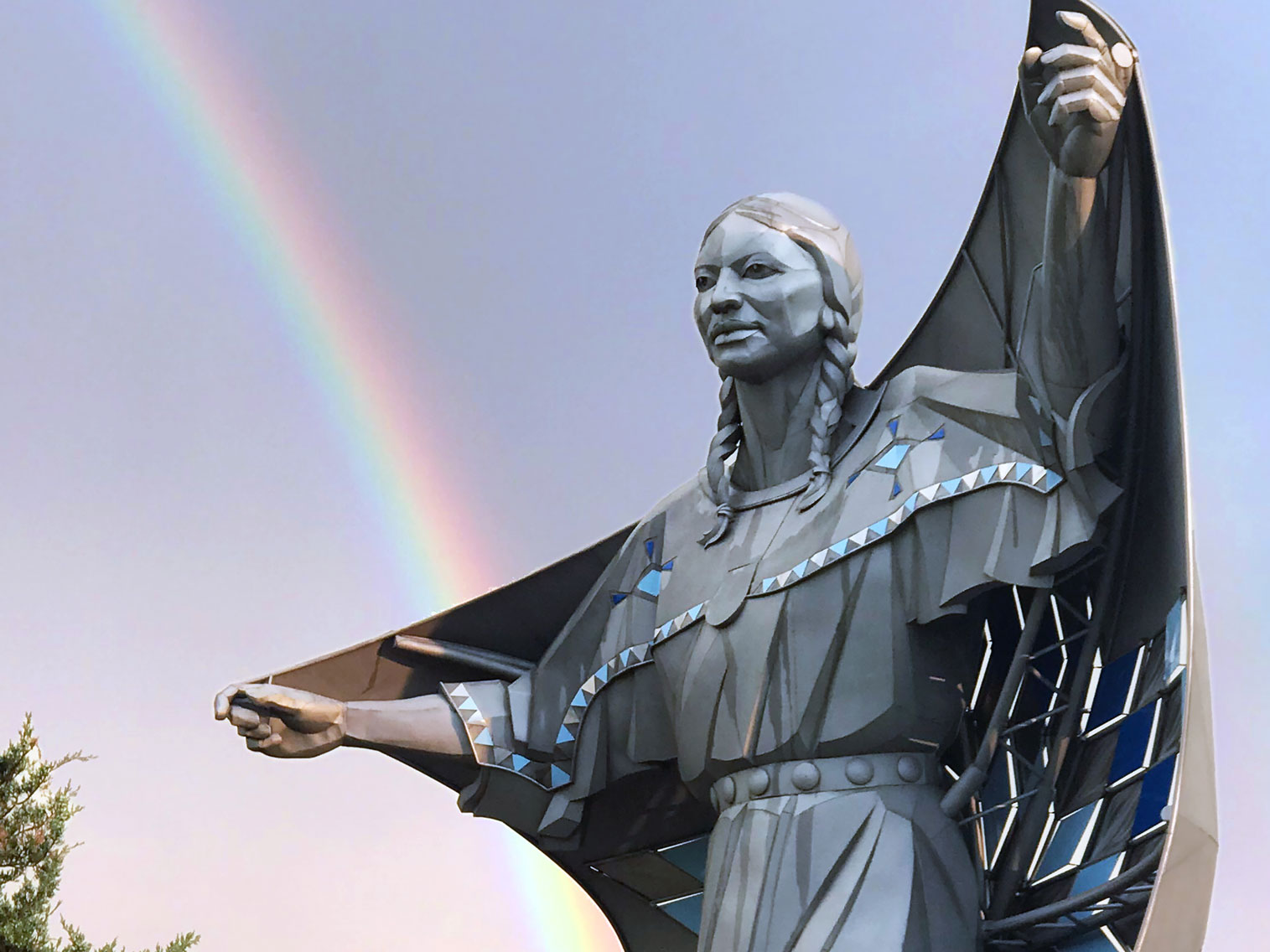
Landmarks and Landscapes
1880 Town · Dignity (Statue) · Mammoth Site · Porter Sculpture Park · South Dakota State Capitol · Spirit Mound State Historic Prairie · Wall Drug · World's Only Corn Palace
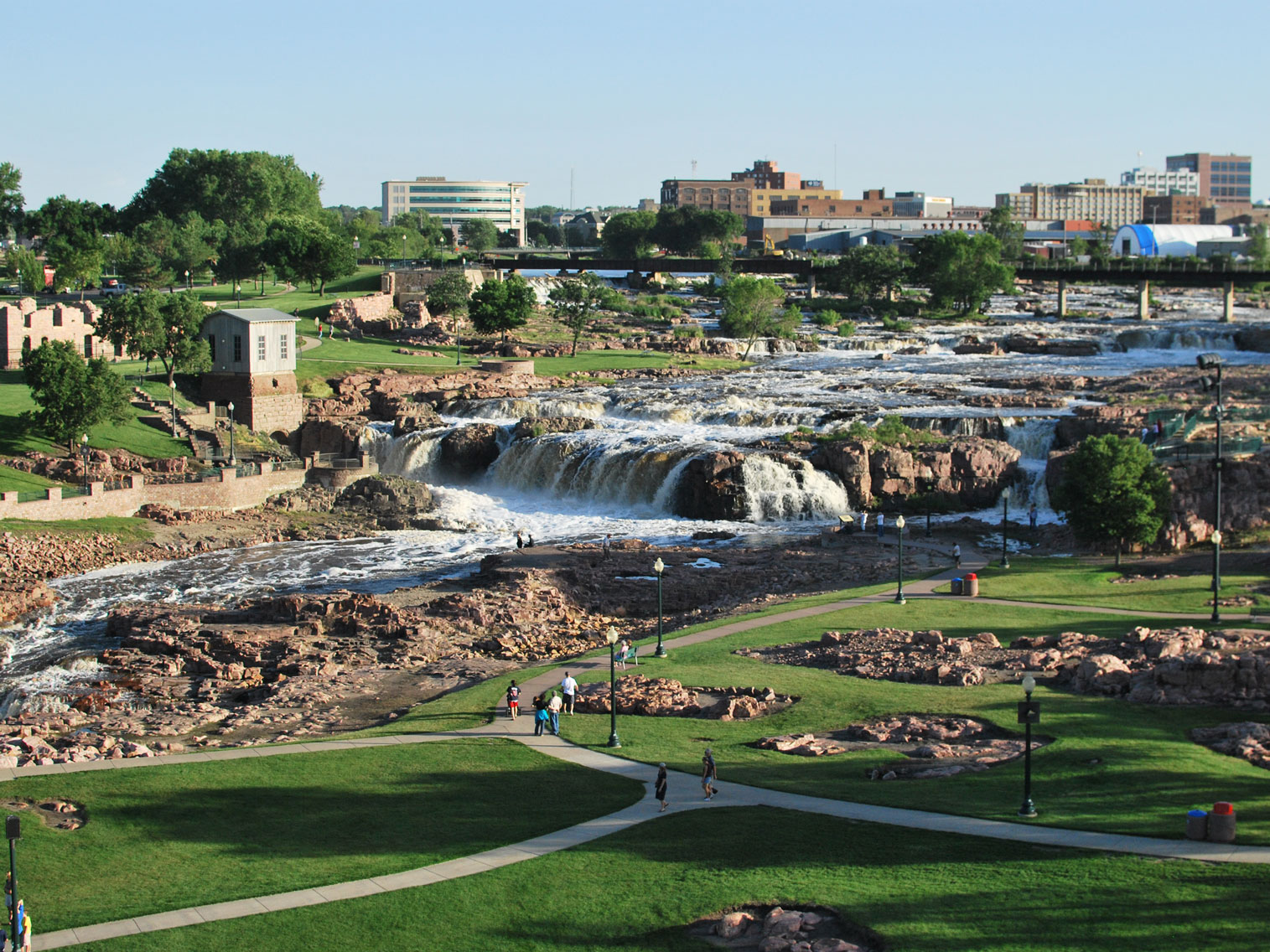


Cities
Deadwood · Rapid City · Sioux Falls
South Dakota is a landlocked state in the North Central region of the United States. It is also part of the Great Plains. South Dakota is named after the Dakota Sioux tribe, which comprises a large portion of the population — with nine reservations currently in the state — and has historically dominated the territory. South Dakota is the 17th-largest by area, but the fifth-least populous, and the fifth-least densely populated. Pierre is the state capital, and Sioux Falls, with a population of about 213,900, is South Dakota's most populous city. The state is bisected by the Missouri River, dividing South Dakota into two geographically and socially distinct halves, known to residents as "East River" and "West River".
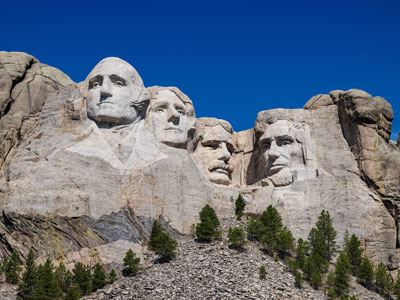
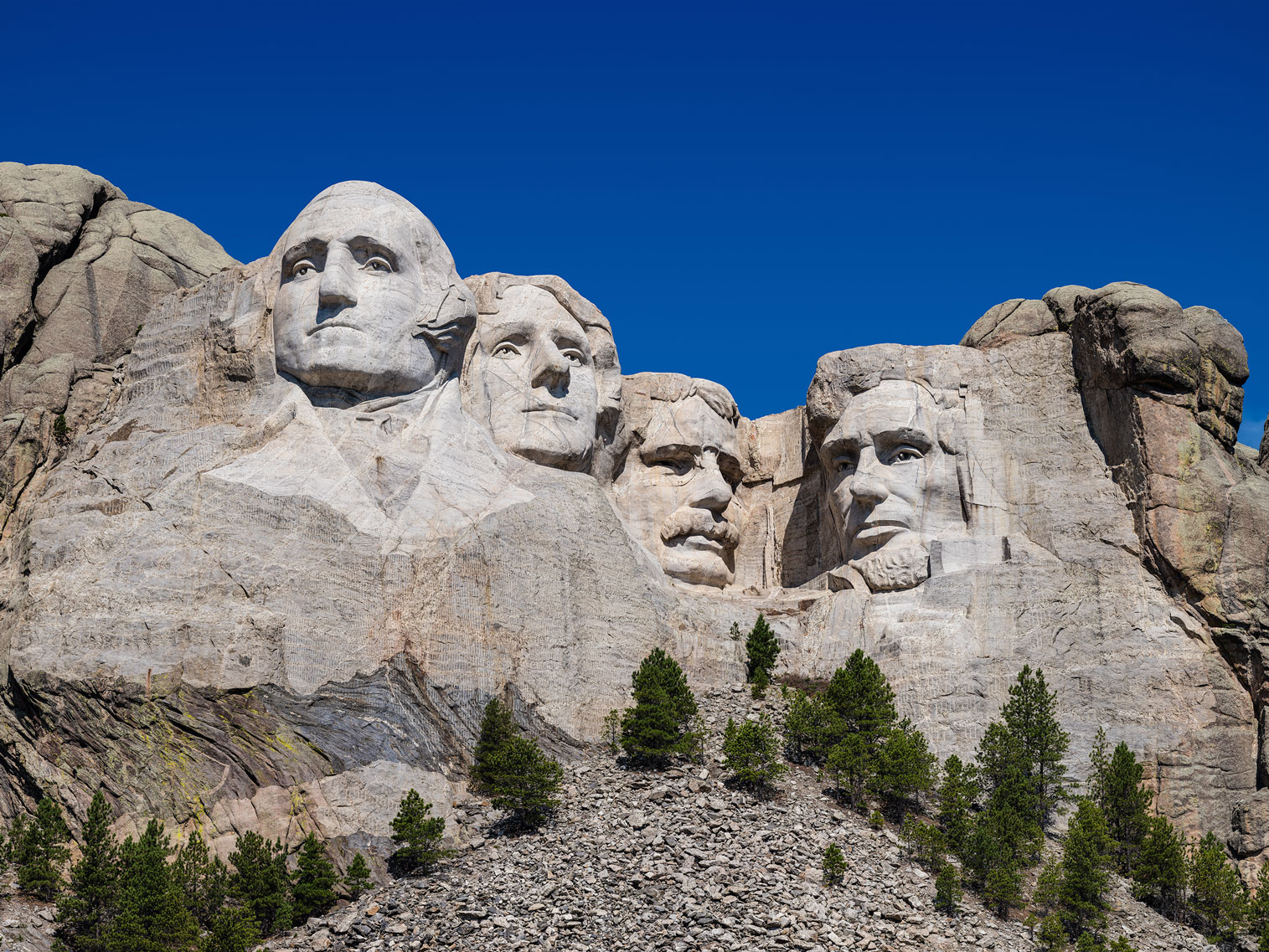
Most of the Native American reservations are in West River. The Black Hills, a group of low pine-covered mountains sacred to the Sioux, are in the southwest part of the state. Mount Rushmore, a major tourist destination, is there.
Humans have inhabited the area for several millennia, with the Sioux becoming dominant by the early 19th century. In the late 19th century, European-American settlement intensified after a gold rush in the Black Hills and the construction of railroads from the east. Encroaching miners and settlers triggered a number of Indian wars, ending with the Wounded Knee Massacre in 1890. Key events in the 20th century included the Dust Bowl and Great Depression, increased federal spending during the 1940s and 1950s for agriculture and defense, and an industrialization of agriculture that has reduced family farming. South Dakota's history and rural character still strongly influence the state's culture.
The culture, economy, and geography of western South Dakota have more in common with the West than the Midwest. Black Elk Peak, formerly named Harney Peak, with an elevation of 7,242 ft (2,207 m), is the state's highest point, while the shoreline of Big Stone Lake is the lowest, with an elevation of 966 ft (294 m). The Missouri River is the largest and longest river in the state.
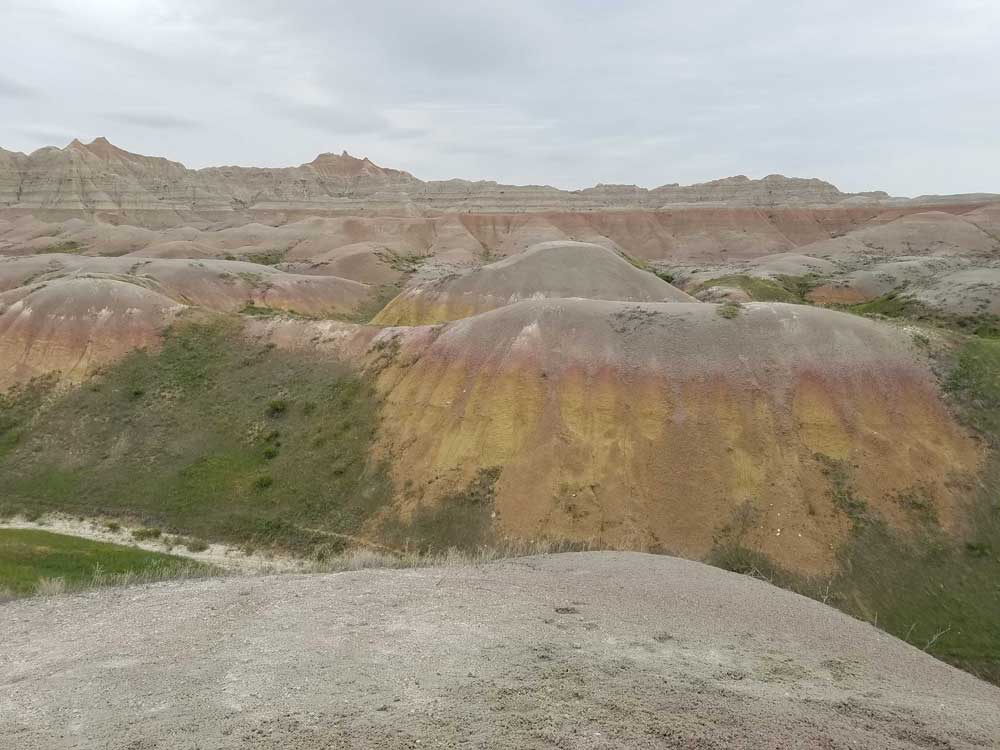
South Dakota has several sites administered by the National Park Service. Two national parks have been established in the state, both in its southwestern region. Wind Cave National Park, established in 1903 in the Black Hills, has an extensive cave network and is home to a large herd of bison. Badlands National Park was established in 1978, and features an eroded, brightly colored landscape surrounded by semi-arid grasslands. Mount Rushmore National Memorial in the Black Hills was established in 1925. The sculpture of four U.S. Presidents was carved into the mountainside by sculptor Gutzon Borglum.
Other areas managed by the National Park Service include Jewel Cave National Monument near Custer, the Lewis and Clark National Historic Trail, the Minuteman Missile National Historic Site, which features a decommissioned nuclear missile silo and a separate missile control area several miles away, and the Missouri National Recreational River. The Crazy Horse Memorial is a large mountainside sculpture near Mount Rushmore being built using private funds. The Mammoth Site near Hot Springs is another privately owned attraction in the Black Hills. It is a working paleontological dig and has one of the world's largest concentrations of mammoth remains.
Laura Ingalls Wilder, whose semi-autobiographical books are based on her experiences as a child and young adult on the frontier, is one of South Dakota's best-known writers. She drew from her life growing up on a homestead near De Smet as the basis for five of her novels. These gained renewed popularity in the United States when Little House on the Prairie was adapted and produced as a television series in 1974.
This article uses material from the Wikipedia article "South Dakota" which is released under the Creative Commons Attribution-Share-Alike License 3.0