Dallas Travel Guide
Bustling metropolitan hub featuring a dynamic arts scene, diverse culinary offerings, and world-class sports and entertainment venues.


-400.jpg)


Places to See in Dallas, TX
Jeff P from Berkeley, CA, USA, CC BY 2.0, via Wikimedia Commons; Image Size Adjusted
.jpg)
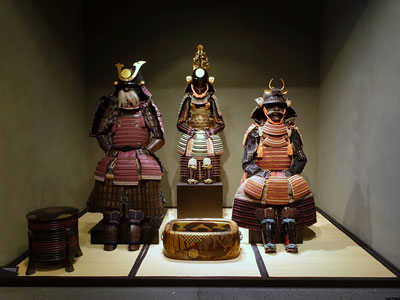
Ann and Gabriel Barbier Mueller Museum
Museum of samurai armor containing nearly three hundred Japanese samurai objects, dating from the 12th to the 19th century AD
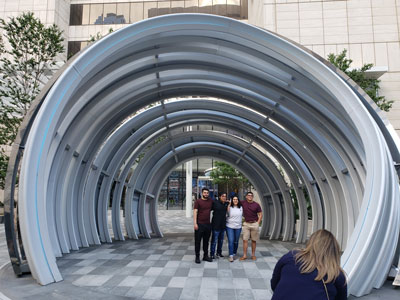
Jeff P from Berkeley, CA, USA, CC BY 2.0, via Wikimedia Commons; Image Size Adjusted
Jeff P from Berkeley, CA, USA, CC BY 2.0, via Wikimedia Commons; Image Size Adjusted
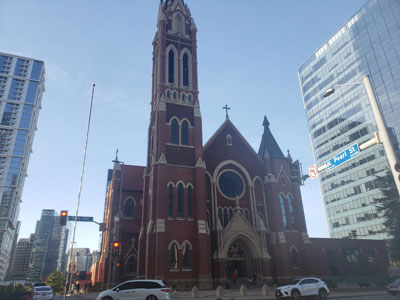
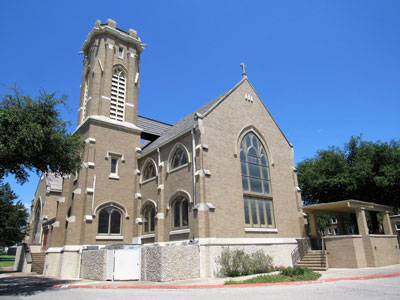
Cathedral Santuario de Guadalupe
Cathedral church dates from the late 19th century and is located in the Arts District of downtown Dallas
Jeff P from Berkeley, CA, USA, CC BY 2.0, via Wikimedia Commons; Image Size Adjusted
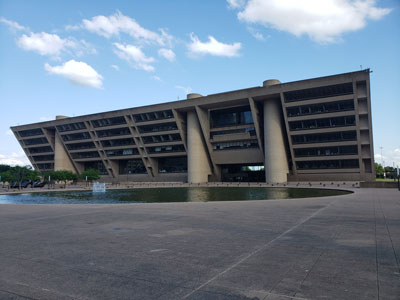
Dallas City Hall
Grand Beaux-Arts complex of city and federal offices and seat of municipal government of the city of Dallas
Jeff P from Berkeley, CA, USA, CC BY 2.0, via Wikimedia Commons; Image Size Adjusted
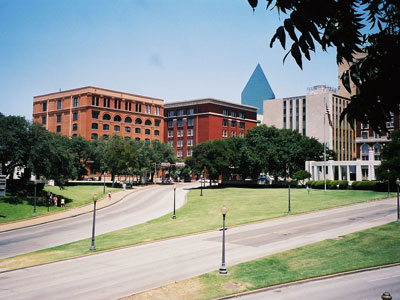
Dealey Plaza
City park in downtown Dallas was the location of the assassination of United States President John F. Kennedy, on November 22, 1963
Jeff P from Berkeley, CA, USA, CC BY 2.0, via Wikimedia Commons; Image Size Adjusted
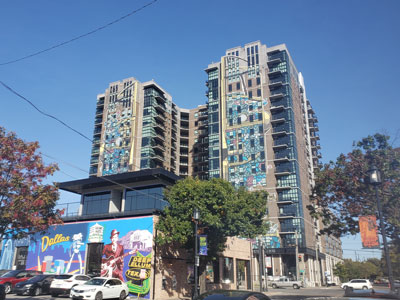
Deep Ellum
Neighborhood composed largely of arts and entertainment venues near downtown in East Dallas
Jeff P from Berkeley, CA, USA, CC BY 2.0, via Wikimedia Commons; Image Size Adjusted
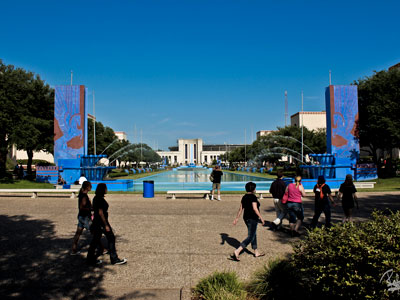
Fair Park
Recreational and educational complex located immediately east of downtown with many of the buildings were constructed for the Texas Centennial Exposition in 1936
Jeff P from Berkeley, CA, USA, CC BY 2.0, via Wikimedia Commons; Image Size Adjusted
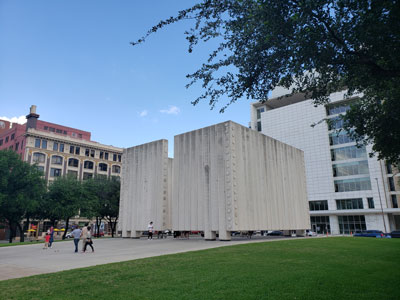
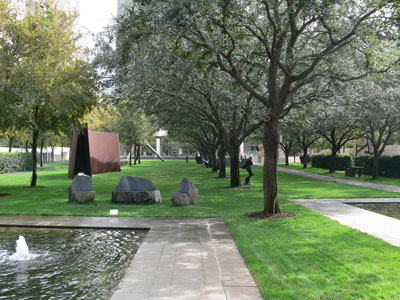
John F. Kennedy Mmeorial
Cenotaph memorial featuring a 50-by-50-foot open space with 30-foot vertically scored concrete walls
Jeff P from Berkeley, CA, USA, CC BY 2.0, via Wikimedia Commons; Image Size Adjusted

Jeff P from Berkeley, CA, USA, CC BY 2.0, via Wikimedia Commons; Image Size Adjusted
Jeff P from Berkeley, CA, USA, CC BY 2.0, via Wikimedia Commons; Image Size Adjusted
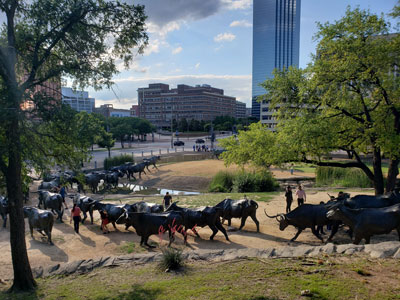
Jeff P from Berkeley, CA, USA, CC BY 2.0, via Wikimedia Commons; Image Size Adjusted
Jeff P from Berkeley, CA, USA, CC BY 2.0, via Wikimedia Commons; Image Size Adjusted
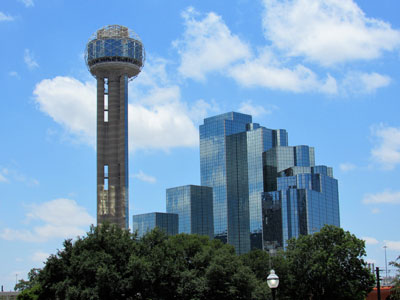
Reunion Tower
561 ft (171 m) observation tower in Dallas, Texas and one of the city's most recognizable landmarks
Jeff P from Berkeley, CA, USA, CC BY 2.0, via Wikimedia Commons; Image Size Adjusted
Jeff P from Berkeley, CA, USA, CC BY 2.0, via Wikimedia Commons; Image Size Adjusted
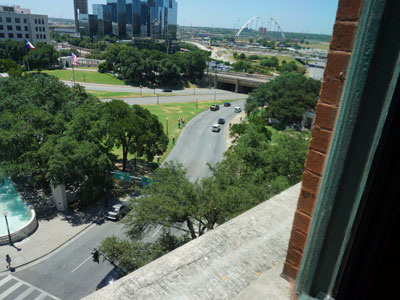
Sixth Floor Museum at Dealey Plaza
Museum examining the life, times, death, and legacy of United States President John F. Kennedy and is located at the very spot from which Lee Harvey Oswald shot and killed the President on November 22, 1963
Jeff P from Berkeley, CA, USA, CC BY 2.0, via Wikimedia Commons; Image Size Adjusted
Dallas and nearby Fort Worth were initially developed due to the construction of major railroad lines through the area allowing access to cotton, cattle and later oil in North and East Texas. The construction of the Interstate Highway System reinforced Dallas's prominence as a transportation hub, with four major interstate highways converging in the city and a fifth interstate loop around it. Dallas then developed as a strong industrial and financial center and a major inland port, due to the convergence of major railroad lines, interstate highways and the construction of Dallas/Fort Worth International Airport, one of the largest and busiest airports in the world.
On November 22, 1963, United States President John F. Kennedy was assassinated on Elm Street while his motorcade passed through Dealey Plaza in Downtown Dallas. The upper two floors of the building from which the Warren Commission reported assassin Lee Harvey Oswald shot Kennedy have been converted into a historical museum covering the former president's life and accomplishments. Kennedy was pronounced dead at Dallas Parkland Memorial Hospital just over 30 minutes after the shooting.
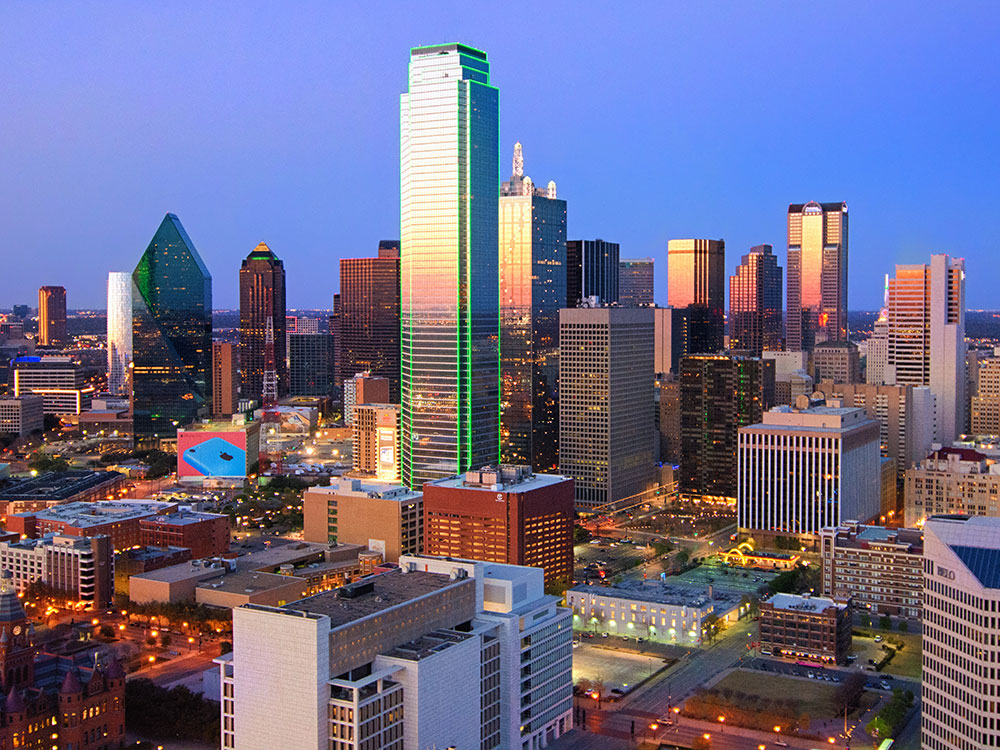
Although some of Dallas's architecture dates from the late 19th and early 20th centuries, most of the notable architecture in the city is from the modernist and postmodernist eras. Iconic examples of modernist architecture include Reunion Tower, the JFK Memorial, I. M. Pei's Dallas City Hall and the Morton H. Meyerson Symphony Center. Good examples of postmodernist skyscrapers are Fountain Place, Bank of America Plaza, Renaissance Tower, JPMorgan Chase Tower, and Comerica Bank Tower. Downtown Dallas also has residential offerings in downtown, some of which are signature skyline buildings.
Several smaller structures are fashioned in the Gothic Revival style, such as the Kirby Building, and the neoclassical style, as seen in the Davis and Wilson Buildings. One architectural "hotbed" in the city is a stretch of historic houses along Swiss Avenue, which has all shades and variants of architecture from Victorian to neoclassical. The Dallas Downtown Historic District protects a cross-section of Dallas commercial architecture from the 1880s to the 1940s.
Dallas and its surrounding area are mostly flat. The city lies at elevations ranging from 450 to 550 feet. Dallas, like many other cities, was founded along a river. The city was founded at the location of a "white rock crossing" of the Trinity River, where it was easier for wagons to cross the river in the days before ferries or bridges.
White Rock Lake, a reservoir built at the beginning of the 20th century, is Dallas's other significant water feature. The lake and surrounding park is a popular destination for boaters, rowers, joggers, and bikers, as well as visitors seeking peaceful respite from the city at the 66-acre Dallas Arboretum and Botanical Garden, on the lake's eastern shore. White Rock Creek feeds into White Rock Lake, and then exits on to the Trinity River southeast of Downtown Dallas. Trails along White Rock Creek are part of the extensive Dallas County Trails System.
Bachman Lake, just northwest of Love Field Airport, is a smaller lake also popularly used for recreation. Northeast of the city is Lake Ray Hubbard, a vast 22,745-acre (92 km2) reservoir in an extension of Dallas surrounded by the suburbs of Garland, Rowlett, Rockwall, and Sunnyvale. To the west of the city is Mountain Creek Lake, once home to the Naval Air Station Dallas (Hensley Field) and a number of defense aircraft manufacturers.
Dallas has a humid subtropical climate characteristic of the Southern Plains of the United States. Located at the lower end of Tornado Alley, it is prone to extreme weather, tornadoes, and hailstorms.
Summers in Dallas are very hot and humid, although low humidity characteristics of desert locations can appear at any time of the year. July and August are typically the hottest months, with an average high of 96.0 °F (36 °C). Heat indices regularly surpass 105 °F (41 °C) at the height of summer.
Winters in Dallas are cool to mild, with occasional cold spells.
Spring and autumn are transitional seasons with moderate and pleasant weather. Vibrant wildflowers (such as the bluebonnet, Indian paintbrush and other flora) bloom in spring and are planted around the highways throughout Texas.
In addition to its large number of businesses, Dallas has more shopping centers per capita than any other city in the United States and is also home to the second shopping center ever built in the United States, Highland Park Village, which opened in 1931. Dallas is home of the two other major malls in North Texas, the Dallas Galleria and NorthPark Center, which is the second largest mall in Texas. Both malls feature high-end stores and are major tourist draws for the region.
Stone Street Gardens is lined with bistros, pubs, and restaurants connecting Main to Elm Streets in Downtown Dallas.
Deep Ellum, immediately east of Downtown, originally became popular during the 1920s and 1930s as the prime jazz and blues hot spot in the South. Artists such as Blind Lemon Jefferson, Robert Johnson, Huddie "Lead Belly" Ledbetter, and Bessie Smith played in original Deep Ellum clubs such as the Harlem and the Palace. Today, Deep Ellum is home to hundreds of artists who live in lofts and operate in studios throughout the district alongside bars, pubs, and concert venues. A major art infusion in the area results from the city's lax stance on graffiti, and a number of public spaces, including tunnels, sides of buildings, sidewalks, and streets, are covered in murals.
The Dallas-Fort Worth metropolitan area is home to five major league sports teams: the Dallas Cowboys (National Football League), Dallas Mavericks (National Basketball Association), Texas Rangers (Major League Baseball), Dallas Stars (National Hockey League), and FC Dallas (Major League Soccer). It also hosts one team in a major women's league: the Dallas Wings (Women's National Basketball Association).
The city's parks contain 17 separate lakes, including White Rock and Bachman lakes, spanning a total of 4,400 acres (17.81 km2). In addition, Dallas is traversed by 61.6 miles (99.1 km) of biking and jogging trails, including the Katy Trail, and is home to 47 community and neighborhood recreation centers, 276 sports fields, 60 swimming pools, 232 playgrounds, 173 basketball courts, 112 volleyball courts, 126 play slabs, 258 neighborhood tennis courts, 258 picnic areas, six 18-hole golf courses, two driving ranges, and 477 athletic fields as of 2013.
Dallas's flagship park is Fair Park. Built in 1936 for the Texas Centennial Exposition world's fair, Fair Park is the world's largest collection of Art Deco exhibit buildings, art, and sculptures; Fair Park is also home to the State Fair of Texas, the largest state fair in the United States.
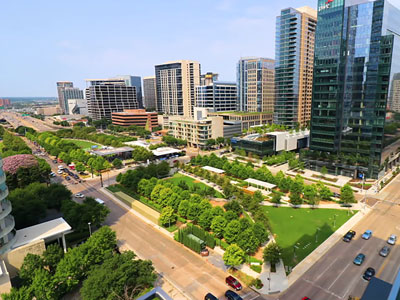
Named after Klyde Warren, the young son of billionaire Kelcy Warren, Klyde Warren Park was built above Woodall Rodgers Freeway and connects Uptown and Downtown, specifically the Arts District.
Klyde Warren Park is home to countless amenities, including an amphitheater, jogging trails, a children's park, My Best Friend's Park (dog park), a putting green, croquet, ping pong, chess, an outdoor library, and two restaurants: Savor and Relish. Food trucks provide another option of dining and are lined along the park's Downtown side. There are also weekly planned events, including yoga, Zumba, skyline tours, Tai Chi, and meditation.
Built in 1913, Turtle Creek Parkway park is a 23.7-acre linear park in between Turtle Creek and Turtle Creek Boulevard in the aptly named Turtle Creek neighborhood. Archaeological surveys discovered dart points and flint chips dating 3,000 years to 1,000 BC. This site was later discovered to be home to Native Americans who cherished the trees and natural spring water. The park is across Turtle Creek from Kalita Humphreys Theater, designed by Frank Lloyd Wright.
In 1935, Dallas purchased 36 acres (15 ha) from John Cole's estate to develop Reverchon Park. Reverchon Park was named after botanist Julien Reverchon, who left France to live in the La Reunion colony, which was founded in the mid-1800s and was situated in present-day West Dallas. Reverchon Park was planned to be the crown jewel of the Dallas park system and was even referred to as the "Central Park" of Dallas. Improvements were made throughout the years, including the Iris Bowl, picnic settings, a baseball diamond, and tennis courts. The Iris Bowl celebrated many Greek pageants, dances, and other performances. The Gill Well was installed for nearby residents and drew people all across Texas who wanted to experience the water's healing powers.
As part of the ongoing Trinity River Project, the Great Trinity Forest, at 6,000 acres (24 km2), is the largest urban hardwood forest in the United States and is part of the largest urban park in the United States. The Trinity River Audubon Center is a new addition to the park. Opened in 2008, it serves as a gateway to many trails and other nature-viewing activities in the area. The Trinity River Audubon Center is the first LEED-certified building built by the City of Dallas Parks and Recreation Department.
Named after its former railroad name, the Missouri-Kansas-Texas Railroad (or "MKT" Railroad), the 3.5-mile stretch of railroad was purchased by the city of Dallas and transformed into the city's premier trail. Stretching from Victory Park, the 30-acre Katy Trail passes through the Turtle Creek and Knox Park neighborhoods and runs along the east side of Highland Park. The trail ends at Central Expressway, but extensions are underway to extend the trail to the White Rock Lake Trail in Lakewood.
Dallas hosts three of the twenty-one preserves of the extensive 3,200 acres (13 km2) Dallas County Preserve System. The Joppa Preserve, the McCommas Bluff Preserve, and the Cedar Ridge Preserve are within the Dallas city limits. The Cedar Ridge Preserve was known as the Dallas Nature Center, but the Audubon Dallas group now manages the 633-acre (2.56 km2) natural habitat park on behalf of the city of Dallas and Dallas County. The preserve sits at an elevation of 755 feet (230 m) above sea level and offers a variety of outdoor activities, including 10 miles (16 km) of hiking trails and picnic areas.
This article uses material from the Wikipedia article "Dallas", which is released under the Creative Commons Attribution-Share-Alike License 3.0
-1000.jpg)
.jpg)