Fair Park

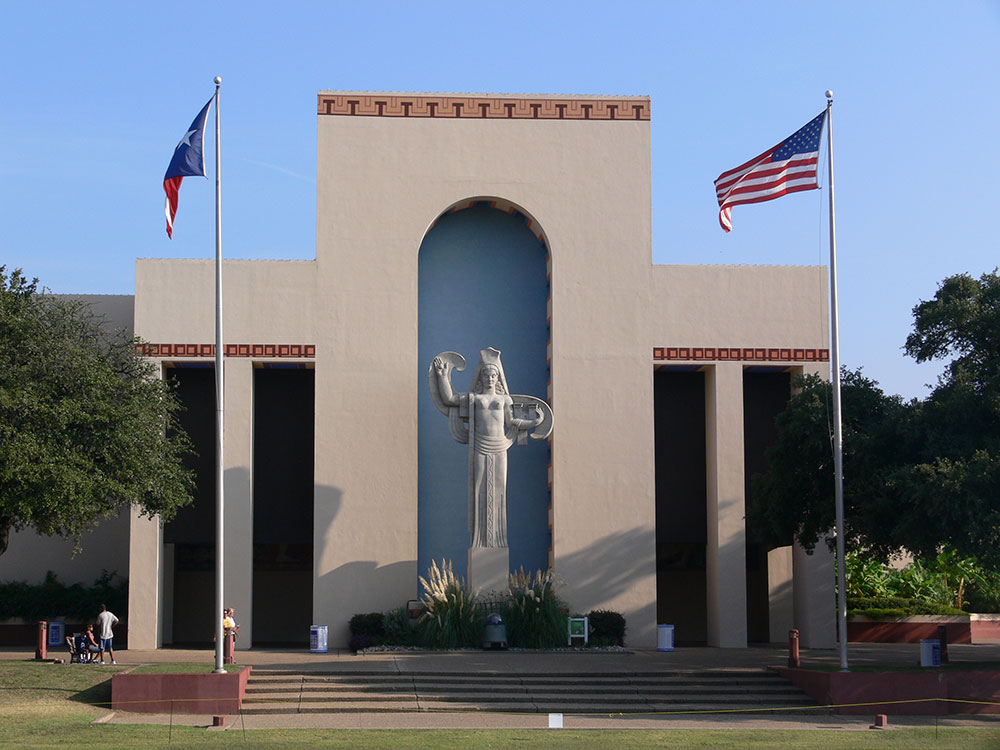
Rafiul Alam, CC BY-SA 3.0, via Wikimedia Commons; Image Size Adjusted

Recreational and educational complex located immediately east of downtown with many of the buildings were constructed for the Texas Centennial Exposition in 1936

General Information

Hours:
Fees:
Pets
No Pets allowed
Seasons:
All Year
Rating:
5.0
Galveston, TX Weather Forecast

From downtown Dallas, take I‑30 east and exit at Fair Park. From the north or south, take I‑35E or I‑45 into downtown and then head east on I‑30 to the Fair Park exit.

Fair Park is a recreational and educational complex in Dallas, Texas, located immediately east of downtown. The 277-acre (112 ha) area is registered as a Dallas Landmark and National Historic Landmark; many of the buildings were constructed for the Texas Centennial Exposition in 1936.

The site was established as an 80-acre (32 ha) fairground on the outskirts of East Dallas for the Dallas State Fair in 1886. After a fire and financial loss by the fair association in 1904, voters approved the "Reardon Plan." It became Dallas' second public park, known as "Fair Park."

An important figure in Fair Park's development was landscape architect and city planner George Kessler. In 1906, he was responsible for the first formal plan for the park influenced by the City Beautiful Movement. The City Beautiful Movement advocated well planned public spaces, tree-lined boulevards, monuments, public art, and fountains which would 'beautify' the city.

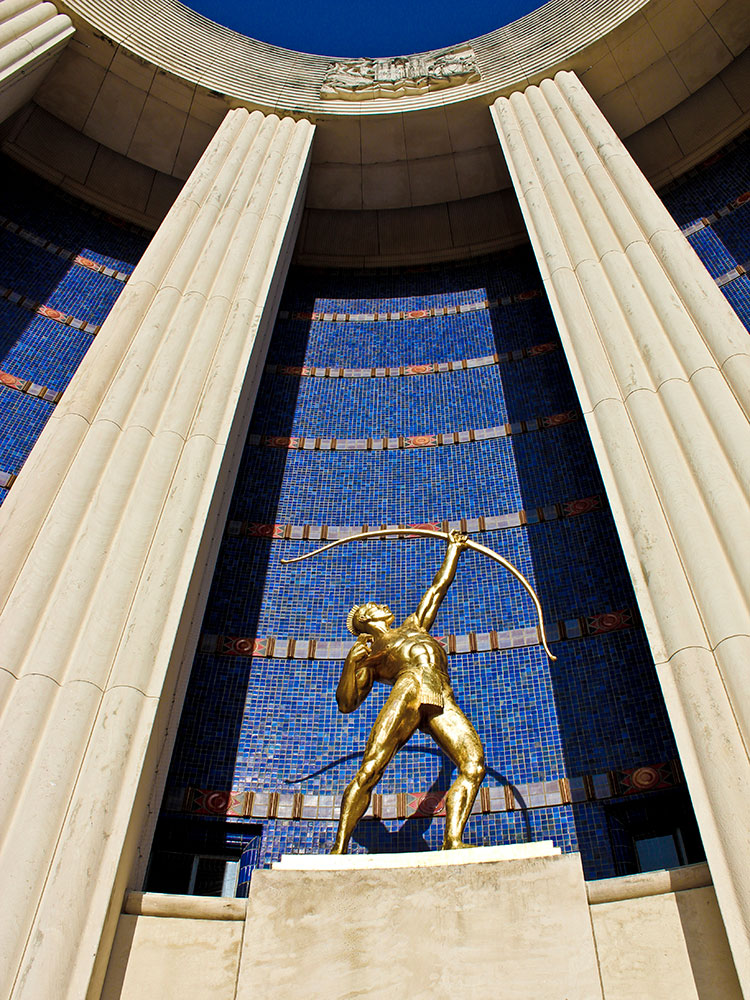
A milestone in Fair Park's history was 1936, when the Texas Centennial Exposition was held there. In preparation for the six-month event, the appearance of the park was dramatically altered by architect George Dahl and consulting architect Paul Cret. The park was transformed from an early 20th-century fairground into an Art Deco showcase. While many of the exposition's buildings were meant to be temporary, several have survived and have been restored to some extent. Over the years, the park was expanded to its current 277 acres (112 ha).

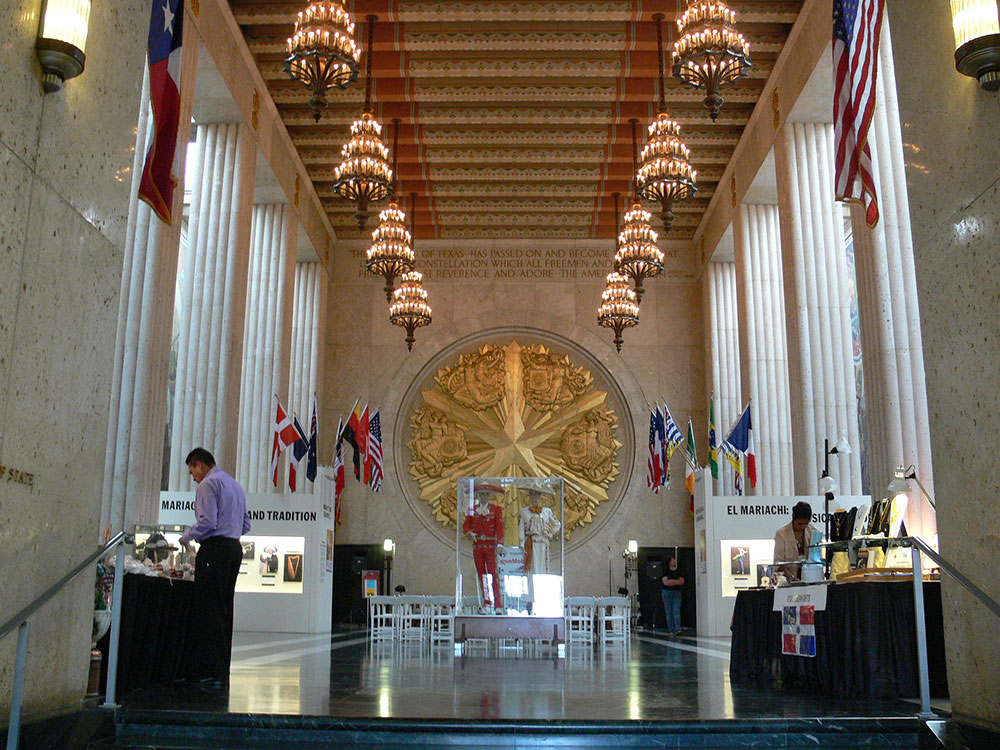
The Hall of State is managed by the Dallas Historical Society, which hosts exhibits inside about Dallas history and culture.

The Old Mill Inn was one of the few Texas Centennial Exposition buildings not to incorporate Art Deco styling. Clad in fieldstone with heavy-timber construction, this was the exhibit building for the flour milling industry. It now sporadically serves Fair Park as a restaurant.

This little-known project by New York architect William Lescaze introduced European Modernism to Texas in 1936. The design of this hospitality lounge for the Magnolia Petroleum Company included elements commonly found in Art Deco architecture. However, the building's overall image was radically different from that of any other structure at the Texas Centennial Exposition.

Site of Theatre '47, the first professional, regional theater company in the United States, the small performing space, the Margo Jones Theatre pays tribute to the visionary founder of America's regional theater movement Margo Jones. Immediately adjacent to the Magnolia Lounge is the former Hall of Religion.

The current museum building occupies virtually the same site as the Texas Centennial Exposition's Hall of Negro Life. It boasts a permanent collection that consists of the works of such highly regarded African American artists as Romare Bearden, Jacob Lawrence, Larry D. Alexander, John T. Biggers, Clementine Hunter, Benny Andrews, Edward Mitchell Bannister and Arthello Beck.

South of the Midway, George Dahl arranged Dallas's future cultural institutions informally around a tranquil lagoon, offering Texas Centennial exposition visitors a peaceful, naturalistic counterpoint to the activity of the exposition.

In 1981, Patricia Johanson was commissioned to redesign and restore the badly degraded lagoon. Since reopening in 1986, the redesigned lagoon has become recognized as a major earth sculpture and one of the earliest examples of art as bioremediation.

The History Building, once the Museum of Natural History, was designed for the Texas Centennial Exposition as a monolithic, rectangular box. The entrance features three vertical window bays with decorative aluminum mullions. Flanking it are paired pilasters with shell-motif capitals. The rest of the building is clad in limestone. In 1988, the northeast corner of the building was excavated, creating a series of landscaped terraces.

The concentric plaster arches of the Band Shell comprise an essentially Art Deco composition. Elements of the Streamline Moderne style are present in the reinforced concrete backstage building. Lighting pylons surround the sloping 5,000-seat amphitheater.

This was the original Horticulture Building for the Texas Centennial Exposition. It has since been altered by exterior renovations and additions, including the minimalist glass Blachly Conservatory. In the gardens behind the main structure is a model home that the Portland Cement Company originally built for the Exposition.

The Cotton Bowl stadium was built in 1930, and was originally known as "Fair Park Stadium." Subsequent expansions resulted in a present capacity of 92,200. The Cotton Bowl Classic college football bowl game was played there from 1937-2009. Annually during the State Fair of Texas, it hosts the AT&T Red River Rivalry game between the University of Texas and the University of Oklahoma, along with the Southwest Airlines State Fair Classic game between Grambling State University (Louisiana) and Prairie View A&M University. It was also the first home of the Dallas Cowboys, from 1960 until their move to Texas Stadium in Irving in 1971.

Music Hall, built in Spanish colonial revival style, was the General Motors Building during the Centennial Exposition. It underwent extensive remodeling in 1972. It was home of the Dallas Opera until 2009 and is the current home for Dallas Summer Musicals.

The Women's building was originally built in 1910 as a park coliseum. It was remodeled as an Art Deco structure for the Centennial Exposition during which it was known as the Hall of Administration. The building was operated as The Women's Museum from 2000-2011 but now is only used for special events and exhibits.

The Texas Star, opened in 1985, is the fourth-largest Ferris wheel in North America.

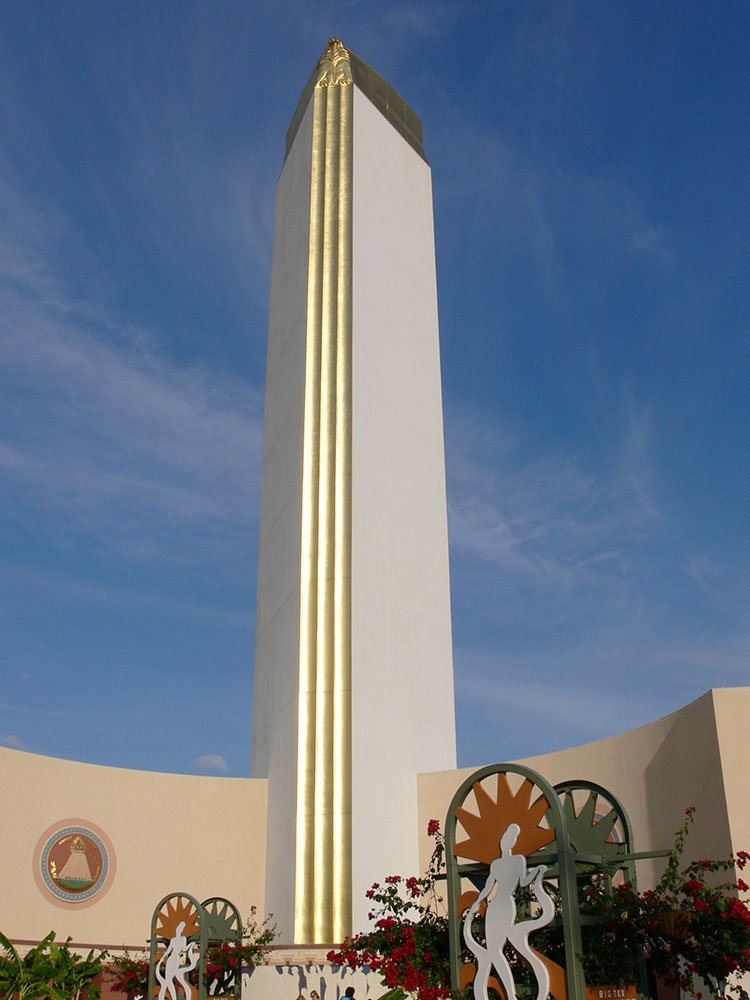
The Texas Skyway, opened in 2007, is an art deco-styled gondola ride that transports visitors 65 feet (20 m) above the ground for a ride that is one-third of a mile.

Fair Park is home to the Texas State Vietnam Memorial.

This article uses material from the Wikipedia article "The Ann and Gabriel Barbier-Mueller Museum", which is released under the Creative Commons Attribution-Share-Alike License 3.0
1892 Bishops Palace Front
Photo: Andreas Praefcke, CC BY 3.0, via Wikimedia Commons; Image Size Adjusted
1892 Bishops Palace Front
Photo: Andreas Praefcke, CC BY 3.0, via Wikimedia Commons; Image Size Adjusted
1892 Bishops Palace Front
Photo: Andreas Praefcke, CC BY 3.0, via Wikimedia Commons; Image Size Adjusted
1892 Bishops Palace Front
Rafiul Alam, CC BY-SA 3.0, via Wikimedia Commons; Image Size Adjusted
1892 Bishops Palace Front
AppalachianCentrist, CC BY-SA 4.0, via Wikimedia Commons; Image Size Adjusted