Impact structure, the deeply eroded bottom-most remnants of an impact crater approximately 10 kilometres (6.2 mi) in diameter and the crater is known to be less than 170 million years old
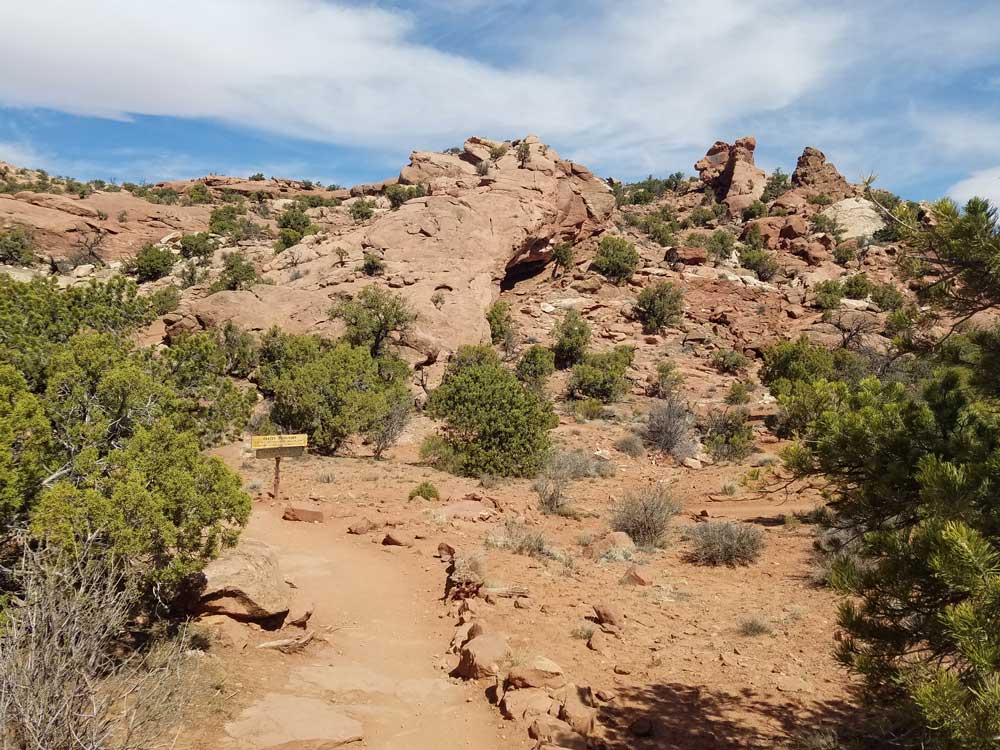
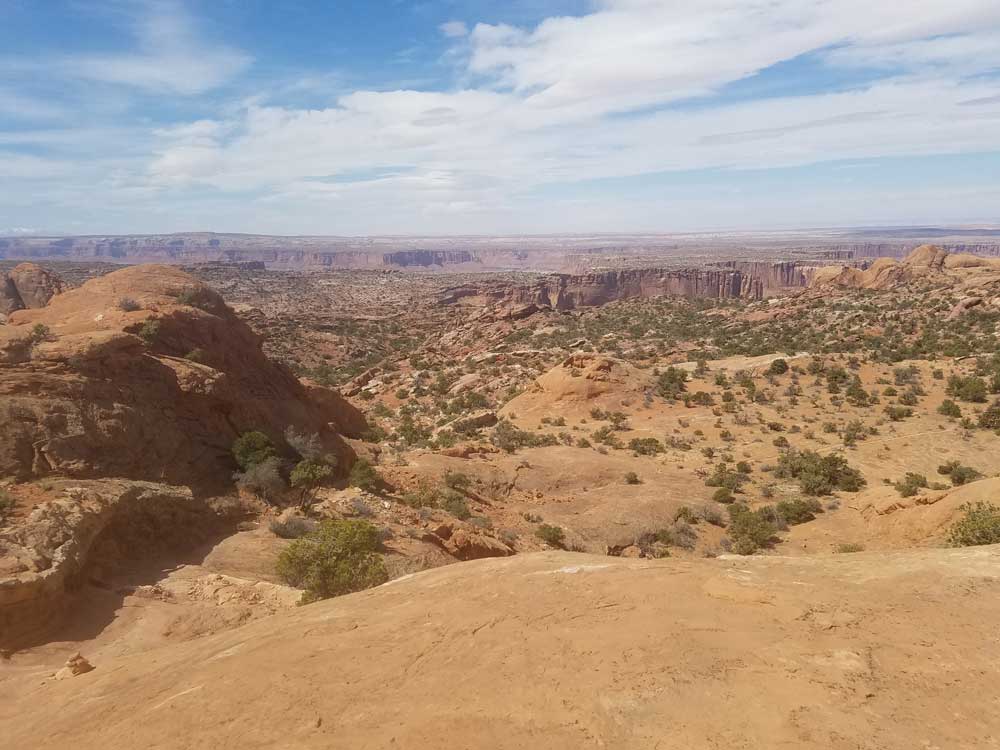
Upheaval Dome is an impact structure, the deeply eroded bottom-most remnants of an impact crater, in Canyonlands National Park southwest of the city of Moab, Utah. The crater is located in the Island in the Sky section of the park, and is approximately 42 miles (68 km) by vehicle from Moab.
Description
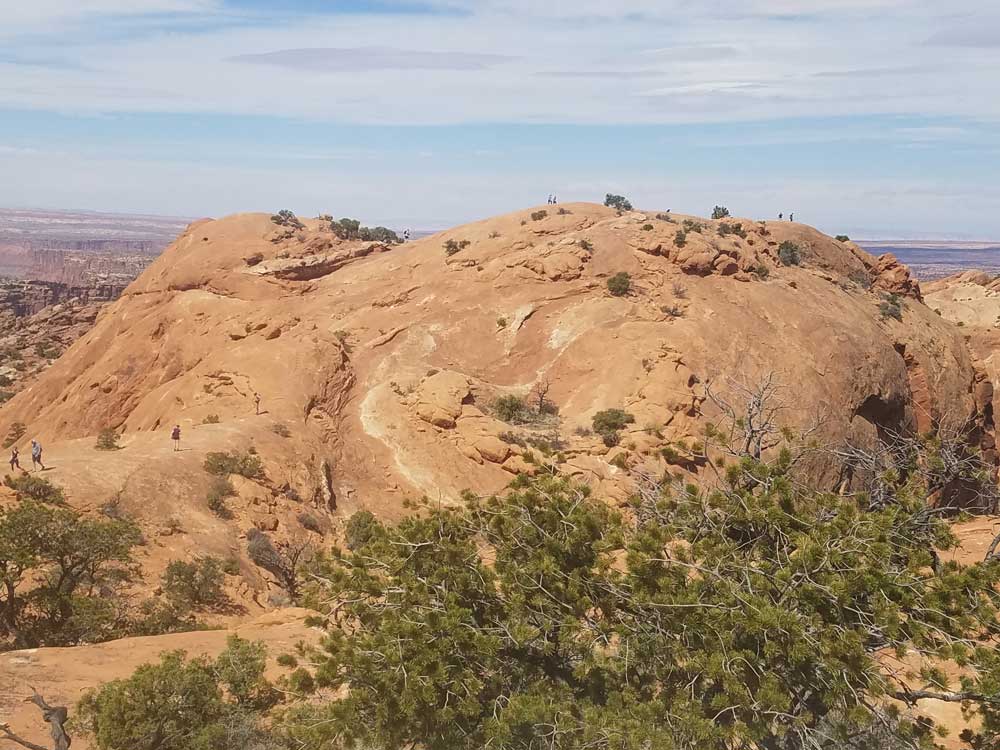
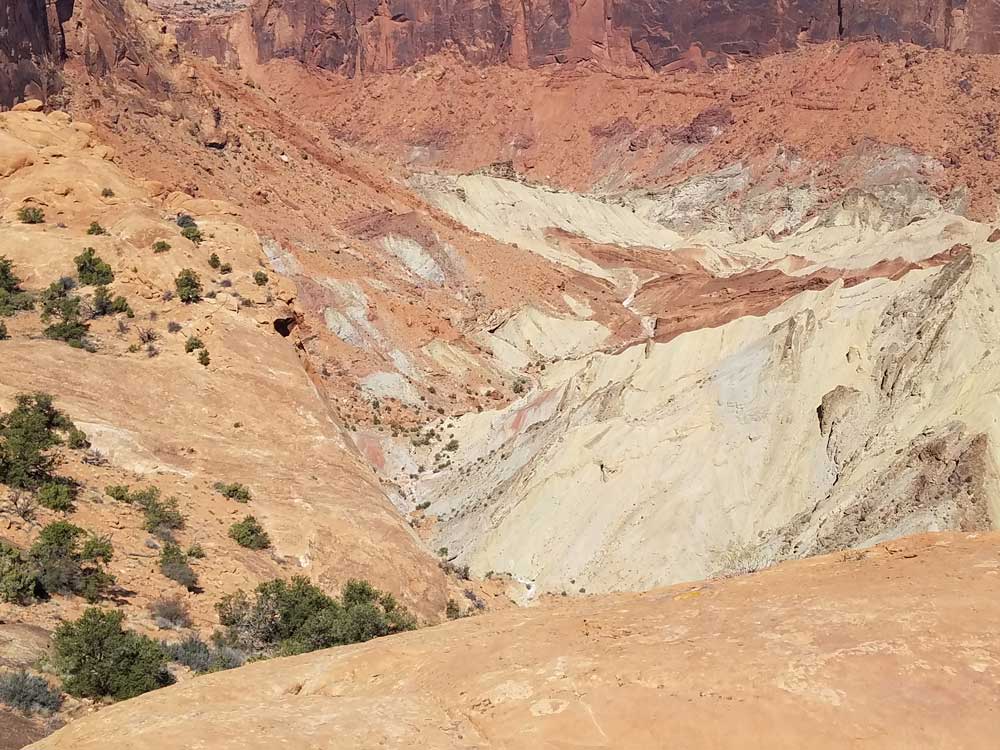
Upheaval Dome is approximately 10 kilometres (6.2 mi) in diameter and the crater is known to be less than 170 million years old (Jurassic or younger, but how much younger is not established.) The crater is clearly visible on the surface as bright brown and black concentric rings.
In an area approximately three miles (5 km) across, rock layers are dramatically deformed. In the center, the rocks are pushed up into a circular structure called a dome, or an anticline. Surrounding this dome is a downwarp in the rock layers called a syncline. What caused these folds at Upheaval Dome? Geologists do not know for sure, but there are two main theories which are hotly debated.
A thick layer of salt, formed by the evaporation of ancient landlocked seas, underlies much of southeastern Utah and Canyonlands National Park. When under pressure from thousands of feet of overlying rock, the salt can flow plastically, like ice moving at the bottom of a glacier. In addition, salt is less dense than sandstone. As a result, over millions of years salt can flow up through rock layers as a "salt bubble", rising to the surface and creating salt domes that deform the surrounding rock.
When geologists first suggested that Upheaval Dome was the result of a salt dome, they believed the land form resulted from erosion of the rock layers above the dome itself. Recent research suggests that a salt bubble as well as the overlying rock have been entirely removed by erosion and the present surface of Upheaval Dome is the pinched off stem below the missing bubble. If true, Upheaval Dome would earn the distinction of being the most deeply eroded salt structure on earth.
When meteorites collide with the earth, they leave impact craters like the well-known one in Arizona. Some geologists estimate that roughly 60 million years ago, a meteorite with a diameter of approximately one-third of a mile hit at what is now the Upheaval Dome. The impact created a large explosion, sending dust and debris high into the atmosphere. The impact initially created an unstable crater that partially collapsed. As the area around Upheaval Dome reached an equilibrium, the rocks underground heaved upward to fill the void left by the impact. Erosion since the impact has washed away any meteorite debris, and now provides a glimpse into the interior of the impact crater, exposing rock layers once buried thousands of feet underground.
Recent research findings support the meteorite hypothesis, but questions still remain. Within Canyonlands National Park, Upheaval Dome serves as a protected geologic laboratory where all can learn about, and be inspired by, the mysteries of nature. Perhaps, with time, we may solve the mystery of this crater and others on our planet.
This article uses material from the Wikipedia article "Upheaval Dome", which is released under the Creative Commons Attribution-Share-Alike License 3.0
This article uses material from nps.gov "Canyonlands National Park"