Ancient pueblo are considered to be one of the oldest continuously inhabited communities in the US, and has been designated a UNESCO World Heritage Site
7am to 6pm
Summer Park Hours
May 31 to September 6
7am to 9pm
Fall to Spring Hours
September 8 to May 27
9am to 5pm
Accepts America The Beautiful Pass.
Overview
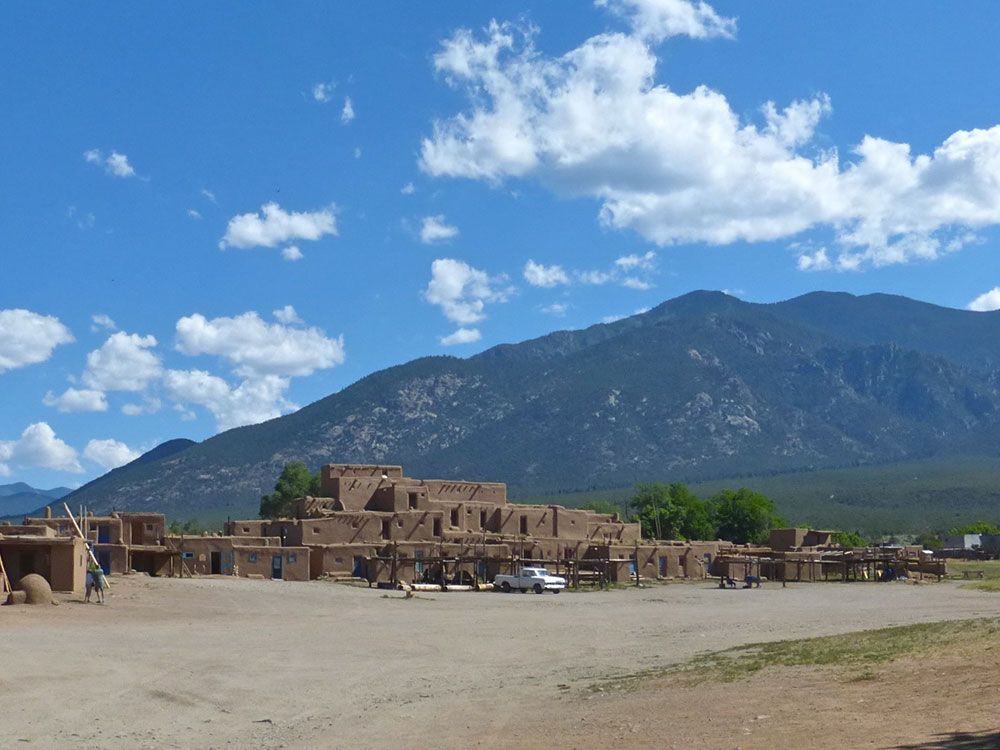
Taos Pueblo (or Pueblo de Taos) is an ancient pueblo belonging to a Taos-speaking (Tiwa) Native American tribe of Puebloan people. It lies about 1 mile (1.6 km) north of the modern city of Taos, New Mexico. The pueblos are considered to be one of the oldest continuously inhabited communities in the United States. This has been designated a UNESCO World Heritage Site.
Taos Pueblo is a member of the Eight Northern Pueblos. A tribal land of 95,000 acres (38,000 ha) is attached to the pueblo, and about 4,500 people live in this area.
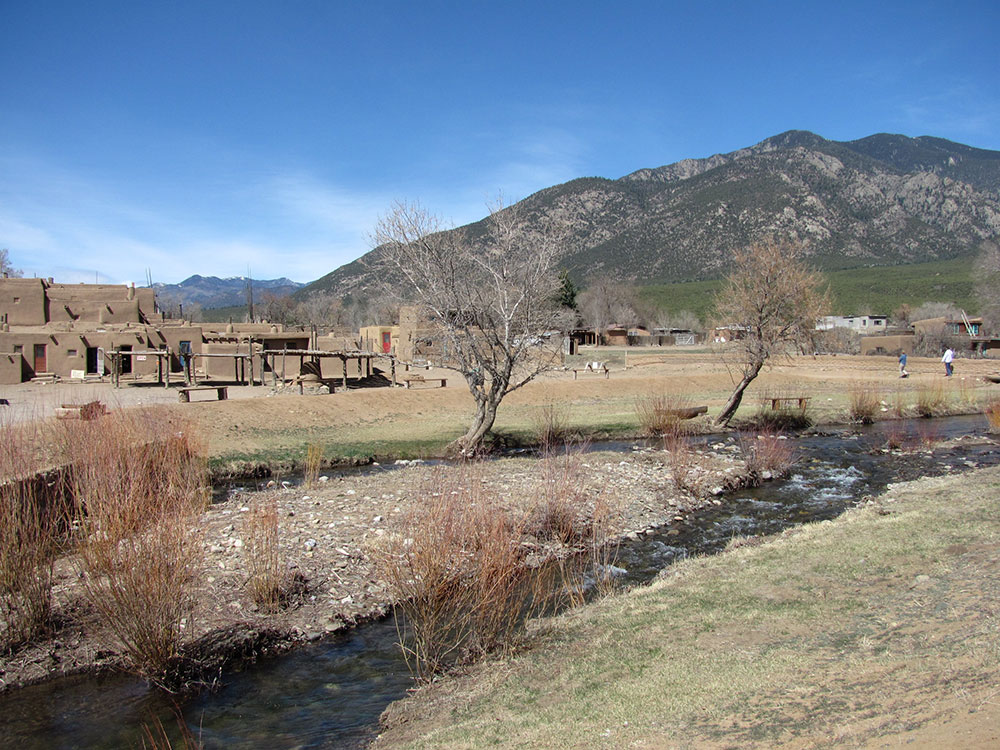
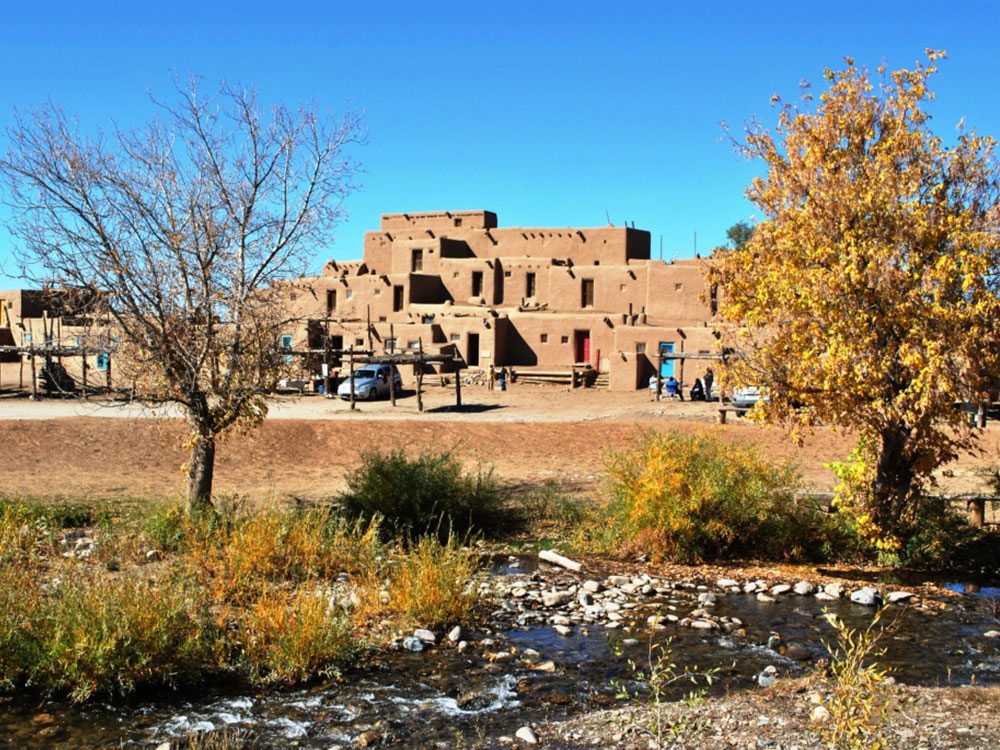
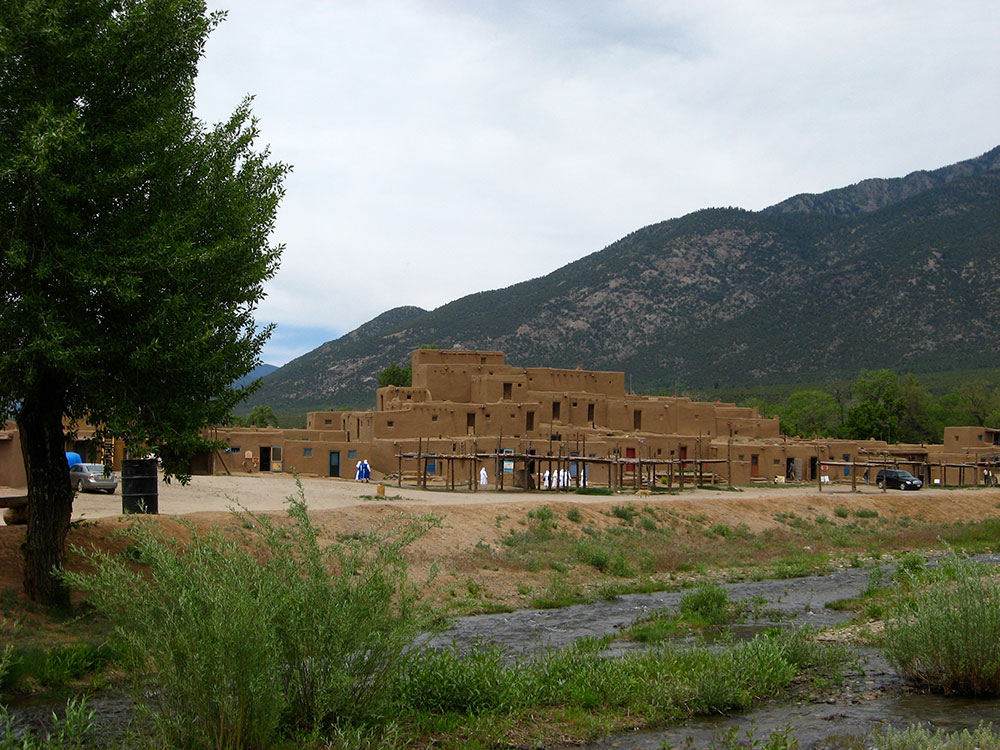
The pueblo was constructed in a setting backed by the Taos Mountains of the Sangre de Cristo Range. The settlement was built on either side of Rio Pueblo de Taos, also called Rio Pueblo and Red Willow Creek, a small stream that flows through the middle of the pueblo compound.
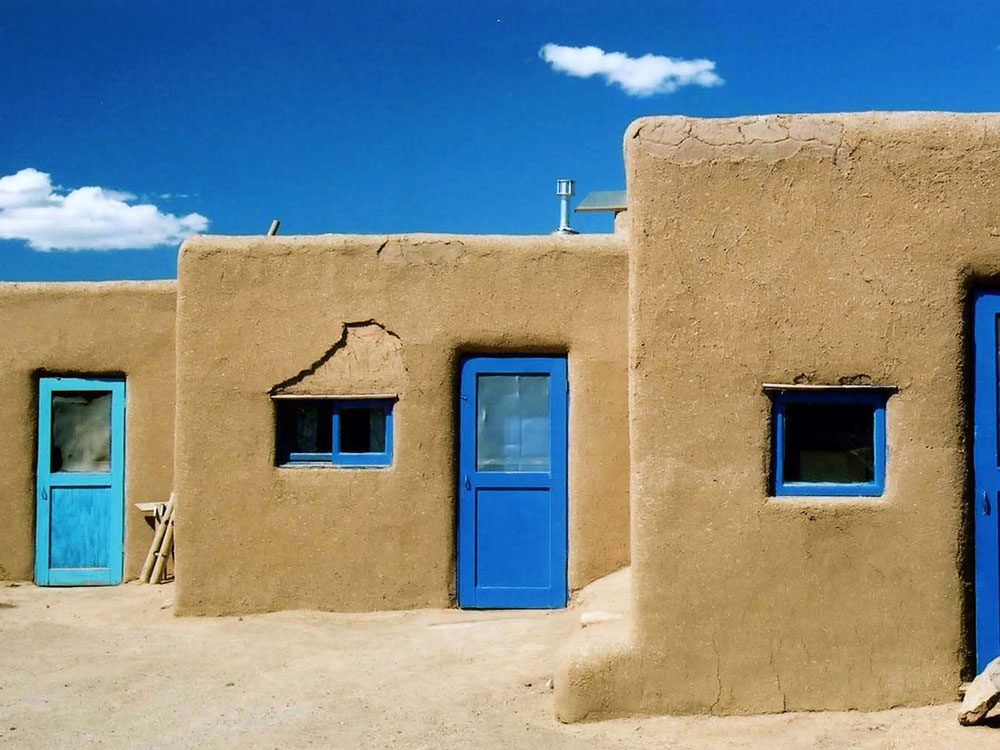
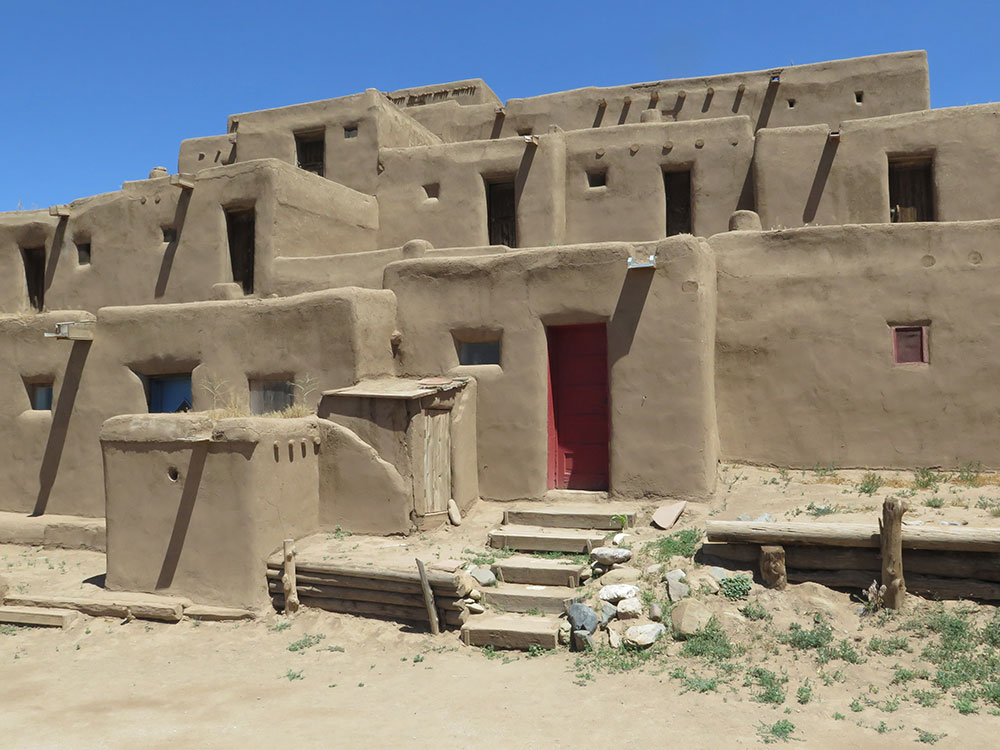
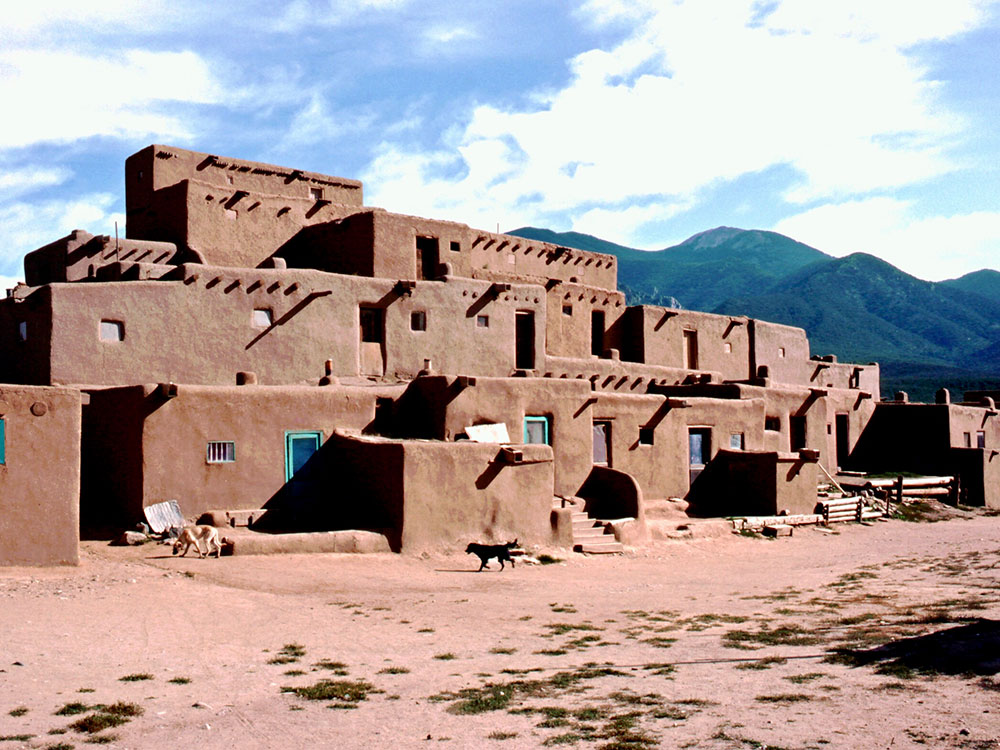
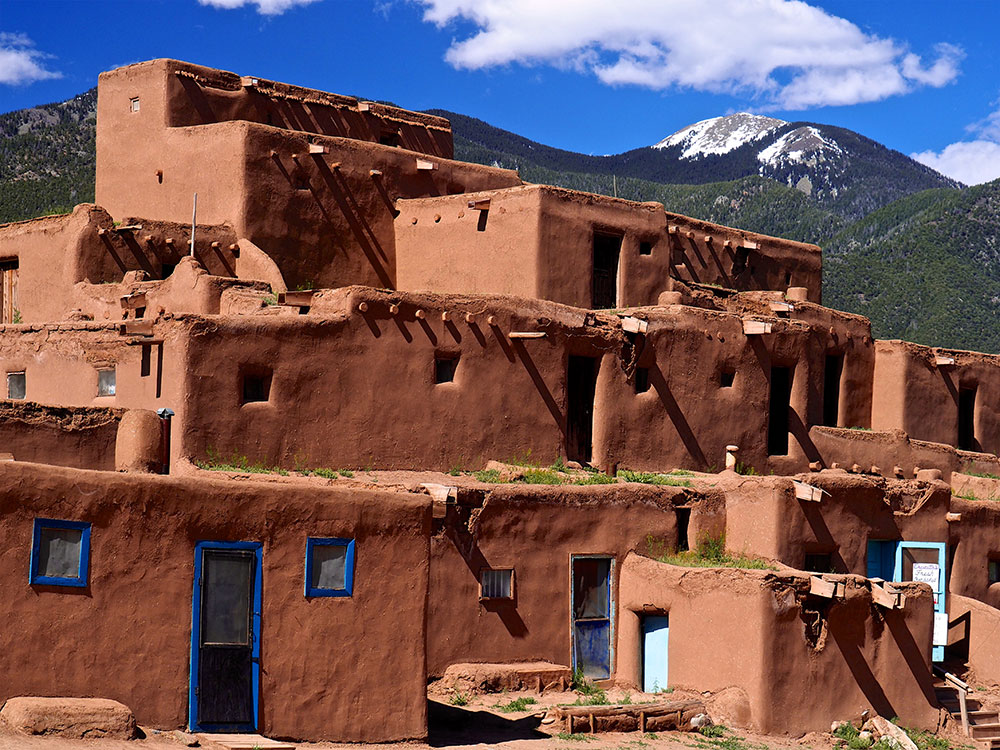
Taos Pueblo's most prominent architectural feature is a multi-storied residential complex of reddish-brown adobe, built on either side of the Rio Pueblo.
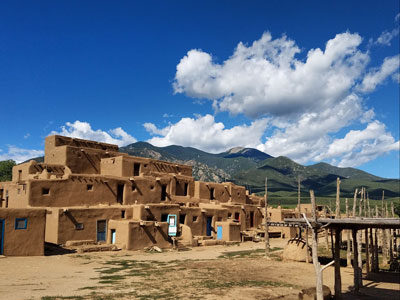
At the time of the Spaniards' initial contact, Hernando de Alvarado described the pueblo as having adobe houses built very close together and stacked five or six stories high. The homes became narrower as they rose, with the roofs of each level providing the floors and terraces for those above.
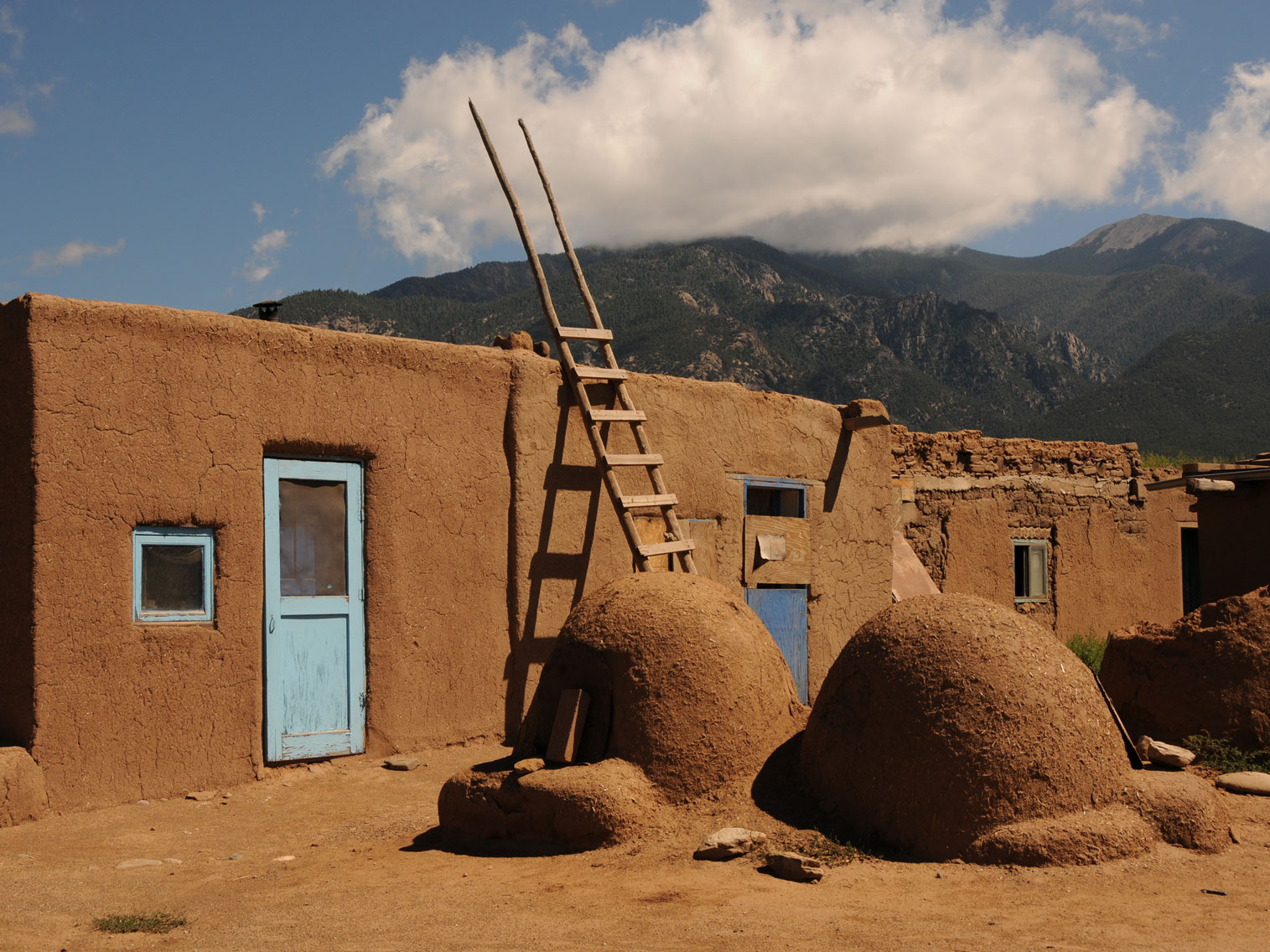
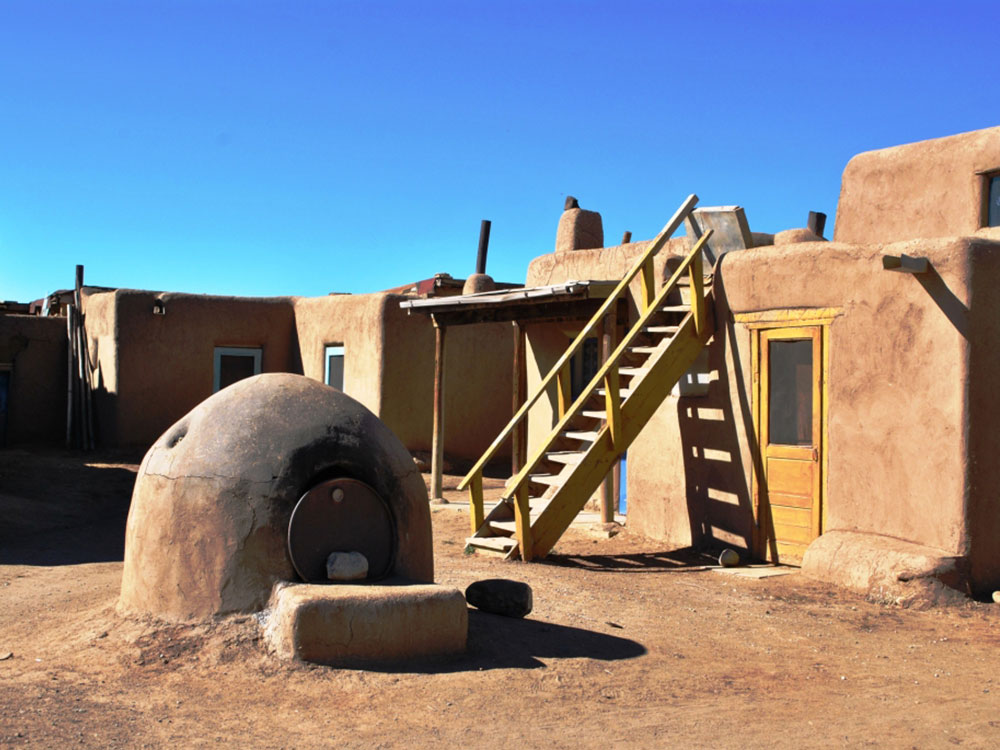
The buildings originally had few windows and no standard doorways. Instead, access to rooms was through square holes in the roof that the people reached by climbing long, wooden ladders. Engelmann Spruce logs (or vigas) supported roofs that had layers of branches, grass, mud, and plaster covering them. The architecture and the building materials were well suited for the rigors of the environment and the needs of the people in the Taos Valley. Prior to the arrival of Coronado, all Taos Pueblo walls were constructed using balls of adobe (clay) about the size of a 'soft ball', Coronado introduced the technique of the formed mud brick, this technique revolutionized adobe construction in the new world. Coronado also changed the roof structure, to use 2" to 4" inch aspen saplings branches installed at a right angle to the Engelmann Spruce vigas, then 2" to 3" inches of adobe plaster was applied, topped off with up to half a meter of loose soil ( about 18" inches thick ) for insulation and structural strength.
The north-side Pueblo is said to be one of the most photographed and painted buildings in North America. It is the largest multistoried Pueblo structure still existing. It is made of adobe walls that are often several feet thick. Its primary purpose was for defense. Up to as late as 1900, access to the rooms on lower floors was by ladders on the outside to the roof, and then down an inside ladder. In case of an attack, outside ladders could easily be pulled up.
The homes in this structure usually consist of two rooms, one of which is for general living and sleeping, and the second of which is for cooking, eating, and storage. Each home is self-contained; there are no passageways between the houses. Taos Indians made little use of furniture in the past, but today they have tables, chairs, and beds. In the pueblo, electricity, running water, and indoor plumbing are prohibited.
This article uses material from the Wikipedia article "Taos Pueblo", which is released under the Creative Commons Attribution-Share-Alike License 3.0