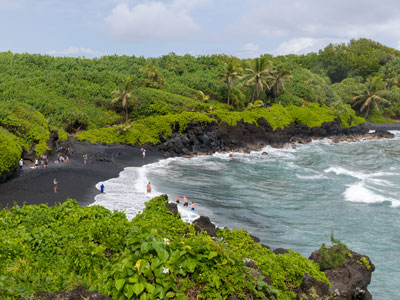
Volcanic island shaped by two massive shield volcanoes and a central valley, featuring lush rainforests, arid coastlines, historic towns, and deep-rooted Hawaiian cultural traditions.
Featured Regions
Jeff P from Berkeley, CA, USA, CC BY 2.0, via Wikimedia Commons; Image Size Adjusted
Central Maui
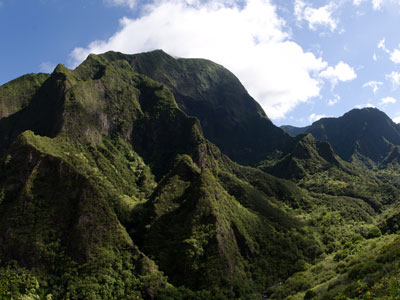
Region featuring a mix of historic towns, lush valleys, cultural landmarks, and commercial centers surrounded by volcanic landscapes.
Jeff P from Berkeley, CA, USA, CC BY 2.0, via Wikimedia Commons; Image Size Adjusted
East Maui
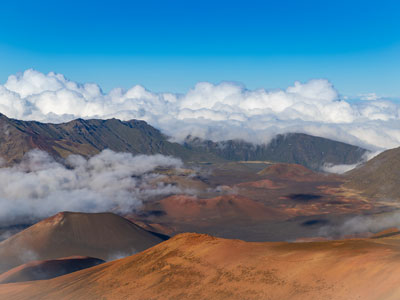
Lush and remote region defined by rainforest-covered cliffs, cascading waterfalls, winding coastal roads, and deep-rooted Hawaiian traditions.
Jeff P from Berkeley, CA, USA, CC BY 2.0, via Wikimedia Commons; Image Size Adjusted
West Maui
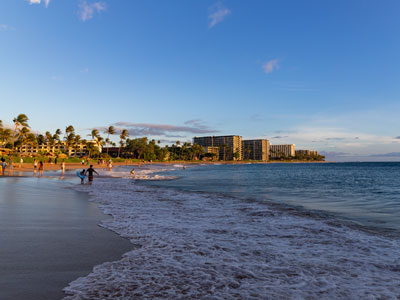
Coastal region featuring luxury resorts, historic towns, scenic beaches, and dramatic mountain backdrops shaped by volcanic ridges and royal heritage.
Overview
The island of Maui is the second-largest of the Hawaiian Islands at 727.2 square miles (1,883 km2) and is the 17th largest island in the United States. Maui is part of the State of Hawaii and is the largest of Maui County's four islands, which include Molokaʻi, Lānaʻi, and unpopulated Kahoʻolawe. Kahului is the largest area on the island, and is the commercial and financial hub of the island. Wailuku is the seat of Maui County and is the third-largest area. Other significant places include Kīhei (including Wailea and Makena in the Kihei Town, the island's second-most-populated area), Lāhainā (including Kāʻanapali and Kapalua in the Lāhainā Town), Makawao, Pukalani, Pāʻia, Kula, Haʻikū, and Hāna.
Native Hawaiian tradition gives the origin of the island's name in the legend of Hawaiʻiloa, the navigator credited with discovery of the Hawaiian Islands. According to it, Hawaiʻiloa named the island after his son, who in turn was named for the demigod Māui. The earlier name of Maui was ʻIhikapalaumaewa. The Island of Maui is also called the "Valley Isle" for the large isthmus separating its northwestern and southeastern volcanic masses.
Maui's diverse landscapes are the result of a unique combination of geology, topography, and climate. Each volcanic cone in the chain of the Hawaiian Islands is built of dark, iron-rich/quartz-poor rocks, which poured out of thousands of vents as highly fluid lava over a period of millions of years. Several of the volcanoes were close enough to each other that lava flows on their flanks overlapped one another, merging into a single island. Maui is such a "volcanic doublet," formed from two shield volcanoes that overlapped one another to form an isthmus between them.
The older, western volcano has been eroded considerably and is cut by numerous drainages, forming the peaks of the West Maui Mountains (in Hawaiian, Mauna Kahalawai). Puʻu Kukui is the highest of the peaks at 5,788 feet (1,764 m). The larger, younger volcano to the east, Haleakalā, rises to more than 10,000 feet (3,000 m) above sea level, and measures 5 miles (8.0 km) from seafloor to summit.
The eastern flanks of both volcanoes are cut by deeply incised valleys and steep-sided ravines that run downslope to the rocky, windswept shoreline. The valley-like Isthmus of Maui that separates the two volcanic masses was formed by sandy erosional deposits.
Maui's last eruption (originating in Haleakalā's Southwest Rift Zone) occurred around 1790; two of the resulting lava flows are located at Cape Kīnaʻu between ʻĀhihi Bay and La Perouse Bay on the southwest shore of East Maui, and at Makaluapuna Point on Honokahua Bay on the northwest shore of West Maui. Considered to be dormant by volcanologists, Haleakalā is certainly capable of further eruptions.
Maui is part of a much larger unit, Maui Nui, that includes the islands of Lānaʻi, Kahoʻolawe, Molokaʻi, and the now submerged Penguin Bank. During periods of reduced sea level, including as recently as 20,000 years ago, they are joined together as a single island due to the shallowness of the channels between them.
Snorkeling is one of the most popular activities on Maui, with over 30 beaches and bays to snorkel at around the island. Maui's trade winds tend to come in from the northeast, making the most popular places to snorkel on the south and west shores of Maui. Having many mountains on Maui helps with the trade winds not being able to reach the beaches located on the south and west of the island, making the ocean water very clear.
Maui is a well-known destination for windsurfing. Kanaha Beach Park is a very well-known windsurfing spot and may have stand-up paddle boarders or surfers if there are waves and no wind. Windsurfing has evolved on Maui since the early 1980s when it was recognized as an ideal location to test equipment and publicize the sport.
One of the most popular sports in Hawaii. Ho'okipa Beach Park is one of Maui's most famous surfing and windsurfing spots. Other famous or frequently surfed areas include Slaughterhouse Beach, Honolua Bay, Pe'ahi (Jaws), and Fleming Beach. The north side of Maui absorbs the most swell during the winter season and the south and west in the summer time. Due to island blocking, summer south swells tend to be weak and rare.
One of the newest sports on Maui is Kitebsurfing. Kanaha Beach Park is where beginner, intermediate and advanced Kiters gather. It is known as Kite Beach. Kiters share the water with Windsurfers who have dominated the area since the early 1980s. Since 2008 there has been an explosion in the number of Kiters mostly due to advances in equipment and safety.
The big tourist spots in Maui include the Hāna Highway, Haleakalā National Park, Iao Valley, and Lahaina.
The Hāna Highway runs along the east coast of Maui, curving around mountains and passing by black sand beaches and waterfalls. Haleakalā National Park is home to Haleakalā, a dormant volcano. Snorkeling can be done at almost any beach along the Maui coast. Surfing and windsurfing are also popular on Maui.
The main tourist areas are West Maui (Kāʻanapali, Lahaina, Nāpili-Honokōwai, Kahana, Napili, Kapalua) and South Maui (Kīhei, Wailea-Mākena). The main port of call for cruise ships is located in Kahului. There are also smaller ports located at Lahaina Harbor (located in Lahaina) and Maʻalaea Harbor (located between Lahaina and Kihei). Lahaina is one of the main attractions on the island with an entire street of shops and restaurants which leads to a wharf where many set out for a sunset cruise or whale watching journey. Known locally as Lahainatown, it has a long and diverse history from its Hawaiian population beginnings to the arrival of travelers and settlers and its use as a significant whaling port.
This article uses material from the Wikipedia article "Maui", which is released under the Creative Commons Attribution-Share-Alike License 3.0