
Region in the southern part of the San Francisco Bay Area in Northern California that serves as a global center for high technology and innovation
How to Get There
Overview
Silicon Valley is a region in the southern part of the San Francisco Bay Area in Northern California that serves as a global center for high technology and innovation. It corresponds roughly to the geographical Santa Clara Valley. San Jose is Silicon Valley's largest city, the third-largest in California, and the tenth-largest in the United States; other major Silicon Valley cities include Sunnyvale, Santa Clara, Redwood City, Mountain View, Palo Alto, Menlo Park, and Cupertino. The San Jose Metropolitan Area has the third-highest GDP per capita in the world (after Zurich, Switzerland and Oslo, Norway), according to the Brookings Institution.The word "silicon" in the name originally referred to the large number of innovators and manufacturers in the region specializing in silicon-based MOS transistors and integrated circuit chips. The area is now home to many of the world's largest high-tech corporations, including the headquarters of more than 30 businesses in the Fortune 1000, and thousands of startup companies. Silicon Valley also accounts for one-third of all of the venture capital investment in the United States, which has helped it to become a leading hub and startup ecosystem for high-tech innovation. It was in Silicon Valley that the silicon-based integrated circuit, the microprocessor, and the microcomputer, among other technologies, were developed. As of 2013, the region employed about a quarter of a million information technology workers.
As more high-tech companies were established across San Jose and the Santa Clara Valley, and then north towards the Bay Area's two other major cities, San Francisco and Oakland, the term "Silicon Valley" has come to have two definitions: a narrower geographic one, referring to Santa Clara County and southeastern San Mateo County, and a definition referring to high-tech businesses in the entire Bay Area. The term Silicon Valley is often used for the American high-technology economic sector. The name also became a global synonym for leading high-tech research and enterprises, and thus inspired similar named locations, as well as research parks and technology centers with a comparable structure all around the world.
Due to the personal connection between people and computer technology, many headquarters of companies in Silicon Valley are a hotspot for tourism.
Origin of the term
The popularization of the name is credited to Don Hoefler. He first used it in the article "Silicon Valley USA", which appeared in the January 11, 1971, issue of the weekly trade newspaper Electronic News. However, it took about a decade before the term came into common use. The term gained widespread use in the early 1980s, at the time of the introduction of the IBM PC and numerous related hardware and software products to the consumer market.
Silicon Valley was born through the intersection of several contributing factors including a skilled science research base housed in area universities, plentiful venture capital, and steady U.S. Department of Defense spending. Stanford University leadership was especially important in the valley's early development. Together these elements formed the basis of its growth and success.
Companies based in Silicon Valley
Thousands of high technology companies are headquartered in Silicon Valley. Among those, the following are in the Fortune 1000:
Adobe Inc.
Advanced Micro Devices
Agilent Technologies
Alphabet Inc.
Apple Inc.
Applied Materials
Cadence Design Systems
Cisco Systems
Cypress Semiconductor
eBay
Electronic Arts
Facebook, Inc.
Hewlett Packard Enterprise
HP Inc.
Intel
Intuit
Intuitive Surgical
Juniper Networks
KLA Corporation
Lam Research
Lockheed Martin Space
Maxim Integrated
NetApp
Netflix
Nvidia
Oracle Corporation
PayPal
Salesforce
Sanmina Corporation
Square, Inc.
Synnex
Synopsys
Tesla, Inc.
Twitter
Western Digital
Xilinx
Things to Do
Explore the Global Center of Technology and Innovation
Silicon Valley is the world-renowned technology hub located in the southern portion of the San Francisco Bay Area. Home to many of the world's leading technology companies, startups, research institutions, and venture capital firms, the region offers visitors a unique combination of innovation, history, culture, outdoor recreation, and educational attractions.
Visit Technology Company Campuses
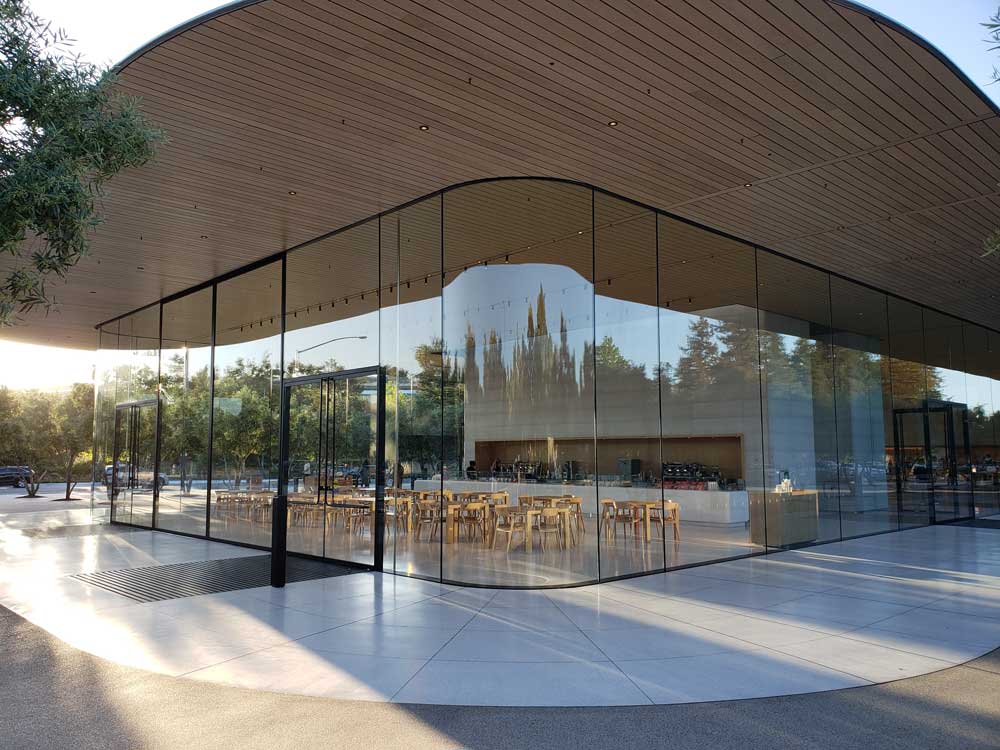
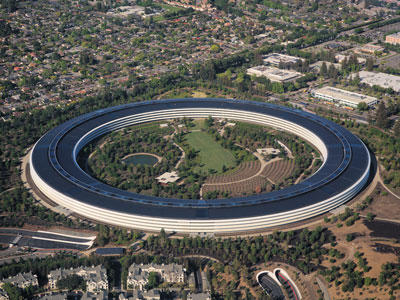
Visitors can explore the exterior visitor areas and company stores of famous technology firms such as Apple, Google, Intel, NVIDIA, and Meta. Popular attractions include Apple Park Visitor Center in Cupertino and the Google Visitor Experience in Mountain View, where guests can learn about innovation, technology, and the companies that helped shape the digital age.
Tour Computer and Science Museums
Silicon Valley is home to several world-class museums, including The Tech Interactive in San Jose, the Computer History Museum in Mountain View, and the Intel Museum in Santa Clara. These attractions showcase the evolution of computing, robotics, artificial intelligence, space exploration, and technological innovation.
Explore Stanford University
Founded in 1885, Stanford University is one of the world's leading research institutions and played a major role in the development of Silicon Valley. Visitors can explore its historic campus, public art installations, museums, gardens, and iconic landmarks such as Hoover Tower and Memorial Church.
Visit Santana Row and Downtown San Jose
For shopping, dining, and entertainment, visitors can explore Santana Row, one of the region's premier lifestyle destinations. Downtown San Jose offers museums, theaters, cultural attractions, restaurants, nightlife, and public events throughout the year.
Discover Nature and Scenic Open Space Preserves
Despite its global reputation for technology, Silicon Valley is surrounded by beautiful natural landscapes. Visitors can enjoy hiking, cycling, wildlife viewing, and scenic drives in parks and preserves throughout the Santa Cruz Mountains, Diablo Range, and San Francisco Bay shoreline.
Top Trails
Stanford Dish Trail
Length: Approximately 3.5 miles loop
Elevation Gain: Moderate
Difficulty: Easy to Moderate
One of Silicon Valley's most popular walking trails, the Stanford Dish Trail circles a large radio telescope and offers panoramic views of Stanford University, Palo Alto, and the surrounding foothills.
Mission Peak Trail
Length: Approximately 6 miles round trip
Elevation Gain: About 2,100 feet
Difficulty: Difficult
Located in Fremont, this challenging hike leads to one of the Bay Area's most iconic summits. Visitors are rewarded with sweeping views of Silicon Valley, the San Francisco Bay, and neighboring mountain ranges.
Castle Rock Trail
Length: Approximately 5 miles loop
Elevation Gain: Moderate
Difficulty: Moderate
Located in the Santa Cruz Mountains, this scenic trail traverses sandstone formations, forested ridges, and rocky outcrops while providing opportunities for hiking, climbing, and wildlife observation.
Bay Trail at Shoreline Park
Length: Approximately 4 miles round trip
Elevation Gain: Minimal
Difficulty: Easy
This family-friendly waterfront trail in Mountain View follows the San Francisco Bay shoreline and offers excellent opportunities for birdwatching, cycling, walking, and enjoying views of the wetlands and bay ecosystem.
Sources: Silicon Valley tourism and visitor information, including technology attractions, museums, Stanford University landmarks, outdoor recreation opportunities, cultural destinations, and visitor experiences throughout the region.
https://www.visitsanjose.org/https://www.visitsanjose.org/
Additional information verified through Stanford University visitor resources, Computer History Museum information, and Bay Area parks and open space resources covering hiking trails, technology attractions, scenic preserves, and recreational opportunities throughout Silicon Valley.
https://computerhistory.org/https://computerhistory.org/
This article uses material from the Wikipedia article "Silicon Valley", which is released under the Creative Commons Attribution-Share-Alike License 3.0




-1000.jpg)
.jpg)


-1000.jpg)
.jpg)