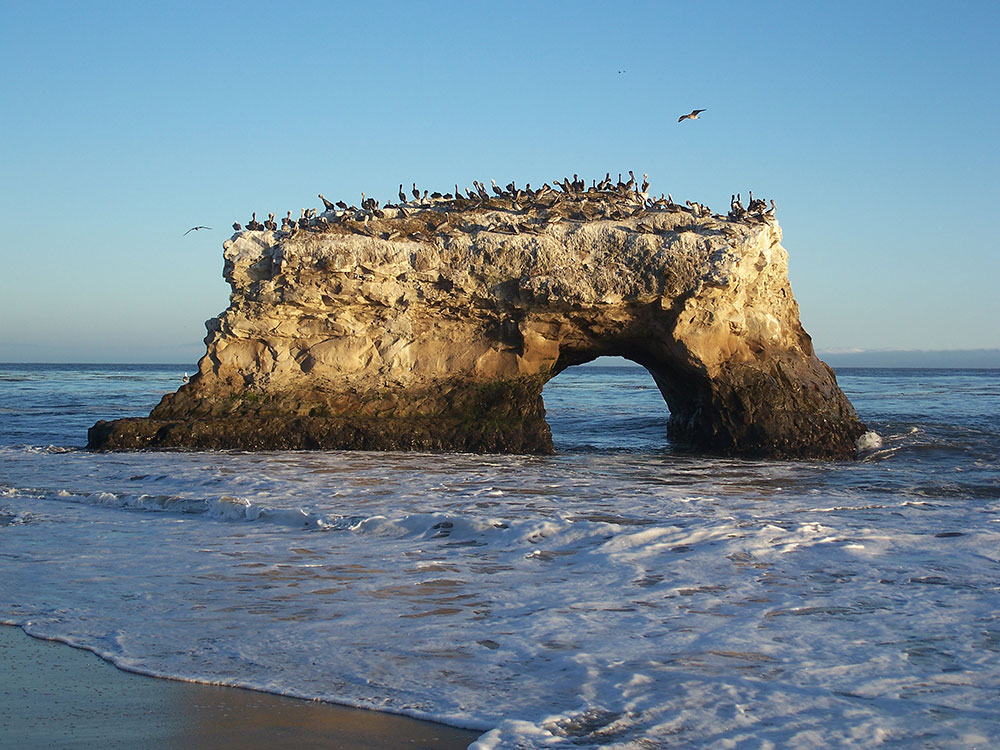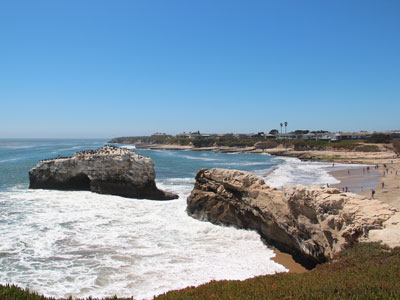

State park in Santa Cruz, featuring a natural bridge across a section of the beach and a eucalyptus grove providing habitat for monarch butterflies
General Information
Visitor Center: Daily, 11am to 4pm
Pets are not permitted on trails or the beach.
Best time to see Monarch butterflies: mid-October to late January
How to Get There
From Santa Cruz (2 mi): Head west on W Cliff Dr for approximately 2 miles until you reach the entrance to Natural Bridges State Beach.
Overview
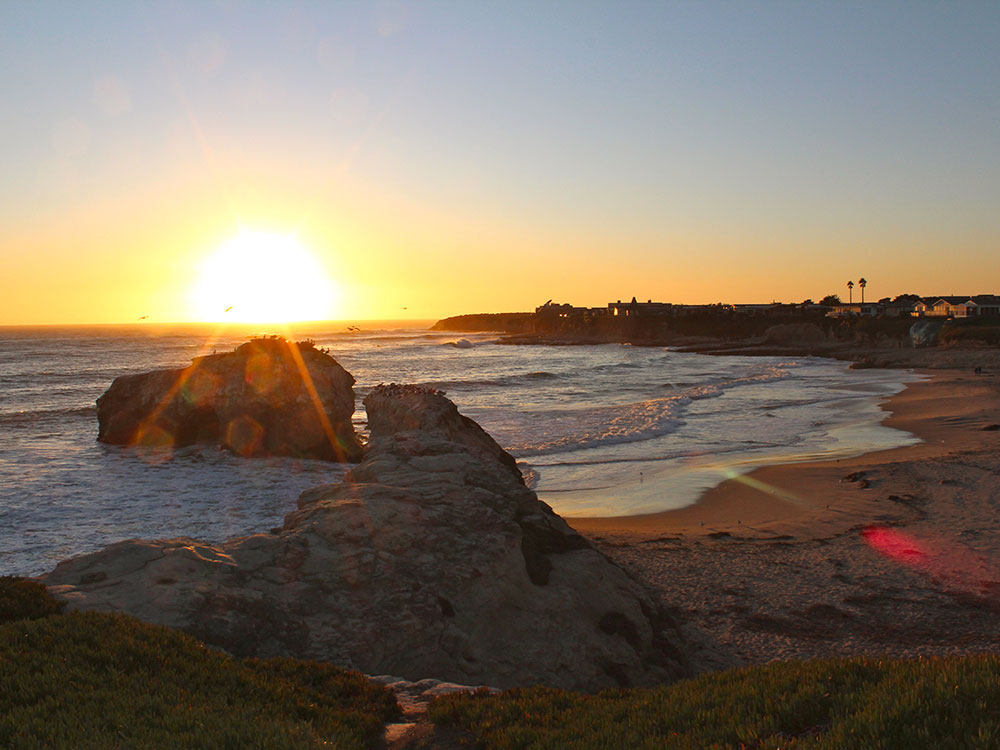
Natural Bridges State Beach is a 65-acre (26 ha) state park in Santa Cruz, California, featuring a natural bridge across a section of the beach and a eucalyptus grove providing habitat for monarch butterflies. During monarch butterfly migration, Monarch Butterfly Natural Preserve has up to 150,000 monarch butterflies from October through early February.
Geology
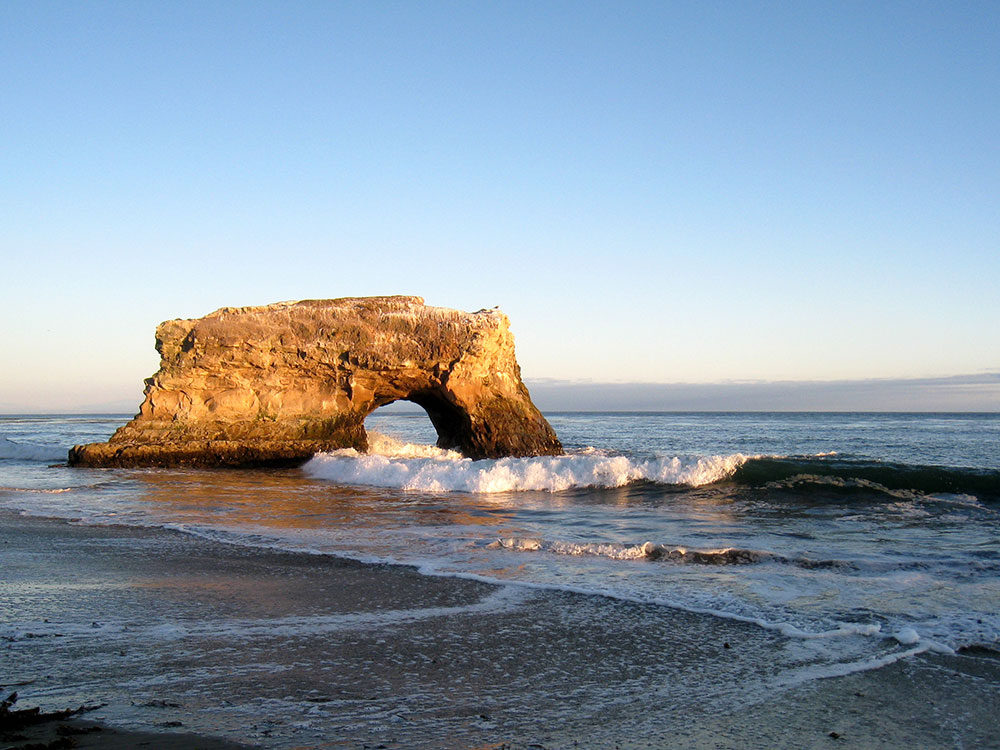
Natural Bridges State Beach is named for the naturally occurring mudstone bridges that were carved by the Pacific Ocean into cliffs that jutted out into the sea.
The arches formed over a million years ago when a combination of silt, clay and diatoms were solidified into a mixture of stone that formed the three original arches of the beach. Wave erosion carved the arches and then cut away the cliffs leaving only islands.
Ecology
The 65-acre (26 ha) of the park have a variety of habitats. Saltwater and freshwater marshes are found on Moore Creek. Coastal Scrub surrounds the margins and undeveloped interior areas of the park. Sand dunes and a fresh water pond are also found at the park.
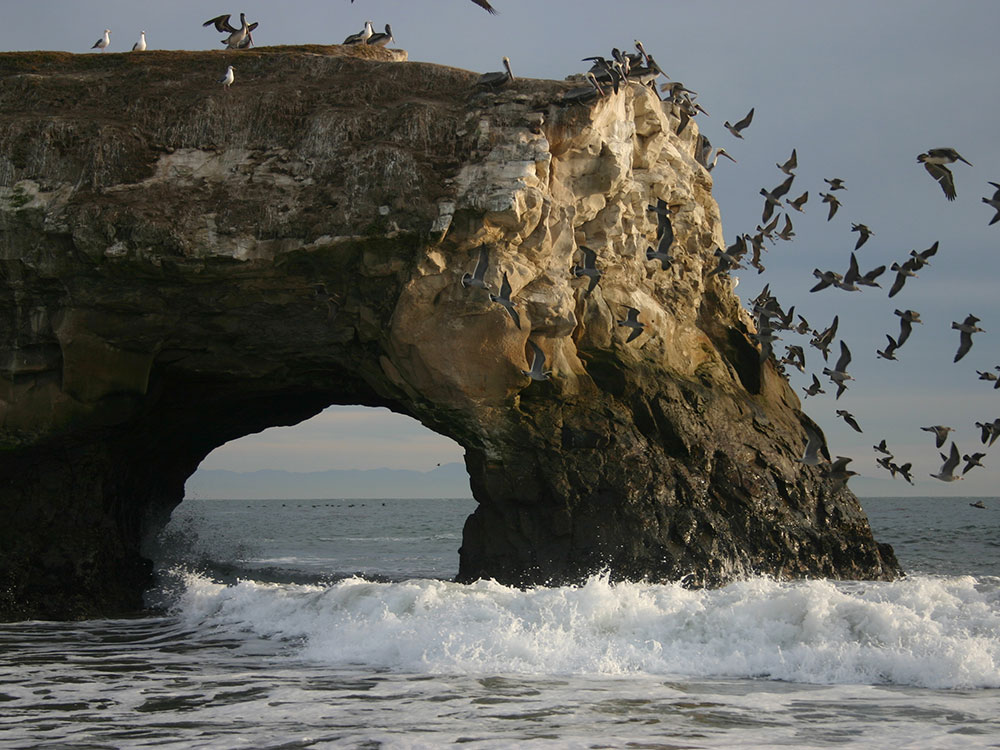
Tide pools at the beach provide a glimpse into marine life habitat for visitors to the park. Receding tides reveal populations of urchins, sea stars, hermit crabs, and kelp. Marine mammals, such as whales, seals, and sea otters can be seen from the beach. In combination with the estuarine mouth of Moore Creek, the state beach provides habitat for a variety of bird species, such as shorebirds, gulls, and snowy egrets. Brown pelicans and cormorants can often be found on the remaining natural bridge.
Recreation
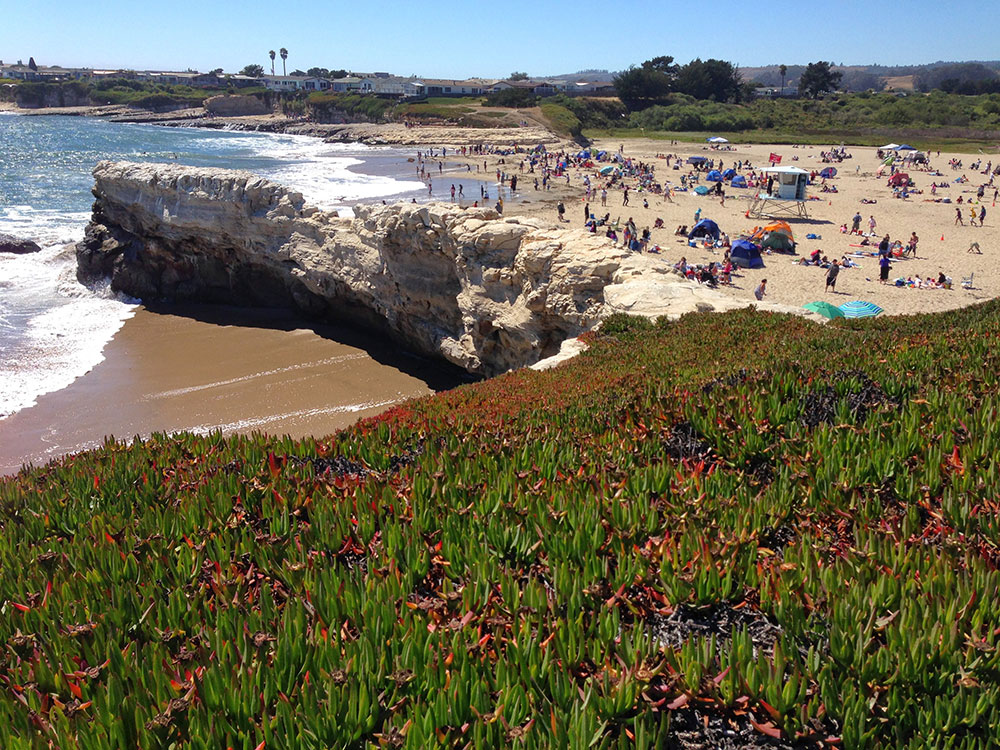
Natural Bridges State Beach is open to year-round recreation including swimming, surfing, hiking, nature walks and picnics. The beach is small and sheltered. The afternoon winds attract kite flying and wind surfing. The beach is open to surfing and is busiest during the winter when large swells wash up onto the shores of Natural Bridges State Beach. Hiking trails pass through the Moore Creek estuary and the Monarch Butterfly Nature Preserve. Guided tours of the butterfly preserve take place on weekends during the fall and winter. Tours of the tidal pools take place year-round as do nature walks.
This article uses material from the Wikipedia article "Natural Bridges State Beach", which is released under the Creative Commons Attribution-Share-Alike License 3.0