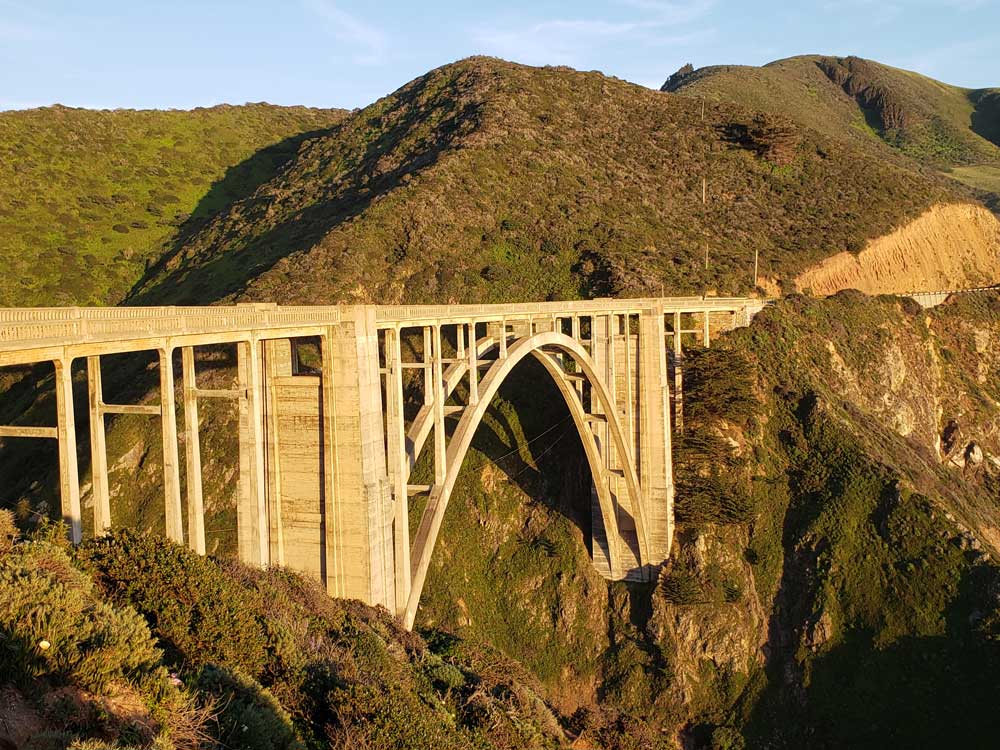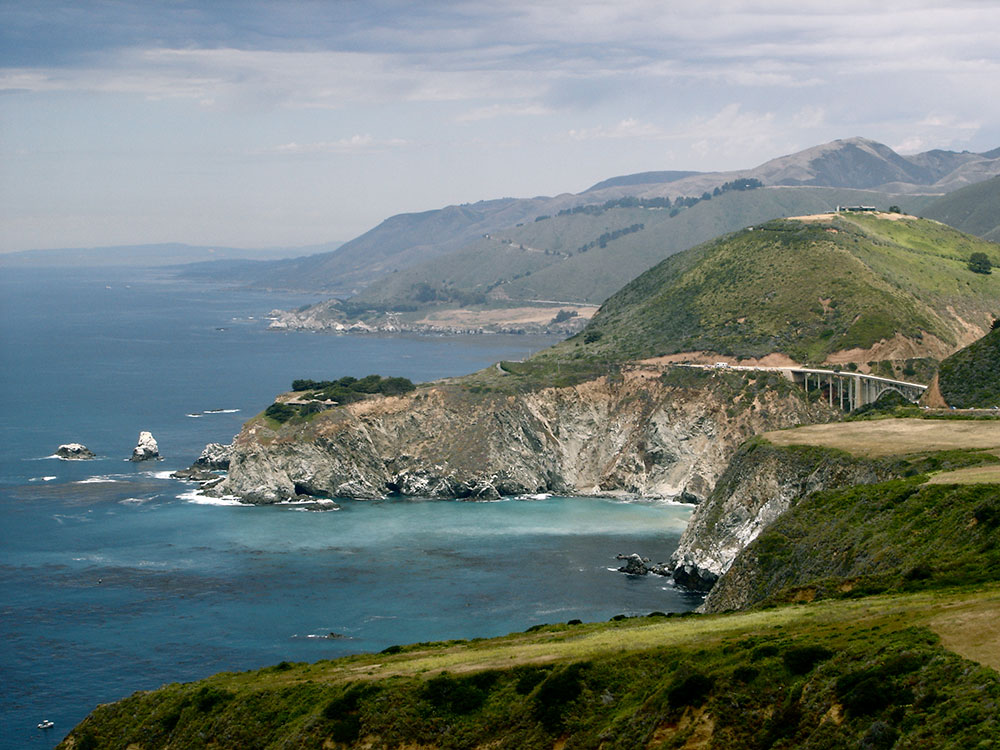

One of the most photographed bridges in California due to its aesthetic design, "graceful architecture and magnificent setting"
General Information
Hours:
Open daily: 24 hours
Best visited during daylight for safety and scenic views
Best visited during daylight for safety and scenic views
Fees:
Free to visit
No entrance or parking fees
No entrance or parking fees
Pet Policy:
Leashed pets are allowed in roadside and viewpoint areas
Not permitted on bridge structure or steep trails
Not permitted on bridge structure or steep trails
Closest cities with hotels:
Carmel-by-the-Sea (15 mi)
Monterey (20 mi)
Big Sur (10 mi)
Monterey (20 mi)
Big Sur (10 mi)
Seasons:
Best visited in early spring for green hills and wildflowers
Summer and fall offer clear skies and dramatic sunsets
Summer and fall offer clear skies and dramatic sunsets
Location:
Website:
How to Get There
From Carmel-by-the-Sea, CA (15 mi): Take CA-1 south for approximately 15 miles along the Pacific Coast Highway to reach Bixby Creek Bridge.
Overview
Bixby Creek Bridge is Big Sur’s iconic concrete arch bridge on Highway 1, about 13 miles south of Carmel, one of the most photographed bridges in the world. It was the highest single-span arch bridge in the world when completed in 1932, and pullouts on the north side give classic views, especially with morning fog.
This article uses material from the Wikipedia article "Bixby Creek Bridge", which is released under the Creative Commons Attribution-Share-Alike License 3.0