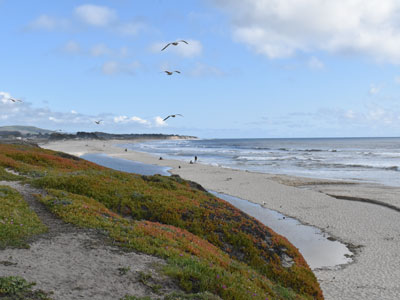

Coastal city named for its crescent shape, is approximately 25 miles south of San Francisco, and known for Mavericks, a big-wave surf location
How to Get There
From San Francisco (29 mi): Get on US-101 S/Central Fwy. Take I-280 S and CA-1 S/Cabrillo Hwy N to Kelly Ave in Half Moon Bay. Turn left onto Kelly Ave.
Overview
Half Moon Bay is a coastal town of about 12,000 people on the San Mateo County coast, about 25 miles south of San Francisco, set around a crescent-shaped bay. It is known for its long beaches, farm stands and pumpkin patches, and for Mavericks, a famous big-wave surf break off Pillar Point where waves can top 50 feet.
Visitors come to Half Moon Bay for a day trip from the Bay Area, to walk the beaches and bluff trails, to explore the tide pools of Fitzgerald Marine Reserve, and to eat seafood and fresh produce along Highway 1. The town also draws crowds to its autumn Art and Pumpkin Festival, and to the luxury resort, The Ritz-Carlton, on the bluff above the sea.
History
The Ohlone people lived along the coast before Spanish colonists used the area to grow food for Mission San Francisco de Asis. Italian and Portuguese immigrants later farmed and fished here, and the town was known as Spanishtown until it took the name Half Moon Bay in 1874. During Prohibition, the foggy coast was a landing point for rum runners, and today flower growing and agriculture remain important.
Sightseeing and Popular Landmarks
Half Moon Bay State Beach, Pillar Point Harbor and the Jetty, the Johnston House, Main Street and the old Methodist Episcopal Church are the main sights. Farther out are the Pigeon Point Lighthouse to the south and Moss Beach to the north, where the Fitzgerald Marine Reserve offers some of the best tide pooling on the California coast.
Culture and Museums
The Johnston House, built in 1853, is the oldest house on the coastside and offers tours, and the Half Moon Bay Coastside History Museum preserves local history. The Half Moon Bay Art and Pumpkin Festival each October and the Coastal Arts Gallery and Main Street shops highlight local artists and growers.
Parks
Half Moon Bay State Beach has four miles of sand, dunes and campgrounds along the bay, and Poplar Beach is a popular spot for sunsets and walks. Fitzgerald Marine Reserve protects tide pools, Montara State Beach and Mountain have hiking, and the Coastal Trail offers about 7 miles of walking and biking along the water.
Seasons and Weather
Half Moon Bay has a cool, foggy coastal climate, with highs in the low 60s to low 70s°F and fog common in summer mornings. Fall is often the sunniest and warmest season, winter brings most of the 25 inches of rain, and the biggest Mavericks waves arrive in winter, usually from November to March.
Things to Do
- Beaches: Half Moon Bay State Beach, Poplar Beach, San Gregorio and Pomponio
- Fitzgerald Marine Reserve tide pools
- Pillar Point and the Jetty (“Breakwater”)
- Hiking on Montara Mountain
This article uses material from Wikipedia as well as information from official tourism and institutional sources. Key references include Half Moon Bay Coastside Chamber of Commerce, City of Half Moon Bay, California State Parks, Mavericks, and National Weather Service Bay Area. Wikipedia material is from the article "Half Moon Bay, California", released under the Creative Commons Attribution-Share-Alike License 3.0.
Featured Location

Elisa.rolle, CC BY-SA 4.0, via Wikimedia Commons; Image Size Adjusted

Ritz-Carlton Half Moon Bay
Luxury Forbes Five Star hotel and golf resort in Half Moon Bay, California, sitting on a point in the bay, that allows for views along a long section of the coast.


