Historic district centered on Texas's oldest continually operating dance hall, set along the Guadalupe River within New Braunfels.
General Information
How to Get There
From New Braunfels (3 mi): Take I-35 to Exit 191 (Gruene Rd/FM 306), head west on Gruene Road approximately 1.5 miles, then turn left (south) onto Hunter Road and continue about 1 mile into the historic district to Gruene Hall at 1281 Gruene Rd.
Overview
Gruene is a German town in Comal County in Texas. Once a significant cotton-producing community along the Guadalupe River, the town has now shifted its economy to one supported primarily by tourism. Gruene, a German surname, (pronounced "Green") is now a district within the city limits of New Braunfels, and much of it was listed in the National Register of Historic Places on April 21, 1975. The city is known for its German-Texan heritage and architecture.
Things to Do
Dance at Gruene Hall
Visit the oldest continually operating dance hall in Texas and enjoy live music from local performers and nationally known artists in an authentic Texas setting.
Explore the Gruene Historic District
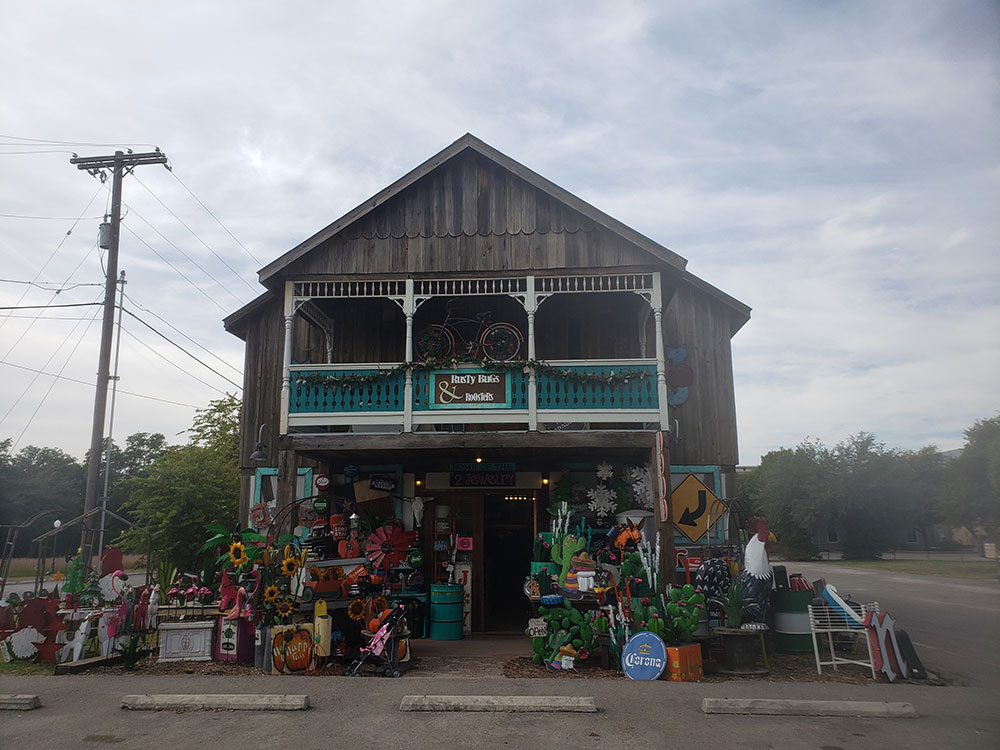
Walk through a beautifully preserved historic district filled with restored 19th-century buildings, unique shops, local eateries, and Texas charm.
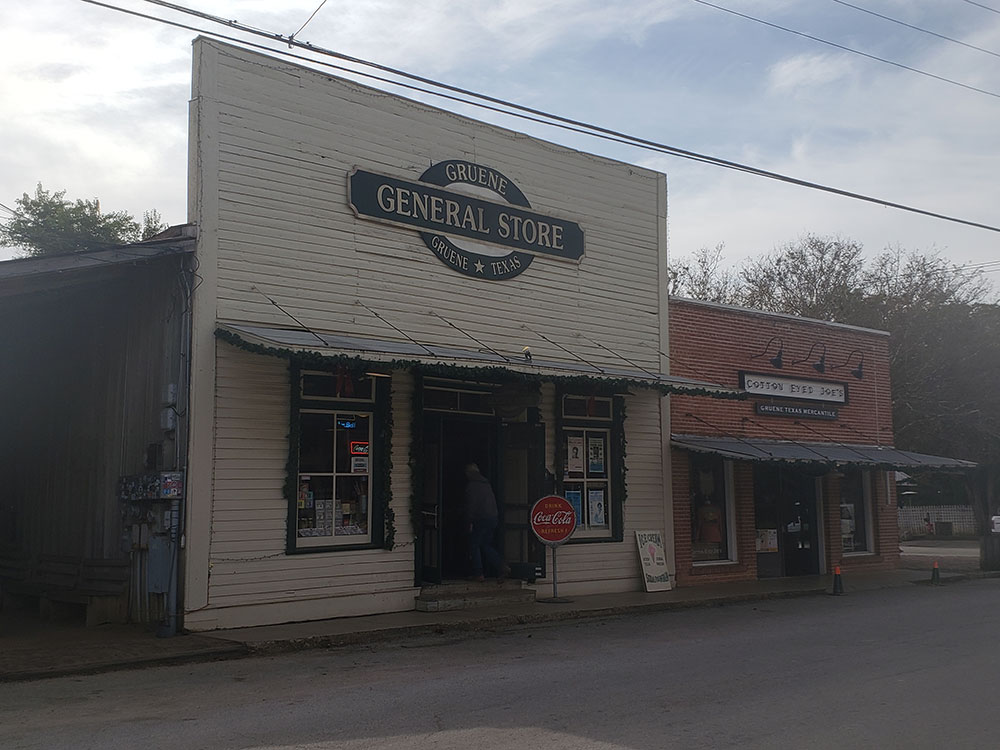
Shop at the Gruene General Store
Browse souvenirs, Texas-made products, candies, gifts, and local specialties in one of Gruene's most iconic historic businesses.
Visit Local Wineries and Tasting Rooms
Sample Texas wines and enjoy live music, outdoor patios, and Hill Country hospitality at local wine venues.
Browse Boutiques and Antique Stores
Discover unique gifts, handcrafted items, antiques, artwork, clothing, and locally made products throughout the historic district.
History
German farmers arriving in the mid 1840s became the first European settlers of what is now known as Gruene, Texas. Ernst Gruene, one such German immigrant, arrived in New Braunfels in 1845, but acreage was scarce there. With his two sons he then purchased land along the Guadalupe River, and he built the first home in Gruene in early Fachwerk, German timber framing house style.
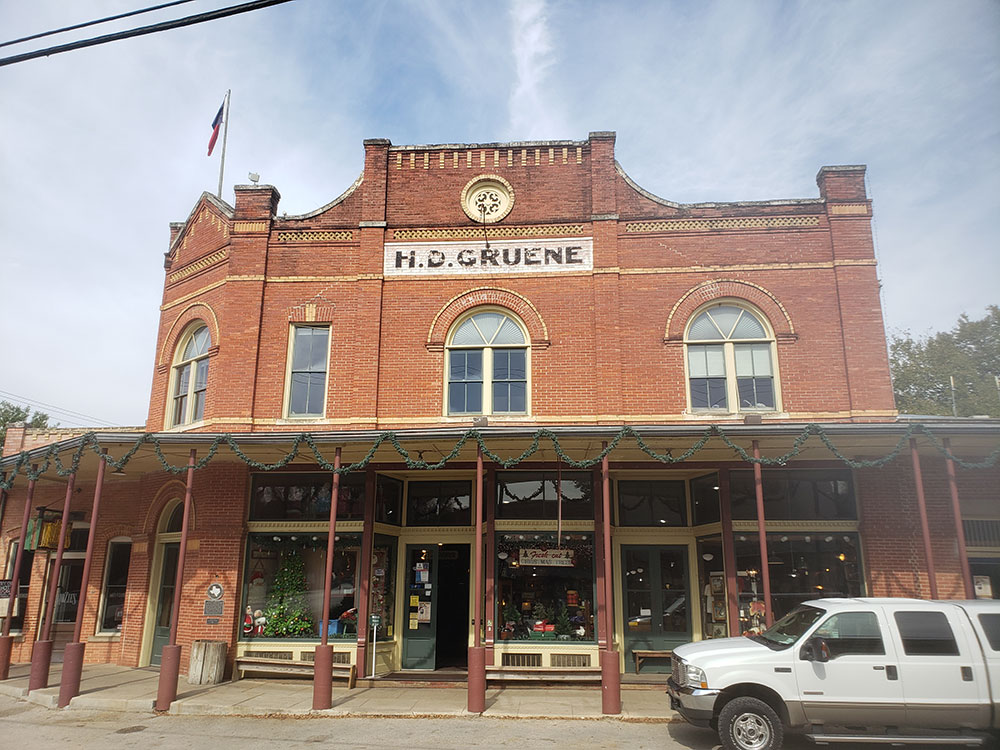
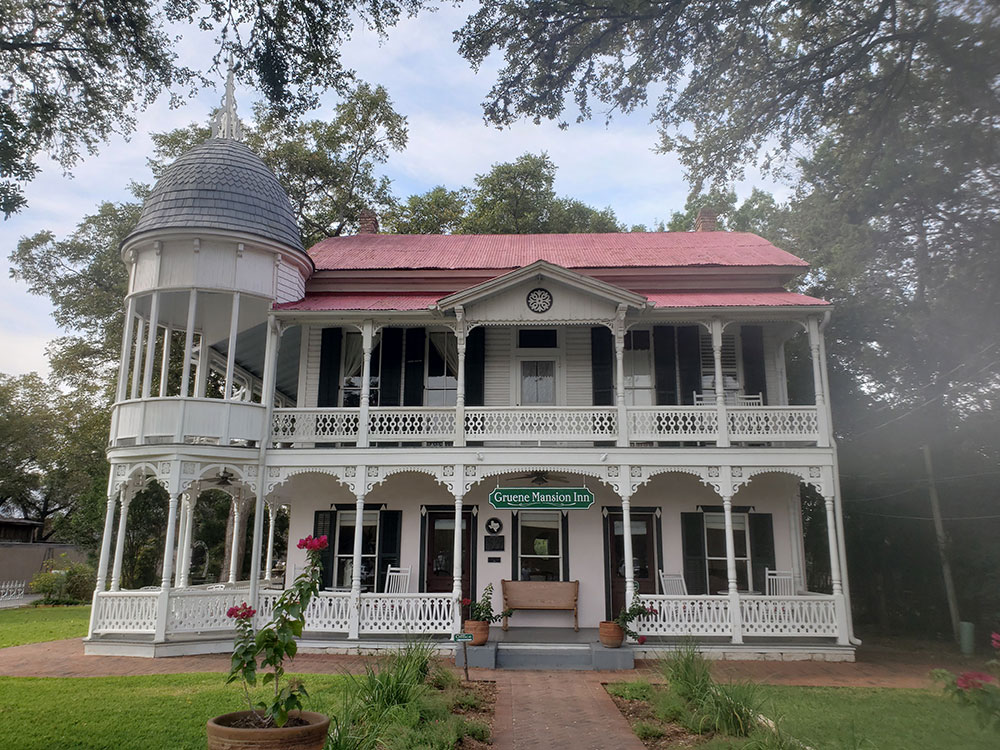
Ernst Gruene's second son, Heinrich (Henry) D. Gruene, built his own house (Gruene Family Home) and planted cotton. As cotton was a top crop it lured up to 30 families to Henry D.'s lands. In addition to his Victorian-style home (now Gruene Mansion Inn), Henry D. was responsible for several buildings in various styles, many still standing: a Victorian cottage, a large brick home, and, for his farm foreman, a frame house (now Gruene Haus). In 1878, Gruene opened a mercantile store to serve the several dozen or so families sharecropping on his land. Originally known as "Goodwin", the town benefited by its location along the stagecoach route between Austin and San Antonio, the store thrived for many years and stimulated local commercial growth. A cotton gin (now Gristmill River Restaurant and Bar) powered by the Guadalupe River was added soon after. Gruene Hall, which opened in 1878, is one of the oldest dance halls in Texas. The Thorn Hill School and three large cotton gins soon followed. By the time the International-Great Northern Railroad was built across Comal County in the 1880s, the small community was bustling with commercial and farming activity, and officially took the name "Gruene" after its founding father and most prominent citizen.
Decline and abandonment
By 1900, Gruene was a prominent banking, ginning, and shipping center for area cotton farming. Though it never had a post office of its own, the community did possess two freight rail stations by the 1910s. In 1922, the original cotton gin burned and was replaced by a modern electric model down the road (now Adobe Verde). Gruene was decimated, however, by the boll weevil blight of the 1920s, and further doomed by the effects of the Great Depression. By 1930, the population had fallen to 75, and post-World War II highway construction bypassed the town. By 1950, Gruene had become a ghost town.
Revival and renaissance
In 1974, Chip Kaufman, a UT Austin architecture student, began working to get Gruene on the National Register of Historic Places and sought new owners for properties in the historic district.
As a result of the restoration of area structures, such as Gruene Hall and the old mercantile store, Gruene began a rebirth of sorts in the early 1970s. Redevelopment and restoration of the area continued throughout the 1970s and 1980s and today, and though no longer an autonomous community (it was annexed by New Braunfels in 1979), Gruene maintains a thriving tourist business. Many original structures from the town's heyday still exist, including the Gruene Family Home, a Victorian-style edifice built in 1872 which is listed on the National Register of Historic Places and today operates as the Gruene Mansion Inn. A historic water tower rises above Gruene Hall, and other buildings at the heart of the district have been renovated into shops and restaurants. There is also a wine-tasting room.
This article uses material from the Wikipedia article "Gruene, New Braunfels, Texas", which is released under the Creative Commons Attribution-Share-Alike License 3.0 Sources: Gruene Historic District information, history, shopping, dining, live music, Guadalupe River recreation, and visitor attractions. [1](https://www.austintexas.org/austin-insider-blog/blog/post/day-trip-destination-8-things-to-do-in-gruene/)[2](https://www.visitnbtx.com/things-to-do/gruene-historic-district)[3](https://www.gruene-tx.com/) Additional information on Gruene Hall, tubing, local businesses, and visitor experiences. [4](https://gruenehall.com/)[5](http://www.gruenetexas.com/)[6](https://thetouristchecklist.com/things-to-do-in-gruene-texas/)[7](https://thesanantoniothings.com/things-to-do-in-gruene-tx/)[8](https://thetouristchecklist.com/gruene-texas/)