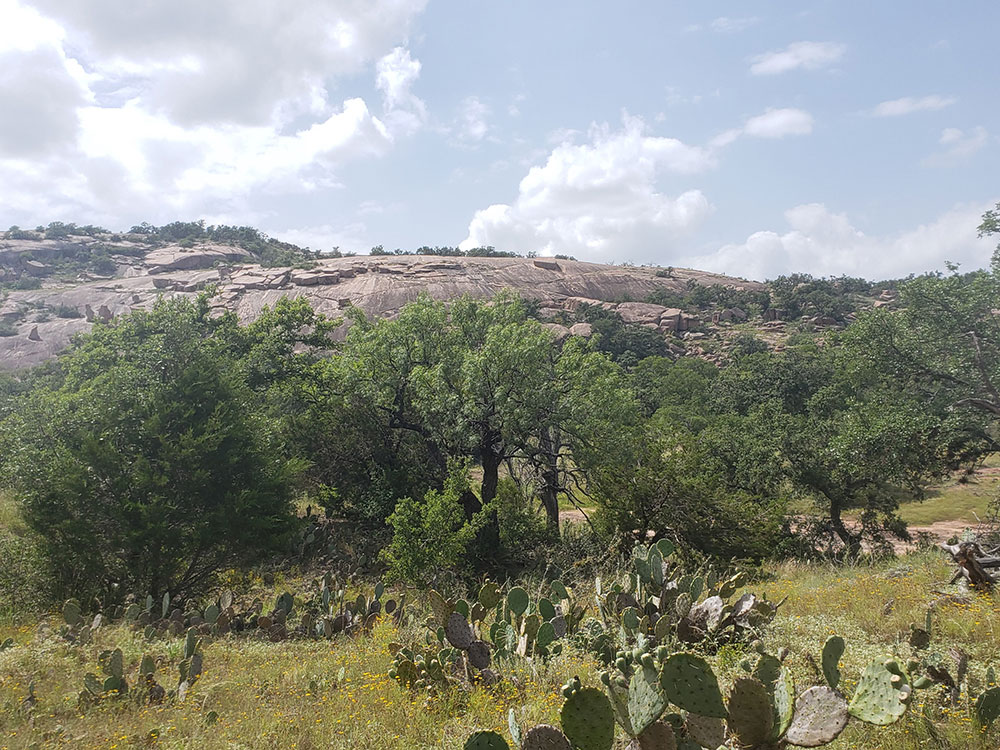
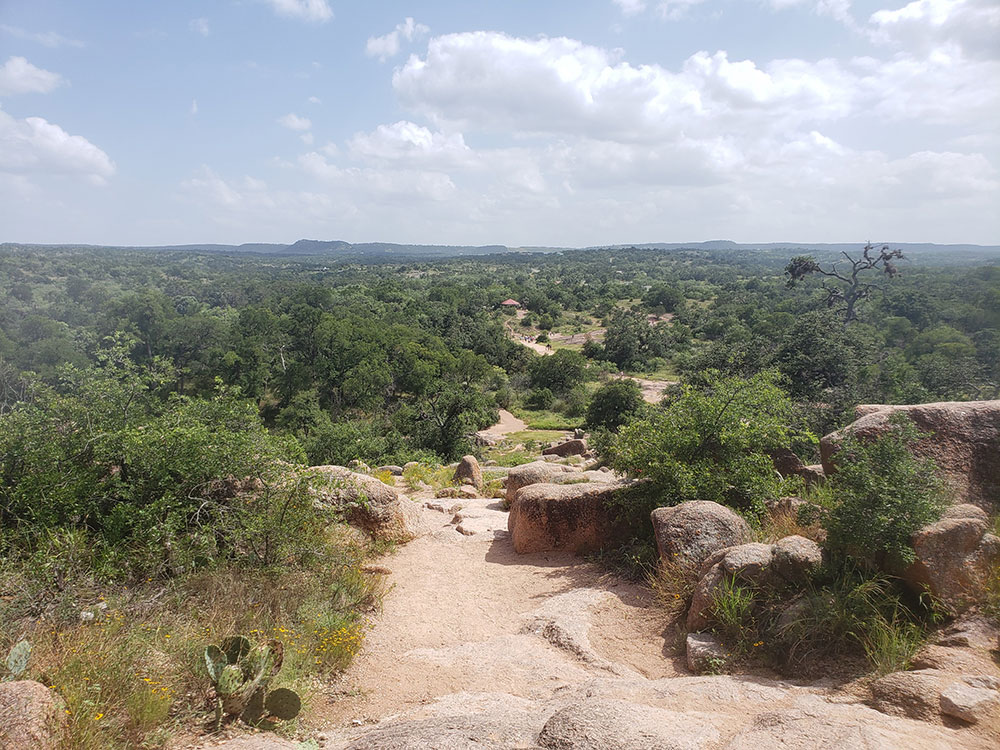
Largest pink granite monadnock in the United States covers roughly 640 acres (260 ha) and rises around 425 feet (130 m) above the surrounding terrain to an elevation of 1,825 feet (556 m) above sea level
General Information
Gate open daily 6:30am to 8pm
Child 12 Years and Under: Free
How to Get There
From Fredericksburg (17 mi): Head north on Ranch Road 965 for approximately 17 miles until the park entrance appears on the right.
Overview
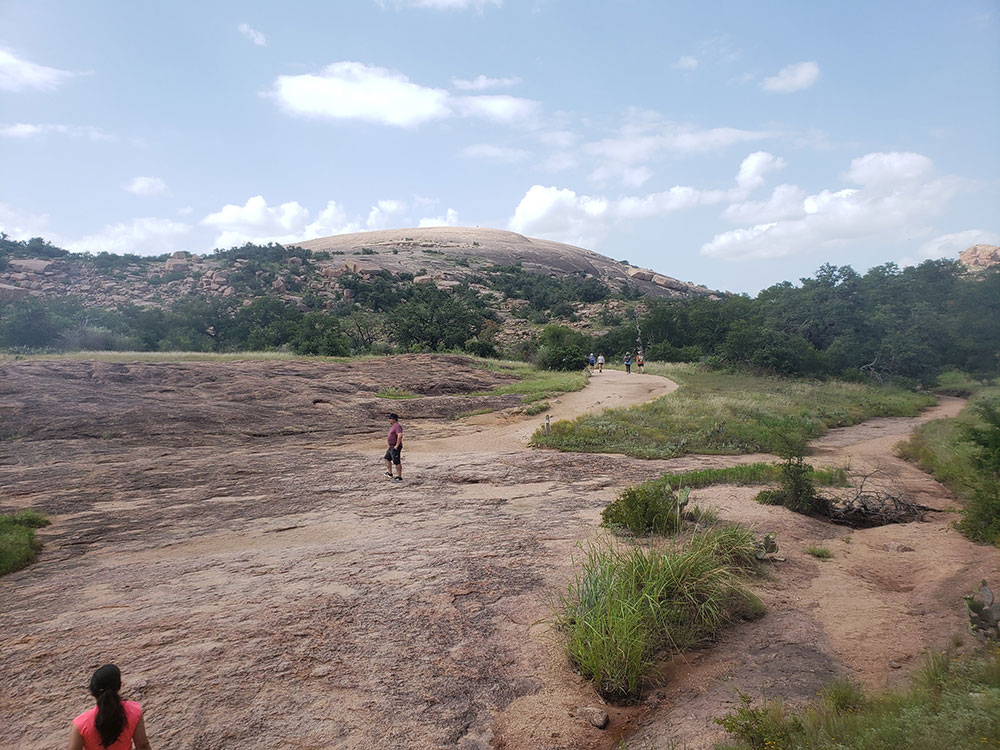
Enchanted Rock is a massive pink granite dome rising 425 feet above the Hill Country landscape, about 17 miles north of Fredericksburg. The largest exposed granite monadnock in the country, it's the centerpiece of a 1,644-acre state natural area and one of Central Texas's most popular hiking and climbing destinations. The dome is the exposed tip of a granite batholith over a billion years old; Native tribes considered it sacred, and the eerie creaking sounds it makes as it cools at night — the granite contracting after a day in the sun — inspired the legends behind its name. The park is also a designated International Dark Sky Park, so clear night skies are part of the draw.
Because of its popularity, weekends and holidays require an advance day-pass reservation and the park often reaches capacity by mid-morning; weekday mornings bring the coolest temperatures and lightest crowds. Summer heat can be intense, so bring extra water and start hikes early — fall and spring offer the most comfortable conditions.
Things to Do
Hike to the Summit
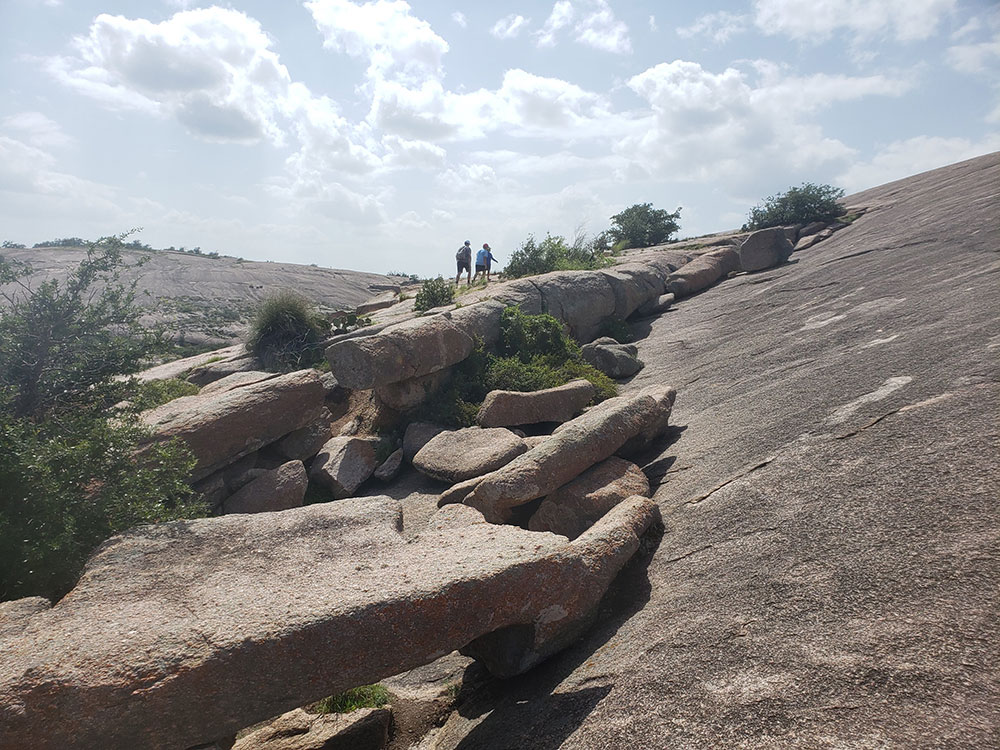
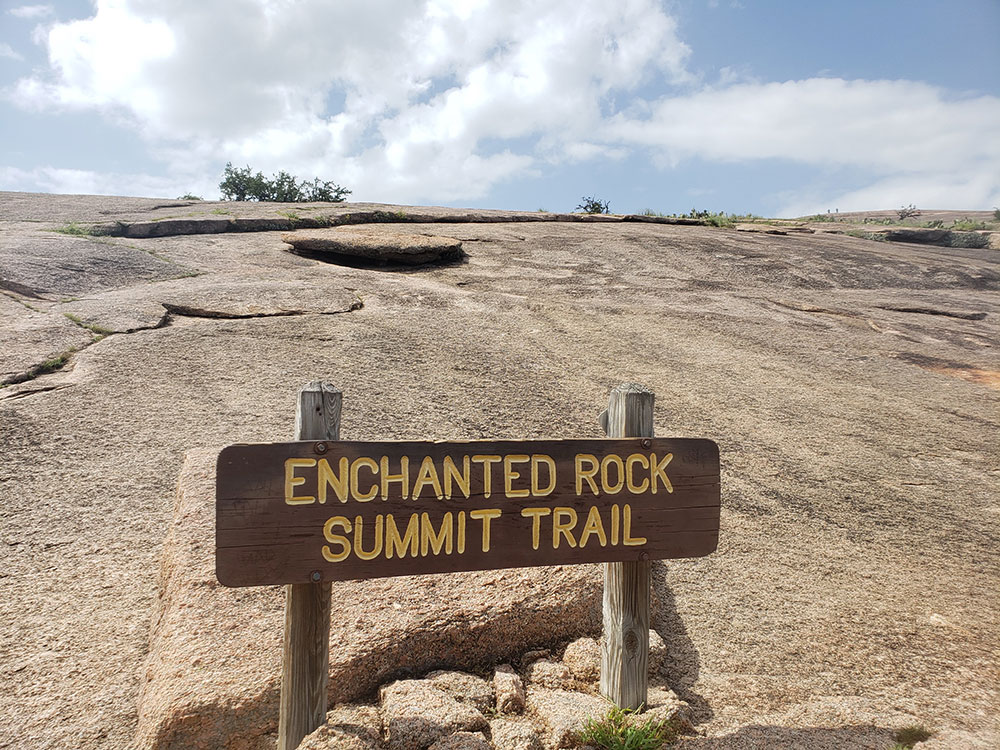
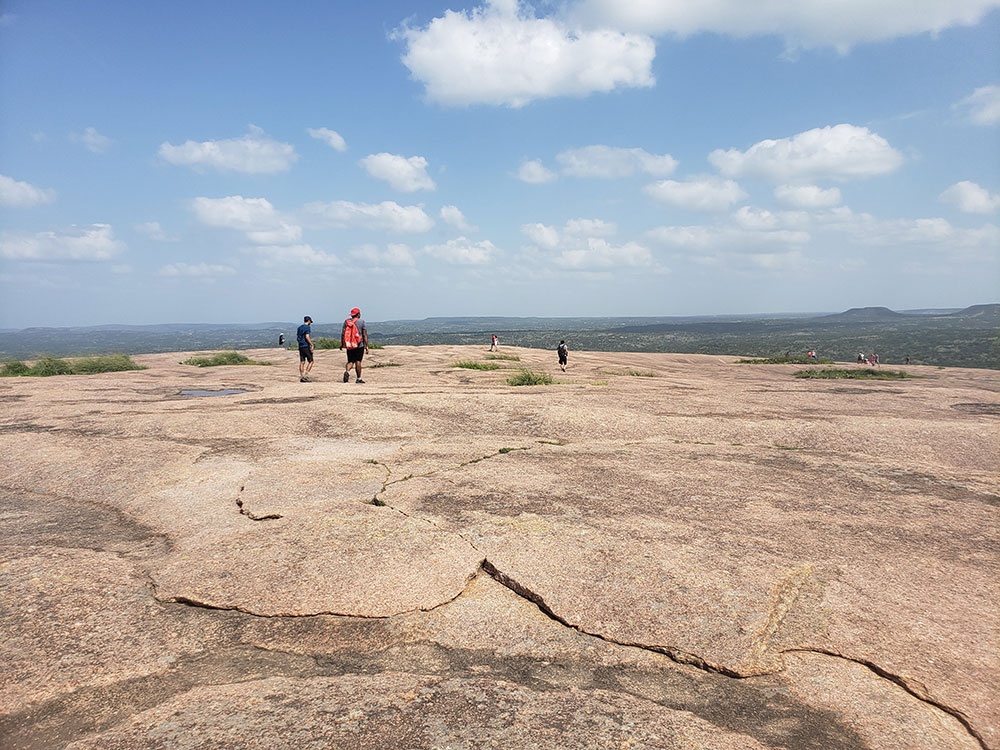
The park's signature experience is the climb up the granite dome itself via the Summit Trail, rewarded with sweeping panoramic views of the surrounding Hill Country. The nearby Interpretive Loop Trail offers an easier, educational walk covering the area's geology, ecology, and history.
Explore Trails Beyond the Summit
Roughly 11 miles of additional trails wind through granite formations, boulder fields, and wooded terrain, circling surrounding domes and connecting the park's major sections.
Go Rock Climbing and Bouldering
Enchanted Rock is one of Texas' premier climbing destinations, with granite slabs, cliffs, and boulder problems ranging from beginner to advanced.
Camp in the Backcountry
Primitive backpack camping is available throughout the natural area for visitors looking to spend the night among the granite domes.
Top Trails
Summit Trail
Distance: 1.3 miles round trip
Difficulty: Moderate
Highlights: A direct climb to the top of Enchanted Rock with sweeping panoramic views.
Loop Trail
Distance: 4.6 miles
Difficulty: Moderate
Highlights: Circles the base of Enchanted Rock, passing surrounding domes and rock formations.
Echo Canyon Trail
Distance: 3 miles round trip
Difficulty: Moderate to challenging
Highlights: Boulder fields and a dramatic, narrow canyon.
Turkey Pass Trail
Distance: 2.1 miles
Difficulty: Moderate
Highlights: Connects the park's major trail sections with wide Hill Country views.
Interpretive Loop Trail
Distance: Short loop
Difficulty: Easy
Highlights: An educational walk covering the park's geology, ecology, and history.
This article is based on publicly available information about Enchanted Rock State Natural Area, as well as material from the Wikipedia article "Enchanted Rock", used under the Creative Commons Attribution-Share-Alike License 3.0.