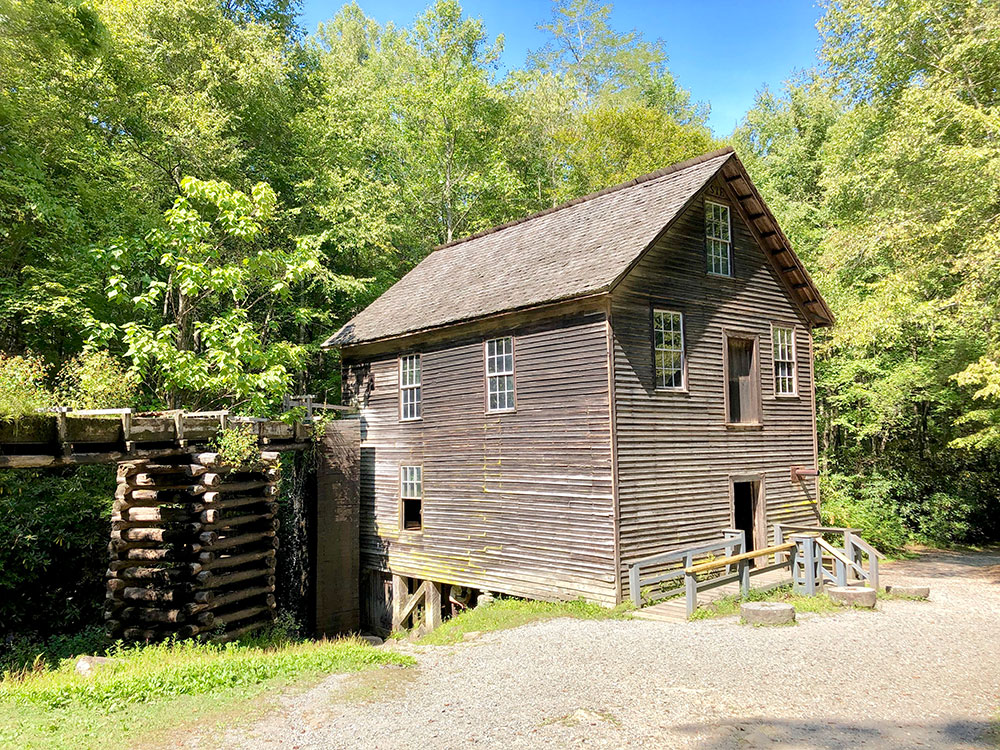
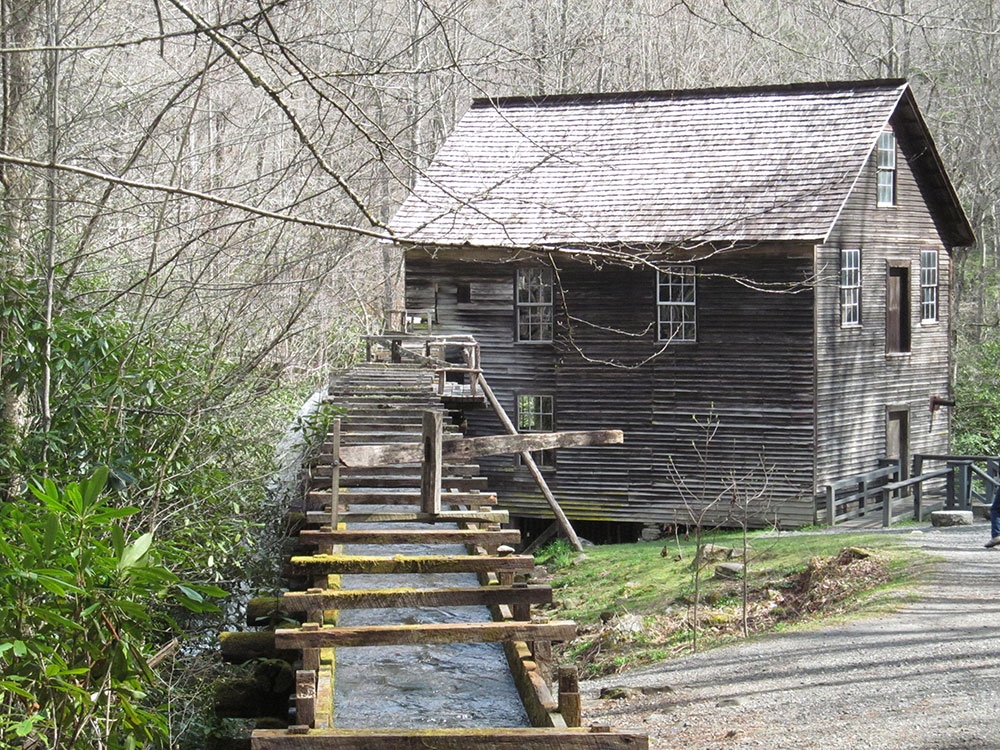
Historic water-powered gristmill dating to 1886 that demonstrates traditional corn-grinding methods using a turbine-driven milling system.
General Information
Also open Thanksgiving weekend
Grounds are open daily year-round
Great Smoky Mountains National Park parking tag required for vehicles parked longer than 15 minutes
How to Get There
From Cherokee, NC (2 mi): Take US-441 N into Great Smoky Mountains National Park, continue about one-half mile past the Oconaluftee Visitor Center, then turn left onto Mingus Mill Access Road and follow it to the parking area.
Mingus Mill was built in 1886 by the millwright Sion Thomas Early of Sevier County, Tennessee. Early did the work for John Mingus, a son of John Jacob Mingus. Early completed the mill in three months for a cost of $600. The mill operated at wholesale and retail levels until the National Park Service purchased the property in 1934. The mill was restored in 1937, closed during World War II, and reopened in 1968.
Water diverted from Mingus Creek via a sluice (canal) and a wooden flume turns two turbines which provide power to the mill. An iron shaft connects the turbines to grindstones on the first floor and a wheat cleaner and bolting chest on the second floor (the latter two via a series of pulleys). Wheat or corn is first transported by bucket belt to the wheat cleaner, which is essentially a fan which clears the grain of dirt and excess material, and then drops it back to the first floor. The cleaned grain is then fed into the grindstones, which break it down into flour (or cornmeal). The flour is then transported back to the second floor and fed into the bolting chest, which uses bolts of progressively coarser cloth to separate the flour into different grades.
While the mill's turbine is not as photogenic as the overshot wheels that power mills such as the Cable Mill at Cades Cove, it was more efficient and required less water power to operate. The turbine generated approximately 11 horsepower (8.2 kW) turning at 400 rpm.
Aden Carver, who arrived in Oconaluftee in the mid-19th century, helped Early build the mill in 1886. When the mill was restored in 1937, Carver, then in his 90s, aided in its restoration.
This article uses material from the Wikipedia article "Oconaluftee (Great Smoky Mountains)", which is released under the Creative Commons Attribution-Share-Alike License 3.0