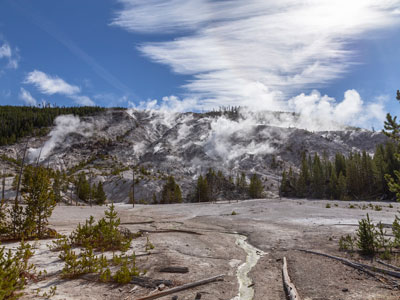

Steaming mountainside thermal area containing hundreds of fumaroles that continuously vent hot gases and steam from Yellowstone's volcanic system.
Private vehicle: $35 (7-day pass)
Motorcycle: $30 (7-day pass)
Individual (walk/bike): $20 (7-day pass)
Annual Yellowstone Pass: $70
How to Get There
From Gardiner (18 mi): Enter Yellowstone National Park through the North Entrance, travel south past Mammoth Hot Springs on Grand Loop Road, and stop at the roadside pullout directly below Roaring Mountain.
Overview
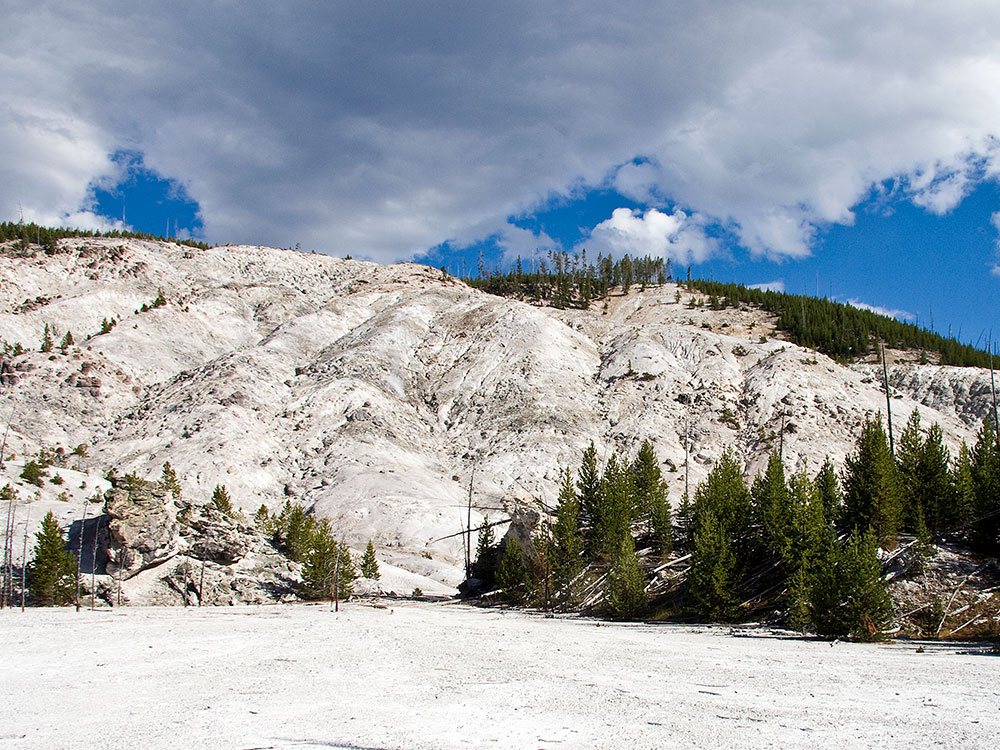
The Roaring Mountain thermal area is one of Yellowstone National Park's most distinctive geothermal landscapes. Located between Mammoth Hot Springs and Norris Geyser Basin, the mountainside is covered with hundreds of active fumaroles that release steam and volcanic gases through cracks in the rock. During the late nineteenth and early twentieth centuries, the escaping steam produced such a loud roaring sound that it could reportedly be heard for miles, giving the feature its memorable name. Although the roar has diminished as geothermal activity shifted over time, the mountain remains an impressive display of Yellowstone's active volcanic system.
Today, visitors can observe steam rising from numerous vents scattered across the barren slopes, creating a dramatic contrast with the surrounding forests. The area provides an excellent example of how Yellowstone's geothermal features continuously evolve as underground water pathways and heat sources change. Easily viewed from a roadside overlook, Roaring Mountain offers a fascinating glimpse into the immense geothermal forces operating beneath the Yellowstone Plateau and serves as a reminder that the park sits atop one of the world's largest active volcanic systems.
This article uses material from the Wikipedia articles and official tourism pages for Roaring Mountain and Yellowstone National Park, which are released under the /by-sa/3.0/">Creative Commons Attribution-Share-Alike License 3.0.

-1000.jpg)
.jpg)