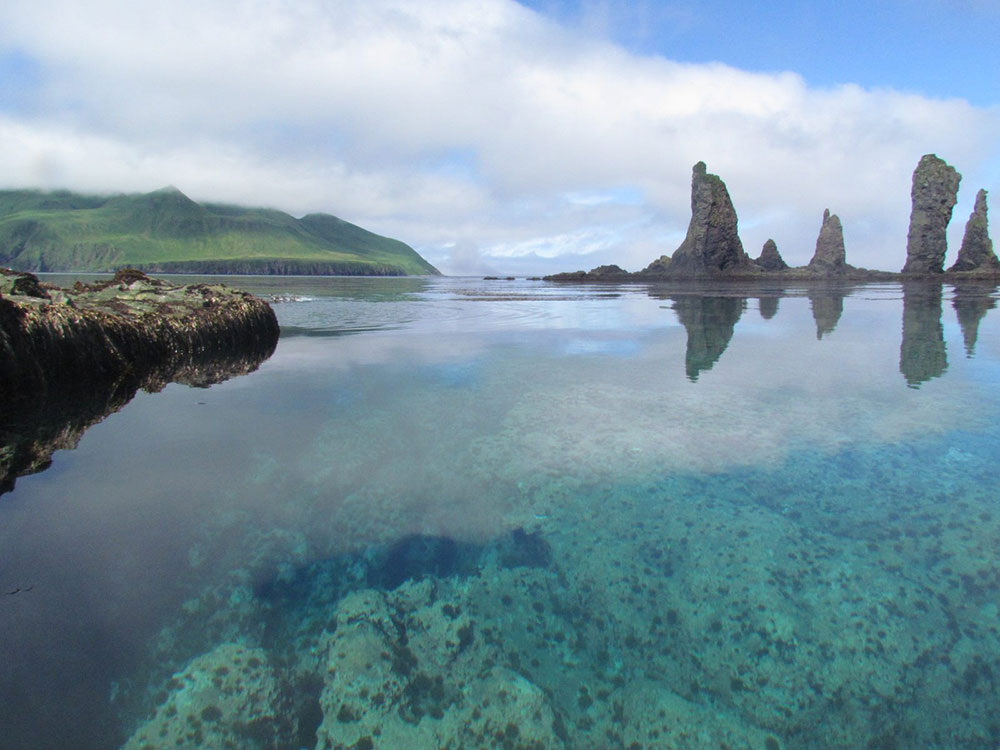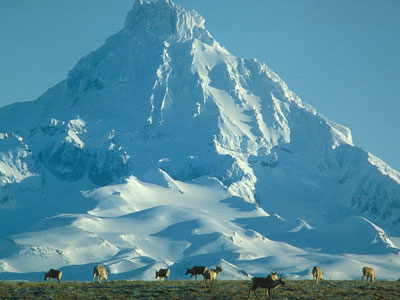

Wildlife refuge comprising 2,400 islands, headlands, rocks, islets, spires and reefs in Alaska, featuring diverse landforms and terrains, including tundra, rainforest, cliffs, volcanoes, beaches, lakes, and streams
General Information
How to Get There
From Anchorage, AK (~220 mi): Fly Alaska Airlines to Homer Airport (HOM) ~45 minutes, then arrange a charter boat or floatplane from Homer to the refuge islands, as the headquarters is in Homer and no roads access the refuge islands.
Overview
Alaska Maritime National Wildlife Refuge covers about 2,400 islands, headlands, rocks, and islets stretching from Southeast Alaska to the Arctic, including most of the Aleutian Islands, and is famous for its seabirds: about 75 percent of Alaska's nesting seabirds and 15 to 30 million birds of 55 species, including puffins, murres, and auklets. The headquarters and visitor center are in Homer, and access is by boat or floatplane.
Things to Do
Explore America's Largest Maritime Wildlife Refuge
Alaska Maritime National Wildlife Refuge stretches across much of Alaska's coastline, encompassing thousands of islands, offshore rocks, reefs, headlands, and marine environments from Southeast Alaska through the Aleutian Islands and into the Arctic. The refuge protects critical habitat for millions of seabirds, marine mammals, and other wildlife, making it one of the most important conservation areas in North America.
Observe Millions of Seabirds
The refuge is best known for its extraordinary seabird colonies. More than 30 species of seabirds nest throughout the refuge, including puffins, murres, auklets, kittiwakes, and fulmars. Many islands host nesting colonies containing hundreds of thousands or even millions of birds, creating one of the world's greatest wildlife spectacles.
Enjoy Exceptional Wildlife Viewing
Visitors can observe a wide variety of wildlife throughout the refuge, including sea otters, Steller sea lions, harbor seals, whales, and numerous seabird species. Once visitors reach refuge lands or surrounding waters, wildlife viewing opportunities are often abundant due to the area's rich marine ecosystems.
Take Boat Tours to Seabird Colonies
Boat excursions departing from communities such as Homer, Seward, and Sitka provide some of the easiest access to refuge lands. Popular destinations include the Chiswell Islands, St. Lazaria Island, Kachemak Bay, and other offshore seabird colonies where visitors can observe nesting birds, marine mammals, and dramatic coastal landscapes.
Visit the Islands and Ocean Visitor Center
Located in Homer, the Alaska Maritime National Wildlife Refuge Visitor Center offers interactive exhibits, educational displays, wildlife presentations, and information about the refuge's ecosystems. Visitors can learn about seabird conservation, marine research, and the unique environments protected throughout the refuge.
Walk the Beluga Slough Trail
Beginning near the visitor center, the Beluga Slough Trail follows a combination of gravel paths and boardwalks through wetland habitats before reaching Bishop's Beach. The trail provides opportunities to observe shorebirds, waterfowl, sandhill cranes, and other wildlife while enjoying views of the surrounding landscape.
Explore the Pribilof Islands
The Pribilof Islands are among the refuge's premier wildlife destinations. These remote islands are home to large colonies of seabirds, northern fur seals, and unique Aleut cultural history. Visitors can participate in guided tours and enjoy exceptional birdwatching opportunities.
Watch Whales and Marine Mammals
The waters surrounding refuge islands support a rich diversity of marine life. Depending on the location and season, visitors may observe humpback whales, orcas, sea otters, harbor seals, Steller sea lions, and porpoises while exploring coastal areas or traveling by boat.
Top Trails
Beluga Slough Trail
Length: Approximately 1.2 miles one way
Elevation Gain: Minimal
Difficulty: Easy
This accessible trail extends from the Alaska Maritime National Wildlife Refuge Visitor Center to Bishop's Beach. The route passes through wetlands and boardwalk sections where visitors may observe shorebirds, ducks, sandhill cranes, and other wildlife.
Bishop's Beach Shoreline Walk
Length: Variable shoreline route
Elevation Gain: Minimal
Difficulty: Easy
Accessible from the Beluga Slough Trail, Bishop's Beach offers opportunities for beachcombing, birdwatching, photography, and marine wildlife viewing. The shoreline also provides beautiful views of Kachemak Bay and surrounding mountains.
St. Paul Island Birding Routes
Length: Multiple route options
Elevation Gain: Minimal
Difficulty: Easy
On St. Paul Island in the Pribilofs, visitors can explore a network of roads and walking routes that provide access to some of Alaska's premier seabird viewing locations. The island is internationally recognized for birdwatching and wildlife photography opportunities.
This article uses material from the Wikipedia article and official pages for Alaska Maritime National Wildlife Refuge, Alaska Maritime National Wildlife Refuge Activities, released under the Creative Commons Attribution-Share-Alike License 3.0.
-1000.jpg)
.jpg)