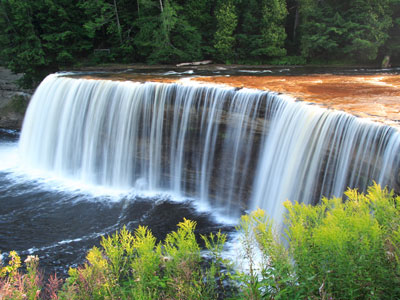

State Park that follows the Tahquamenon River as it passes over Tahquamenon Falls which include a single 50-foot drop, the Upper Falls, plus the cascades and rapids collectively called the Lower Falls
General Information
Park access generally available from 8:00am to 10:00pm
Some facilities, campgrounds, and concessions operate seasonally
Nonresident Daily Pass: $12
Nonresident Annual Pass: $42
Michigan resident Recreation Passport fees vary based on vehicle registration
How to Get There
From Paradise, MI (4 mi): Take M-123 south from Paradise for approximately 4 miles to the Upper Falls area of Tahquamenon Falls State Park, where visitors can access overlooks, boardwalks, hiking trails, and the park's main visitor facilities.
Overview
The Tahquamenon Falls State Park is a 46,179-acre (186.88 km2) state park in Michigan. It is the second largest of Michigan's state parks. Bordering on Lake Superior, most of the park is located within Whitefish Township in Chippewa County, with the western section of the park extending into McMillan Township in Luce County. The nearest town of any size is Paradise.
Tahquamenon Falls State Park follows the Tahquamenon River as it passes over Tahquamenon Falls and drains into Whitefish Bay, Lake Superior. The Tahquamenon Falls include a single 50-foot (15 m) drop, the Upper Falls, plus the cascades and rapids collectively called the Lower Falls. During the late-spring runoff, the river drains as much as 50,000 U.S. gallons (190,000 L) of water per second, making the upper falls the second most voluminous vertical waterfall east of the Mississippi River, after only Niagara Falls.
The North Country Trail passes through the park. There is a seasonal shuttle service that allows hikers to walk between upper falls and lower falls without doubling back, the Tahqua Trekker.
Things to Do
Experience One of the Largest State Parks in the Midwest
Tahquamenon Falls State Park is one of Michigan's largest and most spectacular state parks, encompassing nearly 50,000 acres in the eastern Upper Peninsula. The park is best known for the magnificent Tahquamenon River and its famous waterfalls, surrounded by vast forests, wetlands, and wilderness landscapes. It is one of the premier outdoor destinations in the Great Lakes region.
See the Majestic Upper Falls
The Upper Falls is the park's signature attraction and one of the largest waterfalls east of the Mississippi River. Nearly 200 feet wide with a drop of approximately 50 feet, the falls are famous for their amber-brown color, caused by natural tannins from surrounding cedar swamps. Observation platforms provide outstanding views of this impressive natural wonder.
Explore the Lower Falls
Located a short distance downstream, the Lower Falls consists of a series of smaller cascades surrounding an island. Visitors can access the island by rowboat during warmer months and enjoy scenic views, photography opportunities, and peaceful riverside settings.
Enjoy Year-Round Outdoor Recreation
The park offers hiking, fishing, canoeing, kayaking, camping, wildlife viewing, snowmobiling, snowshoeing, cross-country skiing, and nature photography. Its vast wilderness and four-season recreation opportunities make it a favorite destination throughout the year.
Observe Wildlife and Northern Forest Ecosystems
Tahquamenon Falls State Park protects extensive forests of pine, cedar, maple, and birch that provide habitat for black bears, moose, white-tailed deer, wolves, foxes, beavers, bald eagles, and numerous migratory birds. The park is ideal for wildlife observation and experiencing Michigan's natural beauty.
Top Trails
Upper Falls Trail
Length: Approximately 0.5 miles round trip
Elevation Gain: Minimal
Difficulty: Easy
This accessible trail leads from the visitor area to multiple observation platforms overlooking the Upper Falls. It provides some of the best waterfall views in the Midwest and is suitable for visitors of all abilities.
River Trail
Length: Approximately 4 miles one way
Elevation Gain: Moderate
Difficulty: Moderate
Connecting the Upper Falls and Lower Falls, this scenic trail follows the Tahquamenon River through beautiful northern forest landscapes. Hikers enjoy river views, wildlife sightings, and opportunities to experience the park's wilderness character.
Lower Falls Trail
Length: Approximately 0.5 miles loop
Elevation Gain: Minimal
Difficulty: Easy
This family-friendly trail provides access to the Lower Falls viewing areas and river shoreline. Visitors can observe the cascading waterfalls and enjoy a peaceful forest setting.
North Country National Scenic Trail
Length: Variable distances available
Elevation Gain: Moderate
Difficulty: Easy to Moderate
Sections of the North Country National Scenic Trail pass through the park, offering extended hiking opportunities through remote forests, river valleys, and diverse natural habitats in Michigan's Upper Peninsula.
Sources: Michigan Department of Natural Resources official Tahquamenon Falls State Park information, including details on the Upper Falls, Lower Falls, hiking trails, camping, wildlife viewing, paddling, and year-round recreation opportunities. https://www.michigan.gov/dnr/places/state-parks/tahquamenon-falls-state-park
Additional information verified through Michigan DNR visitor resources covering the River Trail, North Country National Scenic Trail, waterfall overlooks, forest ecosystems, and recreational facilities throughout the park.
Tahquamenon Falls is also called Rootbeer Falls because of its golden-brown color, caused by tannins from cedar swamps that drain into the river. In winter, the ice that accumulates around and in the falls is often colored in shades of green and blue.
Much of the park is undeveloped but it has more than 22 miles (35 km) of hiking trails. Row boats and canoes are rented to use to approach the lower falls. The upper falls are accessible from the visitor center parking lot via a paved walking trail.
Nearby attractions include the Great Lakes Shipwreck Museum at Whitefish Point, and the Point Iroquois Light and Museum at Bay Mills on Whitefish Bay.
Tahquamenon Falls are two different waterfalls on the Tahquamenon River. Both are located near Lake Superior in the eastern Upper Peninsula of Michigan. The water is notably brown in color from the tannins leached from the cedar swamps which the river drains. Consequently, the upper falls is nicknamed, "The Root Beer Falls".
The upper falls is more than 200 feet (60 m) across with a drop of approximately 48 feet (14 m). During the late spring runoff, the river drains as much as 50,000 US gallons (190,000 L) of water per second, making the upper falls the third most voluminous vertical waterfall east of the Mississippi River, after Niagara Falls and Cohoes Falls.
The lower falls, located four miles (6.5 km) downstream, is a series of five smaller falls cascading around an island which can be reached by rowboat. A hiking trail runs between the falls along the riverside, and visitors often play in the lower falls during the summer heat.
The falls are within Tahquamenon Falls State Park, between Newberry and Paradise. They are a popular tourist destination in the Upper Peninsula during all seasons. Snowmobile trails lead almost to the falls, and walkways are kept clear for most of the winter.
This article uses material from the Wikipedia article "Tahquamenon Falls State Park", and "Tahquamenon Falls", which is released under the Creative Commons Attribution-Share-Alike License 3.0
_-_Flickr_-_LadyDragonflyCC_-_),(-1000.jpg)
_-_Flickr_-_LadyDragonflyCC_-_),(.jpg)

