-400.jpg)
.jpg)
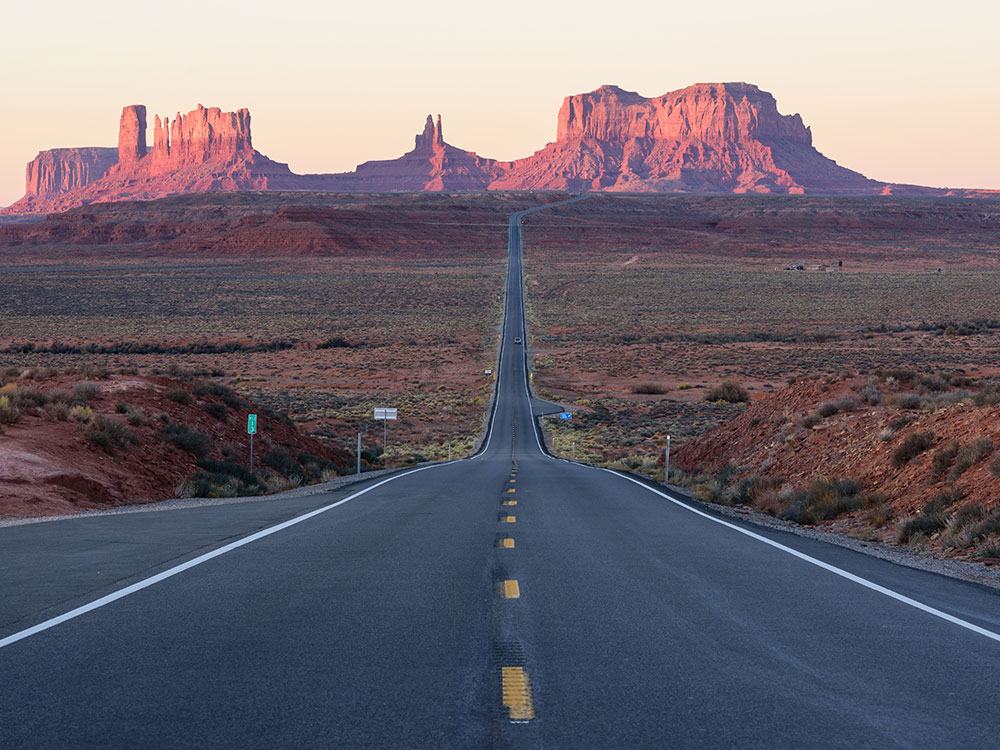
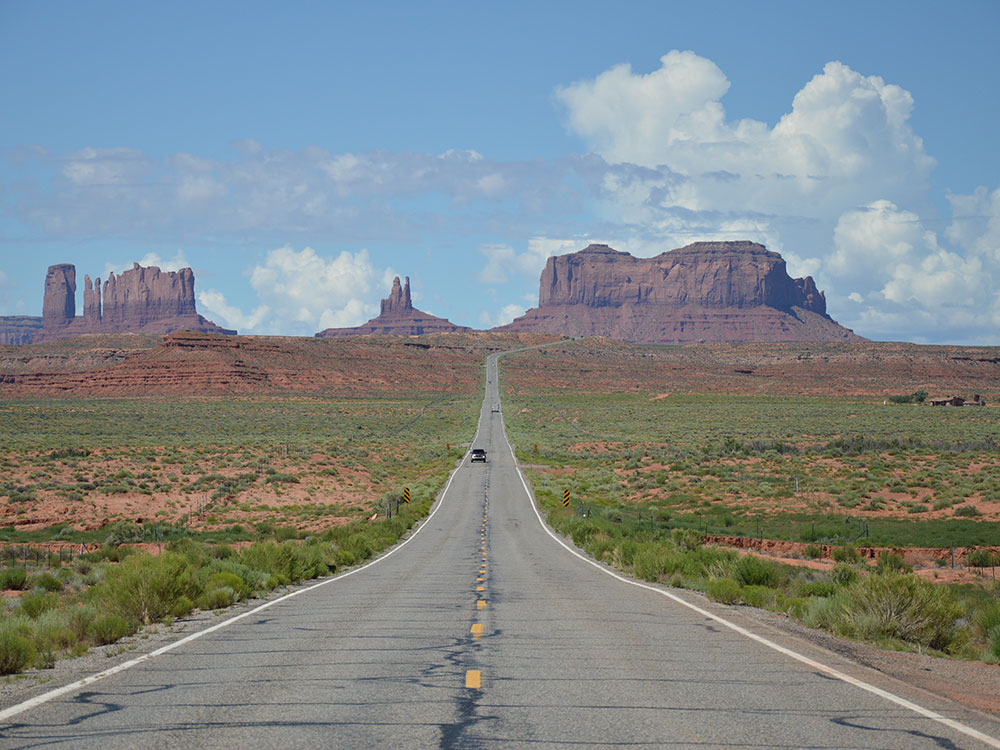
Long, straight desert highway framed by towering red rock formations and expansive skies, offering a cinematic view that has become iconic in American pop culture.
How to Get There
From Page, AZ (134 mi): Follow AZ-98 E to US-160 E in Navajo County. Follow US-160 E to US-163 N/Hwy 163 in San Juan County.
Overview
The scenic stretch of US Route 163 known as Forrest Gump Point offers one of the most iconic vistas in the American Southwest. This seemingly unremarkable bend in the road became legendary after it was featured in the 1994 film Forrest Gump, where the titular character ends his epic cross-country run. The view is unforgettable: a ribbon of asphalt stretching toward the horizon, flanked by the towering buttes and mesas of Monument Valley. Visitors often stand in the middle of the road to recreate the famous scene, capturing photographs that blend cinematic nostalgia with the raw beauty of the desert landscape. The site is unmarked by formal signage, but a small plaque commemorates the film moment, and GPS coordinates make it easy to find for those in search of a uniquely American pilgrimage.
Beyond its Hollywood fame, Forrest Gump Point is a gateway to the geological and cultural richness of the region. The surrounding terrain, part of the Navajo Nation, is steeped in indigenous history and natural wonder. Nearby attractions like Goosenecks State Park and Valley of the Gods offer additional opportunities to explore the sculpted canyons and winding rivers that define this arid expanse. Best visited at sunrise or sunset, when the light casts dramatic shadows across the red rock formations, the area invites quiet reflection and awe. Though there are no facilities at the site itself, nearby towns such as Mexican Hat and Monument Valley provide lodging and amenities, making it a must-stop for road trippers and film lovers alike.
-1000.jpg)
.jpg)