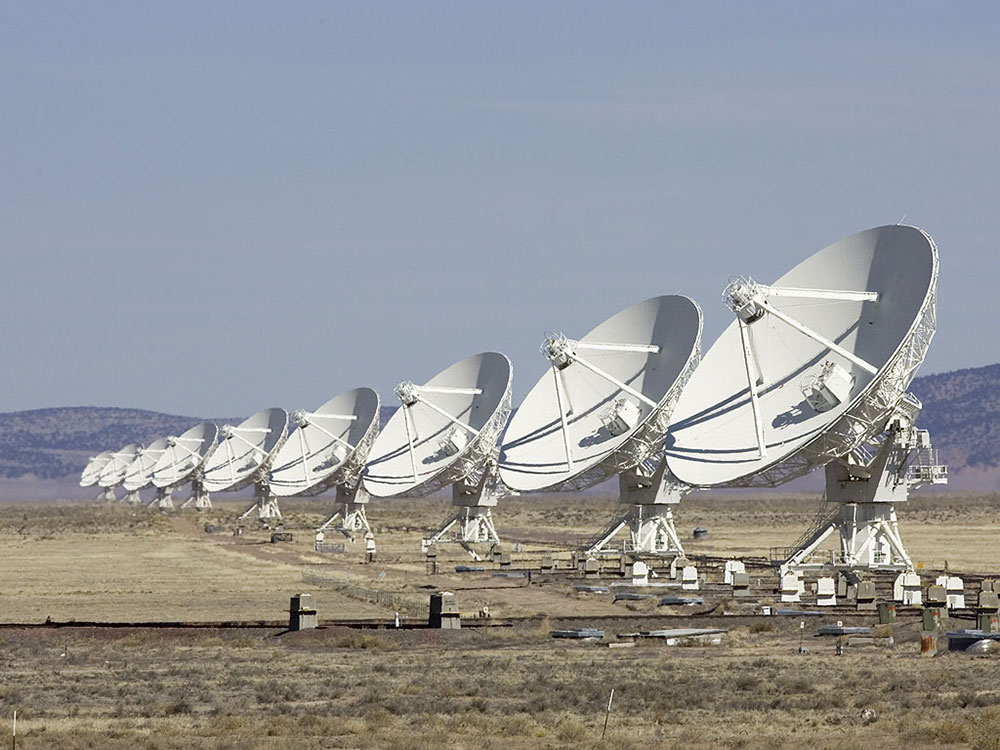

A world-renowned radio astronomy observatory featuring 27 massive dish antennas arranged in a Y-shaped configuration across a high desert plain, designed to study radio emissions from distant cosmic objects.
Closed Thanksgiving Day and Christmas Day
No entry permitted after 4pm
Seniors (65+): $8
Military: $8
Children 12 and under: Free
How to Get There
From Socorro (50 mi): Take US-60 W from Socorro and continue west for approximately 50 miles, then follow signs along Old Highway 60 directly to the observatory entrance.
Overview
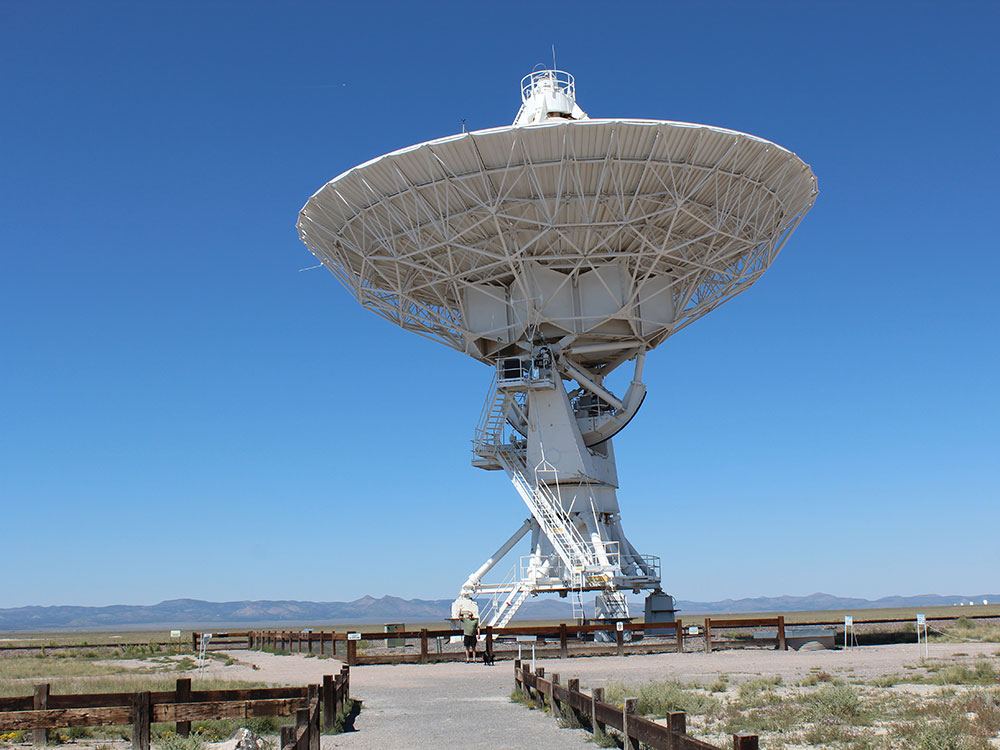
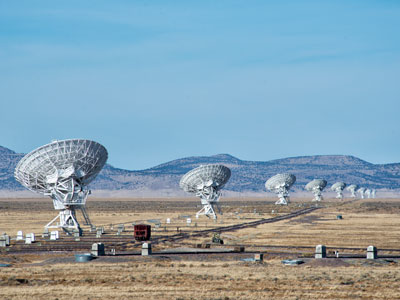
The NRAO Very Large Array is one of the most powerful and recognizable radio astronomy facilities on Earth, where science and landscape merge in striking harmony. Spread across a vast high desert plain, the array consists of 27 enormous dish antennas, each mounted on railroad-style tracks that allow them to be repositioned into different configurations. Working together as a single giant instrument, these antennas detect faint radio waves emitted by distant galaxies, black holes, and stellar formations, transforming invisible signals from deep space into groundbreaking scientific discoveries. Visitors can explore the on-site center, view exhibits, and walk a self-guided trail that leads close to one of the towering dishes.
Since its construction in the late 20th century, the observatory has played a pivotal role in advancing humanity’s understanding of the universe, contributing to research on cosmic phenomena ranging from the formation of planets to the behavior of supermassive black holes. The facility’s remote setting enhances both its scientific mission and its surreal beauty, offering sweeping views of open plains and distant mountains under vast skies. For travelers, the experience is both educational and awe-inspiring—a rare opportunity to stand among instruments that listen to the universe itself.
This article uses material from the Wikipedia articles and official tourism pages for the NRAO Very Large Array, which are released under the Creative Commons Attribution-Share-Alike License 3.0.