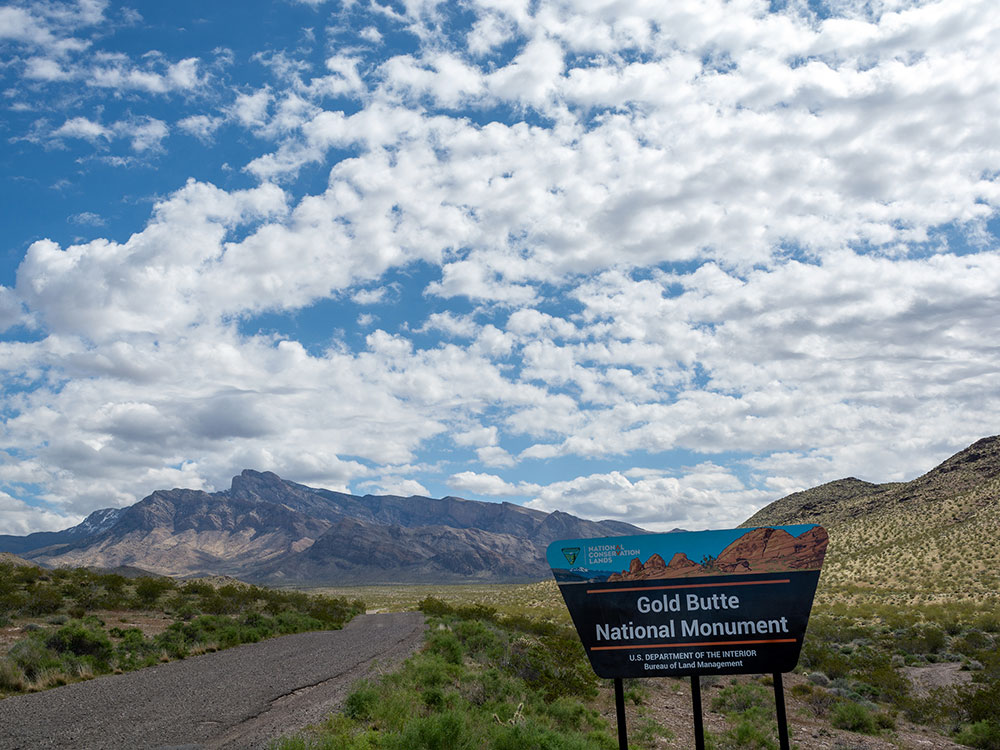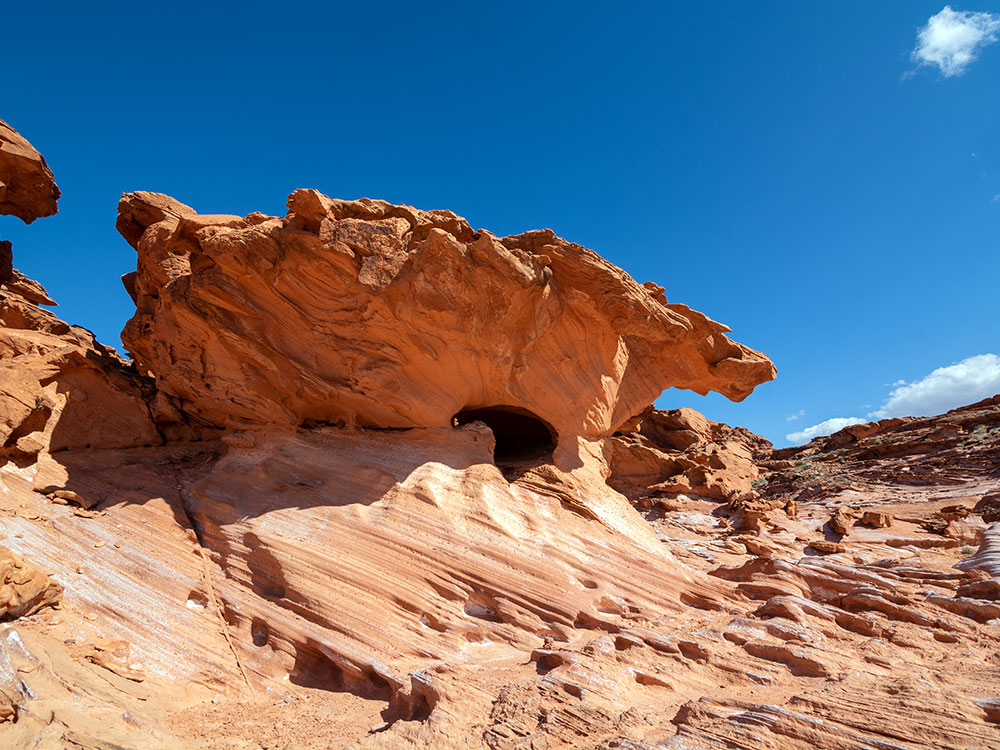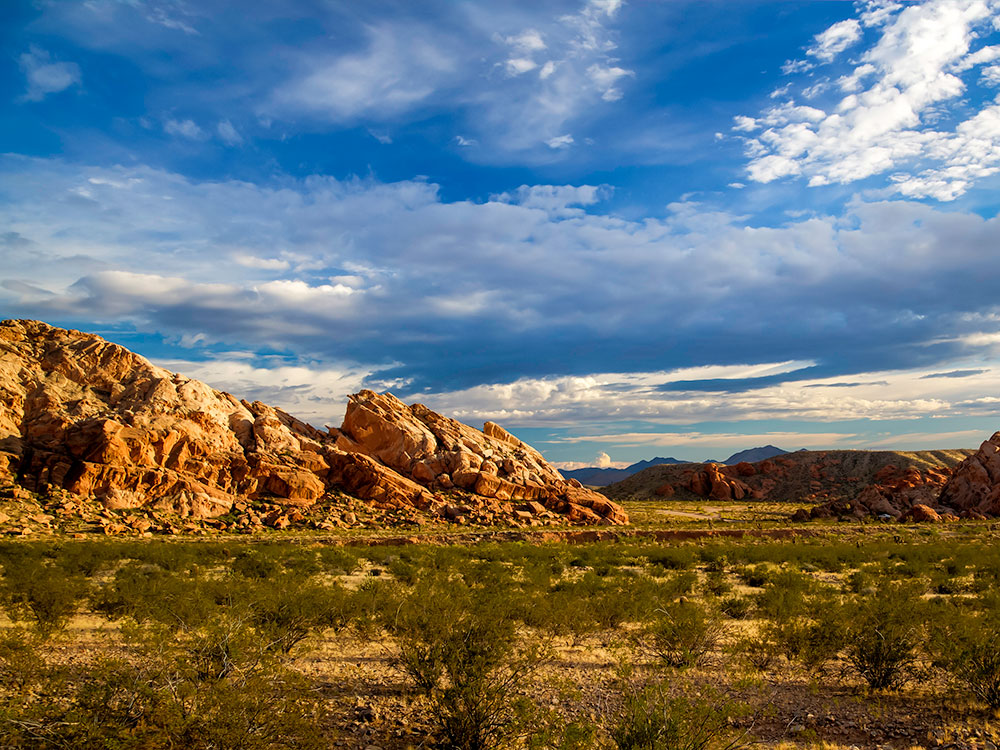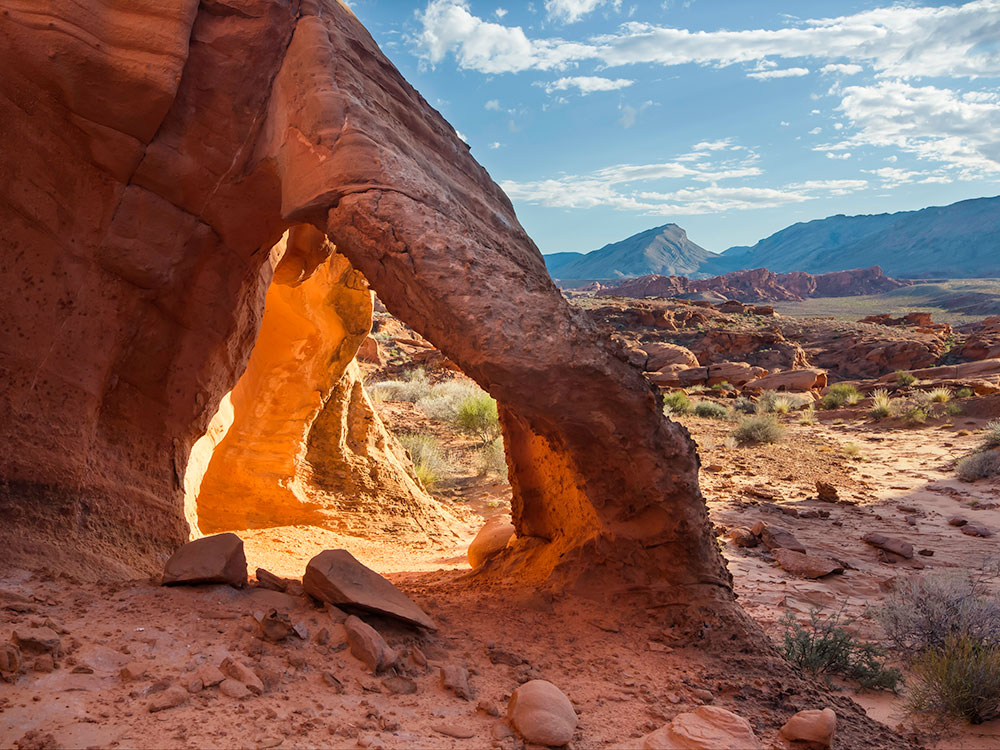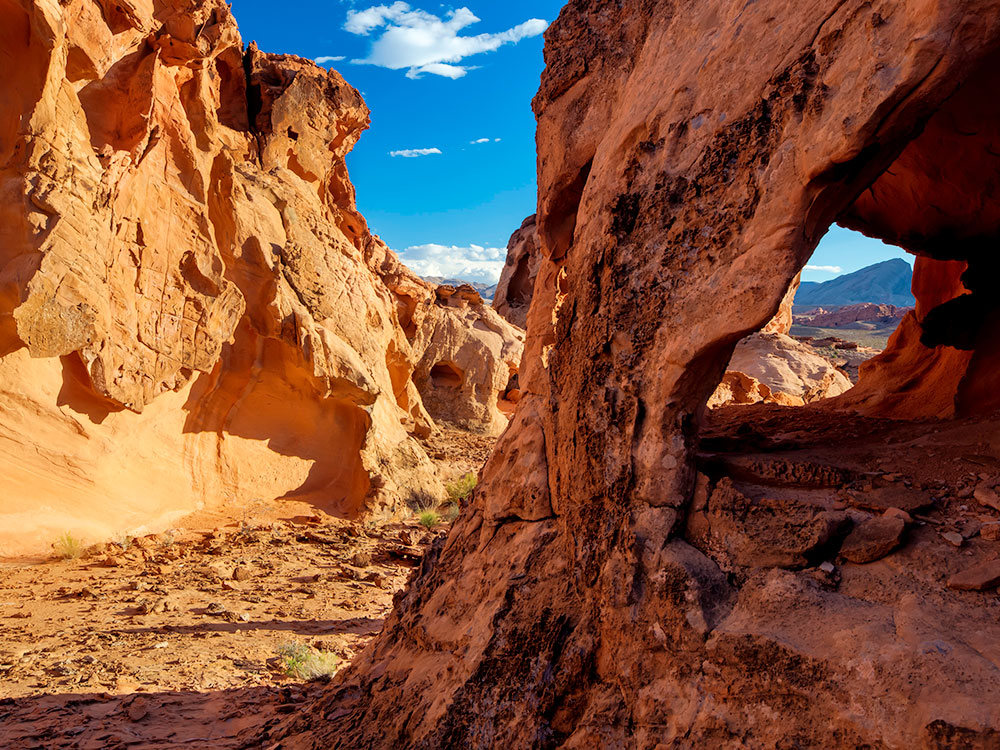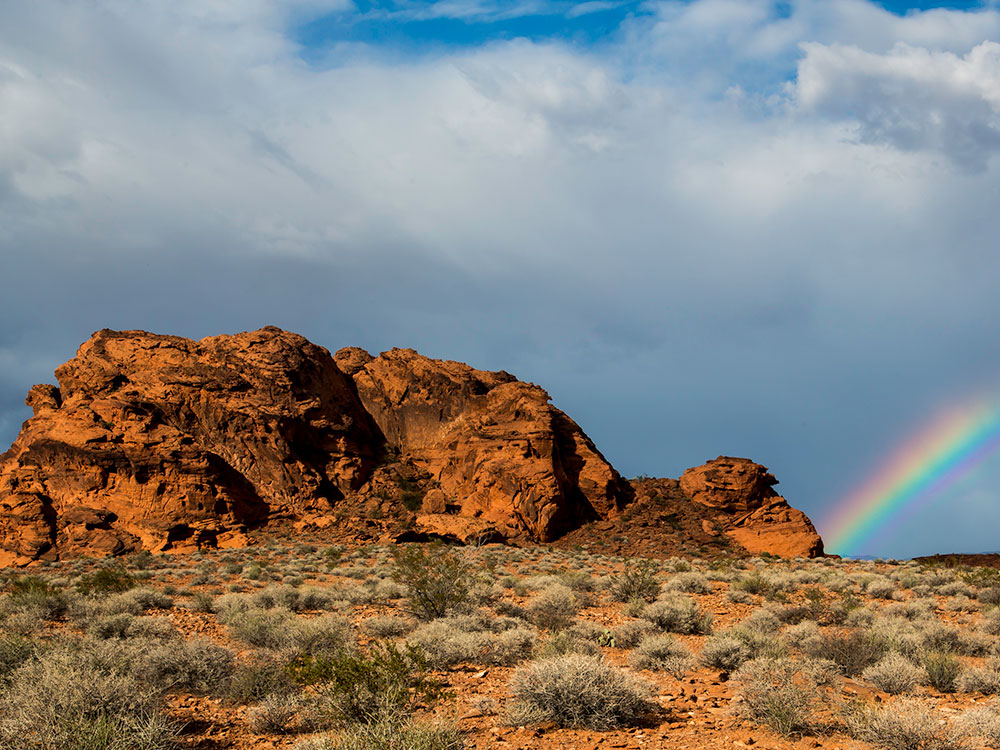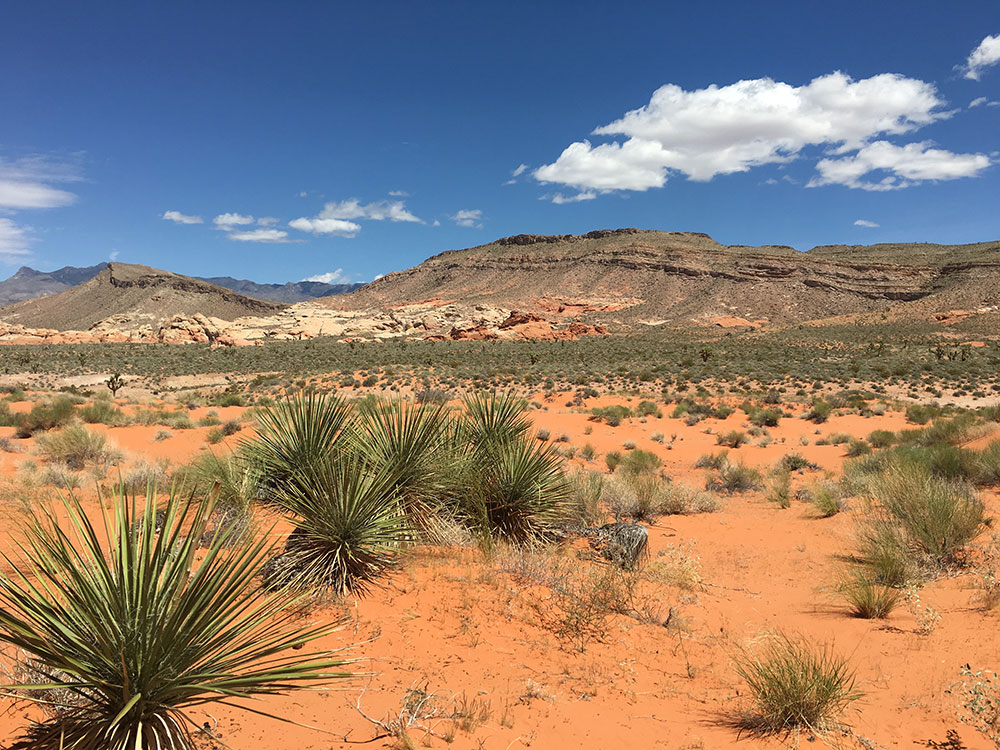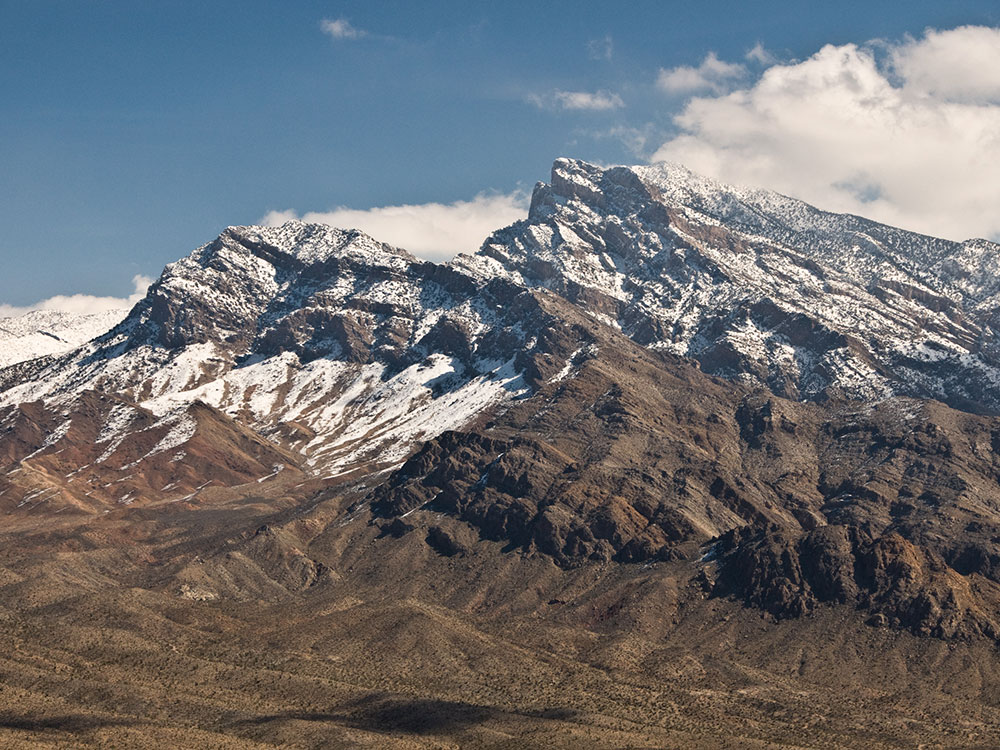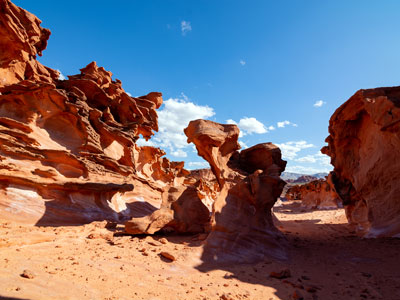

Expansive desert wilderness featuring red sandstone formations, ancient petroglyphs, and rugged backcountry trails ideal for off-road exploration and solitude.
General Information
How to Get There
From Las Vegas (90 mi): Take I-15 N to Exit 112 toward Riverside/Bunkerville, cross the Virgin River bridge, then turn right onto Gold Butte Road and follow it south into the monument.
Overview
Gold Butte National Monument in Clark County, northeast of Las Vegas and south of Mesquite, protects 296,937 acres of Mojave Desert red sandstone, Native rock art, and Joshua tree country. It fills a gap between Lake Mead National Recreation Area and the Grand Canyon-Parashant National Monument. Roads are rough dirt, so you need a high-clearance vehicle and plenty of water, and there are no services.
Highlights
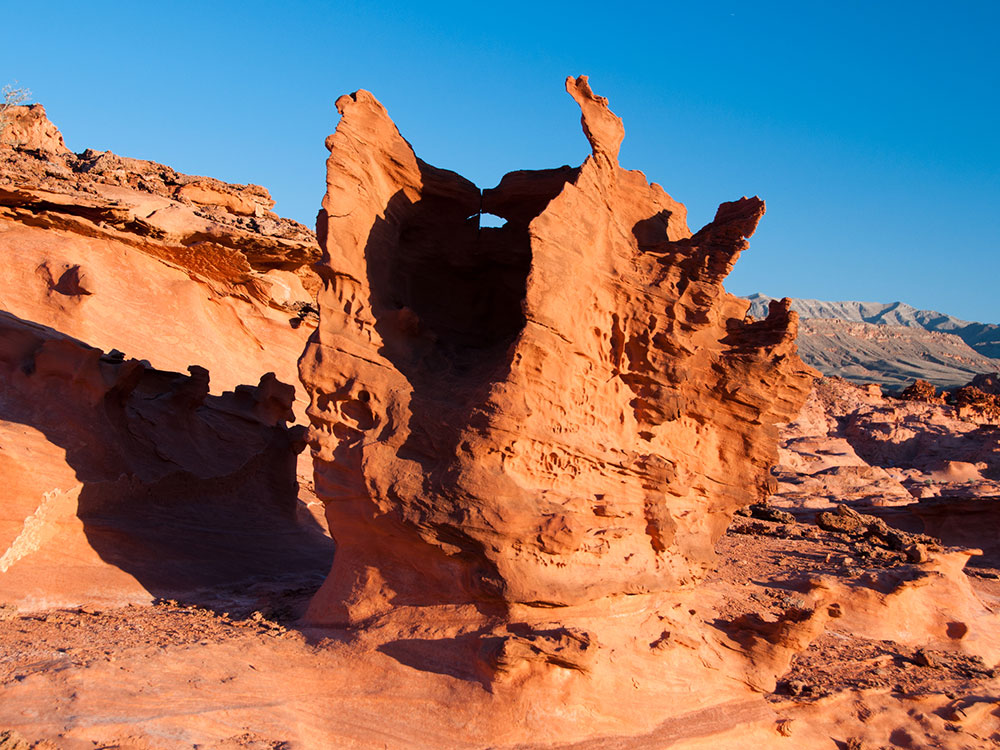
- Little Finland: odd red sandstone formations
- Falling Man and Whitney Pockets: petroglyphs and sandstone alcoves
- Wildlife: desert tortoises and bighorn sheep
Things to Do
Explore One of Nevada's Most Remote and Spectacular Desert Landscapes
Gold Butte National Monument protects nearly 300,000 acres of rugged Mojave Desert terrain in southeastern Nevada. The monument is known for its dramatic red sandstone formations, twisting canyons, archaeological sites, desert wildlife, and vast open spaces. Visitors experience a remote landscape rich in natural beauty, cultural history, and outdoor adventure.
Discover Ancient Petroglyphs and Cultural Sites
Gold Butte contains an extraordinary collection of prehistoric rock art, cultural sites, and evidence of human habitation dating back thousands of years. Throughout the monument, visitors can find petroglyph panels and archaeological resources that provide insight into the area's Indigenous history and cultural significance.
Visit Whitney Pocket
Whitney Pocket is one of the monument's most popular destinations and serves as a gateway to the heart of Gold Butte. The area features colorful sandstone formations sculpted by wind and water, primitive camping opportunities, scenic viewpoints, and easy exploration among unique desert rock formations.
Drive the Gold Butte Backcountry Byway
This scenic backcountry route traverses a diverse landscape of red and white sandstone formations, desert valleys, petroglyph sites, historic mining areas, and mountain scenery. The byway eventually reaches the historic mining district of Gold Butte and provides access to many of the monument's most notable attractions.
Top Trails
Little Finland Loop
Length: Approximately 5.4 miles round trip
Elevation Gain: Approximately 250 feet
Difficulty: Moderate
Little Finland is one of Gold Butte's most iconic destinations. The trail leads visitors through an incredible landscape of intricately sculpted sandstone formations that resemble delicate fins, waves, and natural sculptures shaped by thousands of years of erosion.
Whitney Pocket Trail
Length: Approximately 1.6 miles round trip
Elevation Gain: Minimal
Difficulty: Easy to Moderate
This trail explores the colorful sandstone outcrops and desert scenery of Whitney Pocket. The route provides excellent opportunities for photography, wildlife viewing, and discovering the area's unique geological features.
Whitney Pocket Overlook Trail
Length: Approximately 3.2 miles round trip
Elevation Gain: Moderate
Difficulty: Moderate
Visitors hiking to the overlook are rewarded with panoramic views of the monument's rugged terrain, colorful sandstone formations, and expansive Mojave Desert landscapes.
Billy Goat Peak Trail
Length: Approximately 2.6 miles round trip
Elevation Gain: Approximately 900 feet
Difficulty: Moderate
This short but rewarding hike climbs to elevated viewpoints overlooking portions of Gold Butte National Monument. The trail offers expansive desert vistas and excellent opportunities for photography and sightseeing.
Sources: Bureau of Land Management official Gold Butte National Monument information, including details on Whitney Pocket, the Gold Butte Backcountry Byway, recreation opportunities, desert habitats, cultural resources, and monument access. https://www.blm.gov/programs/national-conservation-lands/nevada/gold-butte
Additional information verified through Bureau of Land Management visitor resources covering Gold Butte National Monument's archaeological sites, camping areas, hiking opportunities, scenic drives, and major visitor destinations. https://www.blm.gov/visit/gold-butte-national-monument
Further details on Gold Butte National Monument's history, geology, and cultural significance can be found in the Wikipedia article "Gold Butte National Monument" under the Creative Commons Attribution-Share-Alike License 3.0.
This article uses material from the Wikipedia article "Gold Butte National Monument", which is released under the Creative Commons Attribution-Share-Alike License 3.0