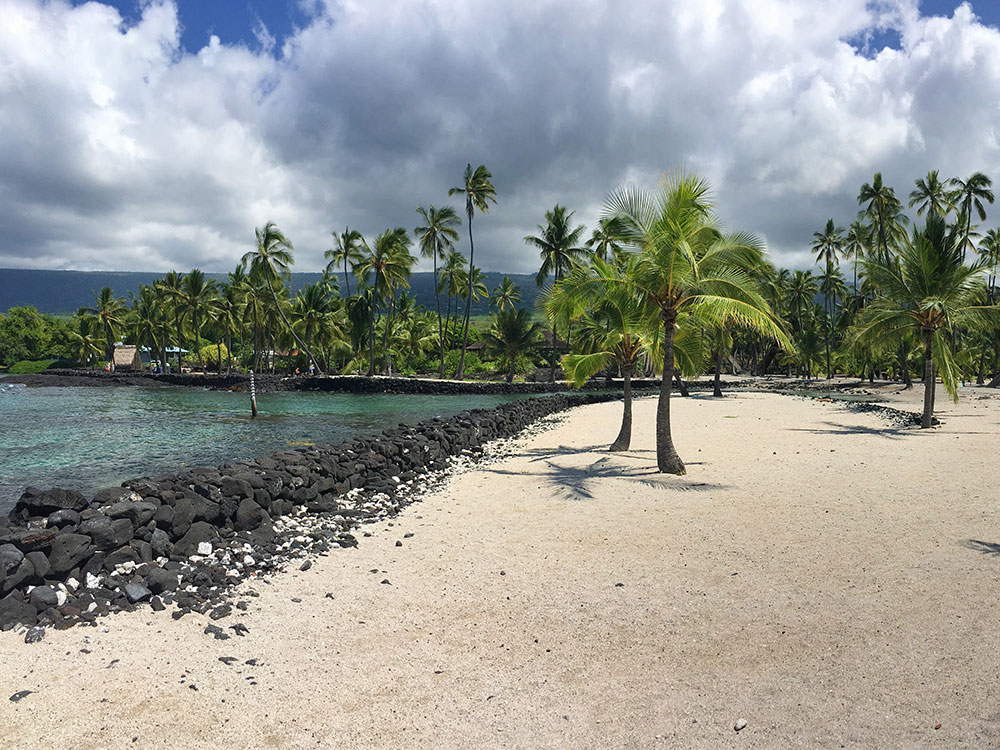
Sacred coastal sanctuary preserving ancient Hawaiian law, royal grounds, and cultural traditions within a lava rock landscape.
General Information
Visitor center open 8:30am to 4:30pm
Individual (walk-in or bicycle): $10
Motorcycle: $15
Annual Pass: $40
How to Get There
From Kona, HI (22 mi): Drive south on HI-11 for about 45 minutes, turn right onto Hōnaunau Beach Road, and follow signs to the park entrance.
Overview
Puʻuhonua o Hōnaunau National Historical Park on the Big Island’s west coast preserves a place of refuge where, until the early 19th century, Hawaiians who broke a kapu (sacred law) could escape certain death. An offender who reached the puʻuhonua was absolved by a priest and freed. Defeated warriors and non-combatants also sought refuge here during battle, and powerful chiefs lived just outside the Great Wall that encloses it.
What to See
- The Great Wall and puʻuhonua: the enclosure of the place of refuge.
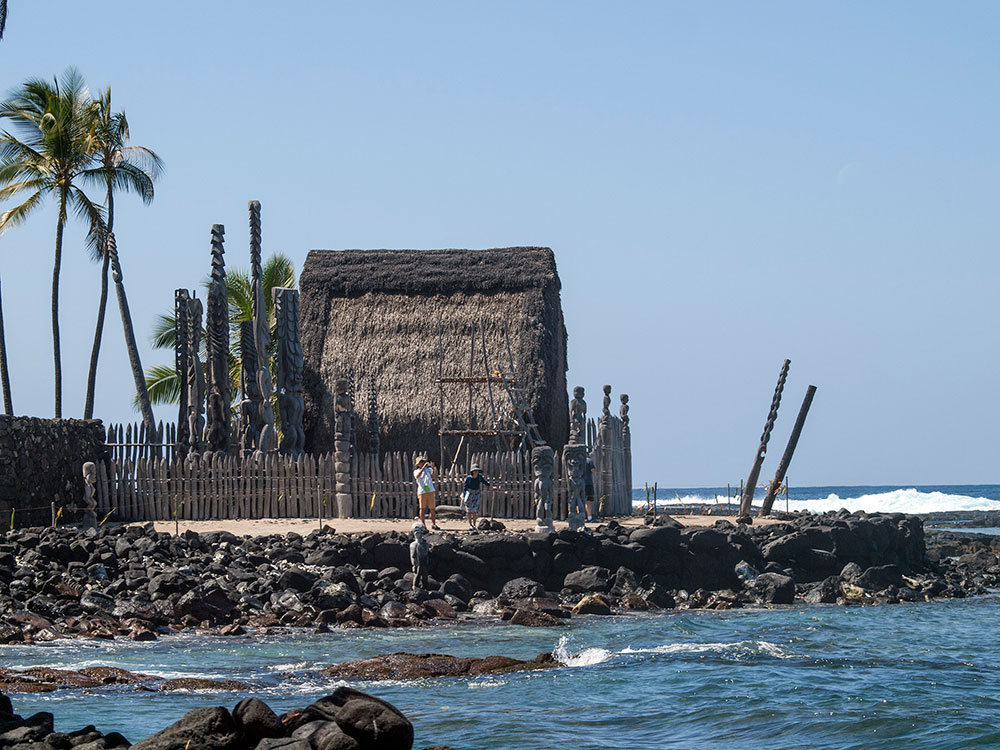
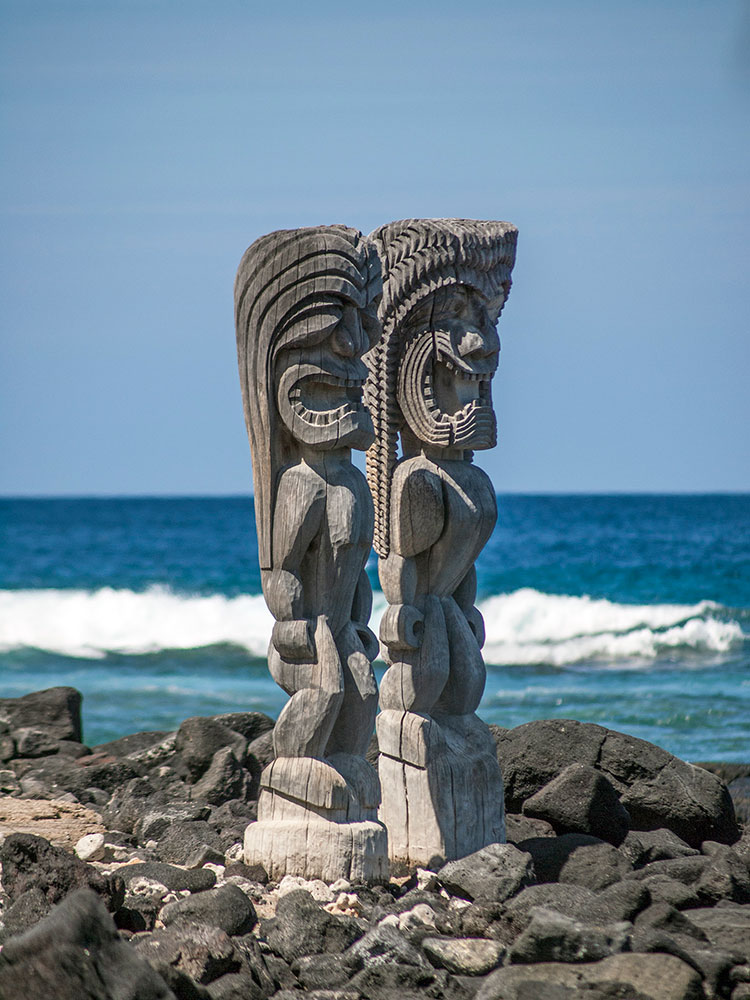
- Hale o Keawe: a reconstructed heiau built around 1650 as a royal burial site, holding 23 remains including that of ruling monarch Keawe‘īkekahiʻaliʻiokamoku. The last burial was a son of Kamehameha I in 1818, and Kaʻahumanu later had the remains moved to the royal mausoleum in Honolulu.
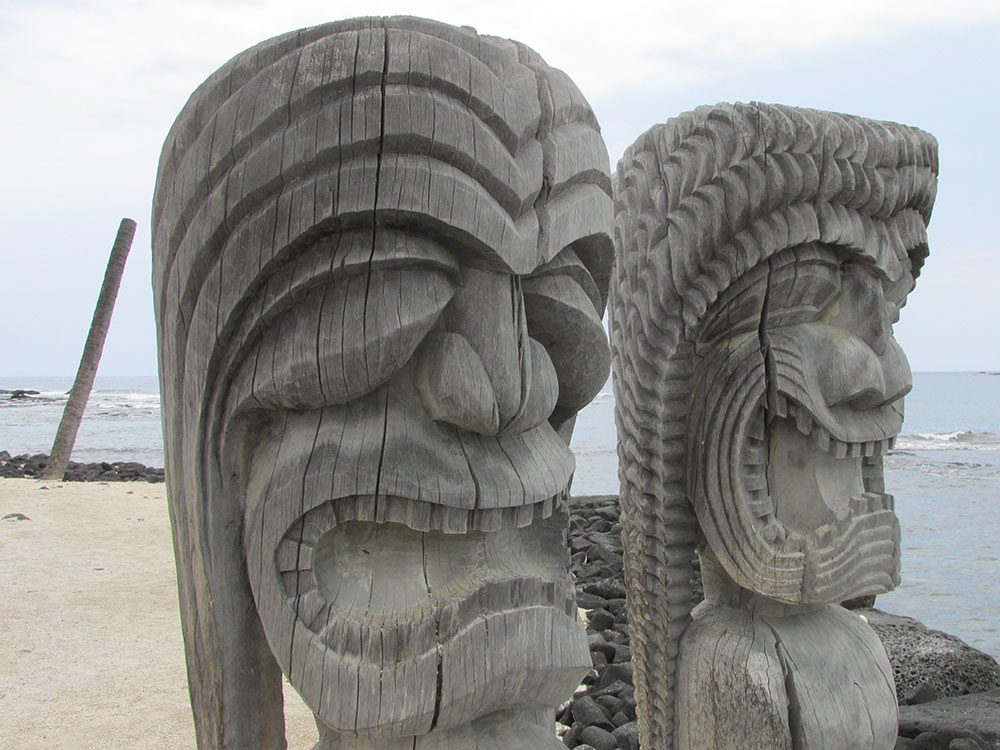
- Other sites: temple platforms, royal fishponds, sledding tracks, coastal village sites and reconstructed thatched structures.
The 420-acre park was established in 1955 as City of Refuge National Historical Park and renamed in 1978. It is one of only four places in Hawaii where the Hawaiian flag can officially fly alone; the others are ʻIolani Palace, Mauna ʻAla and Thomas Square.
This article uses material from the Wikipedia article "Pu'uhonua o Hōnaunau National Historical Park", which is released under the Creative Commons Attribution-Share-Alike License 3.0



_(4529707556)-1000.jpg)
_(4529707556).jpg)