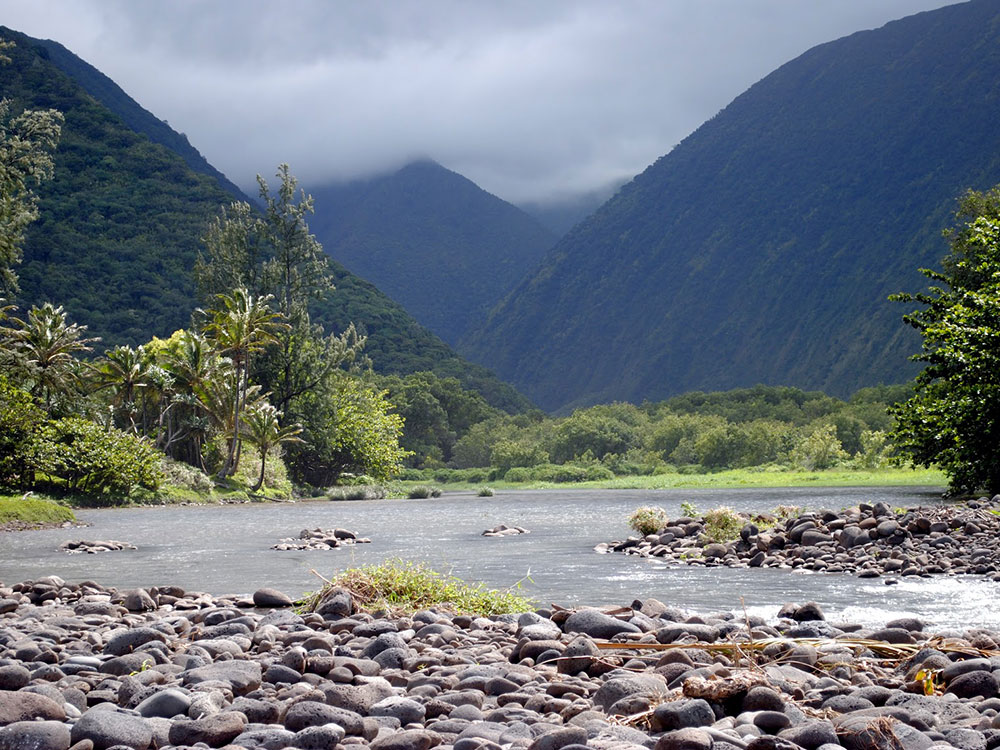
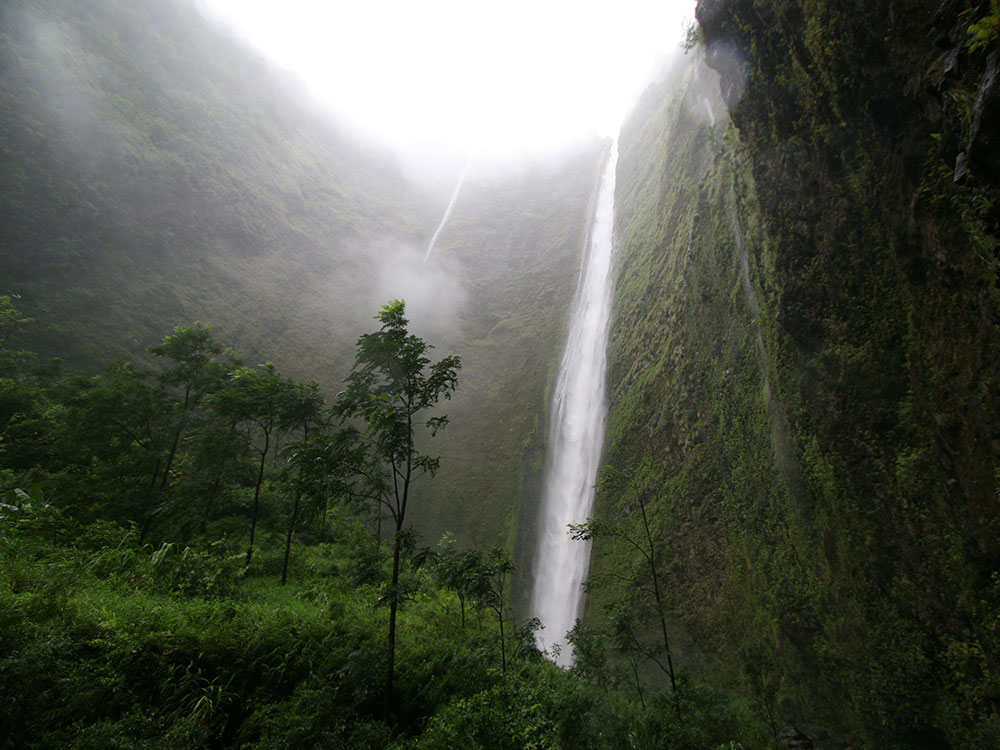
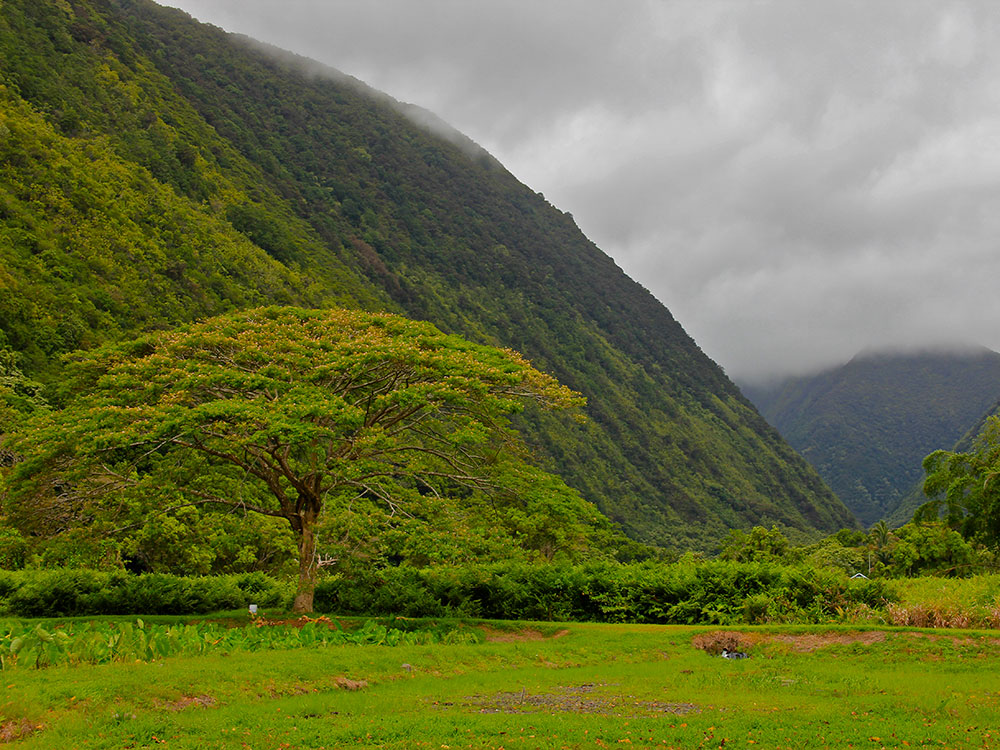
Steep-sided valley with dramatic cliffs, black sand beach, waterfalls, and taro fields, accessible only by guided tour or from a scenic public lookout.
General Information
Valley floor access only via guided tour
Tours operate during daylight hours
Guided valley tours: Typically $70–$100 per person
No private vehicle or pedestrian access to valley floor
How to Get There
From Hilo (50 mi): Take Highway 19 north to Honokaʻa, then turn onto Waipiʻo Valley Road and follow signs to the Waipiʻo Valley Lookout.
Overview
Waipiʻo Valley is a valley located in the Hamakua District of the Big Island of Hawaiʻi. "Waipiʻo" means "curved water" in the Hawaiian language.
The valley was the capital and permanent residence of many early Hawaiian Aliʻi (chiefs/kings) up until the time of King ʻUmi. This was a place celebrated for its nioi tree (Eugenia reinwardtiana) known as the Nioi wela o Paʻakalana ("The burning Nioi of Paʻakalana"). It was the location of the ancient grass palace of the ancient "kings" of Hawaiʻi with the nioi stands. Kahekili II (king of Maui) raided Waipiʻo in the 18th century and burned the four sacred trees to the ground. The first chief who had a court in this valley was called Kahaimoelea.
The valley floor at sea level is almost 2,000 ft (610 m) below the surrounding terrain. A steep road leads down into the valley from a lookout point located on the top of the southern wall of the valley. The road rises 800 feet (240 m) in 0.6 miles (1.0 km) at a 25% average grade, with steeper grades in sections. This is a paved public road but it is open only to 4 wheel drive vehicles. It is the steepest road of its length in the United States. The shore line in the valley is a black sand beach, popular with surfers. A few taro farms are located in the valley. Several large waterfalls fall into the valley to feed the river which flows from the foot of the largest falls at the back of the valley out to the ocean.
A foot trail called Waimanu or Muliwai Trail leads down a steep path to the Waimanu Valley, which is only accessible by the trail or by boat. The trail is accessible to hikers, who need a Waimanu camping permit from the state unless they do the trek as a strenuous day hike. At the upper end of the valley, Waimanu Gap at 2,089 feet (637 m) elevation leads to the south end of Waimanu Valley.
The valley was the site of the final scene in the 1995 sci-fi film Waterworld, at which the main characters found dry land.
It has a role in local Hawaiian folklore as a place where the gateway to Lua-o-Milu (the Underworld) was hidden from view by sand.
This article uses material from the Wikipedia article "Waipio Valley", which is released under the Creative Commons Attribution-Share-Alike License 3.0