.jpg)
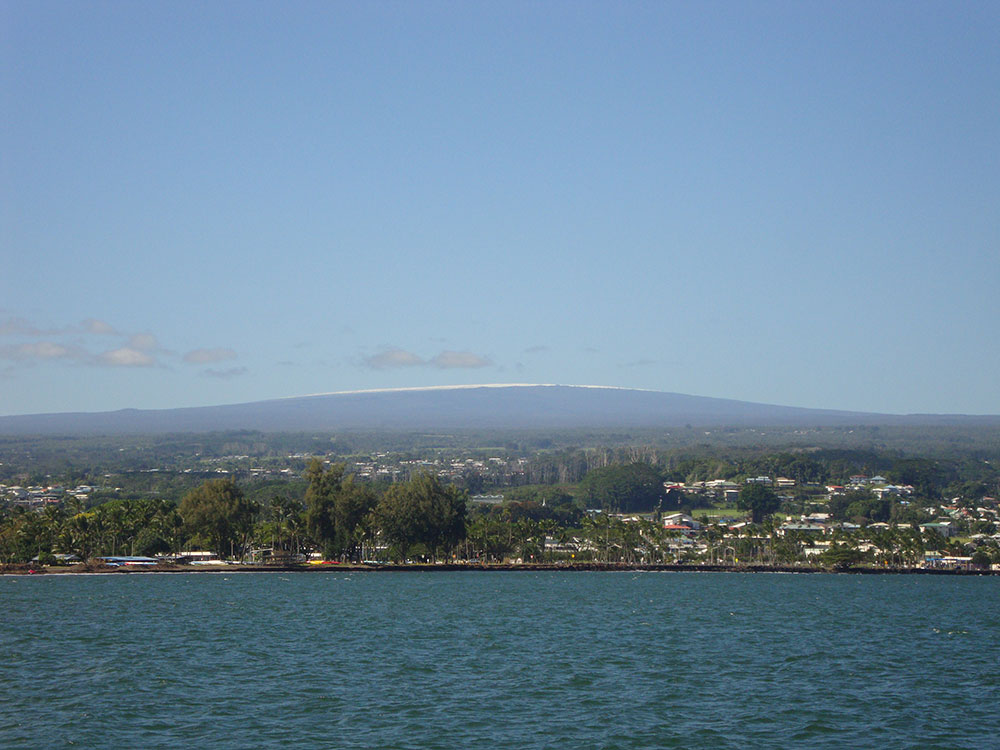
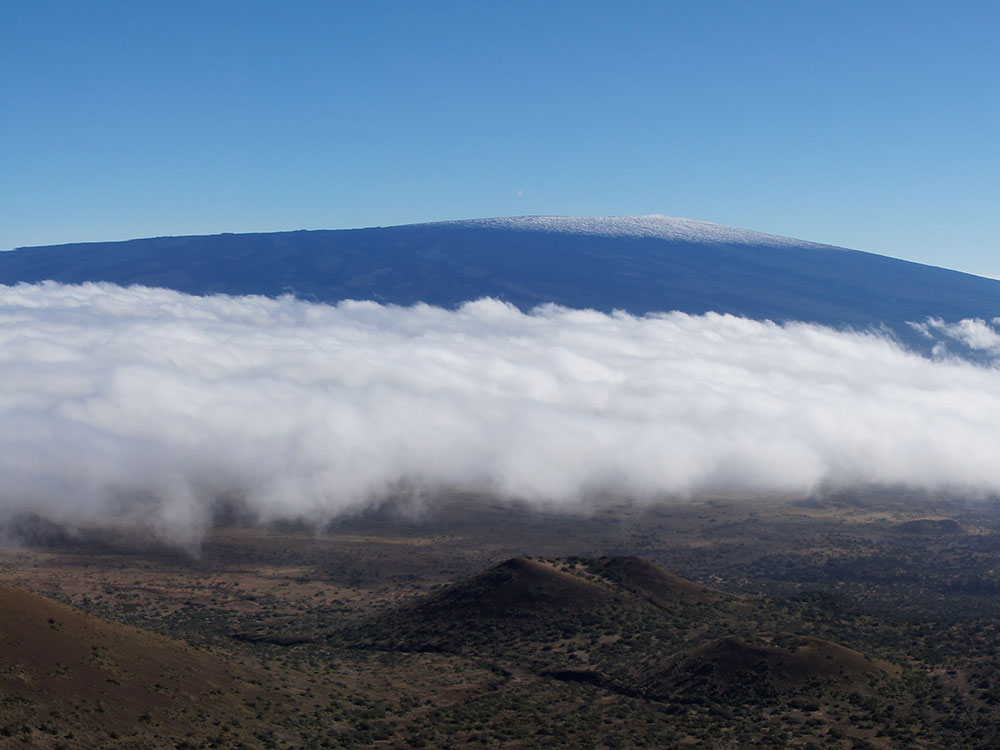
Massive shield volcano with a summit over 13,000 feet, offering rugged backcountry trails, remote cabins, and panoramic views of the island’s volcanic landscape.
General Information
Backcountry trails open daily, weather permitting
Visitor access may be restricted due to volcanic activity
Hawaiʻi Volcanoes National Park entrance: $30 per vehicle, $25 per motorcycle, $15 per pedestrian or bicycle
Backcountry permit: $10 per group (up to 12 people)
How to Get There
From Hilo (40 mi): Take Highway 11 south to Mauna Loa Road, then follow the road to the Mauna Loa Trailhead at the top of the scenic drive.
Overview
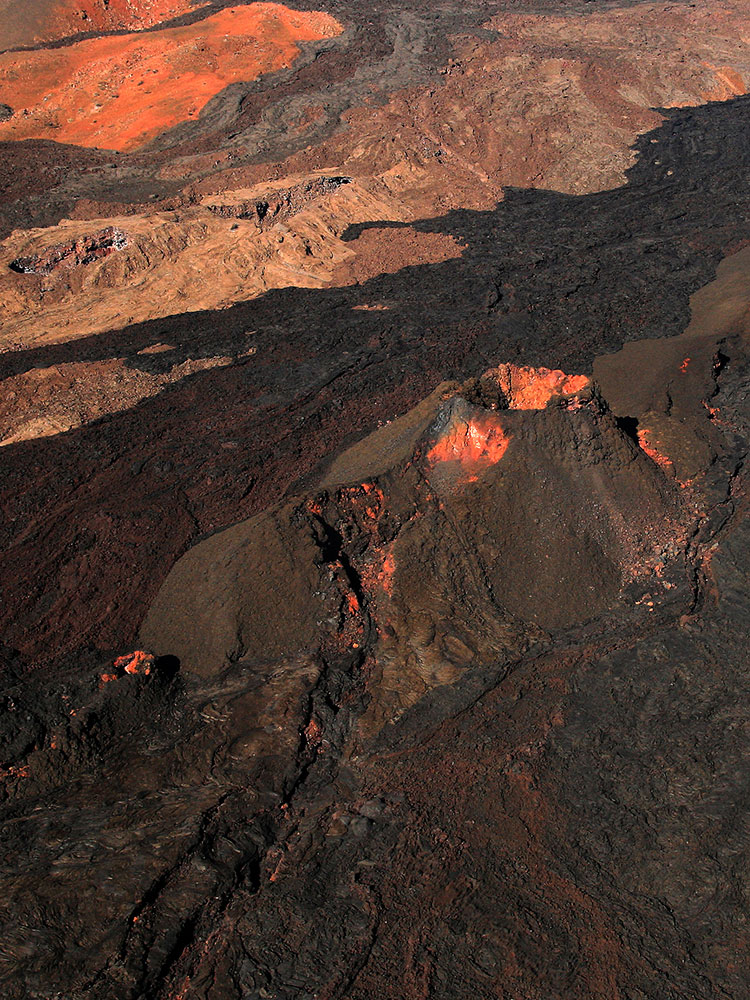
Mauna Loa (English: Long Mountain) is one of five volcanoes that form the Island of Hawaii in Hawai'i. The largest subaerial volcano in both mass and volume, Mauna Loa has historically been considered the largest volcano on Earth, dwarfed only by Tamu Massif. It is an active shield volcano with relatively gentle slopes, with a volume estimated at 18,000 cubic miles (75,000 km3), although its peak is about 125 feet (38 m) lower than that of its neighbor, Mauna Kea Lava eruptions from Mauna Loa are silica-poor and very fluid, and they tend to be non-explosive.
Mauna Loa has probably been erupting for at least 700,000 years, and may have emerged above sea level about 400,000 years ago. The oldest-known dated rocks are not older than 200,000 years. The volcano's magma comes from the Hawaii hotspot, which has been responsible for the creation of the Hawaiian island chain over tens of millions of years. The slow drift of the Pacific Plate will eventually carry Mauna Loa away from the hotspot within 500,000 to one million years from now, at which point it will become extinct.
Mauna Loa's most recent eruption occurred from March 24 to April 15, 1984. No recent eruptions of the volcano have caused fatalities, but eruptions in 1926 and 1950 destroyed villages, and the city of Hilo is partly built on lava flows from the late 19th century. Because of the potential hazards it poses to population centers, Mauna Loa is part of the Decade Volcanoes program, which encourages studies of the world's most dangerous volcanoes. Mauna Loa has been monitored intensively by the Hawaiian Volcano Observatory since 1912. Observations of the atmosphere are undertaken at the Mauna Loa Observatory, and of the Sun at the Mauna Loa Solar Observatory, both located near the mountain's summit. Hawaii Volcanoes National Park covers the summit and the southeastern flank of the volcano, and also incorporates Kīlauea, a separate volcano.
A summit shelter was built with some of the stones from Wilkes' camp site and mortar in 1934. In 1916 Moku'āweoweo was included in Hawaii Volcanoes National Park, and a new trail was built directly from park headquarters at Kīlauea, an even more direct route than the one taken by Wilkes. This trail, arriving at the summit from the east via Red Hill, became the preferred route due to its easier access and gentler slope. The historic 'Ainapō Trail fell into disuse, and was reopened in the 1990s. A third modern route to the summit is from the Saddle Road up to the Mauna Loa Observatory which is at 11,135 feet (3,394 m) elevation a few miles north of Moku'āweoweo and the North Pit trail.
This article uses material from the Wikipedia article "Mauna Loa", which is released under the Creative Commons Attribution-Share-Alike License 3.0