Tropical town known for its lush landscapes, frequent rainfall, vibrant cultural festivals, and access to natural attractions like waterfalls and botanical gardens.
General Information
Overview
Hilo is the largest city in Hawaii County, Hawaii, which encompasses the Island of Hawaiʻi. The city overlooks Hilo Bay, at the base of two shield volcanoes, Mauna Loa, an active volcano, and Mauna Kea, a dormant volcano. Mauna Kea is the site of some of the world's most important ground-based astronomical observatories. Much of Hilo is at risk from lava flows from Mauna Loa, with the bay-front being twice destroyed by tsunamis. The majority of human settlement in Hilo stretches from Hilo Bay to Waiākea-Uka, on the flanks of the volcanoes.
Hilo is home to the University of Hawaiʻi at Hilo, ʻImiloa Astronomy Center, as well as the Merrie Monarch Festival, a week-long celebration of ancient and modern hula that takes place annually after Easter. Hilo is also home to the Mauna Loa Macadamia Nut Corporation, one of the world's leading producers of macadamia nuts. Hilo is served by Hilo International Airport.
Around 1100 AD, the first Hilo inhabitants arrived, bringing with them Polynesian knowledge and traditions. Although archaeological evidence is scant, oral history has many references to people living in Hilo, along the Wailuku and Wailoa rivers during the time of ancient Hawaii. Oral history gives the meaning of Hilo as "to twist".
Originally, the name "Hilo" applied to a district encompassing much of the east coast of the island of Hawaiʻi, now divided into the District of South Hilo and the District of North Hilo. When William Ellis visited in 1823, the main settlement there was Waiākea on the south shore of Hilo Bay. Missionaries came to the district in the early-to-middle 19th century, founding Haili Church.
Hilo expanded inland beginning in the 1960s. The downtown found a new role in the 1980s as the city's cultural center with several galleries and museums opening; the Palace Theater reopened in 1998 as an arthouse cinema.
Parks and attractions near Hilo Bay and downtown Hilo, Hawaii:
- Lyman House Memorial Museum
- Haili Church
- Kalākaua Park / East Hawaii Cultural Center
- Pacific Tsunami Museum
- Moʻoheau County Park (Hele-On Bus Terminal) / S. Hata Building / Mokupāpapa Discovery Center
- Russell Carroll Soccer Fields
- Aupuni Center / County of Hawaiʻi offices
- Hilo Bayfront Beach Park
- Wailoa River State Recreation Area / Waiākea Pond
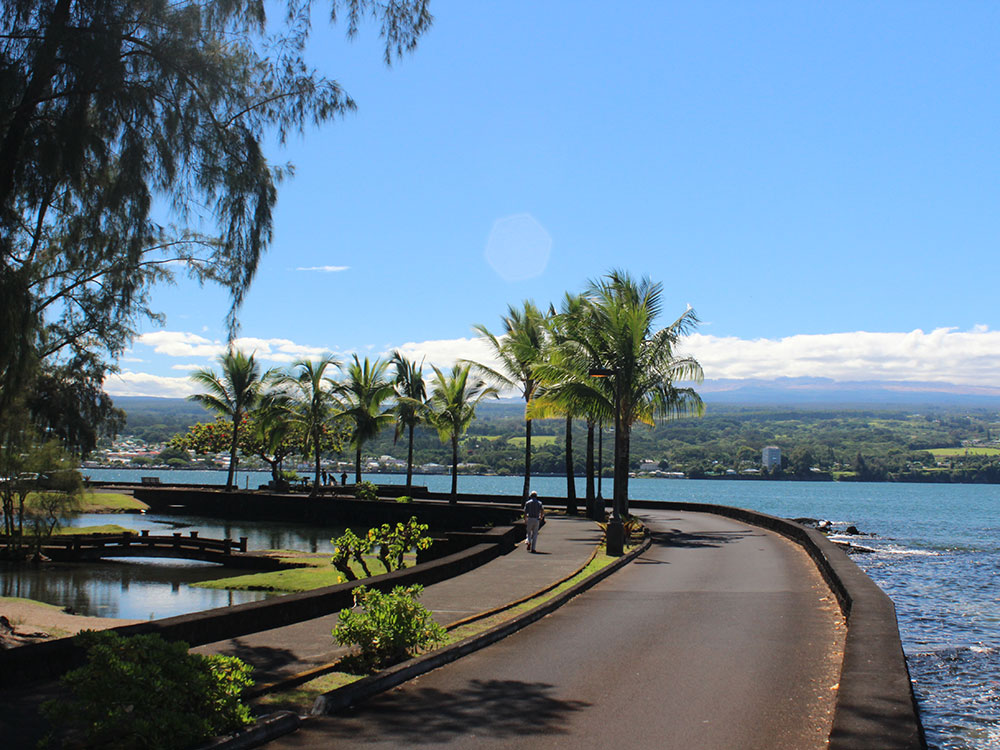
- Coconut Island / Moku Ola
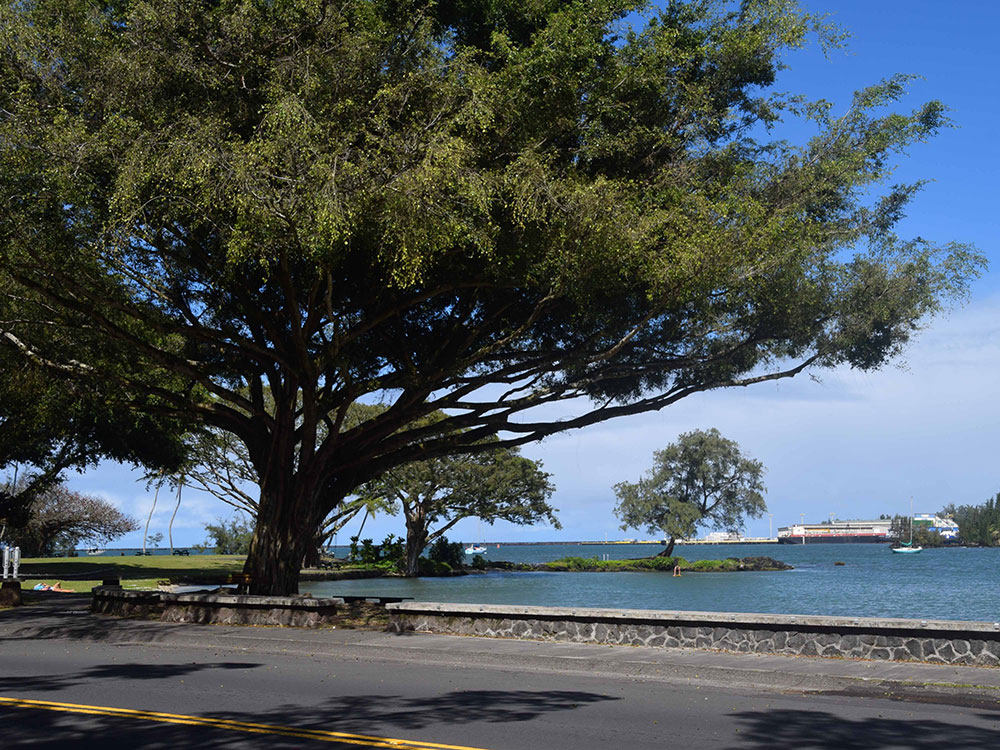
- Queen Liliʻuokalani Park and Gardens / Banyan Drive
- Grand Naniloa Hotel / Naniloa Golf Course
- Reed's Bay Beach Park
- Hoʻolulu Complex (Merrie Monarch Festival site): Afook-Chinen Civic Auditorium · Aunty Sally Kaleohano's Luʻau Hale · Edith Kanakaʻole Stadium · 'Sparky' Kawamoto Swim Stadium · Walter Victor Baseball Complex · Francis Wong Stadium
- Hilo Harbor
- Hilo International Airport
The oldest city in the Hawaiian archipelago, Hilo's economy was historically based on the sugar plantations of its surrounding areas, prior to their closure in the 1990s.
While Hilo has a fairly significant tourism sector, it gets less than half the annual visitors as the western coast of the Big Island, which has much sunnier weather and significantly less rain, with sandy and swimmable beaches and numerous major resorts.
A main source of tourism in Hilo is the annual week-long Merrie Monarch Festival, the world's preeminent hula competition and festival, which brings in visitors and participants from all over the world. It is held in the spring of each year beginning on Easter Sunday.
The local orchid society hosts the largest and most comprehensive orchid show in the state, the annual Hilo Orchid Show, which has been presented since 1951 and draws visitors and entrants worldwide.
Hilo is home to Hawaii's only tsunami museum, mostly dedicated to the 1946 Pacific tsunami, and is notable for the banyan trees planted by Babe Ruth, Amelia Earhart and other celebrities. It is home to the Pana'ewa Rainforest Zoo, shopping centers, cafés and other eateries, movie theaters, hotels, restaurants, and a developed downtown area with a Farmers Market. Downtown Hilo is bounded approximately by the Wailuku River, Kamehameha Avenue, Ponahawai Street, and Kapiolani Street.
- East Hawaiʻi Cultural Center
- Lyman House Memorial Museum
- Merrie Monarch Festival
- Pacific Tsunami Museum
- Banyan Drive
- Coconut Island
- East Hawaii Cultural Center
- Haili Church
- Hawaii Tropical Botanical Garden
- Hilo Tropical Gardens
- Hoʻolulu Park
- ʻImiloa Astronomy Center
- James Kealoha Beach Park
- Kalakaua Park
- Liliʻuokalani Park and Gardens
- Lower Waiakea Mountain Bicycle Park
- Lyman Museum
- Mauna Loa Macadamia Nut Corporation
- Mokupāpapa Discovery Center for Northwestern Hawaii's remote coral reefs
- Nani Mau Gardens
- Naha Stone (associated with Kamehameha I) in front of the Hilo Public Library
- Pacific Tsunami Museum
- Pana'ewa Rainforest Zoo
- Prince Kuhio Plaza
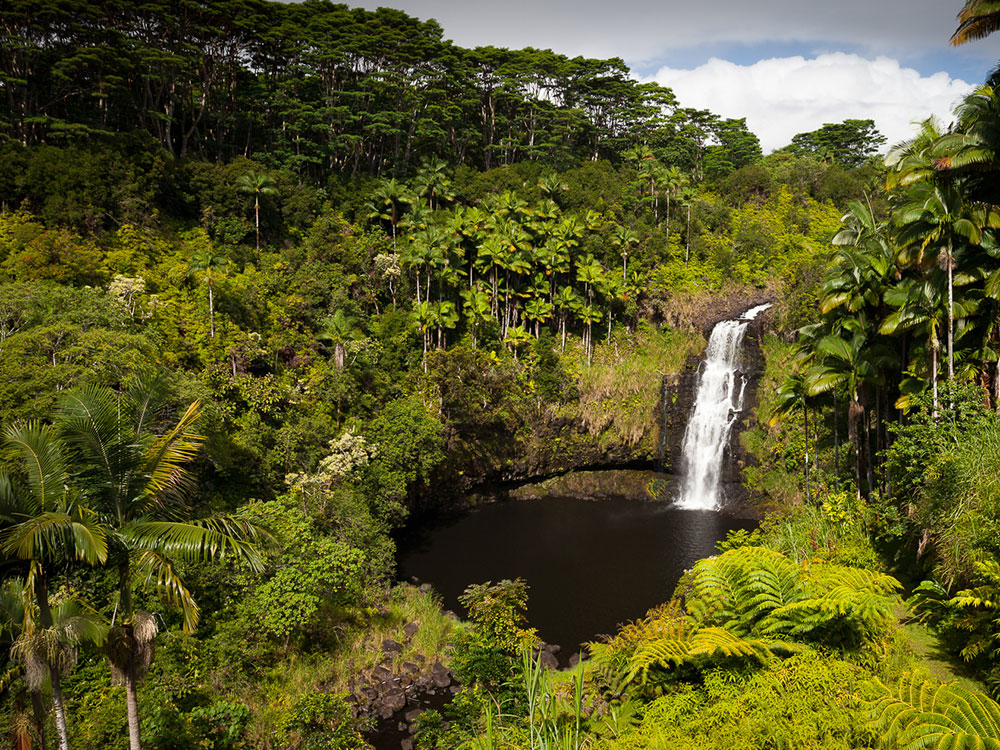
- Rainbow Falls (Waianuenue) & Boiling Pots on the Wailuku River
- University of Hawaiʻi at Hilo Botanical Gardens
- Wailoa River State Recreation Area with King Kamehameha Statue
This article uses material from the Wikipedia article "Hilo, Hawaii", which is released under the Creative Commons Attribution-Share-Alike License 3.0