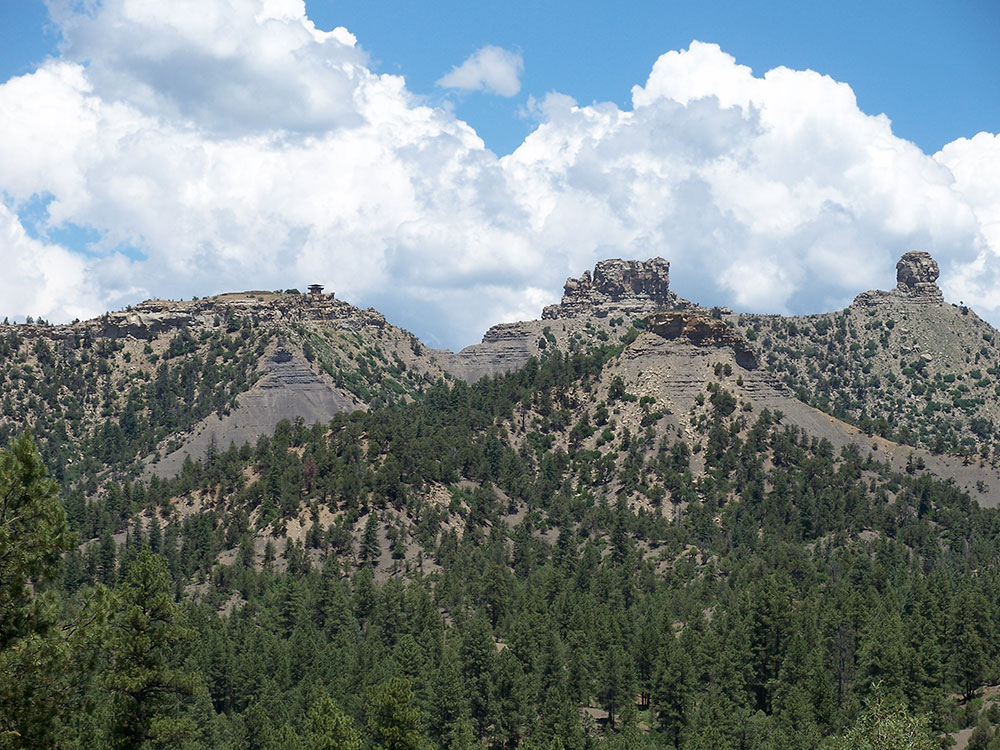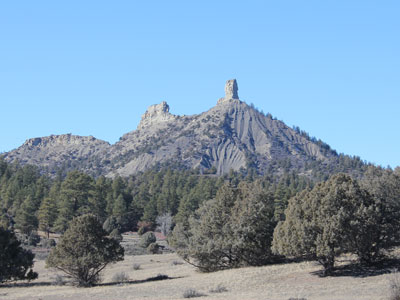

4,726-acre national monument in southwestern Colorado, between Durango and Pagosa Springs, featuring the Great Kiva, built in AD 1084, and the 315 feet tall Chimney Rock itself
From Durango (47 mi): Take W 11th St to US-550 S/Camino Del Rio. Take US-160 E to CO-151 W in Archuleta County. Continue on CO-151 W. Drive to Forest Rd 617A.
Overview
Chimney Rock National Monument is a 4,726-acre monument in San Juan National Forest in southwestern Colorado with an Ancestral Puebloan archaeological site (a Chacoan outlier) at 7,600 feet, built about 1076 AD, next to two rock pinnacles. Twice each 18.6 years, at the lunar standstill, the moon rises between the two rocks. It is open seasonally from mid-May to late September, and visitors can walk a 1-mile loop through the ruins with a guide.
Things to Do
Explore a Sacred Ancestral Puebloan Landmark
Chimney Rock National Monument protects one of the most significant archaeological and cultural sites in the American Southwest. Located in the San Juan Mountains of southwestern Colorado near Pagosa Springs, the monument encompasses more than 4,700 acres of rugged terrain, ancient ruins, and spectacular mountain views. The site was occupied by Ancestral Puebloan peoples more than 1,000 years ago and is known for its ceremonial significance, astronomical alignments, and dramatic twin rock spires known as Chimney Rock and Companion Rock.
Visit Ancient Puebloan Archaeological Sites
The monument contains more than 200 documented archaeological sites, including great houses, pit houses, kivas, and ceremonial structures. Visitors can learn about the sophisticated culture that flourished here between A.D. 900 and 1150 and its connections to the larger Chacoan world centered in present-day New Mexico.
See the Great House Pueblo
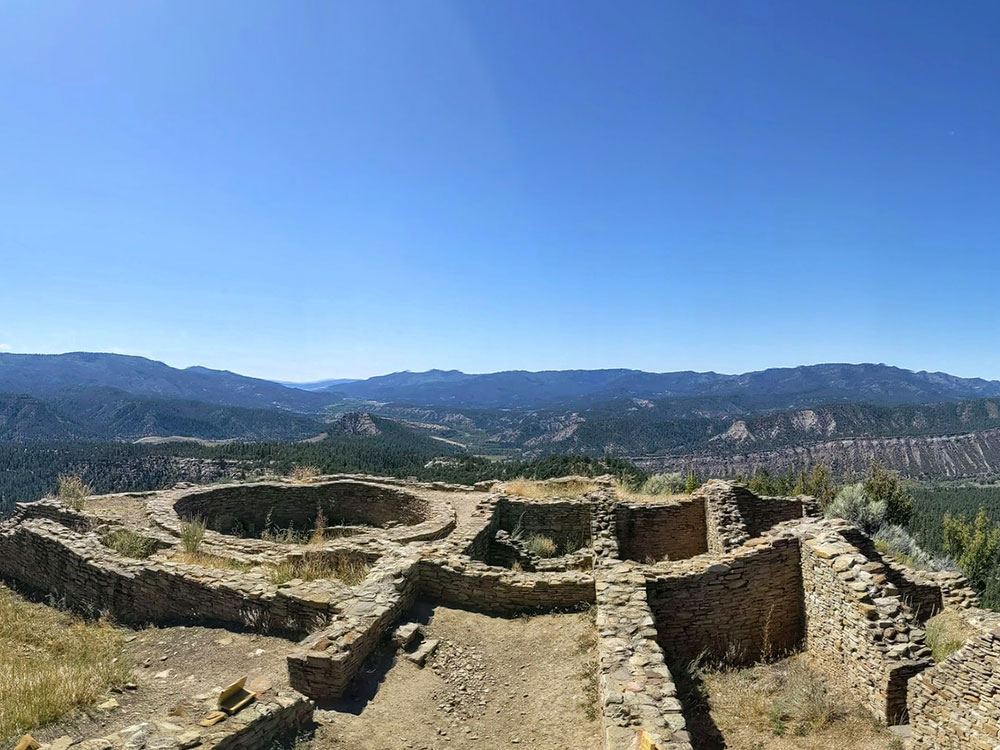
One of the monument's most important features is the Great House Pueblo, located near the summit ridge. Archaeological evidence suggests the site served ceremonial, social, and astronomical purposes. The location offers panoramic views of surrounding valleys, forests, and mountain peaks.
Learn About Ancient Astronomy
Chimney Rock is renowned for its lunar alignment phenomenon. Archaeologists believe the site's builders incorporated the 18.6-year lunar standstill cycle into the placement of structures. Interpretive programs explore the advanced astronomical knowledge of the Ancestral Puebloan people and the significance of the site's celestial alignments.
Enjoy Scenic Mountain and Forest Landscapes
The monument's elevation and location within the San Juan National Forest provide beautiful views of mountains, meadows, ponderosa pine forests, and wildlife habitats. Visitors may observe mule deer, elk, black bears, hawks, eagles, and a variety of songbirds while exploring the area.
Top Trails
Great House Trail
Length: Approximately 0.6 miles one way
Elevation Gain: Moderate to Strenuous
Difficulty: Moderate
This primary interpretive trail climbs to the Great House Pueblo near the summit. Along the route, visitors encounter archaeological features, interpretive exhibits, and stunning views of Chimney Rock and the surrounding landscape.
Mesa Village Trail
Length: Approximately 0.3 miles loop
Elevation Gain: Minimal
Difficulty: Easy
This shorter trail explores the lower village area and introduces visitors to Ancestral Puebloan architecture, daily life, and the significance of the monument's archaeological resources.
Chimney Rock Overlook Route
Length: Included with guided site access
Elevation Gain: Moderate
Difficulty: Easy to Moderate
Visitors enjoy exceptional views of the monument's iconic rock spires, mountain scenery, and surrounding valleys while learning about the cultural and ceremonial importance of the landscape.
Sources
U.S. Forest Service and Chimney Rock Interpretive Association information, including details on Ancestral Puebloan archaeology, the Great House Pueblo, lunar alignments, guided tours, hiking trails, and visitor experiences. https://www.chimneyrockco.org
Additional information verified through San Juan National Forest resources covering archaeological preservation, cultural history, scenic overlooks, wildlife viewing, and recreational opportunities at Chimney Rock National Monument.
Geography
The Great Kiva was built in AD 1084 as part of the Chimney Rock settlement. Originally, it would have had an adobe plaster exterior. It was reconstructed and stabilized in 1972.
Chimney Rock National Monument lies on 4,726 acres (19 km2) of San Juan National Forest land surrounded by the Southern Ute Indian Reservation. The Chimney Rock Archeological Area, listed in the National Register of Historic Places in 1970, consists of a central 960 acres.
Chimney Rock itself is approximately 315 feet (96 m) tall. Next to Chimney Rock is Companion Rock, which is a popular nesting spot for the Peregrine Falcon.
The primary settlements that have been excavated lie on the ridge that eventually terminates at Chimney Rock. The ridge is mostly bedrock made of sandstone.
Guided and self-guided tours begin at the small visitor center at the base of the monument. The guided tour comes in two parts; a quarter mile paved pathway that winds through unexcavated sites and the Great Kiva and singular pithouse, and a third mile, more strenuous dirt and rock path that runs past the pit house complex, Rooms A-E, the Guardhouse, and Great House Pueblo. The tour lasts approximately 2 1/2 hours and gives detailed information of the inhabitants and their lives.
This article uses material from the Wikipedia article "Chimney Rock National Monument", which is released under the Creative Commons Attribution-Share-Alike License 3.0

-1000.jpg)