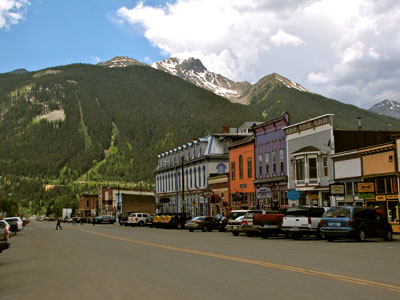

Former silver mining camp, most of which is now included in a federally designated National Historic Landmark District, is linked to Durango by the Durango and Silverton Narrow Gauge Railroad
From Durango (48 mi): Head north on Main Ave toward E 11th St. Continue straight to stay on Main Ave. Main Ave turns left and becomes E 14th St. Turn right onto US-550 N/N Main Ave. Continue straight onto State Hwy 110. Turn left onto W 12th St.
From Ouray (23 mi): Head south on US-550 S/3rd St/Main St toward 3rd St/Main St. Slight left onto Co Rd 2. Turn left onto Greene St. Turn left onto W 12th St.
Overview
Silverton is a former silver mining camp at 9,318 feet in the San Juan Mountains, most of which is a National Historic Landmark District, and the northern end of the Durango & Silverton Narrow Gauge Railroad. Prospectors found placer gold in 1860 and the Sunnyside silver vein in 1873. Mining is over (the Sunnyside Mine closed in 1991), and tourism now sustains the town. Its dirt side streets and Blair Street's saloons have an Old West feel. In winter, it is a backcountry ski and snowmobile hub.
Highlights
- Durango & Silverton Narrow Gauge Railroad
- Alpine Loop: Jeep road to Animas Forks and Lake City
- Mining history: the Mining Heritage Center and the Old Hundred Gold Mine tour
Things to Do
Explore a Historic Mining Town in the San Juan Mountains
Silverton is a National Historic Landmark District located high in the San Juan Mountains of southwestern Colorado. Originally founded during the Colorado mining boom, the town retains its Old West character with historic buildings, mountain scenery, museums, and outdoor recreation opportunities that attract visitors throughout the year.
Ride the Durango & Silverton Narrow Gauge Railroad
One of Colorado's most famous attractions, the Durango & Silverton Narrow Gauge Railroad takes passengers through spectacular mountain canyons, along the Animas River, and deep into the San Juan Mountains. The historic steam-powered train provides a memorable journey and a unique look at the region's mining heritage.
Discover Alpine Scenic Drives and Jeep Adventures
Silverton is a gateway to many of Colorado's most scenic mountain roads, including the legendary Alpine Loop Scenic Byway. Visitors can explore historic mining districts, ghost towns, high mountain passes, alpine lakes, and breathtaking views by four-wheel-drive vehicle or guided tour.
Visit Historic Downtown Silverton
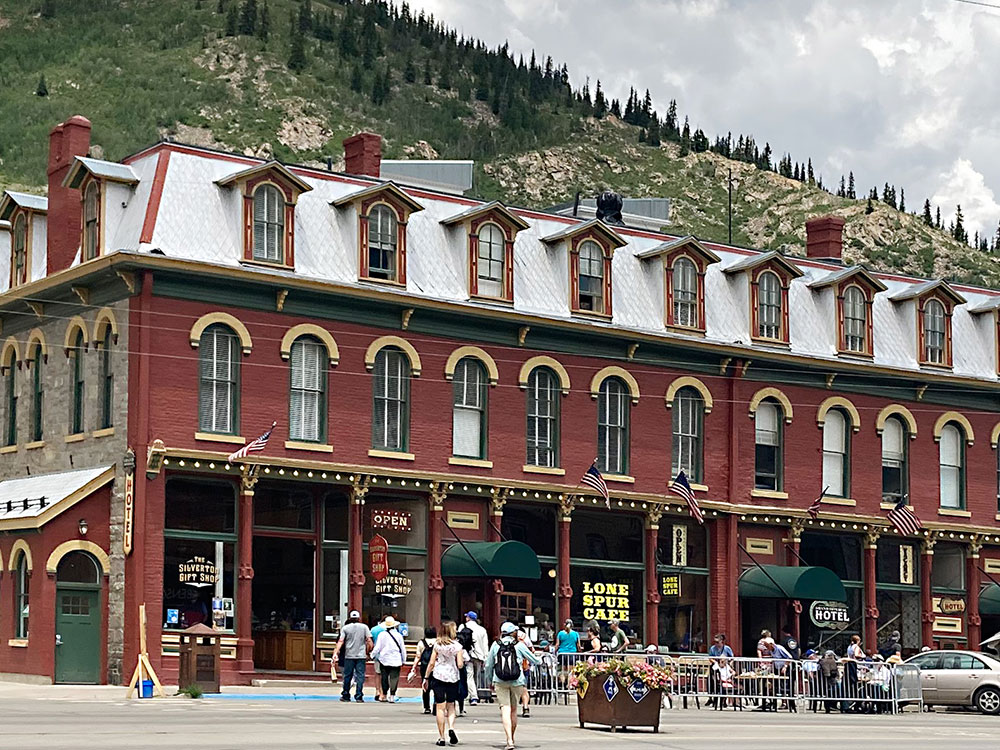
Downtown Silverton features well-preserved Victorian-era buildings, restaurants, shops, museums, and historic sites. Visitors can learn about the area's mining history while strolling along Greene Street and enjoying the authentic atmosphere of this mountain community.
Explore Ghost Towns and Mining History
The mountains surrounding Silverton are dotted with abandoned mines, historic structures, and ghost towns such as Animas Forks. These sites offer a fascinating glimpse into the lives of Colorado's early miners and settlers during the late nineteenth century.
Enjoy Outdoor Recreation Year-Round
From hiking, mountain biking, fishing, and camping in summer to snowmobiling, backcountry skiing, and winter photography, Silverton provides endless opportunities for outdoor adventure. The surrounding San Juan Mountains are known for their rugged beauty, abundant wildlife, and dramatic alpine landscapes.
Top Trails
Ice Lakes Trail
Length: Approximately 8 miles round trip
Elevation Gain: Approximately 2,500 feet
Difficulty: Strenuous
One of Colorado's most famous hikes, Ice Lakes Trail climbs through forests, waterfalls, and wildflower-filled meadows before reaching brilliant turquoise alpine lakes surrounded by towering mountain peaks. The scenery is among the most spectacular in the state.
Highland Mary Lakes Trail
Length: Approximately 7 miles round trip
Elevation Gain: Approximately 1,800 feet
Difficulty: Moderate to Strenuous
This beautiful alpine trail leads to a collection of pristine mountain lakes nestled among rolling tundra and rugged peaks. Wildflowers, wildlife viewing, and expansive mountain vistas make this one of the area's most popular hikes.
Colorado Trail to Molas Pass Overlook
Length: Approximately 3 to 6 miles round trip
Elevation Gain: Moderate
Difficulty: Moderate
Accessible from nearby Molas Pass, this section of the Colorado Trail offers stunning views of the Weminuche Wilderness, alpine meadows, and the San Juan Mountains. The route is popular with hikers, trail runners, and backpackers.
South Mineral Creek Falls Trail
Length: Approximately 1 mile round trip
Elevation Gain: Minimal
Difficulty: Easy
A short and family-friendly trail leads to scenic waterfalls surrounded by dramatic mountain scenery. The area also provides access to nearby alpine lakes and popular camping destinations.
This article uses material from the Wikipedia article and official pages for silvertoncolorado.com, durangotrain.com, fs.usda.gov, Silverton, Colorado, released under the Creative Commons Attribution-Share-Alike License 3.0.

-1000.jpg)
.jpg)
_city_limit_sign-1000.jpg)
_city_limit_sign.JPG)
-1000.jpg)
.jpg)