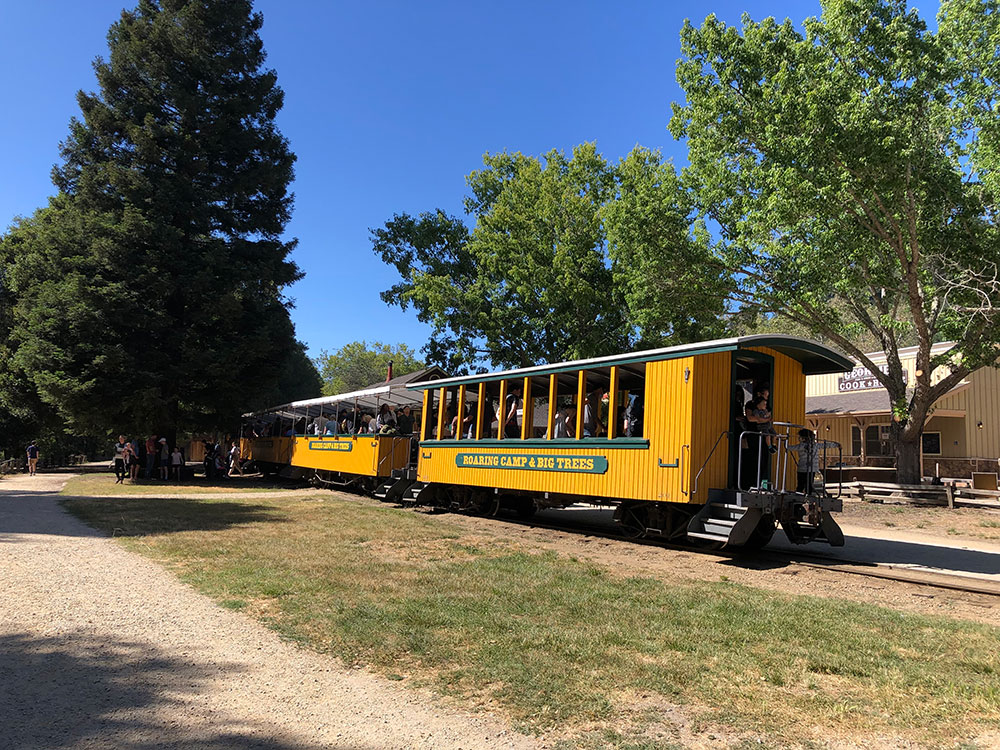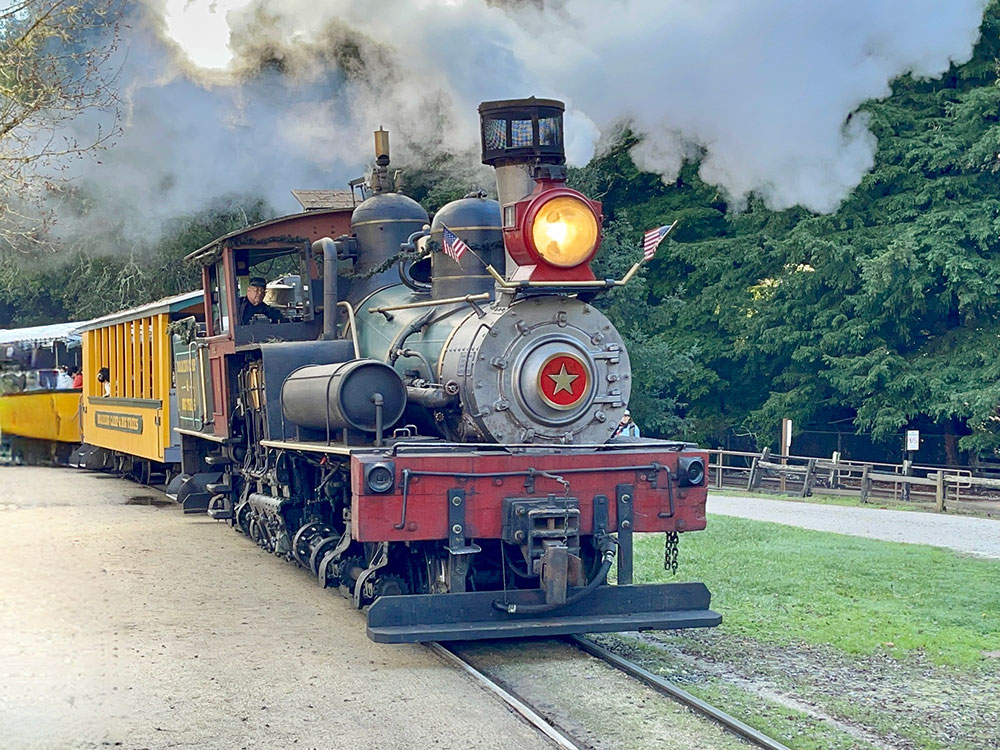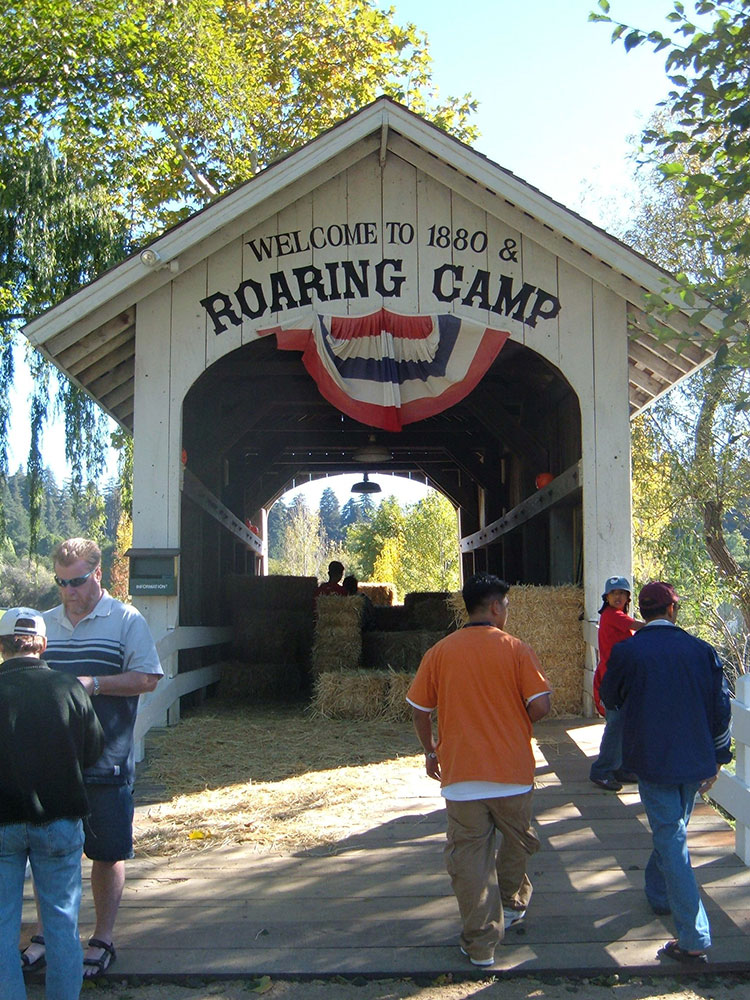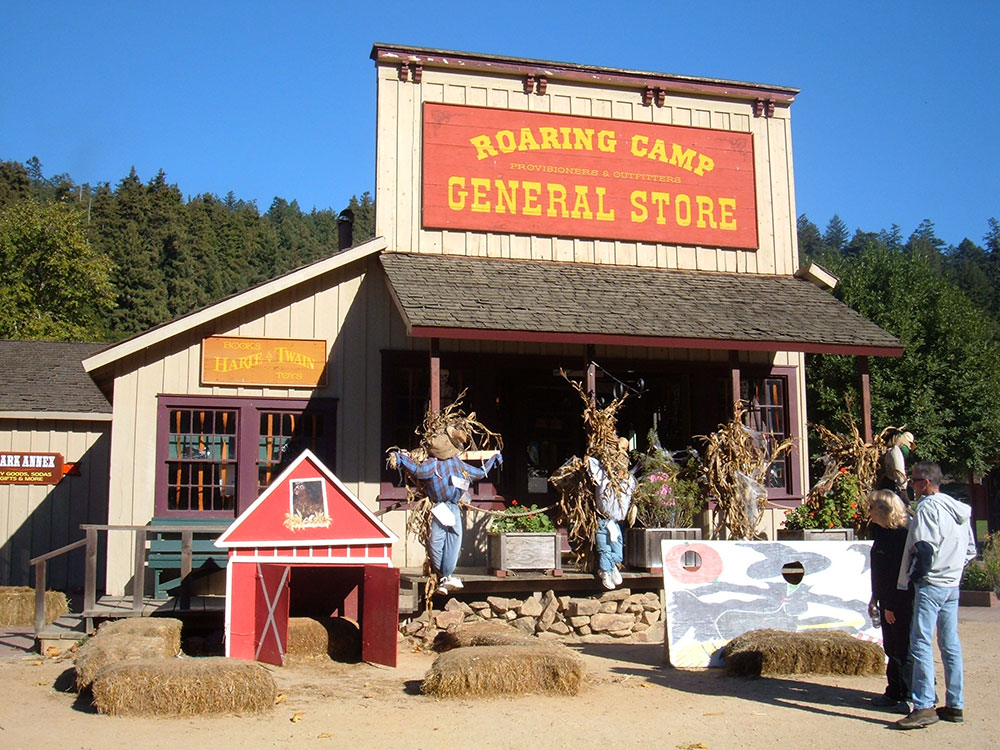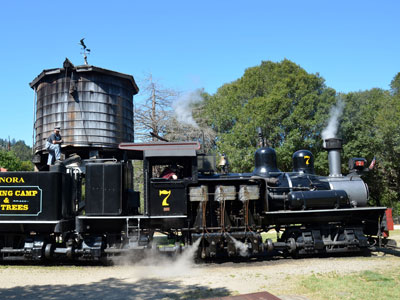

Narrow-gauge tourist railroad that starts from the Roaring Camp depot in Felton, California and runs up steep grades through redwood forests to the top of nearby Bear Mountain
General Information
Train schedules vary by season; check website for current departure times
Santa Cruz Beach Train: Adults $37, Children (2–12) $28
Parking: $10 per vehicle
Admission to grounds is free except during special events
How to Get There
From Santa Cruz, CA (6 mi): Take CA-9 N to Felton, turn right onto Graham Hill Road, and continue for 0.5 miles to Roaring Camp Railroads entrance on the right.
Overview
The Roaring Camp & Big Trees Narrow Gauge Railroad is a 3 ft (914 mm) narrow-gauge tourist railroad in California that starts from the Roaring Camp depot in Felton, California and runs up steep grades through redwood forests to the top of nearby Bear Mountain, a distance of 3.25 miles (5.23 kilometers).
The railroad runs most trains using steam locomotives, several dating from the 1890s. They are some of the oldest narrow-gauge steam locomotives still providing regular passenger service in the United States.
History
Roaring Camp Railroads operations began in 1963 under the guidance of F. Norman Clark (1935–1985), who was the founder and owner. His purpose was to keep a family tradition of constructing railroads and to "bring the romance and color of steam railroading back to America". In 1958, Clark found the engine Dixiana abandoned near a coal mine in the Appalachian Mountains; he described it as looking like a " rusty pile of junk". Dixiana was reconditioned and began service in 1963 on rails that had been shipped around Cape Horn in 1881. The railway route was laid out so that as few trees as possible would have to be cut on the 170 acres (69 ha).
This article uses material from the Wikipedia article "Roaring Camp & Big Trees Narrow Gauge Railroad", which is released under the Creative Commons Attribution-Share-Alike License 3.0