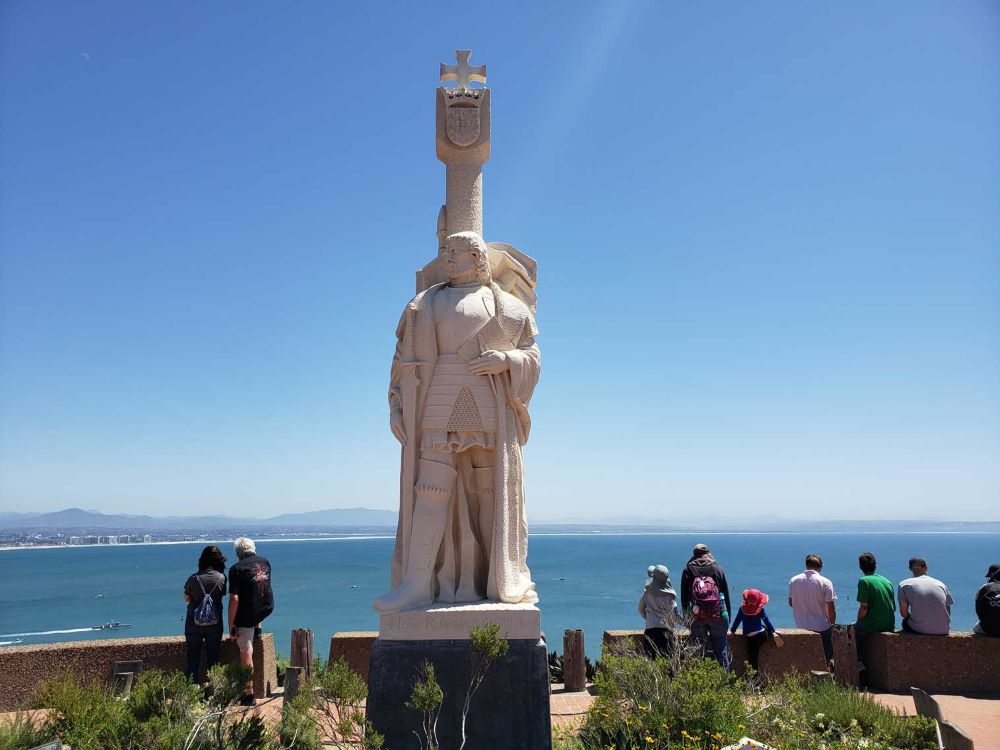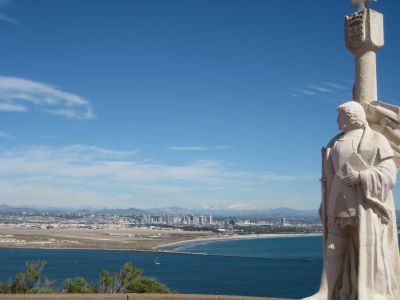

Park commemorating the landing of Juan Rodríguez Cabrillo at San Diego Bay on September 28, 1542, the first time a European expedition had set foot on what later became the West Coast of the US
Accepts America The Beautiful Pass.
How to Get There
Get on I-5 N. Continue on I-5 N to Sunset Cliffs Blvd. Take Nimitz Blvd and Catalina Blvd to Cabrillo Memorial Dr.
Overview
Cabrillo National Monument at the southern tip of Point Loma in San Diego commemorates Juan Rodríguez Cabrillo’s 1542 landing, the first European expedition to set foot on the future West Coast of the United States. The park has views of San Diego Bay and the skyline, the Old Point Loma Lighthouse (1855), a visitor center, and tide pools that are among the best in Southern California at low tide. From December to March, whale watchers see gray whales migrating offshore.
Things to Do
Explore the Historic Landing Site of Juan Rodríguez Cabrillo
Cabrillo National Monument commemorates the 1542 landing of Juan Rodríguez Cabrillo, the first European explorer to reach the West Coast of present-day United States. Located at the southern tip of the Point Loma Peninsula in San Diego, the monument combines history, spectacular coastal scenery, diverse habitats, and panoramic views of San Diego Bay and the Pacific Ocean.
Visit the Cabrillo Statue and Historic Exhibits
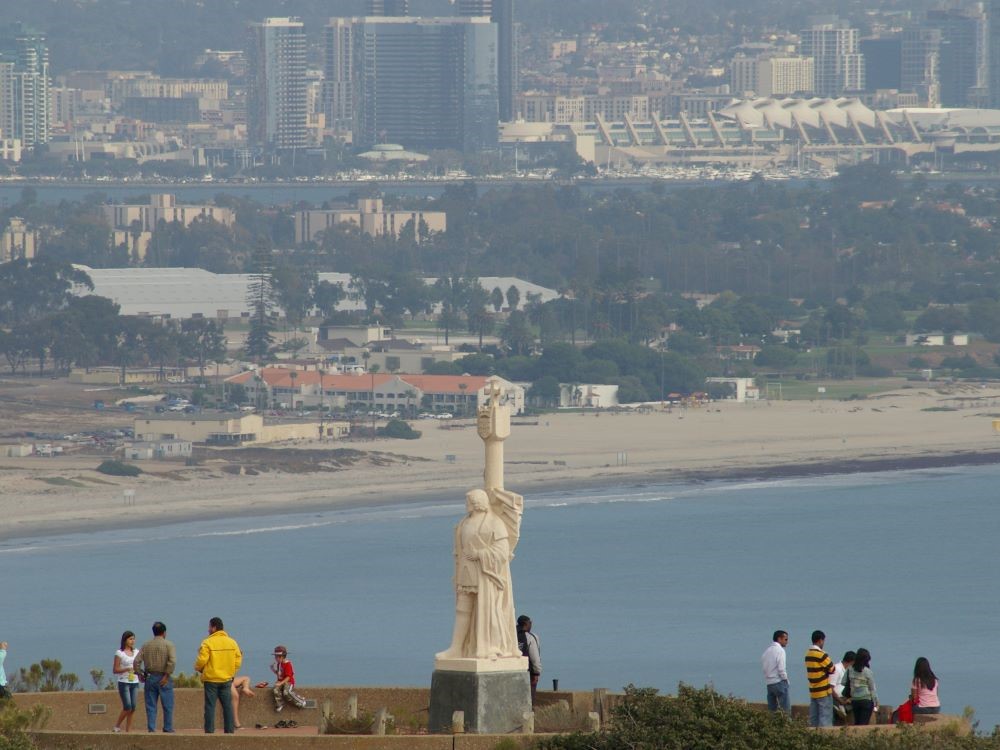
Visitors can explore exhibits detailing Cabrillo's voyage, the history of exploration along the Pacific Coast, and the cultural heritage of the region. The monument's centerpiece is a large statue of Cabrillo overlooking San Diego Bay and the surrounding landscape.
Enjoy Panoramic Views of San Diego
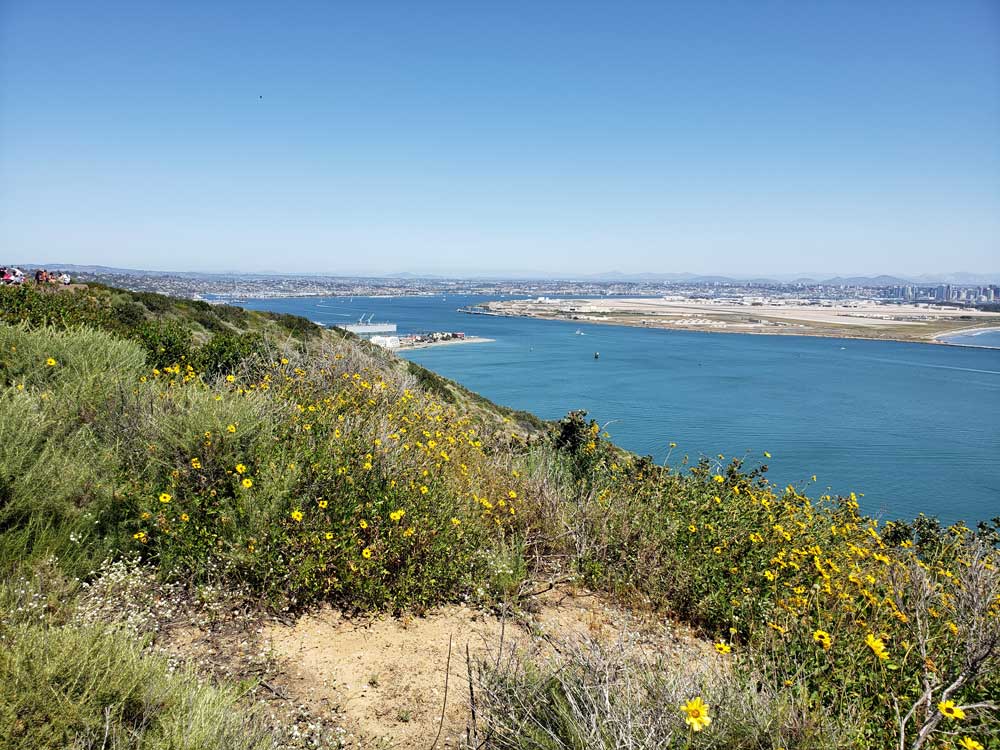
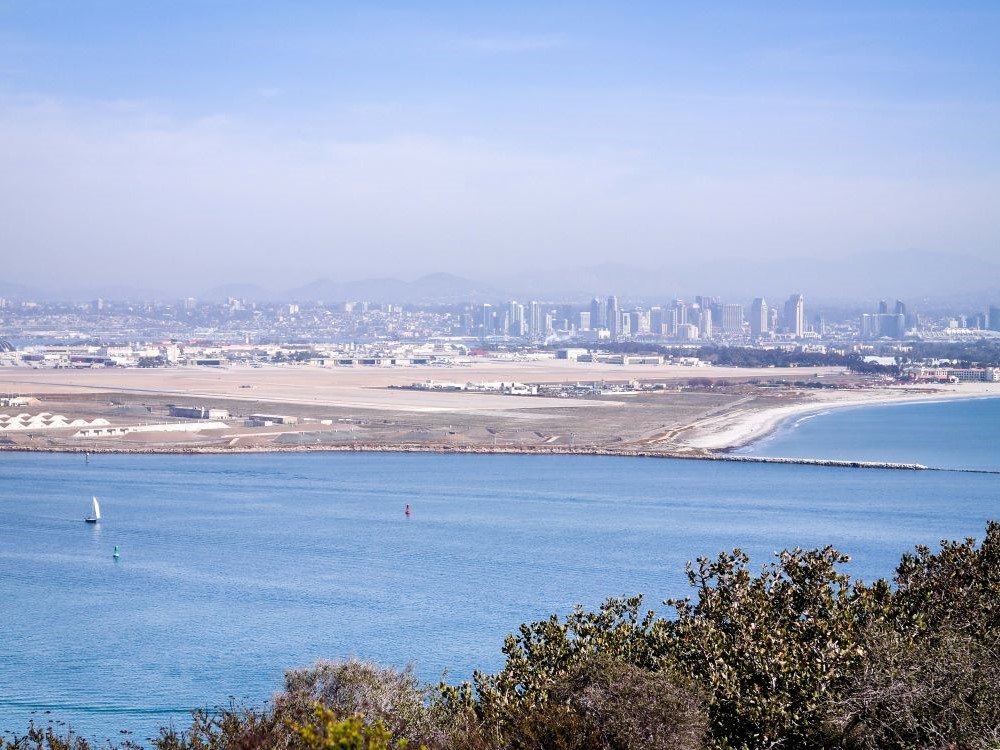
The monument offers some of the finest viewpoints in Southern California. From the overlook areas, visitors can enjoy sweeping views of downtown San Diego, Coronado, San Diego Bay, the Pacific Ocean, and, on clear days, distant mountain ranges and Mexico's coastline.
Explore the Old Point Loma Lighthouse
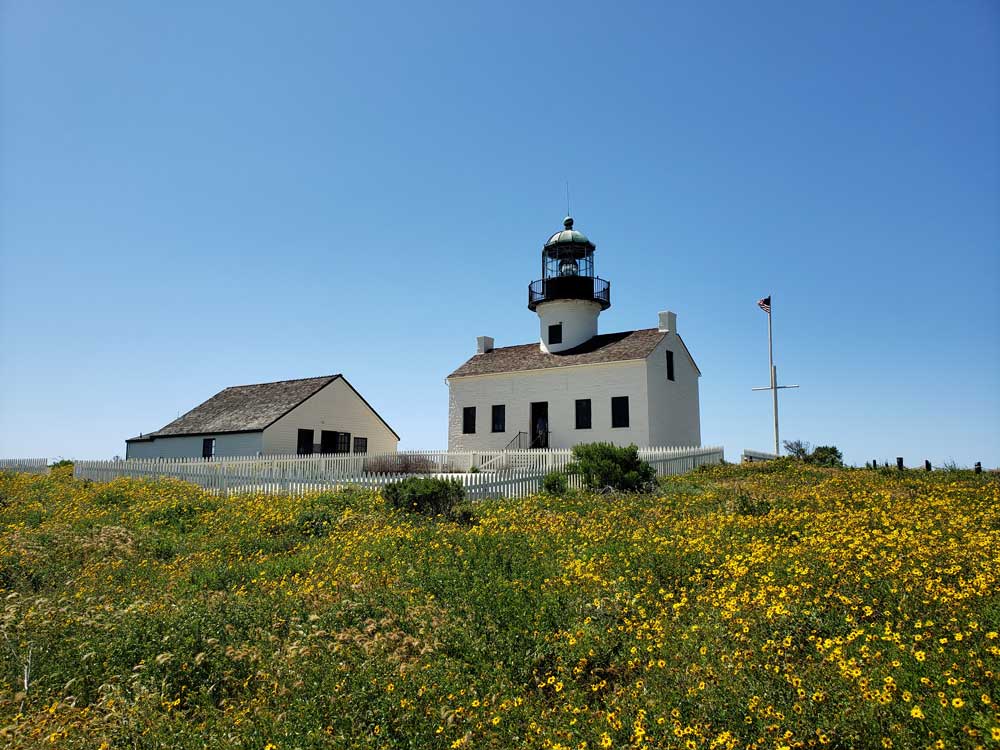
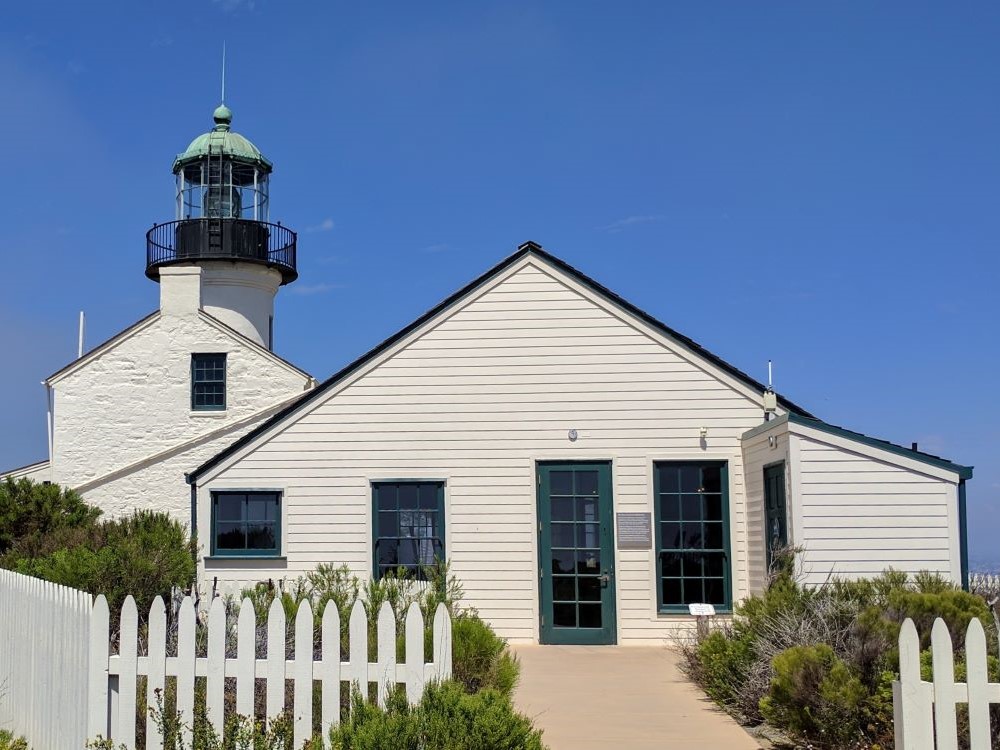
One of the monument's most popular attractions is the restored Old Point Loma Lighthouse, which dates to 1855. Visitors can tour the historic structure and learn about the challenges faced by lighthouse keepers who helped guide ships along the California coast during the nineteenth century.
Discover the Tide Pools
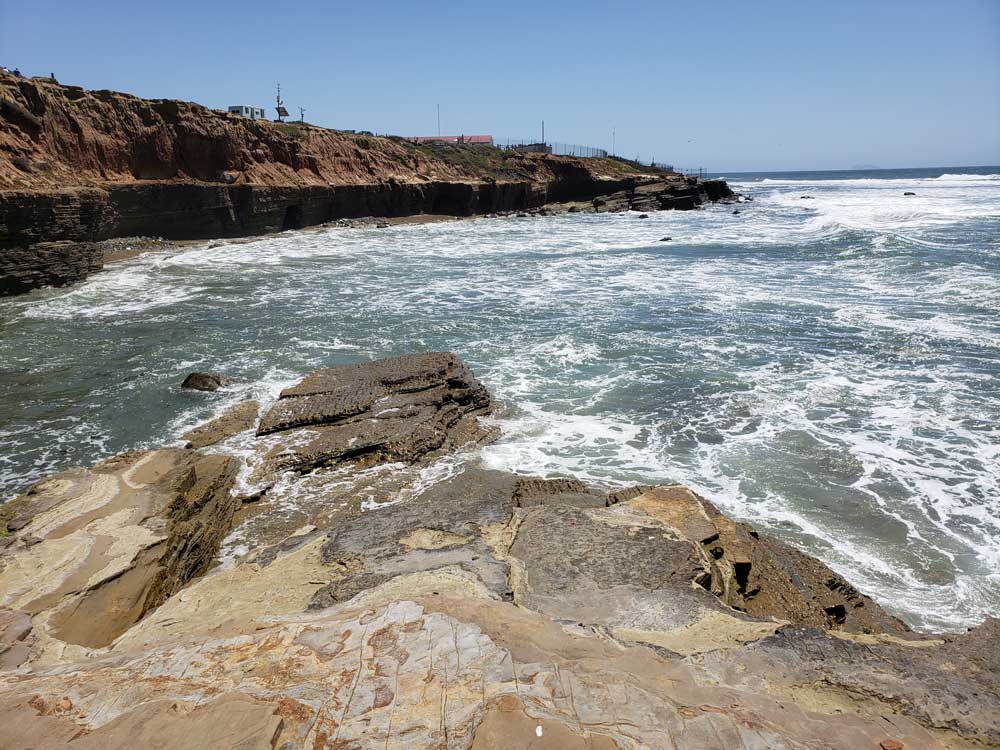
The rocky shoreline below the monument contains some of Southern California's best tide pools. During low tide, visitors can observe sea stars, anemones, crabs, mussels, and other marine life within the protected intertidal ecosystem.
Observe Wildlife and Seasonal Whale Migrations
Cabrillo National Monument is a premier location for spotting gray whales during their annual migration. Visitors may also observe dolphins, sea birds, harbor seals, and a variety of coastal wildlife throughout the year.
Top Trails
Bayside Trail
Length: Approximately 2.5 miles round trip
Elevation Gain: About 300 feet
Difficulty: Moderate
The park's most popular hiking trail descends toward San Diego Bay and passes military history exhibits, coastal sage scrub habitat, and scenic viewpoints overlooking the harbor and city skyline.
Coastal Trail
Length: Approximately 1 mile round trip
Elevation Gain: Minimal
Difficulty: Easy
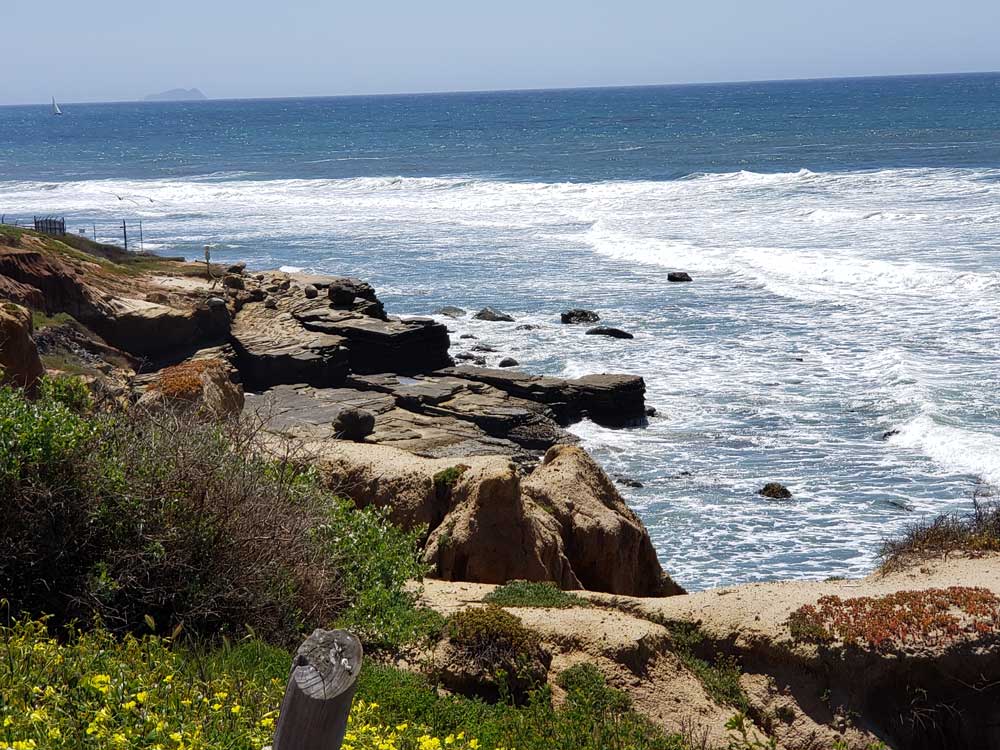
This short trail provides ocean views, opportunities for wildlife observation, and access to scenic overlooks showcasing the rugged Point Loma coastline.
Tide Pool Access Trail
Length: Approximately 0.5 miles round trip
Elevation Gain: Moderate descent and ascent
Difficulty: Easy to Moderate
This route provides access to the monument's famous tide pool area, where visitors can explore intertidal habitats and observe marine life during favorable low-tide conditions.
Lighthouse Area Walking Paths
Length: Varies
Elevation Gain: Minimal
Difficulty: Easy
A network of short pathways around the Old Point Loma Lighthouse allows visitors to enjoy historic exhibits, interpretive displays, gardens, and panoramic views of San Diego Bay and the Pacific Ocean.
Sources: National Park Service official Cabrillo National Monument information, including details on Juan Rodríguez Cabrillo, the Old Point Loma Lighthouse, tide pools, whale watching, hiking trails, visitor facilities, and educational exhibits.
https://www.nps.gov/cabr/index.htmhttps://www.nps.gov/cabr/index.htm
Additional information verified through National Park Service visitor resources covering the Bayside Trail, tide pool access, lighthouse history, military history exhibits, wildlife viewing opportunities, and recreational experiences at Cabrillo National Monument.
https://www.nps.gov/cabr/planyourvisit/index.htmhttps://www.nps.gov/cabr/planyourvisit/index.htm
The annual Cabrillo Festival Open House is held on a Sunday each October. It commemorates Cabrillo with a reenactment of his landing at Ballast Point, in San Diego Bay. Other events are held above at the National Monument and include Kumeyaay, Portuguese, and Mexican singing and dancing, booths with period and regional food, a historical reenactment of a 16th-century encampment, and children's activities.
Flora and fauna
One of the most thriving and diverse animal communities of Cabrillo National Monument is located in the intertidal zone and tide pools. The Monument advises that the best time to see the tide pools is in the late fall or winter, when tides are rated at negative one or lower during daylight hours.
In the winter (December through March), migrating gray whales can be seen off the coast from the Whale Overlook station, 100 yards south of the old lighthouse. Established in 1950, this was the first public whale watching lookout point in the world. During its first year of operation, 10,000 people visited the lookout to observe the gray whale migration.
Native coastal sage scrub habitat along the Bayside Trail offers a place to hike or relax, as well as a noteworthy habitat for wildlife.
In 1851, a year after California entered the Union, the U.S. Coastal Survey selected the heights of Point Loma to be a navigational aid. The crest seemed like the right location: it stood 422 feet above sea level, overlooking the bay and the ocean, and a lighthouse there could serve as both a harbor light and a coastal beacon.
Construction began on the lighthouse in early 1854 and was completed in November 1855. By late summer 1854, the work was done. At dusk on November 15, 1855, the keeper climbed the winding stairs and lit the oil lamp for the first time. In clear weather its light was visible at sea for 25 miles. For the next 36 years, except on foggy nights, it welcomed sailors to San Diego harbor. However, the lighthouse's location on top of a 400-foot cliff meant that fog and low clouds often obscured the light from the view of ships.
On March 23, 1891, the flame was permanently extinguished and the light was replaced by the New Point Loma lighthouse at a lower elevation. In 1984, the light was lit by the National Park Service for the first time in 93 years to celebrate the site's 130th birthday.
New Point Loma Lighthouse
After boarding up the old lighthouse in 1891, the keeper moved his family and belongings into a new light station at the bottom of the hill, which is still an active light. It can be seen from the Whale Overlook, 100 yards south of the Old Point Loma Lighthouse, or from the tide pool area.
Visitor Center
The Visitor Center offers a place to purchase souvenirs and learn about the park's history. The center also allows visitors the chance to communicate with Park Rangers and volunteers. Visitors can learn the day's weather readings, the time of low tide, get a National Park Passport stamped, visit the “Age of Exploration” exhibit, and learn the times for ranger talks/guided tours and auditorium showings. The auditorium offers several showings a day, and features three different films including: “In Search of Cabrillo,” “On the Edge of Land and Sea,” and “First Breath: Gray Whales.” Cabrillo National Monument also hosts a "Junior Ranger" program in which children can earn a Junior Ranger badge by exploring the park and filling out an activity sheet.
This article uses material from the Wikipedia article "Cabrillo National Monument", which is released under the Creative Commons Attribution-Share-Alike License 3.0