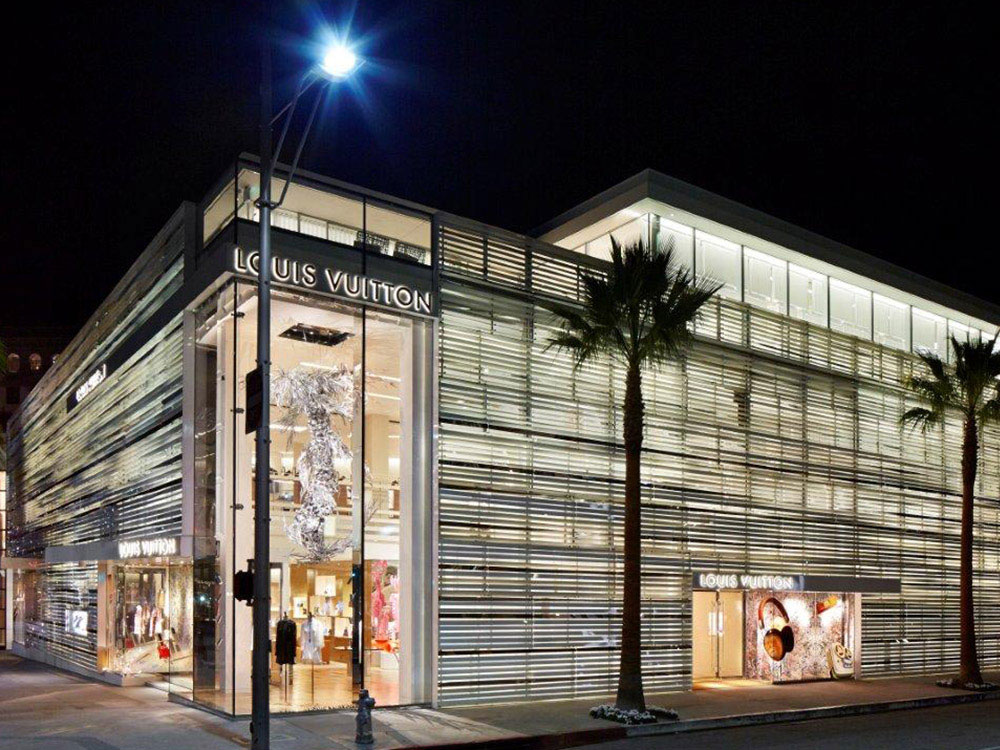
Renown two-mile-long street in Beverly Hills known for celebrity and premiere luxury shopping destination
Stores have individual varied hours
Get on CA-110 from W 1st St. Take I-10 W to S Robertson Blvd. Take exit 6 from I-10 W. Continue on S Robertson Blvd. Take Sawyer St, S Beverly Dr and S Peck Dr to Dayton Way in Beverly Hills
Overview
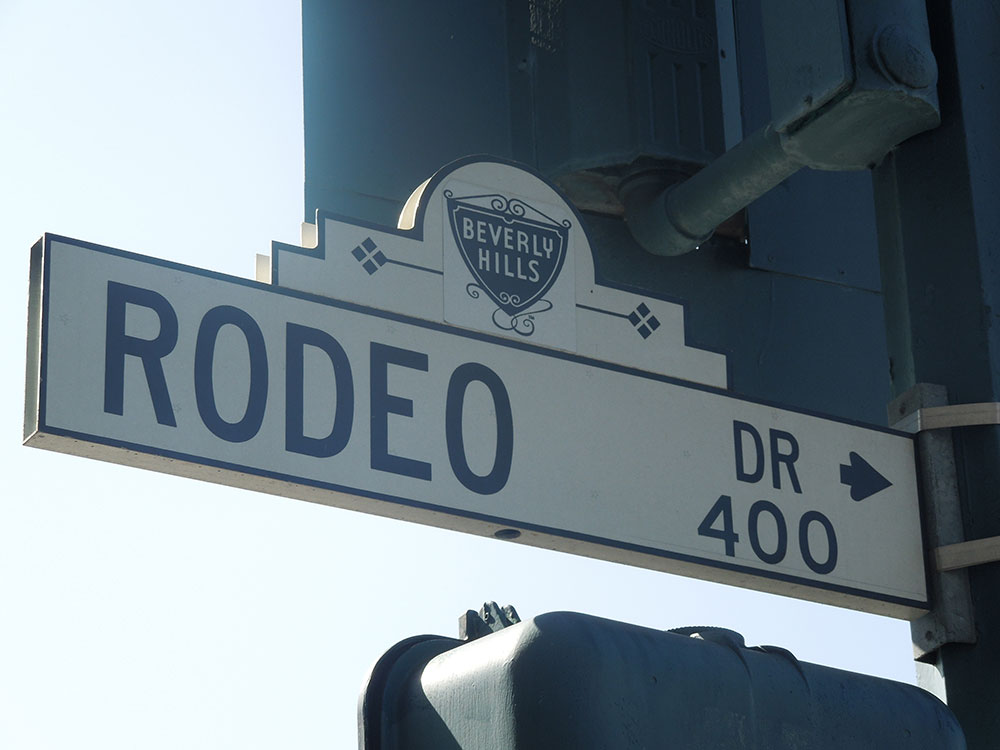
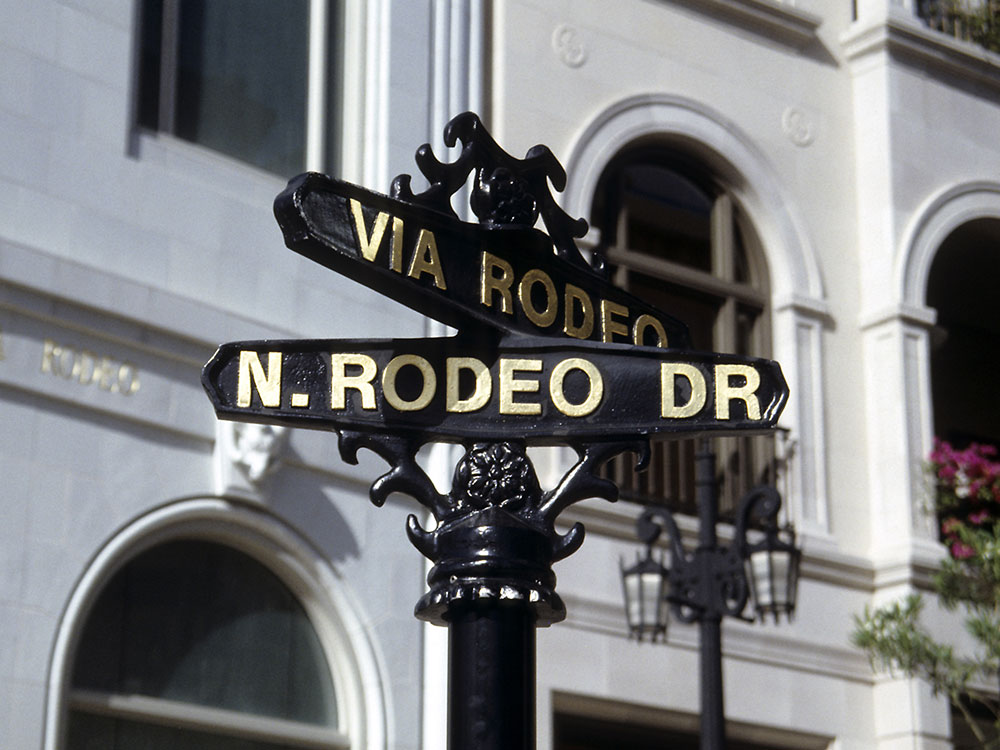
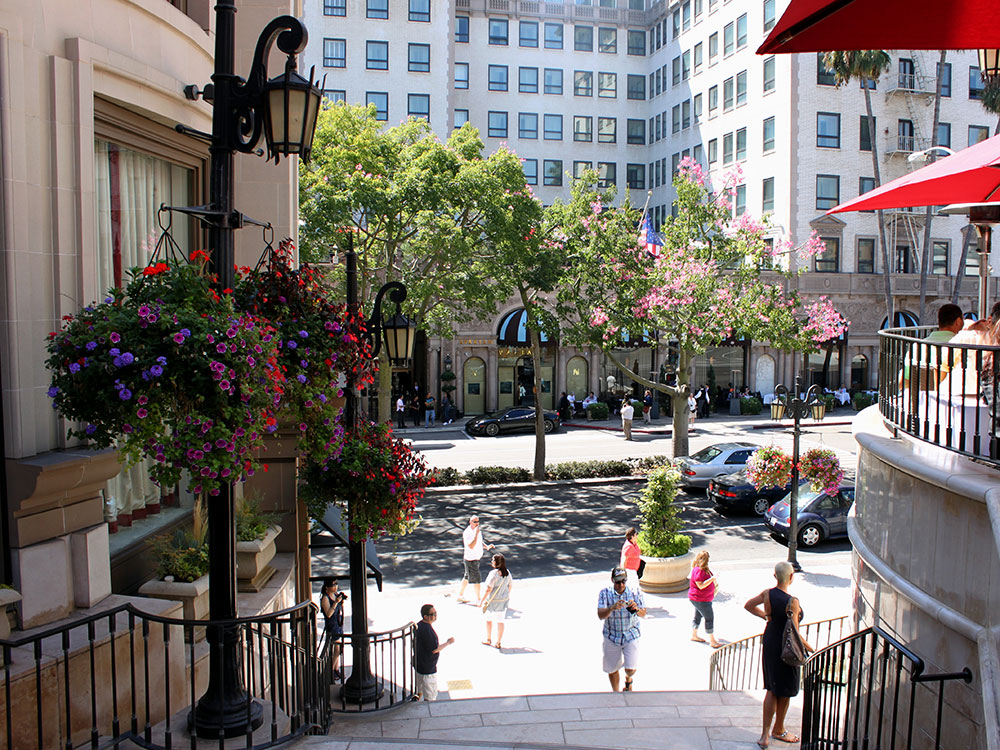
Rodeo Drive is a two-mile-long street in Beverly Hills, California, with its southern segment in the City of Los Angeles. Its southern terminus is at Beverwil Drive, and its northern terminus is at its intersection with Sunset Boulevard in Beverly Hills. The name is most commonly used to refer to the three-block stretch of the street north of Wilshire Boulevard and south of Little Santa Monica Boulevard.
Pronunciation
The word rodeo as a term referring to the cowboy sports can be pronounced with the stress on either the first or second syllable; the latter is its Spanish pronunciation. For the street in Beverly Hills, however, only the latter pronunciation is used; the former pronunciation is used to refer to Rodeo Road in Los Angeles, which has since been renamed Obama Boulevard.
History
In 1906, Burton E. Green (1868-1965) and other investors purchased the property that would become Beverly Hills, formerly named Rancho Rodeo de las Aguas, with plans for a mixed-use subdivision with a branch of the Los Angeles and Pacific Railway running North on Rodeo Drive before turning west at Sunset Boulevard. By November 1925, similar lots were selling for between $15,000 and $30,000, almost double what they'd been selling for.
The central part of Rodeo eventually became a business street with hardware stores, gas stations, beauty shops, and bookstores. In 1958, real estate developer Marvin Kratter bought 48,000 square feet of land at the corner of Rodeo and Wilshire Boulevard from the city of Beverly Hills.
Origin of a new image
In 1967 Fred Hayman, "the father of Rodeo Drive," opened Giorgio Beverly Hills, the street's first high-end boutique. In 1968 Aldo Gucci opened a store on Rodeo, which catalyzed the process by which the street took on its present form. Van Cleef & Arpels opened in 1969, followed by a Vidal Sassoon salon in 1970. The Polo Store, the brand's first freestanding store, opened in 1971.
According to a former co-chair of the "Rodeo Drive Committee," Richard Carroll, the transformation of Rodeo Drive into an international center of fashionable shopping was sparked in 1971 with the opening of a new wing of the Beverly Wilshire. In 1980 Carroll noted that before then "There was nothing at all of an international nature on the street. Rodeo was purely local in flavor." In 1977 the Rodeo Drive Committee "launched a publicity campaign designed to make everyone around the world think of Rodeo Drive as the shopping street of the rich and famous." The RDC wanted to make Rodeo Drive an economic engine for Beverly Hills and spread the image of a "culturally elite lifestyle."
In 1976, Bijan Pakzad opened a showroom on Rodeo, which helped to solidify "Rodeo Drive's reputation as a luxury shopping destination." Pakzad touted his Rodeo Drive store as "the most expensive in the world," but, as Women's Wear Daily notes in relation to the claim, "he was known for hyperbole." By 1978 the Beverly Hills Chamber of Commerce was boasting that Rodeo Drive was "the essence of the best of all the shopping centers of the world" and by 1980 the city of Beverly Hills estimated that the Rodeo Drive shopping district accounted for as much as 25% of its sales tax revenues. The building at 332 N. Rodeo was designed by Frank Lloyd Wright.
International fashion centre
The "Rodeo Collection," a 45-store, 70,000-square-foot shopping mall opened in 1983. The building is only four stories high with the first floor below street level in order to satisfy local building codes. In the early 1990s, Rodeo Drive was ranked 4th most-visited destination in the Los Angeles area (after Disneyland, Knott's Berry Farm and Universal Studios). Two Rodeo Drive, another outdoor shopping center, was built in 1990. It initially housed, amongst other stores, Christian Dior and Valentino.
The Two Rodeo Drive shopping center was hard-hit by the early 1990s recession, with occupancy rates dropping to as low as 60%. Middle-market brand boutiques such as Guess Jeans and Banana Republic opened on Rodeo Drive. Many franchised stores were bought back by the brands they represented (Polo Ralph Lauren, Gianni Versace, Hugo Boss).
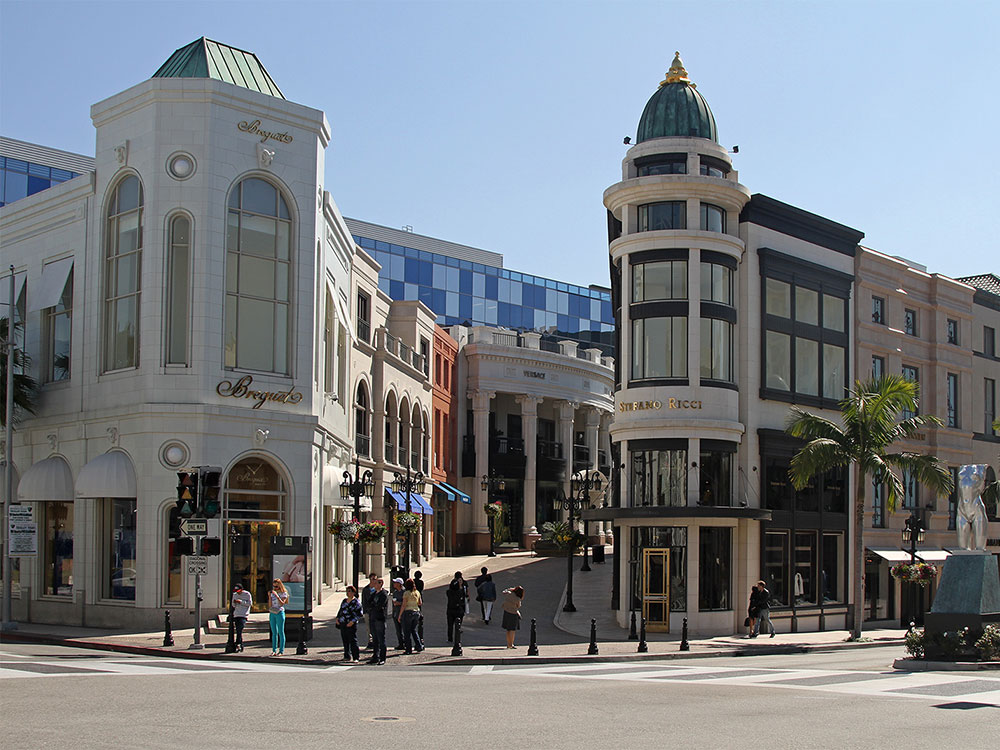
By 2007 the property was financially stable again. It resembles a “faux-European shopping alley” and features a cobblestone street. Some architects have claimed that Two Rodeo Drive is similar to a "theme park in the manner of Disneyland."
Walk of Style
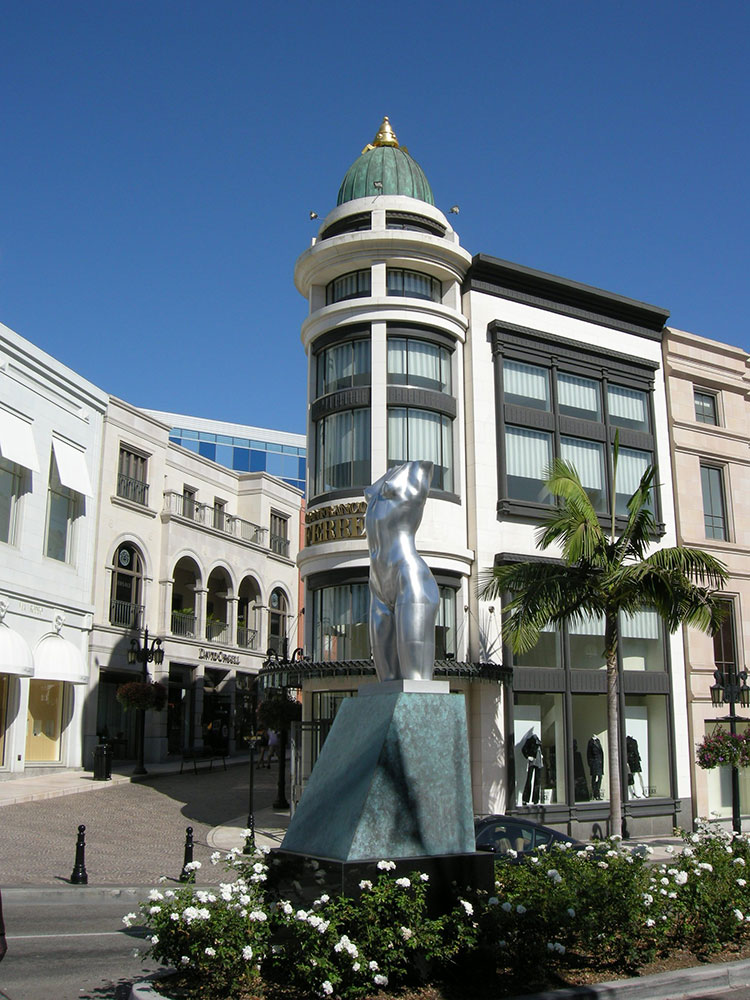
In 2003, Rodeo Drive was given an $18 million makeover which included widening the streets and the addition of crosswalks. The ficus trees lining the street were taken out and replaced with palm trees. In September of the same year, the Rodeo Drive Committee developed the Rodeo Drive Walk of Style. The Walk of Style features plaques set in the sidewalks along Rodeo Drive. Fashion icons are honored with the award for their work in style and fashion. At the intersection of Rodeo Drive and Dayton Way is the majestic, nude sculpture entitled "Torso." This famed statue was created by world-renowned sculptor Robert Graham and is the symbol for the Rodeo Drive Walk of Style.
This article uses material from the Wikipedia article "Rodeo Drive", which is released under the Creative Commons Attribution-Share-Alike License 3.0