Historic hotel featuring ornate interiors, grand ballrooms, and a legacy of hosting iconic cultural and political events.
General Information
Hotel check-out: 11:00 AM
Indoor pool: 6:00 AM – 10:00 PM daily
Restaurant: Daily 4:30 PM – 10:30 PM
Early arrival: $50 plus tax
Late check-out until 6 PM: $100 plus tax
Destination fee: $35 per night
How to Get There
Drive via E 1st Street and turn onto S Grand Avenue; destination is on the right after approximately 0.9 miles.
Overview
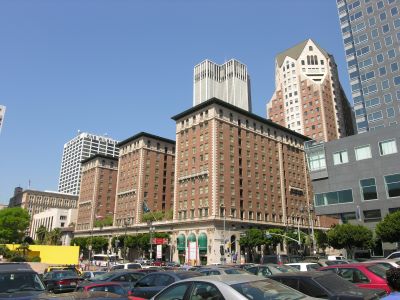
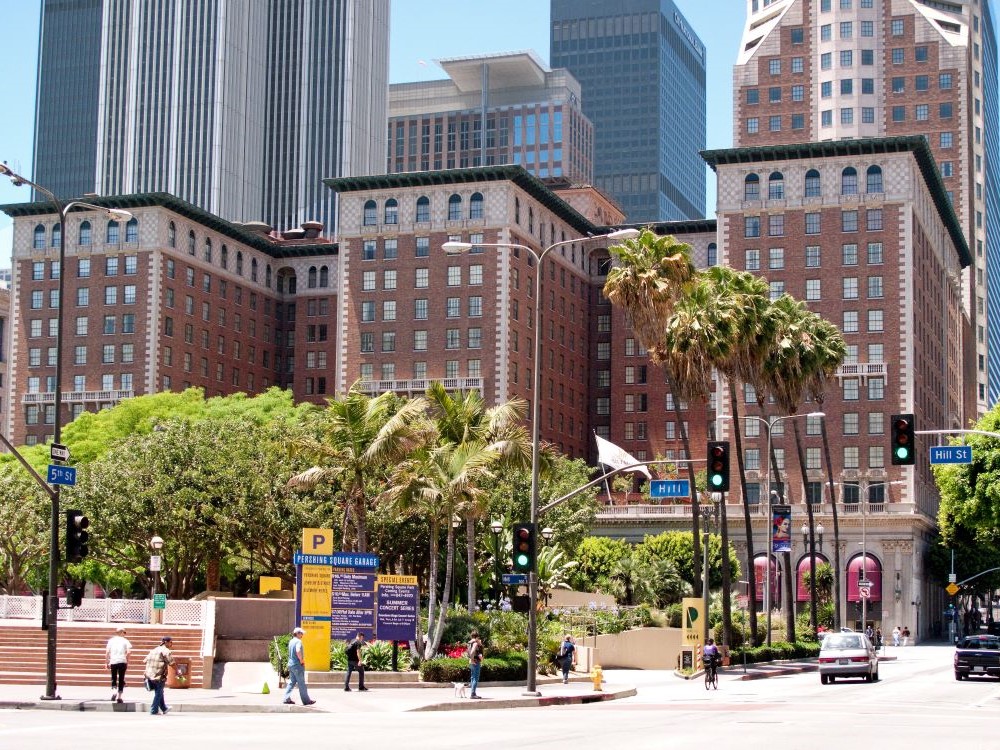
The Millennium Biltmore Hotel, originally the Los Angeles Biltmore of the Bowman-Biltmore Hotels group, is a luxury hotel located opposite Pershing Square in Downtown Los Angeles, California. Upon its grand opening in 1923, the Los Angeles Biltmore was the largest hotel west of Chicago in the United States. In 1969 the Biltmore Hotel was designated a Los Angeles Historic-Cultural Monument by the City of Los Angeles.
Architecture
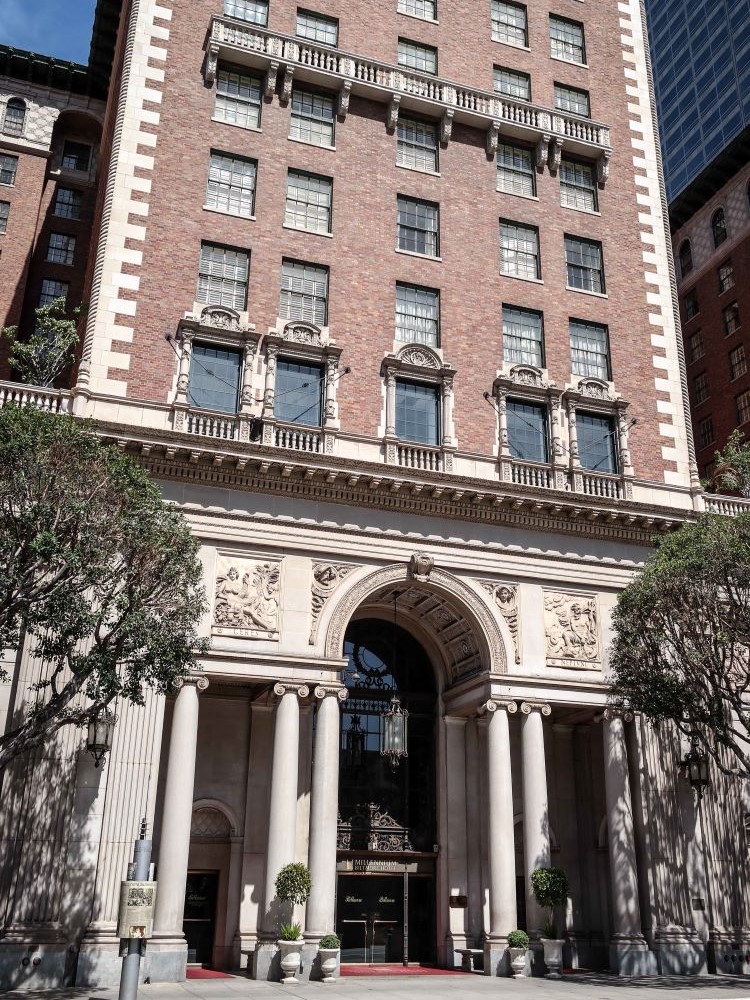
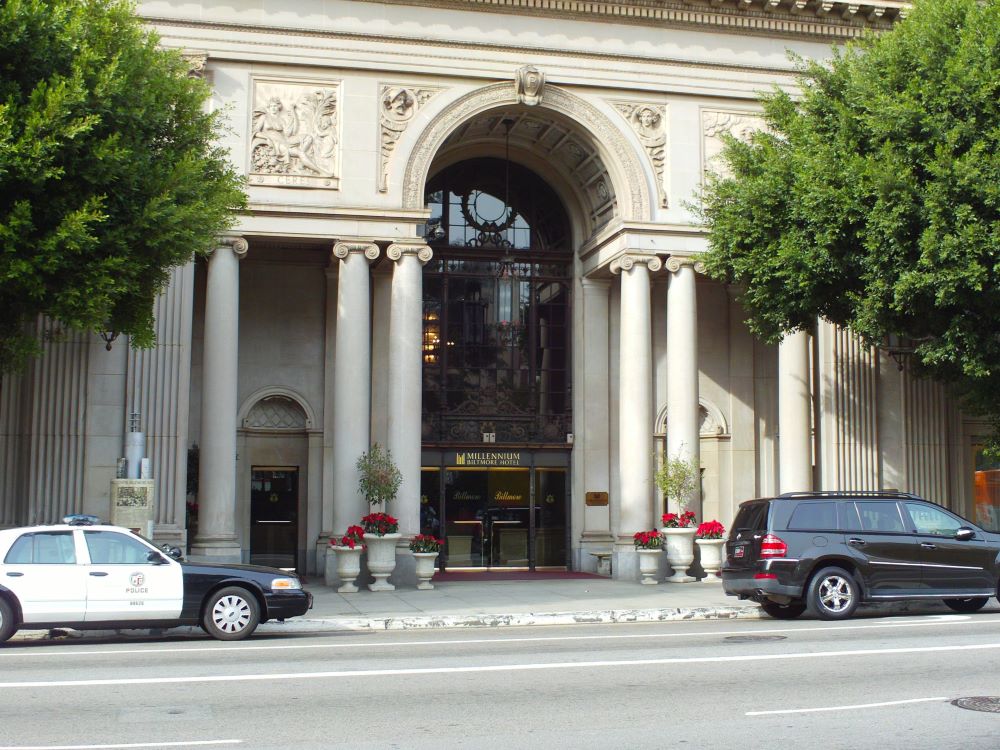
The Biltmore's exterior was designed in a synthesis of the Spanish-Italian Renaissance Revival, Mediterranean Revival, and Beaux Arts styles, meant as an homage to the Castilian heritage of Los Angeles. The "Biltmore Angel" is heavily incorporated into the design—as a symbol of the city as well as the Biltmore itself. With a thick steel and concrete frame, the structure takes up half a city block and rises over 11 stories.
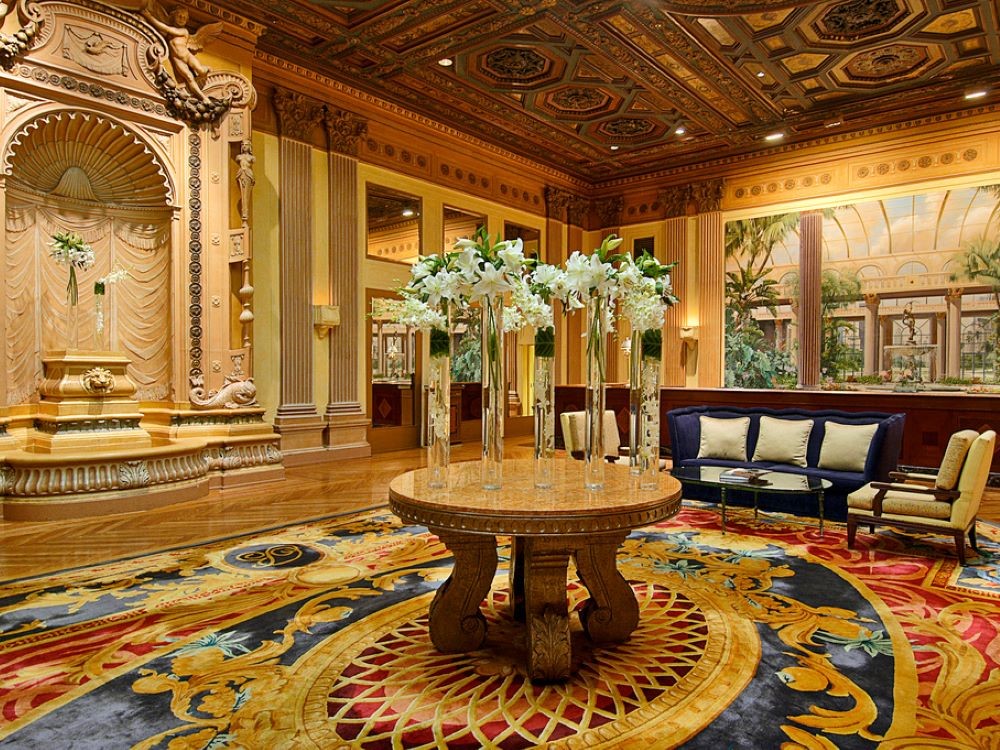
The interiors of the Biltmore Hotel are decorated with: frescos and murals; carved marble fountains and columns; massive wood-beamed ceilings; travertine and oak paneled walls; lead crystal chandeliers; cast bronze stairwells and doorways; fine artisan marquetry and mill work; and heavily embroidered imported tapestries and draperies. Most notable are the frescoed mural ceilings in the main Galleria and the Crystal Ballroom, which were hand painted in 1922 by Italian artist John B. Smeraldi, known for his work in the Vatican and the White House. Smeraldi and his team famously painted the ballroom's colorful, seamless fresco over a period of seven months, decorating it with figures of Greek and Roman gods, angels, cupids and other mythological creatures. It was meticulously restored in the 1980s by Smeraldi's apprentice, Anthony Heinsbergen. The imported Austrian crystal chandeliers that adorn it are 12 feet (3.7 m) in diameter.
The Rendezvous Court, once the hotel's lobby but now used primarily for afternoon tea, is decorated with a Moorish Revival styled plaster ceiling painted with 24 Carat Gold accents, two original imported Italian chandeliers from 1923, and a grand Spanish Baroque Revival bronze doorway, whose astrological clock still keeps time today. Two figures appear on the stairwell front—on the left is the Roman goddess of agriculture Ceres, while on the right is the Spanish explorer Vasco Núñez de Balboa. The current lobby at the hotel's Grand Avenue entrance still has its original travertine walls and oak paneling as well as the large artificial skylighted ceiling, reflected in the custom carpet below.
Millennium Biltmore Hotel Galleria
Each ballroom on the Galleria level is themed either after the room's original function or the hotel's overall California-heritage premise. The Emerald Room was once the hotel's main guest dining room; its decor features images of hunt and harvest, with hand-painted animals and fish on the cast-plaster ceiling beams. The Tiffany Room was formerly an open corridor used as a drop-off point for Crystal Ballroom functions. Now enclosed, the elegant space centers around exploration, with relief sculptures and panels depicting Queen Isabella I of Castile, and Christopher Columbus and other Spanish New World explorers. The split-level Gold Room, once a dining room for elite guests, features Prohibition-era hidden liquor compartments and panels along the ceiling for press photographers to take pictures of the event below. It is decorated with a gold cast-plaster ceiling, hand-oiled wood paneling, and nine mirrored windows along three sides.
The South Galleria is painted with floral friezes inspired by the decor of ancient Roman Pompeii, and features a vaulted ceiling, marble balustrades and heavy Roman piers. Gold-painted wrought iron gates open to a staircase leading down to the Biltmore Bowl.
Also of interest is the hotel's health club and indoor pool, which was modeled after the decks of 1920s luxury ocean liners. Solid brass trim on windows, doors and railings, teakwood deck chairs and hand-laid Italian mosaic tile on the walls and in the pool are original.
This article uses material from the Wikipedia article "Millennium Biltmore Hotel", which is released under the Creative Commons Attribution-Share-Alike License 3.0
_-_295-1000.jpg)

.jpg)
.jpg)