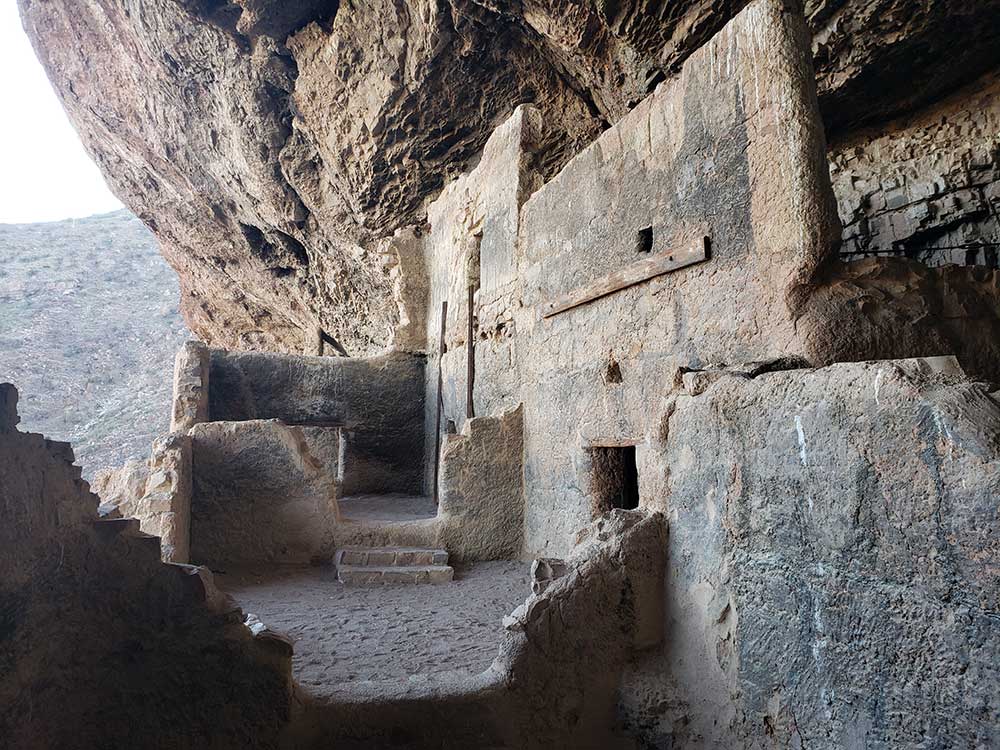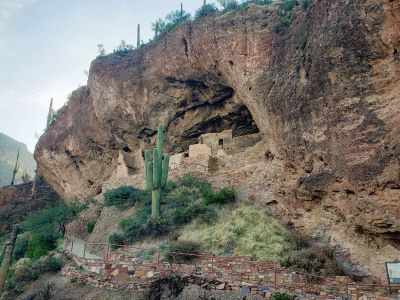
Ancient cliff dwellings preserved within rugged desert terrain, offering insight into the Salado culture through guided and self-guided hikes.
General Information
May–August: 8:00 AM – 12:00 PM (must begin hike before noon)
September–April: 8:00 AM – 4:00 PM (must begin hike before 4 PM)
Upper Cliff Dwelling: Guided tours only, November–April, weekends only
Visitor Center:
May–August: 8:00 AM – 4:00 PM
September–April: 8:00 AM – 5:00 PM
Closed: Thanksgiving, Christmas Day, New Year’s Day
Early closures on Christmas Eve and New Year’s Eve
Children under 16: Free
Valid for 7 consecutive days
Not permitted in visitor center or inside dwellings
Must be leashed (max 6 ft), not left unattended, and cleaned up after
How to Get There
From Phoenix, AZ (110 mi): Take US-60 E through Globe, then follow AZ-188 N toward Roosevelt Lake to reach the monument entrance.
Overview
Tonto National Monument in the Superstition Mountains of central Arizona preserves well-preserved cliff dwellings built and occupied by the Salado people in the 13th, 14th and early 15th centuries. Set in the Sonoran Desert above Roosevelt Lake, where the Salt River provides a rare, year-round water source, it is one of the best places in Arizona to see ancient cliff dwellings up close. The Salado farmed the river valley and were fine craftspeople, producing some of the most colorful polychrome pottery and intricate textiles in the Southwest, and some artifacts are displayed in the visitor center museum.
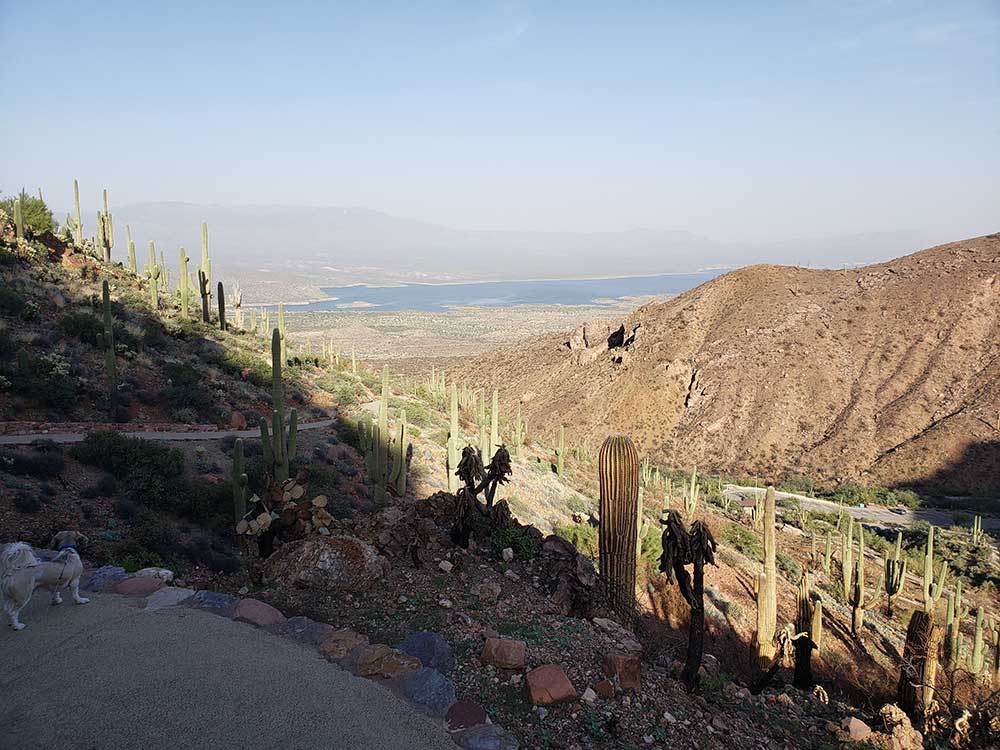
The monument is surrounded by Tonto National Forest and several wilderness areas, including Four Peaks, Superstition and Salome. Its Upper Sonoran habitat is full of saguaros, cholla, prickly pear, palo verde and mesquite, with wildflowers in February and March in good years, and it supports deer, mountain lions, bobcats and rattlesnakes.
This article uses material from the Wikipedia article "Tonto National Monument", which is released under the Creative Commons Attribution-Share-Alike License 3.0
Featured Trails
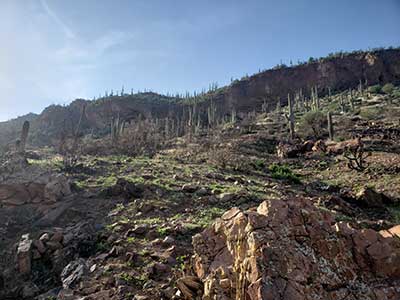
Lower Cliff Dwelling Trail
0.7 mile round trip, 305 feet
Paved, half mile, self-guided trail which leads from the visitor center/museum quite steeply 350 feet up the side of a rocky hill, giving increasingly good views of Tonto Basin and Theodore Roosevelt Lake.