Casa Grande Ruins National Monument

Preserved prehistoric structure and surrounding ruins offering insight into the ancient Sonoran Desert people's community and irrigation systems.

General Information

Hours:
Daily: 9:00 AM – 4:00 PM
Closed: Juneteenth, Independence Day, Thanksgiving, and Christmas
Last entry at 3:45 PM; all visitors must exit by 4:00 PM
Fees:
Entrance: Free
No reservations or passes required
Pet Policy:
Leashed pets allowed in outdoor areas
Not permitted inside buildings
Must be leashed (max 6 ft) and cleaned up after
Closest cities with hotels:
Coolidge, AZ (1 mi)
Seasons:
All year; best in winter and early spring for cooler weather
Location:
https://maps.app.goo.gl/6ZzZzqZzZzqZzZz6
Website:
nps.gov/cagr

From Phoenix, AZ (50 mi): Take I-10 E to AZ-387 S, then follow AZ-87 S to Coolidge and turn onto W Ruins Drive to reach the monument.

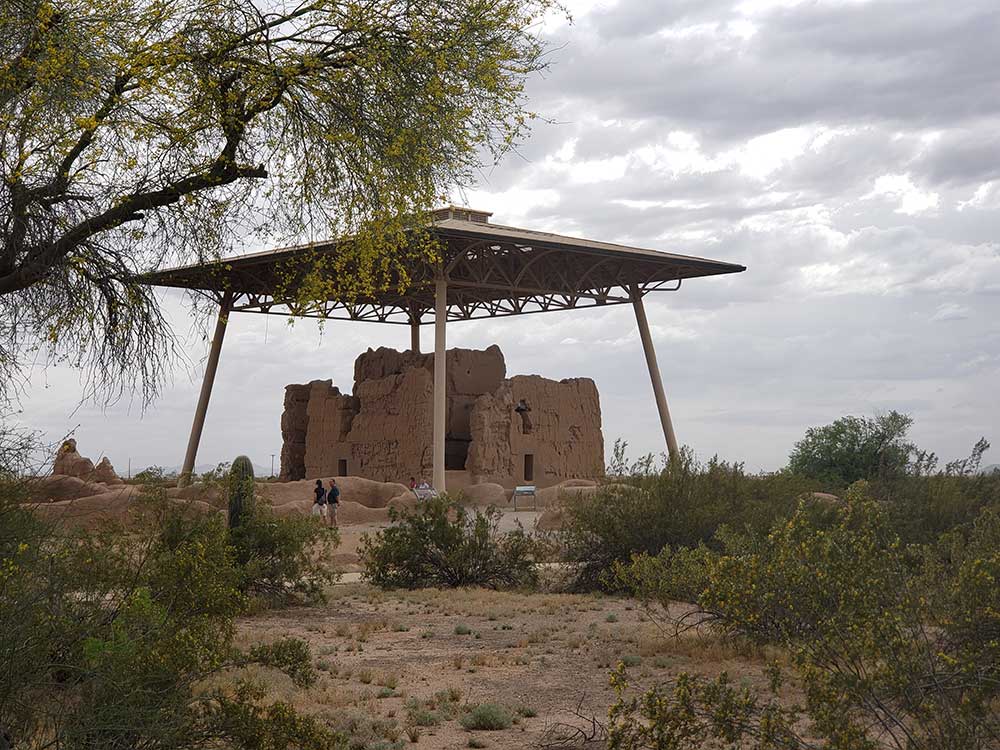
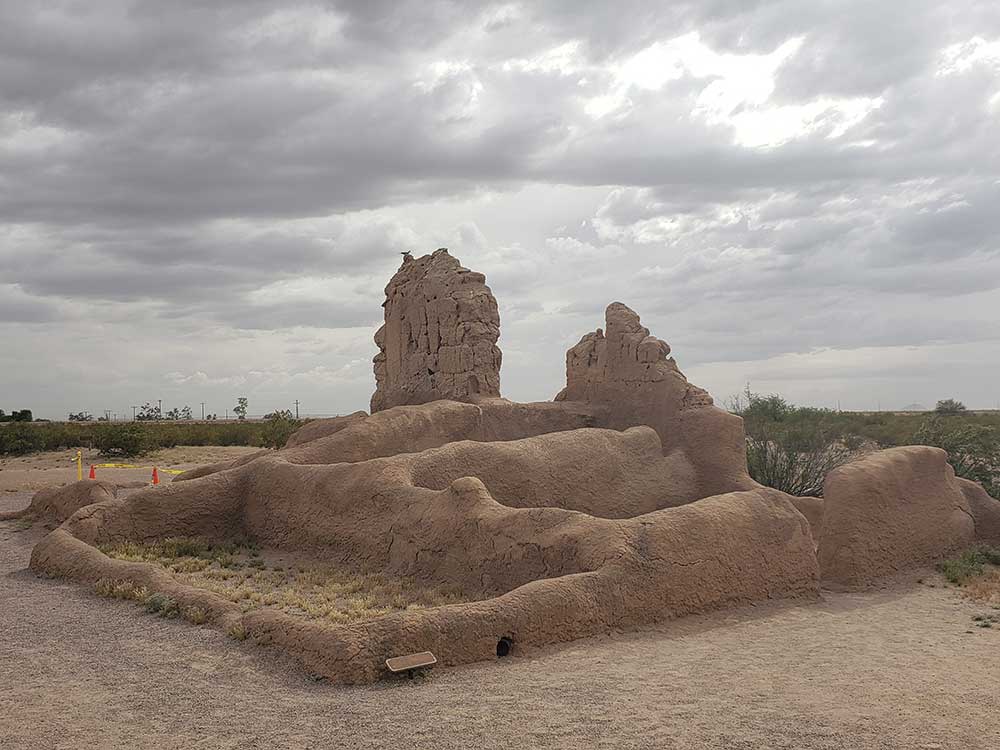
Casa Grande Ruins National Monument, in Coolidge, Arizona, just northeast of the city of Casa Grande, preserves a group of Hohokam structures dating to the Classic Period (1150-1450 C.E.). The national monument consists of the ruins of multiple structures surrounded by a compound wall constructed by the ancient people of the Hohokam period, who farmed the Gila Valley in the early 13th century. Archeologists discovered evidence that the ancient Sonoran Desert people who built the Casa Grande also developed wide-scale irrigation farming and extensive trade connections which lasted over a thousand years until about 1450 C.E.

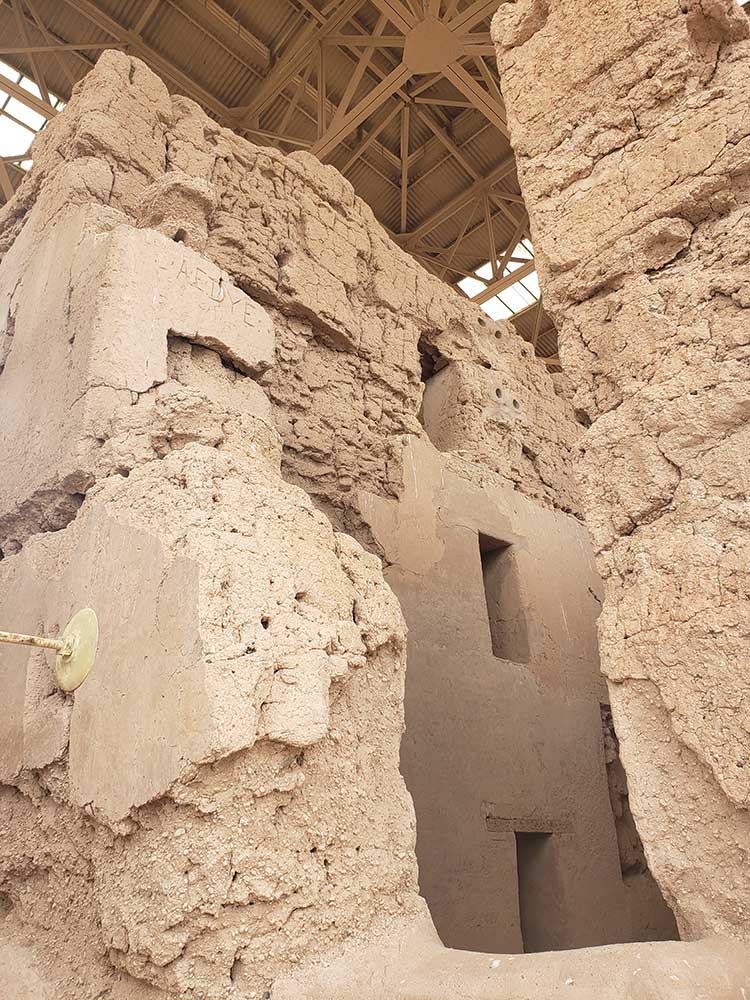
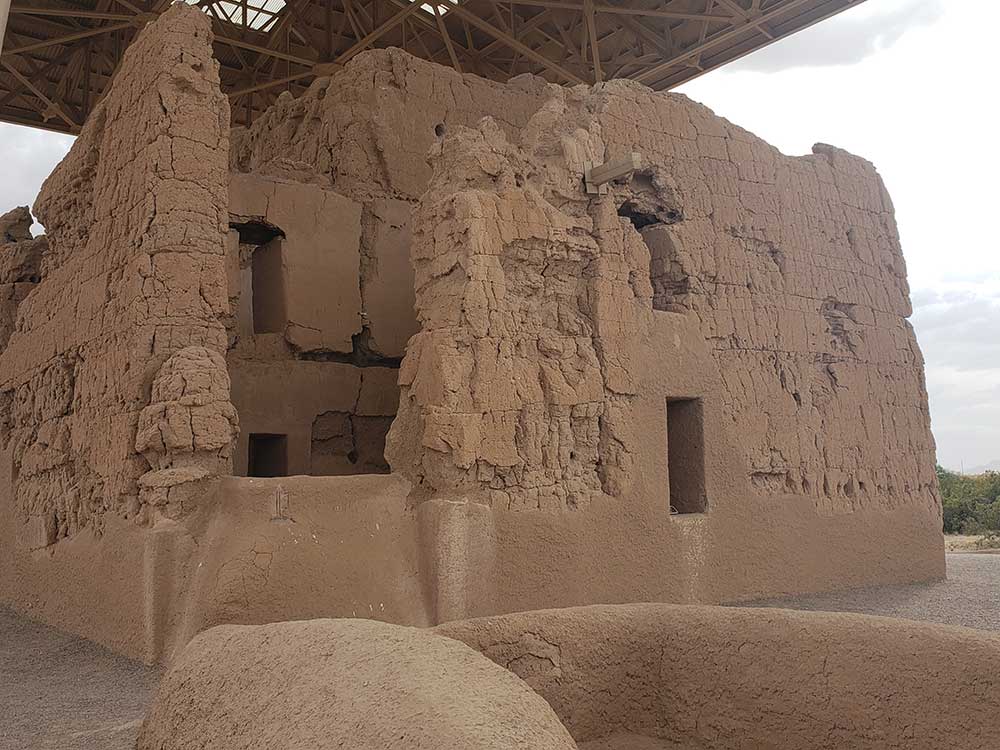
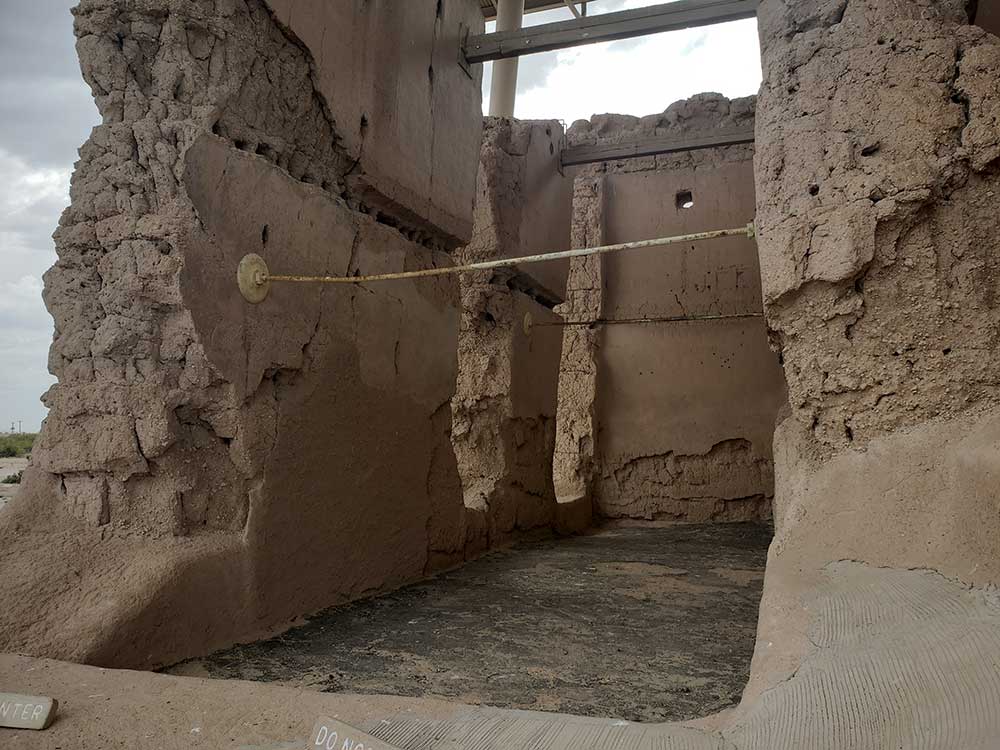
The structure is made of caliche, and has managed to survive the extreme weather conditions for about seven centuries. The large house consists of outer rooms surrounding an inner structure. The outer rooms are all three stories high, while the inner structure is four stories high. The structures were constructed using traditional adobe processes. The wet adobe is thicker at the base and adds significant strength. Noticeable horizontal cracks define the breaks between courses on the thick outer walls. The process consisted of using damp adobe to form the walls and then waiting for it to dry, and then building it up with more adobe. Casa Grande contained a ball court much like that found at Pueblo Grande de Nevada. Father Eusebio Kino was the first European to view the Hohokam complex in November 1694 and named it Casa Grande. Casa Grande now has a distinctive modern roof covering built in 1932.

In 1932, a ramada to shelter the ruins from weathering was built by Boston architect Frederick Law Olmsted, Jr. The current protective structure covering the "Great House" replaced a wooden similar structure built to protect it in 1903 . Due to the fragile nature of the "Great House," visitors to the site are not permitted inside. To protect its integrity, observation by visitors is only permitted outside the structure.

This article uses material from the Wikipedia article "Casa Grande Ruins National Monument", which is released under the Creative Commons Attribution-Share-Alike License 3.0.
casa-grande-incomplete-wall
Incomplete Wall
casa-grande-inside-corridor

Inside Corridor

casa-grande-full-view
Full view of Monument
casa-grande-inside-window

Inside Window

casa-grande-outside-wall
Outside View of Wall