-400.jpg)
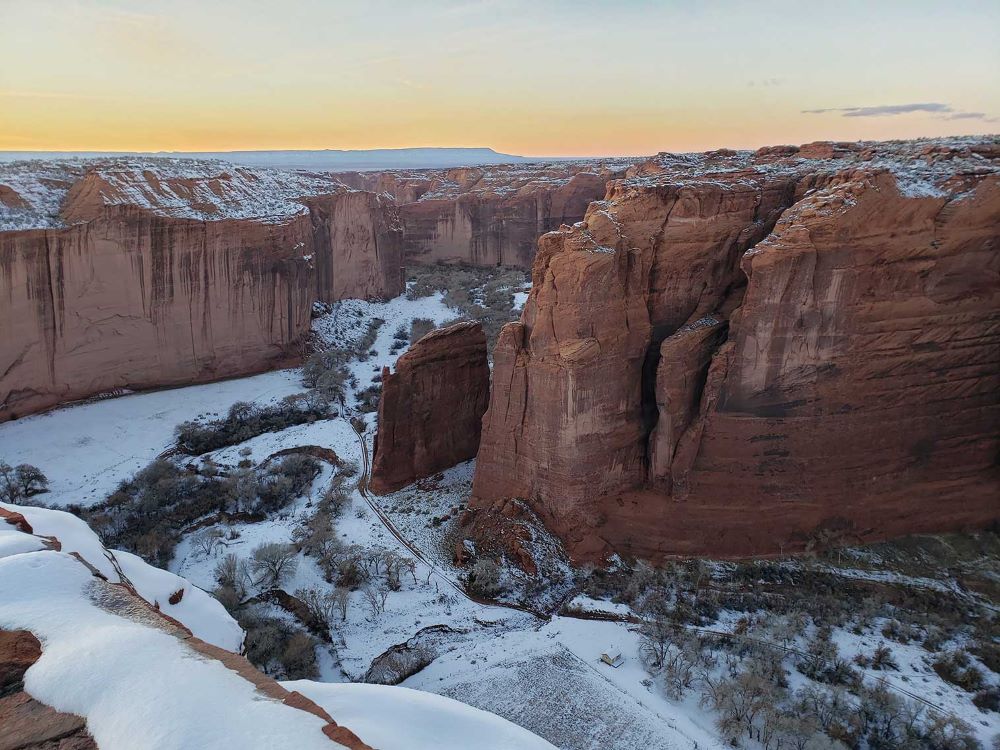
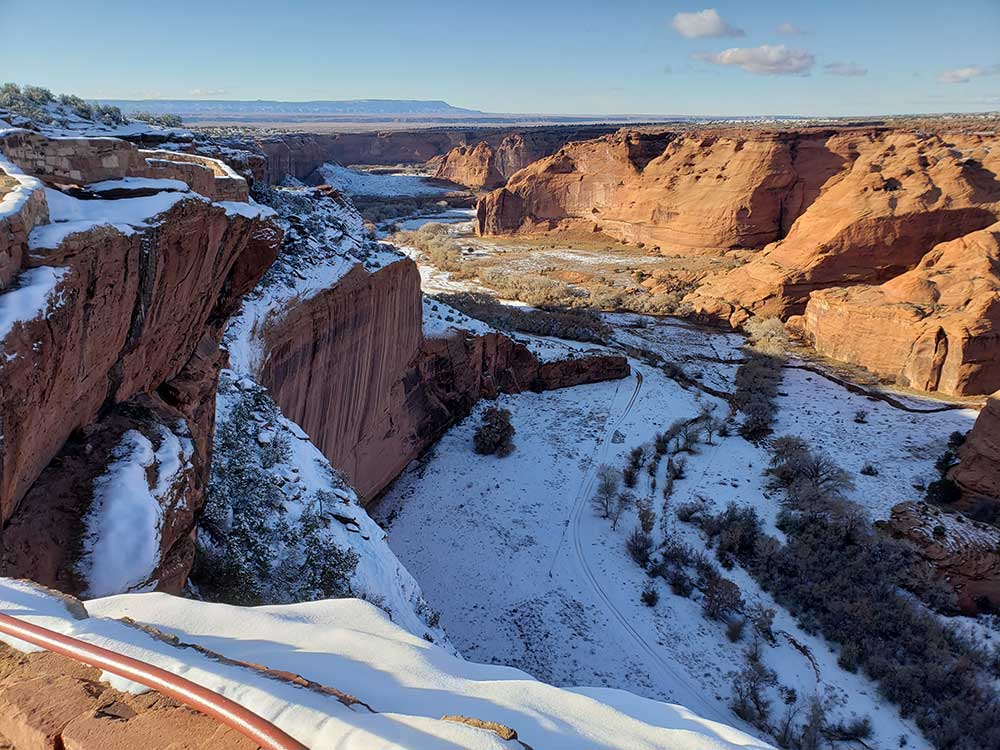
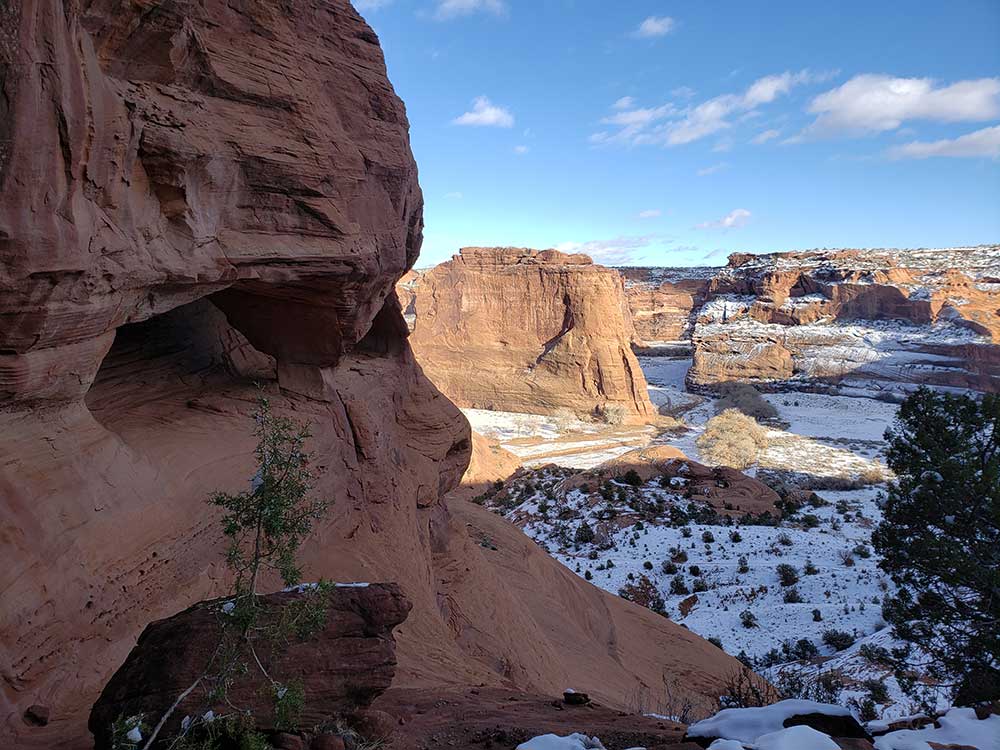
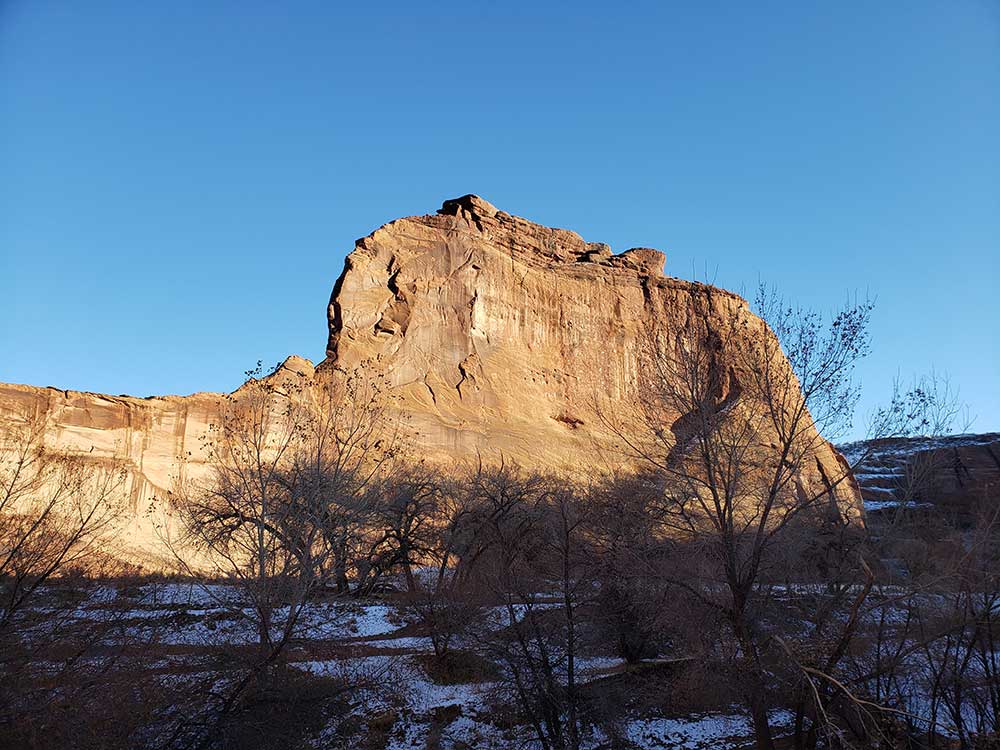
Towering sandstone cliffs, ancient cliff dwellings, and Navajo homesteads preserved within a dramatic canyon landscape.
General Information
Welcome Center: 8:00 AM – 5:00 PM daily
Closed: Thanksgiving, Christmas Day, and New Year’s Day
Guided Canyon Tours (required for interior access): ~$75–$90 per person depending on tour type
Cottonwood Campground: Fee applies, first-come, first-served
Not permitted in Welcome Center or on canyon tours
Must be leashed (max 6 ft) and cleaned up after
From Flagstaff (183mi) take I-40 E. Turn left onto AZ-87 N/I-40BL EAZ-87 N and continue to Indian Rte 15. Turn right onto Indian Rte 15. Turn left onto State Hwy 77. Follow Rte 15 and Indian Rte 15 to US-191 N in Burnside. At the traffic circle, take the 2nd exit onto US-191 . Follow Indian Rte 7 to Indian Rte 64.
From Monument Valley (92mi) take US-163 S Turn left onto US-160 E. Turn right onto Indian Rte 59. Turn right onto US-191 S. Turn left onto Indian Rte 7. Continue onto Indian Rte 64.
Overview
Canyon de Chelly National Monument was established on April 1, 1931, as a unit of the National Park Service. Located in northeastern Arizona, it is within the boundaries of the Navajo Nation and lies in the Four Corners region. Reflecting one of the longest continuously inhabited landscapes of North America, it preserves ruins of the indigenous tribes that lived in the area, from the Ancestral Puebloans (formerly known as Anasazi) to the Navajo. The monument covers 83,840 acres and encompasses the floors and rims of the three major canyons: de Chelly, del Muerto, and Monument. These canyons were cut by streams with headwaters in the Chuska Mountains just to the east of the monument. None of the land is federally owned. Canyon de Chelly is one of the most visited national monuments in the United States.
Etymology
The name Chelly is a Spanish borrowing of the Navajo word Tséyi', which means "canyon" (literally "inside the rock" tsé "rock" + -yi' "inside of, within").
Description
Canyon de Chelly is entirely owned by the Navajo Tribal Trust of the Navajo Nation. It is the only National Park Service unit that is owned and cooperatively managed in this manner. About 40 Navajo families live in the park. Access to the canyon floor is restricted, and visitors are allowed to travel in the canyons only when accompanied by a park ranger or an authorized Navajo guide. The only exception to this rule is the White House Ruin Trail.
Spider Rock
The park's distinctive geologic feature, Spider Rock, is a sandstone spire that rises 750 feet from the canyon floor at the junction of Canyon de Chelly and Monument Canyon. Spider Rock can be seen from South Rim Drive. According to traditional Navajo beliefs, the taller of the two spires is the home of Spider Grandmother.
Most park visitors view Canyon de Chelly from the rim, following both North Rim Drive and South Rim Drive. Ancient ruins and geologic structures are visible, but in the distance, from turnoffs on each of these routes. Private Navajo-owned companies offer tours of the canyon floor by horseback, hiking or four-wheel drive vehicle. The companies can be contacted directly for prices and arrangements. No entrance fee is charged to enter the park, apart from any charges imposed by tour companies. Accommodations for visitors are located in the vicinity of the canyon, on the road leading to Chinle, which is the nearest town.
This article uses material from the Wikipedia article "Canyon de Chelly National Monument", which is released under the Creative Commons Attribution-Share-Alike License 3.0.
Featured Trails
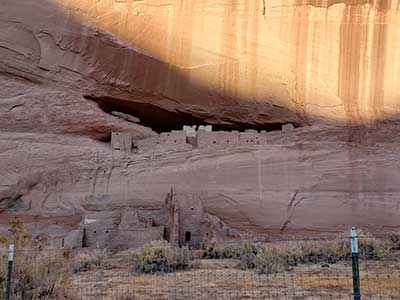
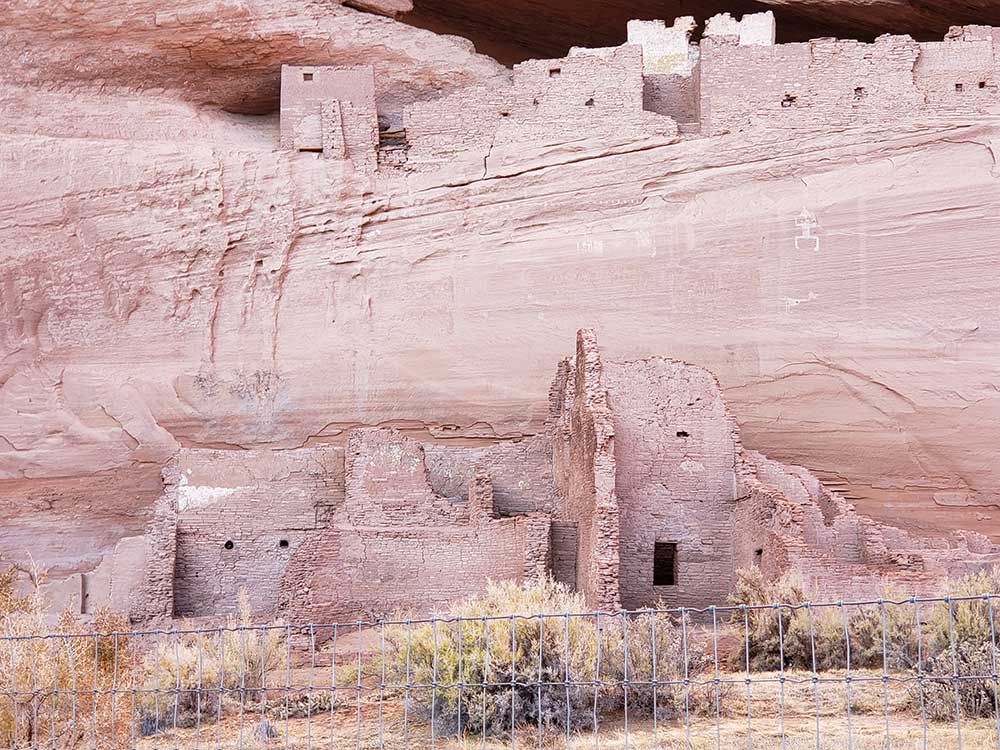
White House Trail
1.0 mile loop, 59ft elevation
Self-guided hike and only exception to restricted access to canyon floor. Trail leads to well preserved ancient indian dwelling built into canyon wall.
.jpg)