Arizona-Sonora Desert Museum

98-acre zoo, aquarium, botanical garden, natural history museum, publisher, and art gallery located near Saquaro National Park

General Information

Hours:
October–May: Daily 8:30am to 5:00pm
June–September: Daily 7:30am to 4:00pm
Cool Summer Nights (Saturdays, June–August): 7:30am to 9:00pm
Open 365 days a year
Fees:
General Admission (ages 13–64): $29.95
Seniors (65+): $27.95
Military (active/retired): $27.95
Arizona/Sonora Residents (13+): $24.95
Children (3–12): $19.95
Children under 3, Members, and Native Americans (with ID): Free
Pet Policy:
Pets are not allowed
Closest cities with hotels:
Tucson, AZ (15 mi)
Seasons:
October through April for cooler weather and active wildlife; open year-round
Location:
desertmuseum.org

From Tucson, AZ (15 mi): Take Speedway Blvd west through Gates Pass, continue on Kinney Rd, and follow signs to the museum entrance near Saguaro National Park West.

The Arizona-Sonora Desert Museum is a 98-acre zoo, aquarium, botanical garden, natural history museum, publisher, and art gallery founded in 1952. Located just west of Tucson, Arizona, it features two miles of walking paths traversing 21 acres of desert landscape. It is one of the most visited attractions in Southern Arizona.

The nonprofit organization focuses on the interpretation of the natural history, plants and animals of the Sonoran Desert. The museum is home to more than 230 animal species and 1,200 varieties of plants. It is open every day through the year, and hosts nearly 400,000 visitors annually, including visitors from abroad.

The Warden Aquarium opened in January 2013. The 1,100-square-foot (100 m2) aquarium highlights the roles of the Colorado and other life-giving rivers in the region, as well as the Gulf of California, from which the water brought by the monsoon is essential to life in the Sonoran Desert. The “Rivers to the Sea” exhibit includes a touch tank with marine invertebrates.

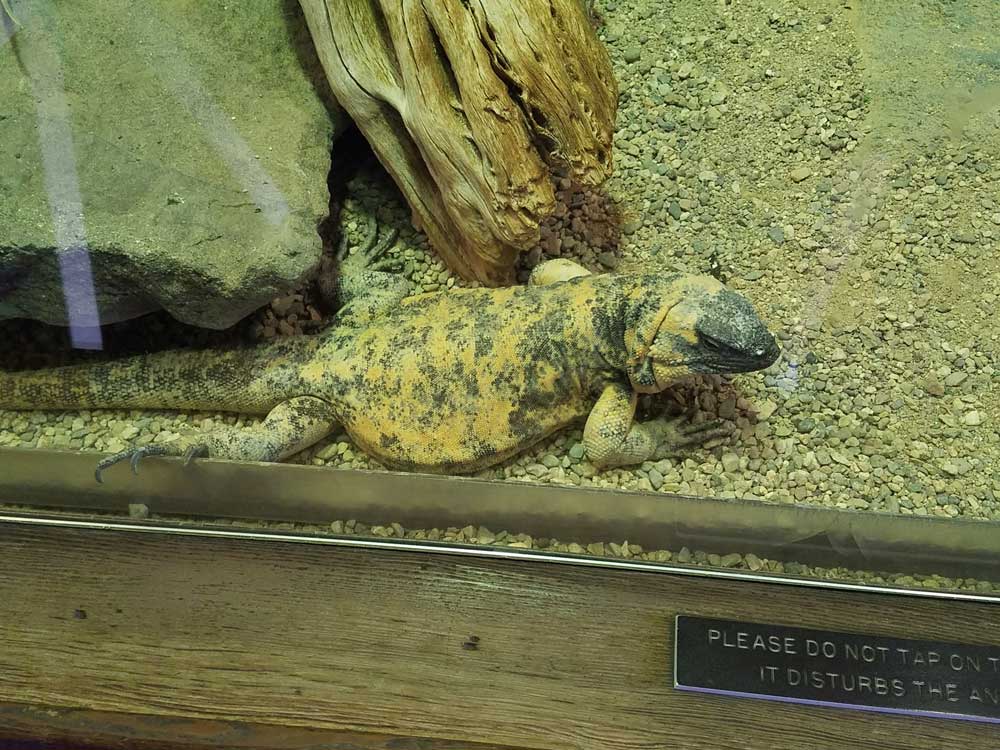
The Desert Museum has exhibited lower vertebrates and invertebrates since its early days. Though this hall has been modified over the years, the building dates back to 1937 and many of the painted dioramas were created in the early to mid-1950s. On exhibit is a wide variety of native reptiles, including many species of rattlesnakes. Many amphibians and other invertebrates, ranging from spiders and scorpions to beetles, walking sticks, and grasshoppers, are also showcased.

At Cat Canyon visitors can view small cats, like bobcats and an ocelot, in naturalistic grotto settings. This exhibit area also includes a gray fox and porcupine. The animals can be viewed from overhead and at eye level..

The Desert Grassland exhibit area recreates a desert grassland habitat featuring soap tree yuccas, desert scrub, grasses and succulents. Visitors here can observe prairie dogs and learn the region's history through a replica of a mammoth kill site.

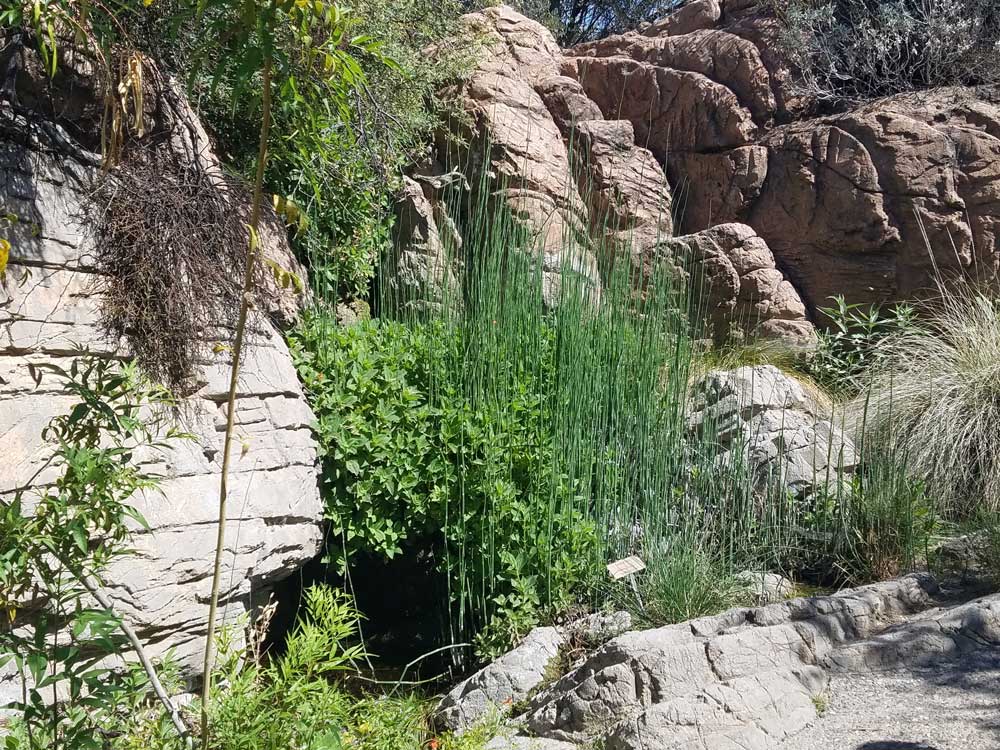
Life on the Rocks is a multi-species exhibit focusing on the habitat and species most often encountered amid the region's rocky slopes. Some enclosures are mesh-topped with natural soils and vegetation; others are glass-fronted crevices or cutaway burrows in simulated soil banks. The “homes” of individual species are embedded in the rocks – many with burrows that can be exposed by visitors.

The Life Underground exhibit highlights creatures that make their homes underground. Visitors enter a tunnel and walk below ground into a dimly lit corridor where various creatures, such as kit fox, kangaroo rat, and ringtail, are featured. Here visitors learn where animals go when the desert heats up.

Currently on exhibit in the Riparian Corridor area are a river otter, bighorn sheep, coatis (also known as coatimundis), beavers, native fish and aquatic invertebrates (i.e., dragonflies and snails). There is also a desert toad life-cycle installation.

The Desert Loop Trail is an unpaved desert trail one-half mile long, passing through areas where javelinas, coyotes and lizards are on display. The fiber fencing there are designed to be almost invisible to the eye, aiming to make the enclosure feel like naturally open space. Agaves and various legume trees, native to the region, are identified on this trail.

The "Mountain Woodland" exhibit is a Mexican Pine-Oak Woodland habitat recreating similar habitats in nearby mountain ranges. Native species include a cougar, white-tailed deer, Merriam's turkeys and a brown bear. Mexican wolves and thick-billed parrots also showcased in this area are no longer present in the Sonoran Desert.

There is a walk-in aviary with northern cardinals, Gambel's quail, ducks, doves, and many other species of native birds. Several benches are located throughout the aviary for observation. A small stream runs through the middle of the enclosure.

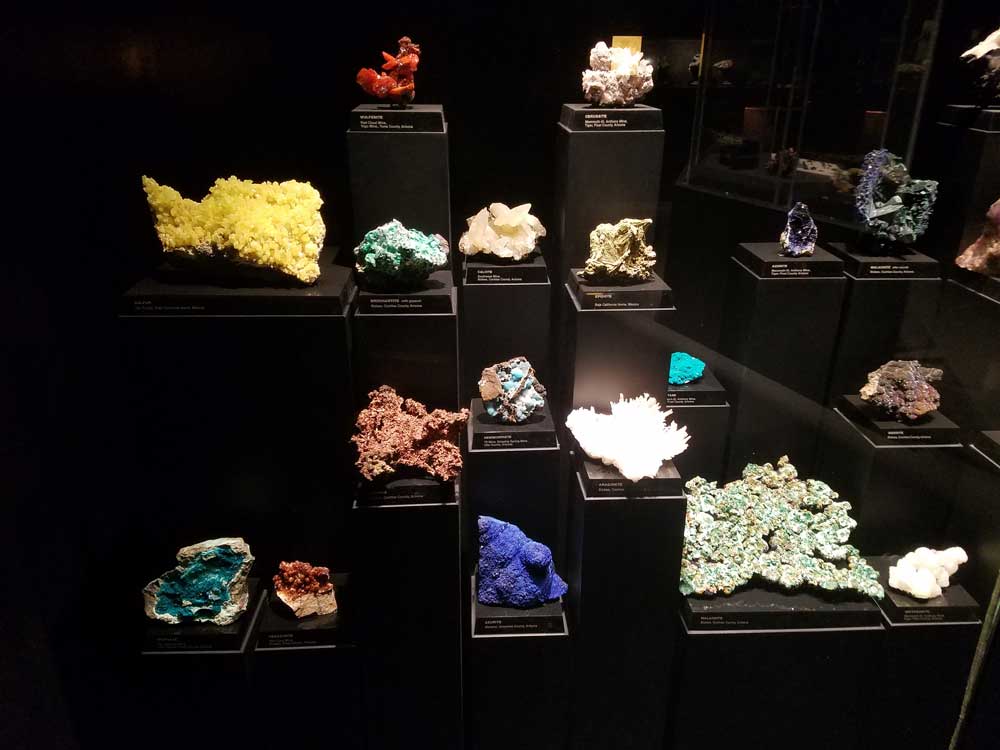
The Earth Sciences Center-Cave is an artificial cave constructed with arches, side chambers and a tunnel for visitors to explore its 75-foot length. Along the entry passage, organisms and residents are displayed. Further in, a glistening mass of cave formations are lit from beneath the surface of a pool. In the grand rooms, fossils, geologic gems and minerals, and the history of the earth is interpreted.

Desert Garden was built as a partnership between Sunset magazine and the Desert Museum. Three different levels of demonstration gardens display various species of plants that can be used in landscaping for homes in the Sonoran Desert region. There are two water features and seating. Attracted by water and flowers, wild native birds and butterflies frequently visit here.

The Hummingbird Aviary allows observation of hummingbirds hovering so closely that visitors can feel the air disturbed by their wings. In breeding season, nests are near enough to allow viewing of the babies. The aviary houses four species that nest annually. The museum's Hummingbird Propagation Program is the only one of its kind in the world for North American hummingbirds.

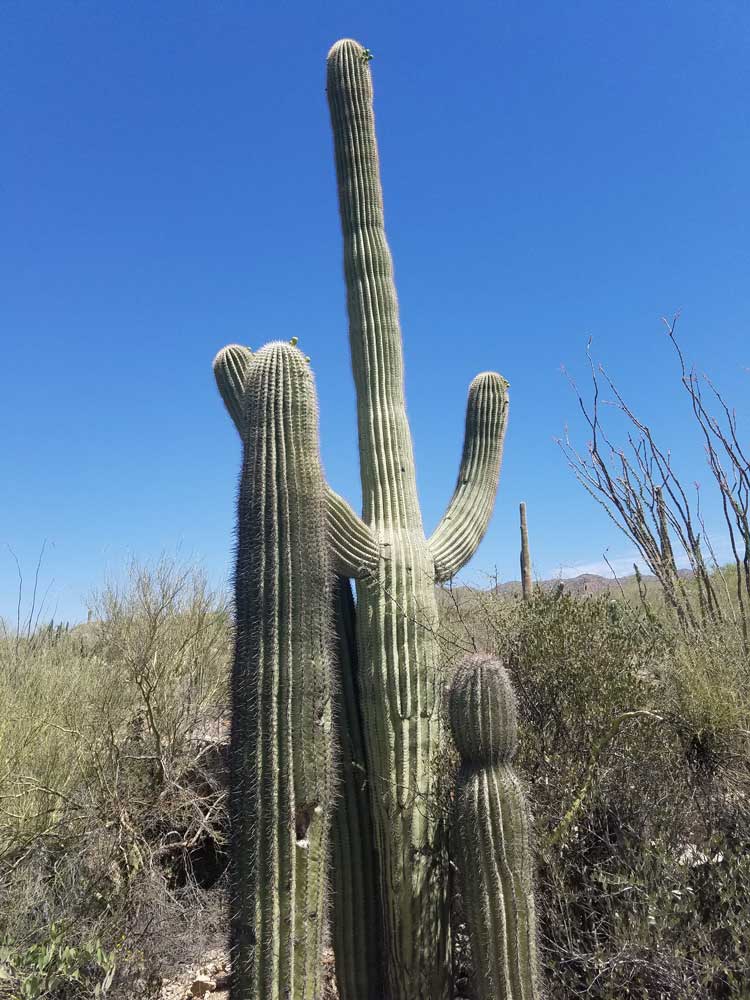
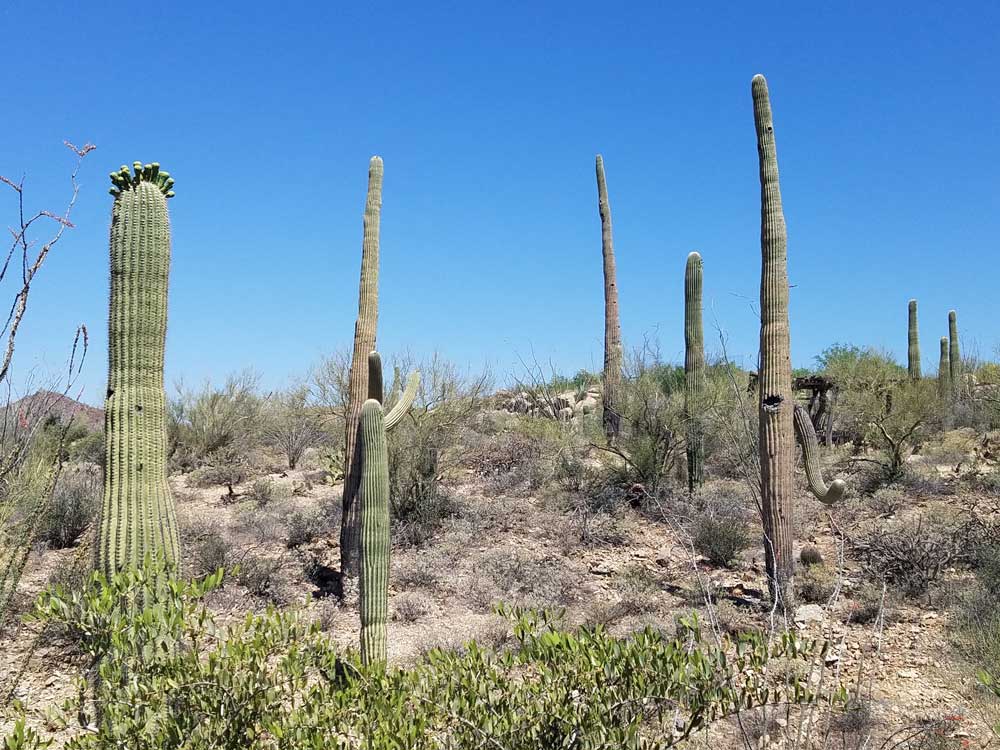
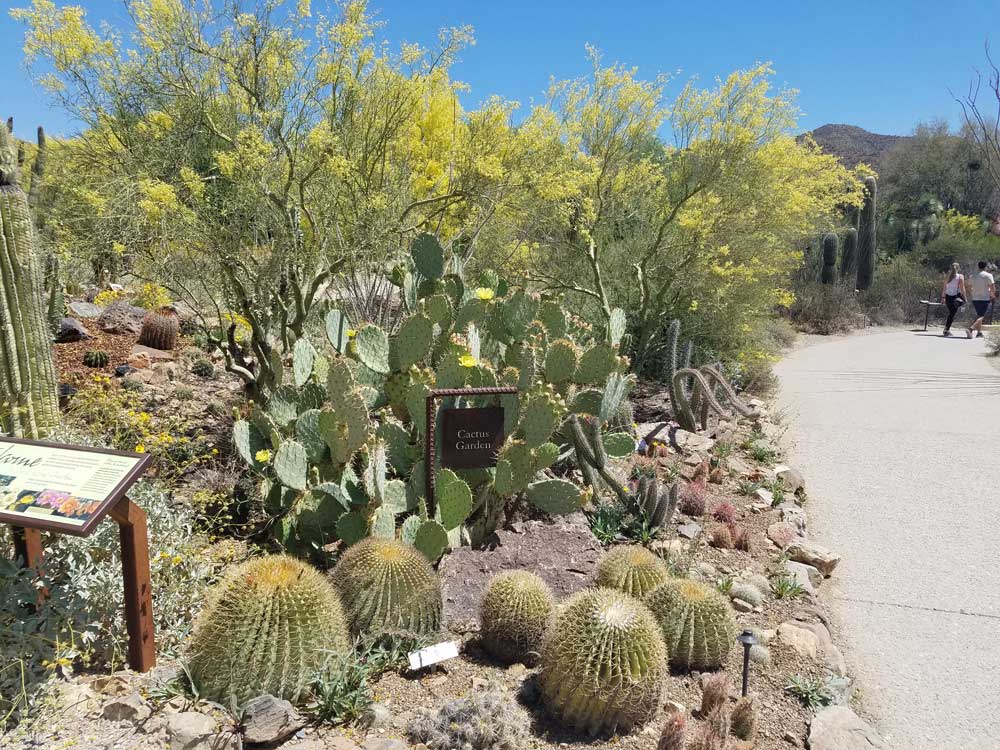
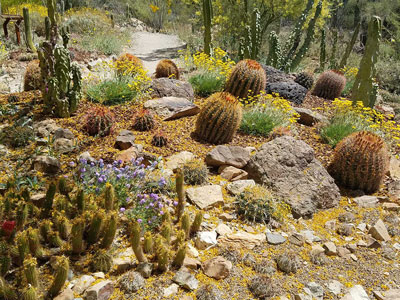
Due to its bi-seasonal rainfall, the Sonoran Desert region is known as the “lushest desert on earth” and is home to over 2,000 species of plants. The museum's gardens display this ecosystem and represent a variety of biotic communities found within the Sonoran Desert region. There are 1,200 different species of plants with 56,000 individual specimens planted on the grounds. The following gardens are available for viewing throughout the year:

  1. Desert Grasslands
  2. Agave Garden
  3. Palo Verde Trees
  4. Hohokam Agave Field
  5. Cactus Garden
  6. Labyrinth
  7. People and Pollinators
  8. Life Zone Transects
  9. Tropical Deciduous Forest
  10. Desert Garden
  11. Yucca Ramada
  12. Pollination Gardens
  13. Live presentations
This presentation features often misunderstood venomous reptiles. Each program presents two species, which could be any combination of the following:
  1. Mexican beaded lizard
  2. Western diamondback rattlesnake
  3. Mohave rattlesnake
  4. Black-tailed rattlesnake
  5. Gila monster
  6. Raptor free-flight
This birds-of-prey demonstration is held in the open desert and spectators watch from the flight path. The birds fly so close visitors often feel the brush of feathers. Weather permitting, the museum hosts two demonstrations daily from mid-October through mid-April. The birds fly completely untethered, without any jesses (leg straps) and most often without leg rings. Only birds native to the Sonoran Desert Region are flown. A featured species is Harris's hawks, the only raptor species in the world to hunt as a family using strategy, like wolves. The morning and afternoon demonstrations showcase different species, so each is unique. Species include: Harris's hawk, peregrine falcons, barn owls, red-tailed hawks, ferruginous hawk, great horned owl, gray hawk, prairie falcon, and chihuahuan raven.

Docent Stations, with trained volunteer naturalists, are located throughout the museum grounds. At these stations, docents offer presentations with live reptiles, birds, or mammals, or with animal skulls, skeletons, or fossil remains. Some stations interpret the geology of the Sonoran Desert region including rock formations and semi-precious stones.

Tours are available through advanced reservations via the museum's website. Topics include: Zookeeper for a Day, Winged Wonders (Hummingbird Tour), Warden Aquarium Private Tour, Walk on the Wild Side, and the Reptiles, Amphibians, and Invertebrates Tour.

This article uses material from the Wikipedia article "Arizona-Sonora Desert Museum", which is released under the Creative Commons Attribution-Share-Alike License 3.0.