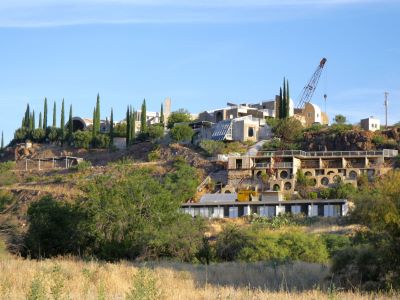

Projected experimental town 67 miles North of Phoenix that uses concept of arcology, which combines architecture and ecology, to demonstrate how urban conditions could be improved while minimizing the destructive impact on the Earth
General Information
Tours: Daily, with specific times Thursday–Monday at 9:30am, 11:00am, and 2:00pm; Tuesday–Wednesday at 11:00am and 2:00pm
Closed on major holidays including New Year’s Day, Easter, Thanksgiving, and Christmas
Discounted rates available for students, seniors, and children
Specialty tours may have additional costs
How to Get There
From Phoenix, AZ (70 mi): Take I-17 N toward Flagstaff, exit at Cordes Junction, then follow signs east on Arcosanti Road to S Cross L Rd and continue to the Arcosanti Visitor Center.
Overview
Arcosanti is an experimental town in the high desert of central Arizona, about 70 miles north of Phoenix, where visitors can tour a living architectural experiment and watch bronze bells being cast in its foundry. Architect Paolo Soleri (1919–2013) began building it in 1970 to test his idea of “arcology,” the fusion of architecture and ecology, aiming to combine the closeness of urban life with minimal resource use and easy access to nature.
The town occupies 25 acres of a 4,060-acre land preserve and has about a dozen major structures, some several stories tall. Its population has ranged from 50 to 150 people, many of them students and volunteers. Soleri once envisioned a city of 5,000 residents, and construction has continued at a varying pace since 1970.
This article uses material from the Wikipedia article "Arcosanti", which is released under the Creative Commons Attribution-Share-Alike License 3.0
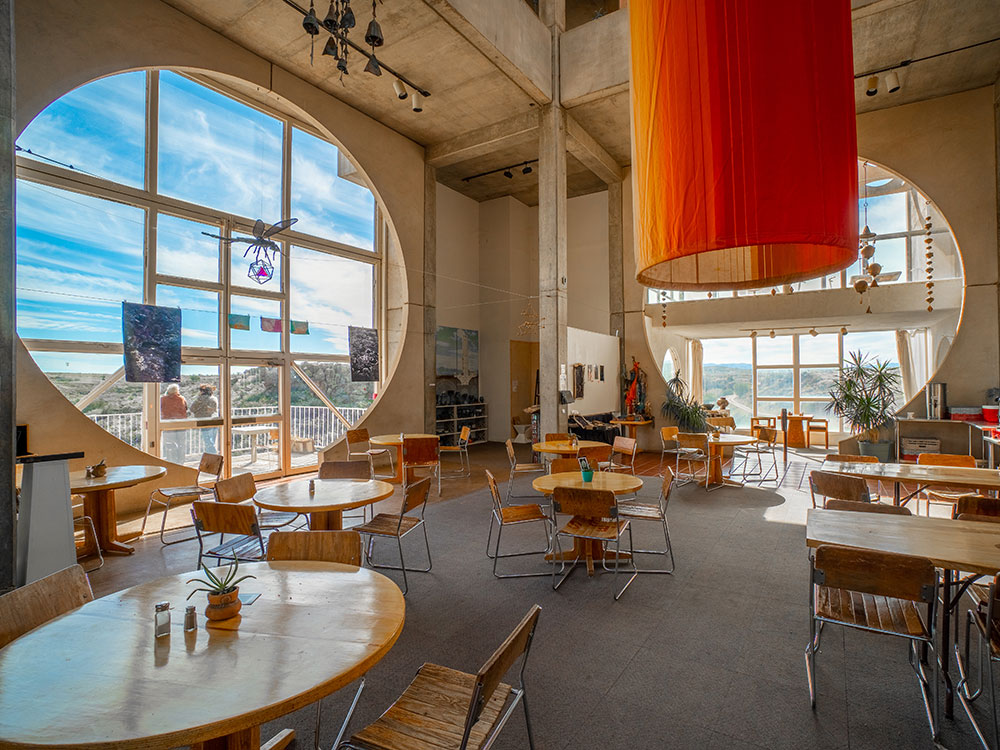 Elitemedia.network, CC BY 4.0, via Wikimedia Commons ; Image Size Adjusted
