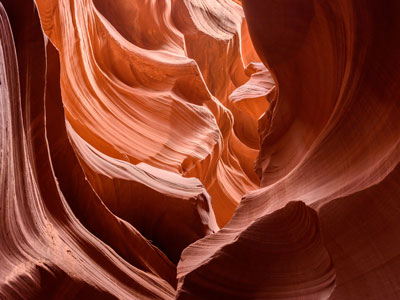

Scenic slot canyon sections with characteristic "flowing" shapes is a popular location for photographers and sightseers.
General Information
Advance reservations are required for all tours
Closed during flash flood warnings or extreme weather
Upper Antelope Canyon: $50–$90 depending on tour type
Most tours include the $8 Navajo permit fee
Children’s pricing may vary by operator
How to Get There
From Page, AZ (7 mi): Head east on AZ-98 for approximately 7 miles, then follow signs to the designated tour operator parking areas for Upper or Lower Antelope Canyon.
Overview
Antelope Canyon is the American Southwest’s most famous slot canyon, on Navajo land east of Page, Arizona, prized for its smooth, flowing sandstone walls and glowing light. It has two sections, Upper Antelope Canyon (Tsé bighánílíní, “the place where water runs through rocks,” also called The Crack) and Lower Antelope Canyon (Hazdistazí, “spiral rock arches,” or The Corkscrew). Both can be visited only on guided tours with licensed Navajo tour operators, since it became a Navajo Tribal Park in 1997.
Flash floods, especially during the monsoon season, carved the canyon from Navajo Sandstone, rushing through the narrow passages and smoothing them into flowing shapes.
Upper vs. Lower
- Upper Antelope: the most visited. Its entrance and entire length are at ground level, and light beams shine down from openings at the top, appearing from about March 20 to October 7 and most often in summer, when the sun is high.
- Lower Antelope: several miles away and more challenging, longer and narrower, with five flights of metal stairs and sand that can make steps slippery.
Other slots, such as Canyon X, can also be visited by tour.
This article uses material from the Wikipedia article "Antelope Canyon", which is released under the Creative Commons Attribution-Share-Alike License 3.0
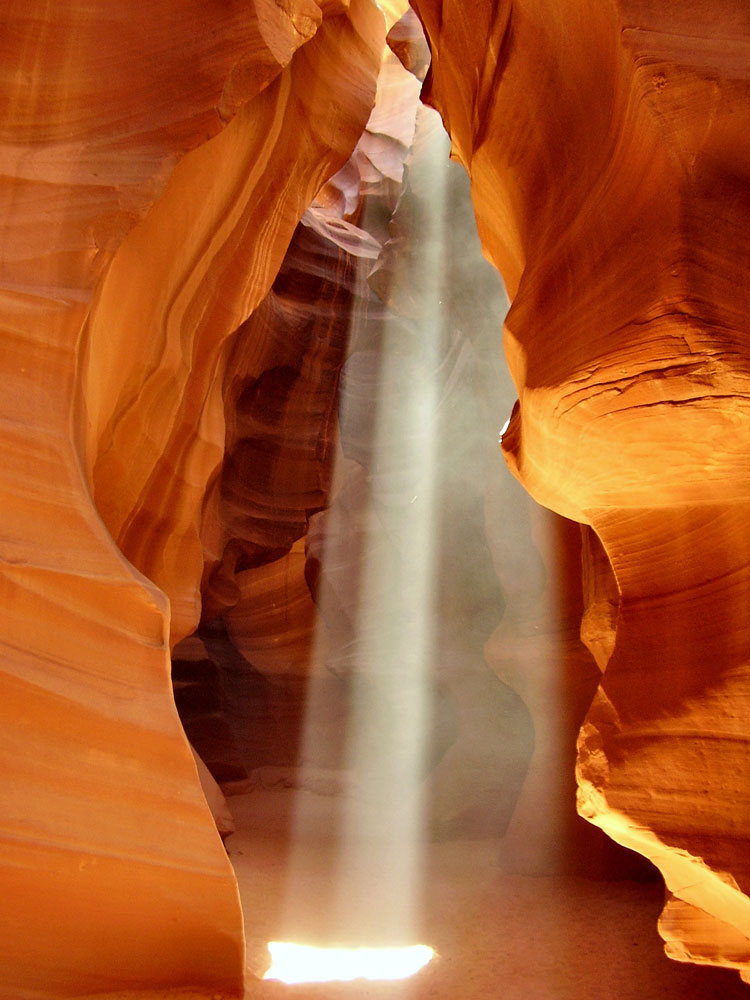 Lucas Löffler, Public domain, via Wikimedia Commons ; Image Size Adjusted
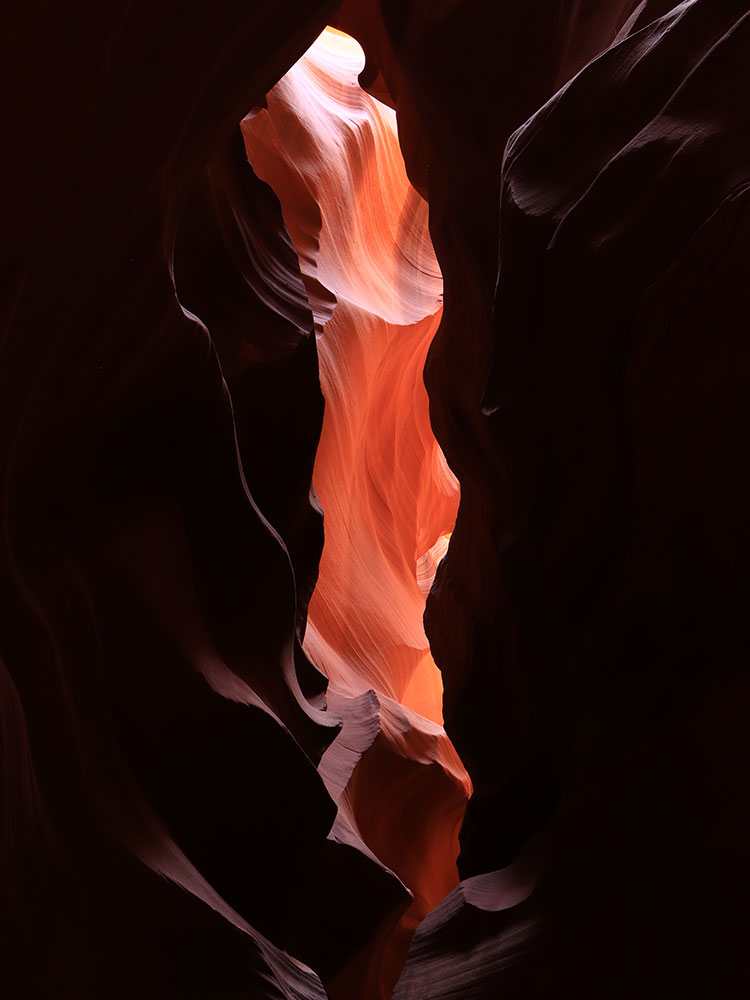

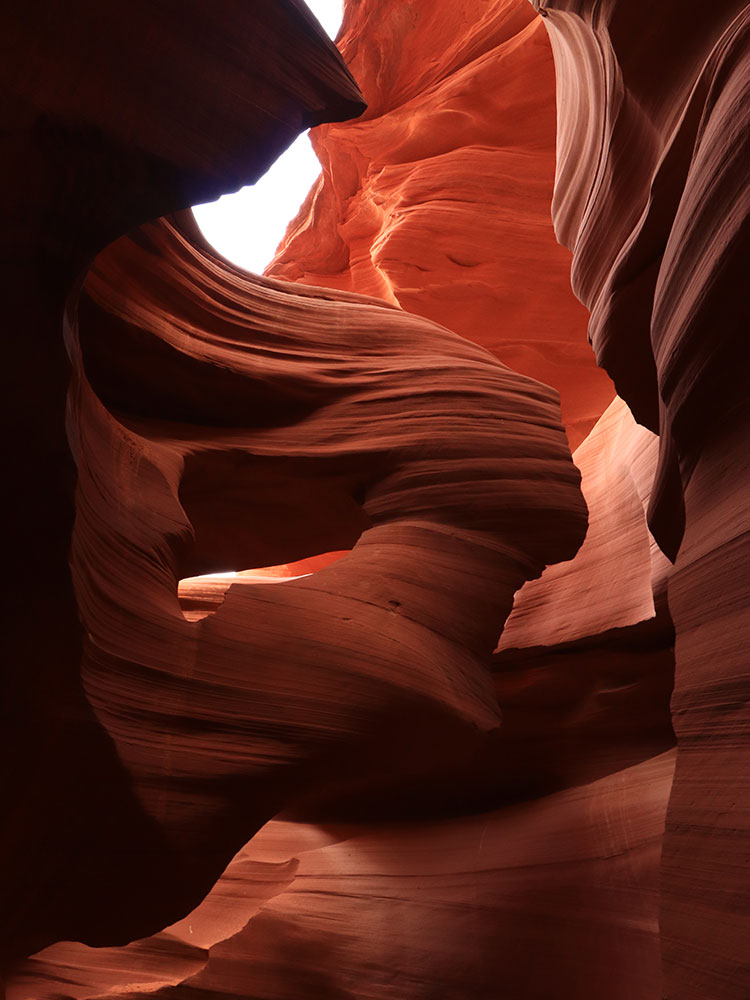 Diane E. Youngstrom, CC BY 4.0, via Wikimedia Commons ; Image Size Adjusted

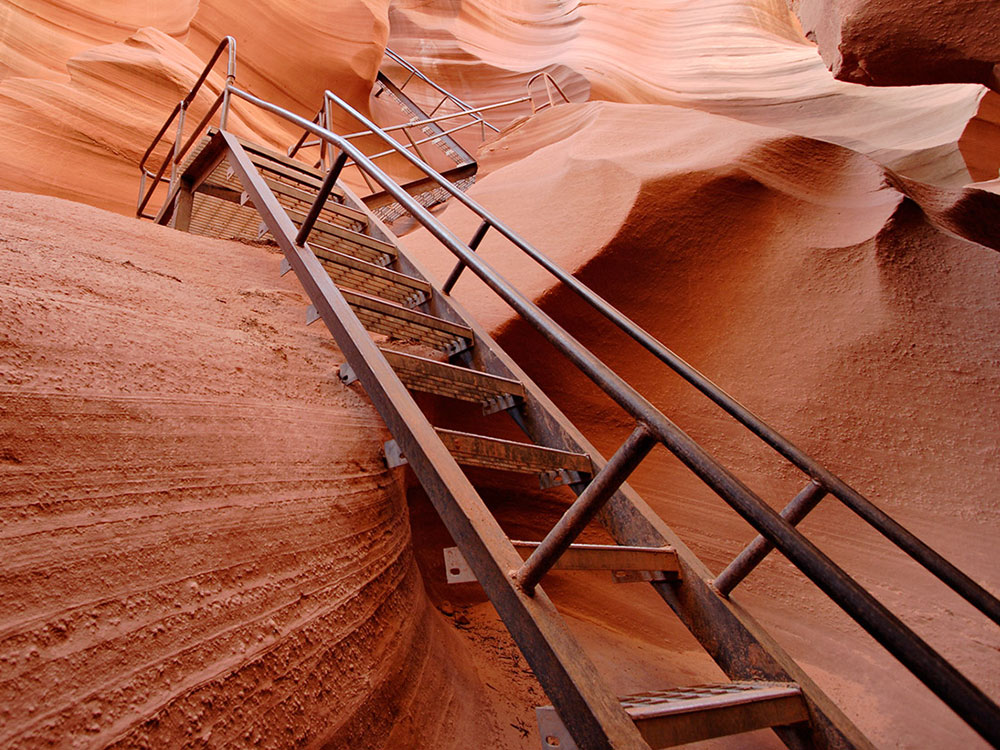 Moondigger, CC BY 2.5, via Wikimedia Commons ; Image Size Adjusted
