.jpg)
General Information
Dickey Ridge Park Store and Outdoor Ranger Contact Station: Open Friday - Tuesday, 9am to 5pm
Big Meadows Park Store: Open Thursday to Monday, 9am to 5pm
Big Meadows Outdoor Ranger Contact Station: 9am to 5pm daily
This fee covers unlimited entry for one vehicle and passengers for seven consecutive days, beginning on the day of purchase
Accepts America The Beautiful Pass
Pets are prohibited on the following trails:
Fox Hollow Trail (mile 4.6)
Stony Man Trail (mile 41.7) except for portion that follows the Appalachian Trail
Limberlost Trail (mile 43)
Post Office Junction to Old Rag Shelter
Old Rag Ridge Trail
Old Rag Saddle Trail
Old Rag Access Trail
Ridge Access Trail (Old Rag area)
Dark Hollow Falls Trail (mile 50.7)
Story of the Forest Trail (mile 51)
Bearfence Mountain Trail (mile 56.4)
Frazier Discovery Trail (mile 79.5)
How to Get There
Overview
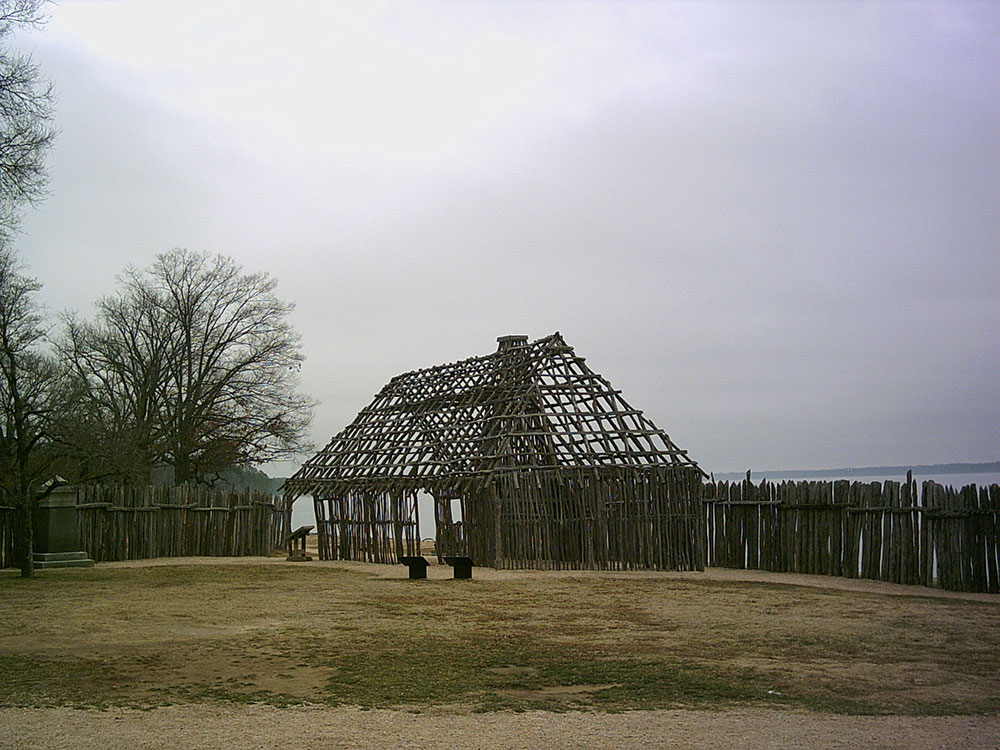
The Jamestown settlement in the Colony of Virginia was the first permanent English settlement in the Americas. It was located on the northeast bank of the James (Powhatan) River about 2.5 mi (4 km) southwest of the center of modern Williamsburg. It was established by the Virginia Company of London as "James Fort" on May 4, 1607 O.S. (May 14, 1607 N.S.), and was considered permanent after a brief abandonment in 1610. It followed several failed attempts, including the Lost Colony of Roanoke, established in 1585 on Roanoke Island, later part of North Carolina. Jamestown served as the colonial capital from 1616 until 1699.
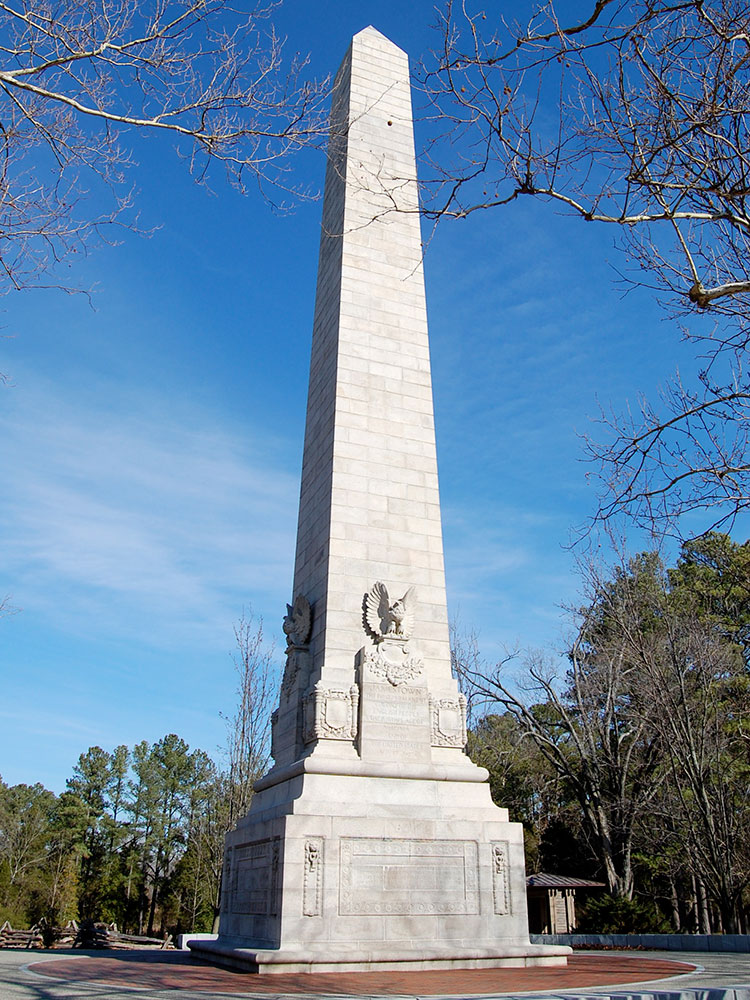 Fletcher6, CC BY-SA 3.0, via Wikimedia Commons ; Image Size Adjusted
Despite the dispatch of more settlers and supplies, including the 1608 arrival of eight Polish and German colonists and the first two European women, more than 80 percent of the colonists died in 1609-10, mostly from starvation and disease. In mid-1610, the survivors abandoned Jamestown, though they returned after meeting a resupply convoy in the James River.
In August 1619, the first recorded slaves from Africa to British North America arrived in what is now Old Point Comfort near the Jamestown colony, on a British privateer ship flying a Dutch flag. The approximately 20 Africans from the present-day Angola had been removed by the British crew from a Portuguese slave ship, the "São João Bautista". They most likely worked in the tobacco fields as slaves under a system of race-based indentured servitude. The modern conception of slavery in the colonial United States was formalized in 1640 (the John Punch hearing) and was fully entrenched in Virginia by 1660.
In 1676, Jamestown was deliberately burned during Bacon's Rebellion, though it was quickly rebuilt. In 1699, the colonial capital was moved to what is today Williamsburg, Virginia; Jamestown ceased to exist as a settlement, and remains today only as an archaeological site, Jamestown Rediscovery.
Today, Jamestown is one of three locations composing the Historic Triangle of Colonial Virginia, along with Williamsburg and Yorktown, with two primary heritage sites. Historic Jamestowne is the archaeological site on Jamestown Island and is a cooperative effort by Jamestown National Historic Site (part of Colonial National Historical Park) and Preservation Virginia. Jamestown Settlement, a living history interpretive site, is operated by the Jamestown Yorktown Foundation, a state agency of the Commonwealth of Virginia.
Today, visitors to Historic Jamestowne can view the site of the original 1607 James Fort, the 17th-century church tower and the site of the 17th-century town, as well as tour an archaeological museum called the Archaearium and view many of the close to two million artifacts found by Jamestown Rediscovery. They also may participate in living history ranger tours and Archaeological tours given by the Jamestown Rediscovery staff. Visitors can also often observe archaeologists from the Jamestown Rediscovery Project at work, as archaeological work at the site continues. As of 2014, the archaeological work and studies are ongoing.
Jamestown Settlement is a living-history park and museum located 1.25 miles (2.01 km) from the original location of the colony and adjacent to Jamestown Island. Initially created for the celebration of the 350th anniversary in 1957, Jamestown Settlement is operated by the Jamestown-Yorktown Foundation, and largely sponsored by the Commonwealth of Virginia. The museum complex features a reconstruction of a Powhatan village, the James Fort as it was c. 1610-1614, and seagoing replicas of the three ships that brought the first settlers, Susan Constant, Godspeed, Discovery.
This article uses material from the Wikipedia article "Jamestown, Virginia", which is released under the Creative Commons Attribution-Share-Alike License 3.0
Featured Locations
-400.jpg)
Tony Fischer, CC BY 2.0, via Wikimedia Commons; Image Size Adjusted
.jpg)
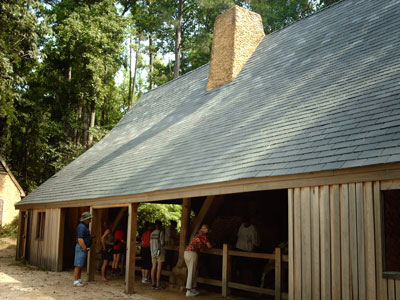
Nationalparks at English Wikipedia, CC BY-SA 2.5, via Wikimedia Commons; Image Size Adjusted

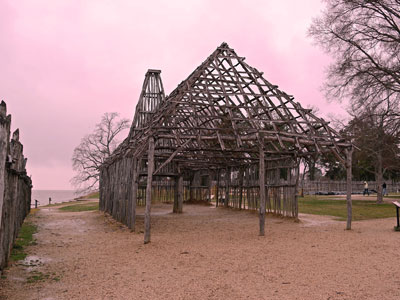
Smash the Iron Cage, CC BY-SA 4.0, via Wikimedia Commons; Image Size Adjusted

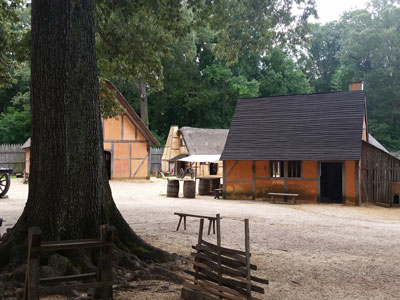
Pi3.124, CC BY-SA 4.0, via Wikimedia Commons; Image Size Adjusted


_(8426448355)-1000.jpg) National Park Service, CC BY-SA 2.0, via Wikimedia Commons ; Image Size Adjusted
National Park Service, CC BY-SA 2.0, via Wikimedia Commons ; Image Size Adjusted_(8426448355).jpg)