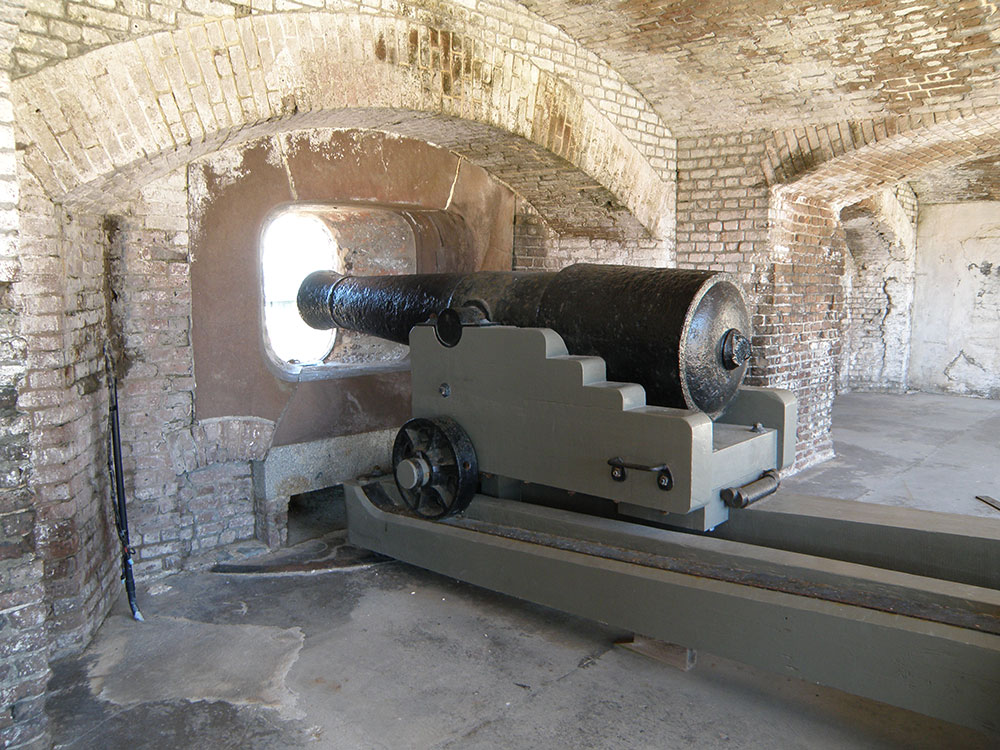
Sea fort built on an artificial island protecting Charleston from naval invasion and known for the location of the Battle of Fort Sumter that began the American Civil War
General Information
Sunday 1pm to 5pm
How to Get There
To Patriot's Point: Take Meeting St to E Bay St. Continue on E Bay St. Take US-17 N/Arthur Ravenel Jr Bridge to Patriots Point Rd in Mount Pleasant. Take the SC-703/Coleman Blvd exit from US-17 N/Arthur Ravenel Jr Bridge. Follow Patriots Point Rd to destination.
To Liberty Square: Head north on Meeting St toward Court House Square. Turn right onto Wentworth St. Wentworth St turns left and becomes E Bay St. Turn right onto Calhoun St. Turn left onto Concord St.
Overview
Fort Sumter is a sea fort built on an artificial island protecting Charleston, South Carolina, from naval invasion. Its origin dates to the War of 1812 when the British invaded Washington by sea. It was still incomplete in 1861 when the Battle of Fort Sumter began the American Civil War. It was severely damaged during the war, left in ruins, and although there was some rebuilding, the fort as conceived was never completed.
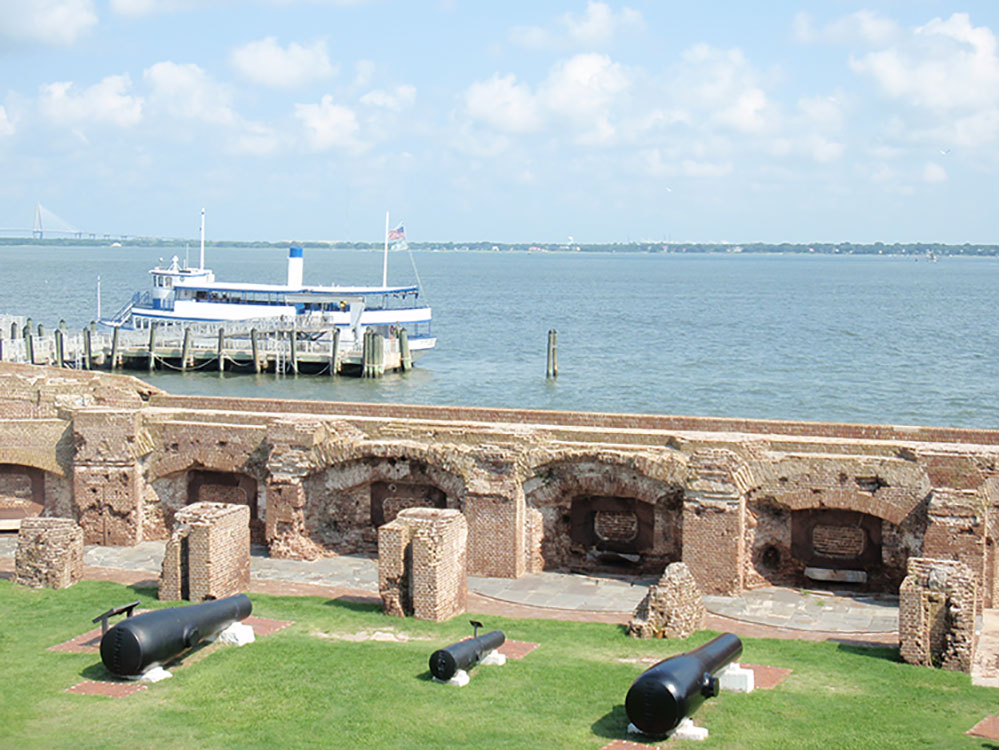

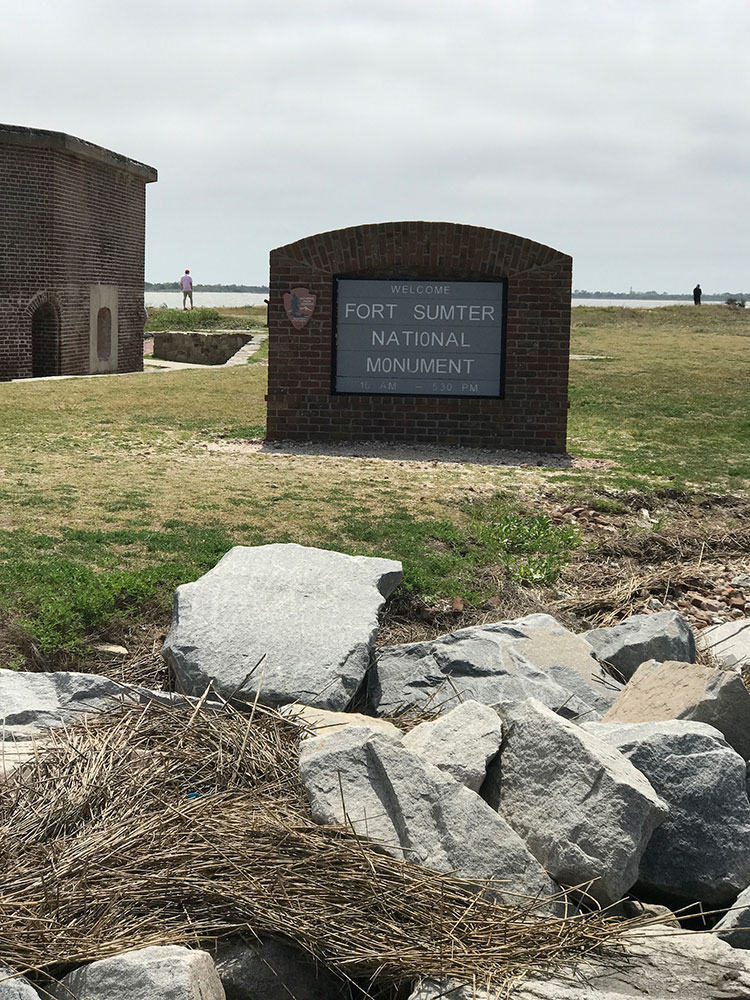
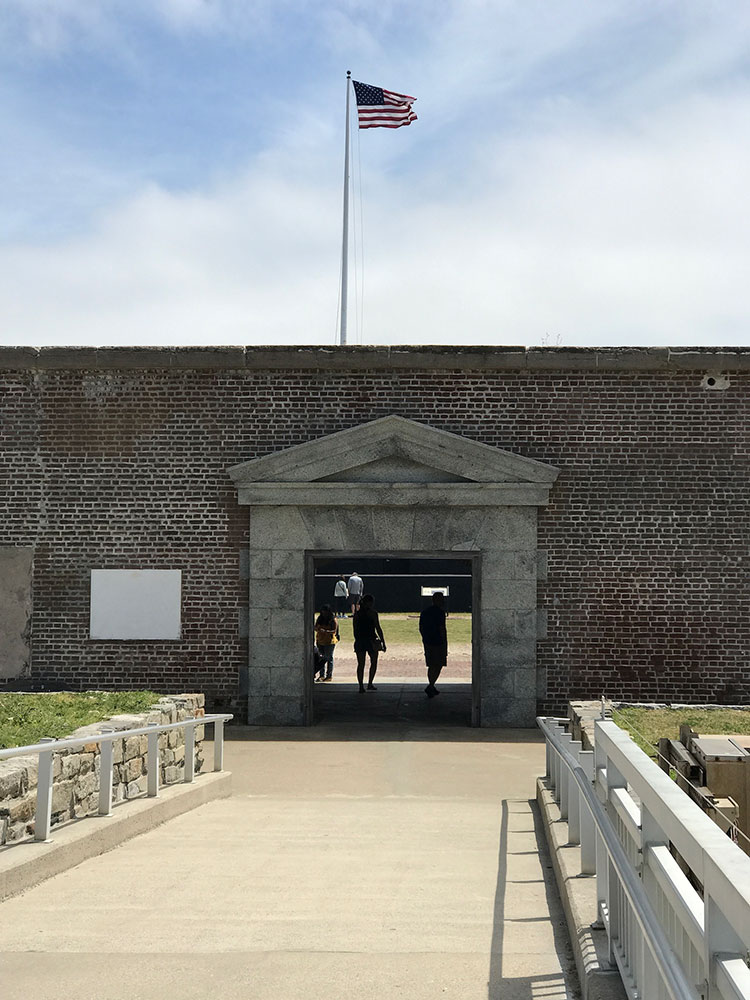
Since the middle of the 20th century, Fort Sumter has been open to the public as part of the Fort Sumter and Fort Moultrie National Historical Park, operated by the National Park Service.
Named after General Thomas Sumter, a Revolutionary War hero, Fort Sumter was built after the 1814 Burning of Washington during the War of 1812 as one of the third system of U.S. fortifications, to protect American harbors from foreign invaders such as Britain. Built on an artificial island in the middle of the channel that provides Charleston with natural shelter, Fort Sumter would dominate the harbor, reinforcing the protection provided by the shore batteries at Fort Moultrie, Fort Wagner, and Fort Gregg.
TThe island was originally a sand bar. In 1827, engineers performed measurements of the depths (depth sounding) and concluded that it was a suitable location for a fort. Construction began in 1829. Seventy thousand tons of granite were transported from New England to build up the artificial island. By 1834, a timber foundation that was several feet beneath the water had been laid. However, the decision was made to build a (stronger) brick fort. If completed, it would have been one of the strongest forts in the world.
The brick fort is five-sided, 170 to 190 feet (52 to 58 m) long, with walls five feet (1.5 m) thick, standing 50 feet (15.2 m) over the low tide mark. Although never completed, it was designed to house 650 men and 135 guns in three tiers of gun emplacements.
The attack on Fort Sumter is generally taken as the beginning of the American Civil War—the first shots fired. The First Battle of Fort Sumter began on April 12, 1861, when South Carolina Militia artillery fired from shore on the Union garrison. These were, both sides agreed, the first shots of the war. . The fort had been cut off from its supply line and surrendered the next day.
The Second Battle of Fort Sumter (September 8, 1863) was a failed attempt by the Union to retake the fort, dogged by a rivalry between army and navy commanders. Although the fort was reduced to rubble, it remained in Confederate hands until it was evacuated as General Sherman marched through South Carolina in February 1865.
This article uses material from the Wikipedia article "Fort Sumter", which is released under the Creative Commons Attribution-Share-Alike License 3.0


-1000.jpg)
.jpg)