
402,000-acre refuge established in 1937 to protect a majority of the 438,000 acre (1,772 km2) Okefenokee Swamp, a vast bog inside a huge, saucer-shaped depression that was once part of the ocean floor
General Information
How to Get There
Overview
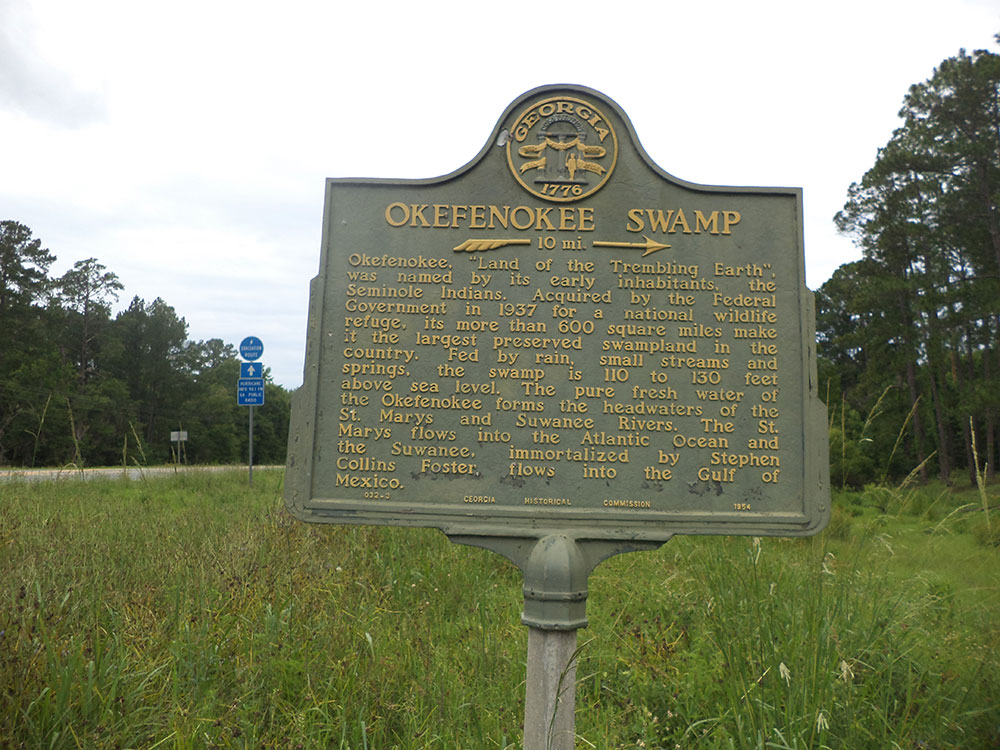
The Okefenokee National Wildlife Refuge is a 402,000-acre (1,627 km2) National Wildlife Refuge located in Charlton, Ware, and Clinch Counties of Georgia, and Baker County in Florida. The refuge is administered from offices in Folkston, Georgia. The refuge was established in 1937 to protect a majority of the 438,000 acre (1,772 km2) Okefenokee Swamp. The name "Okefenokee" is a Native American word meaning "trembling earth."
Nearly 400,000 people visit the refuge each year, making it the 16th most visited refuge in the National Wildlife Refuge System. It is the largest in acreage of any that is not located in a western state.
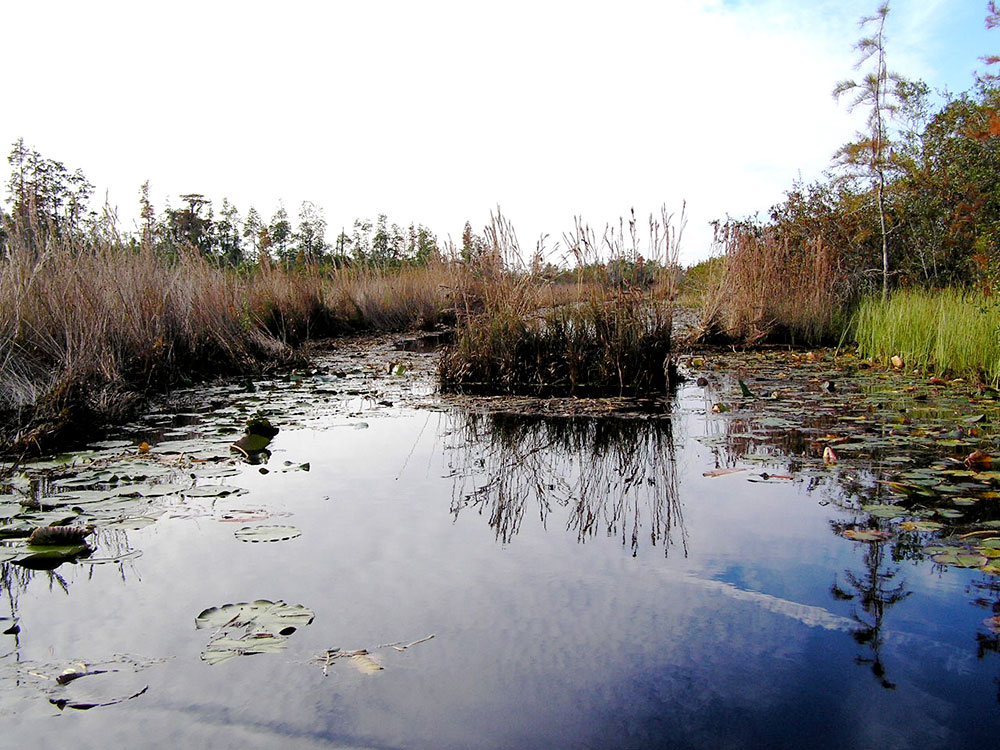
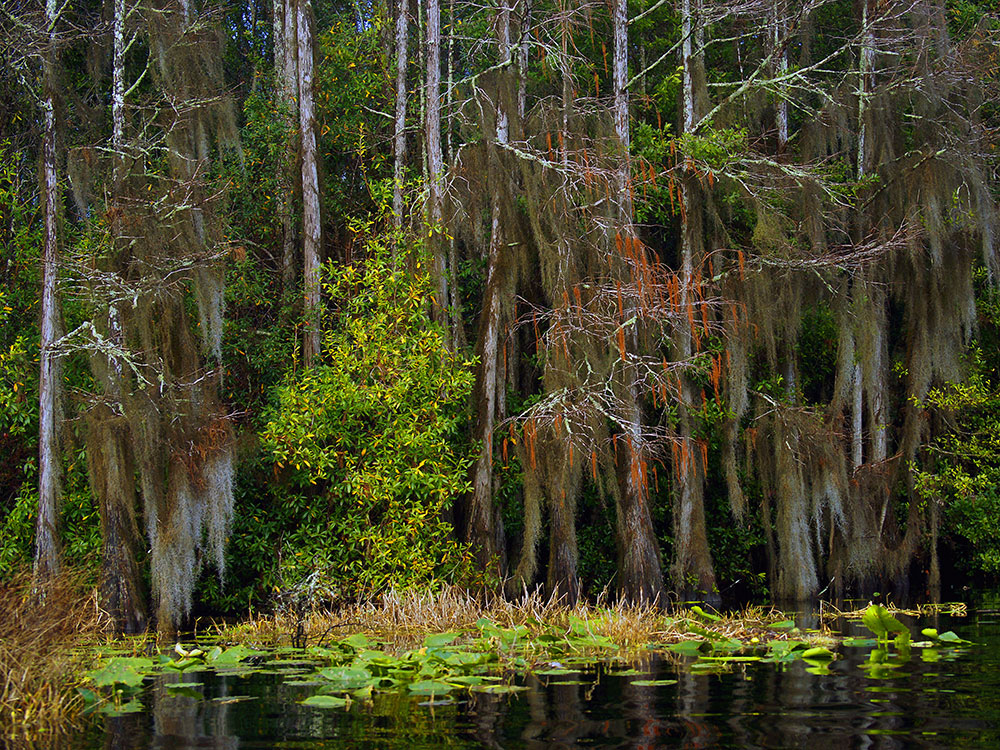
The Okefenokee Swamp is a vast bog inside a huge, saucer-shaped depression that was once part of the ocean floor. The swamp now lies 103 to 128 feet (39 m) above mean sea level. Peat deposits, up to 15 feet (4.6 m) thick, cover much of the swamp floor. These deposits are so unstable in spots that trees and surrounding bushes tremble by stomping the surface. Native Americans named the area "Okefenokee" meaning "Land of the Trembling Earth". Swamp habitats include open wet "prairies", cypress forests, scrub-shrub vegetation, upland islands, and open lakes.
The Okefenokee Swamp is one of the world's largest intact freshwater ecosystems. It has been designated a Wetland of International Importance by the United Nations under the Ramsar Convention of 1971. The swamp is compared through research to wetlands worldwide. It is world-renowned for its amphibian populations that are bio-indicators of global health. Water from the Suwannee River Sill area is used as a standard reference by scientists throughout the world.
The slow-moving waters of the Okefenokee are tea-colored due to the tannic acid released from decaying vegetation. The principal outlet of the swamp, the Suwannee River, originates in the heart of the Okefenokee and drains southwest into the Gulf of Mexico. The swamp's southeastern drainage to the Atlantic Ocean is the St. Mary's River, which forms the boundary between Georgia and Florida.
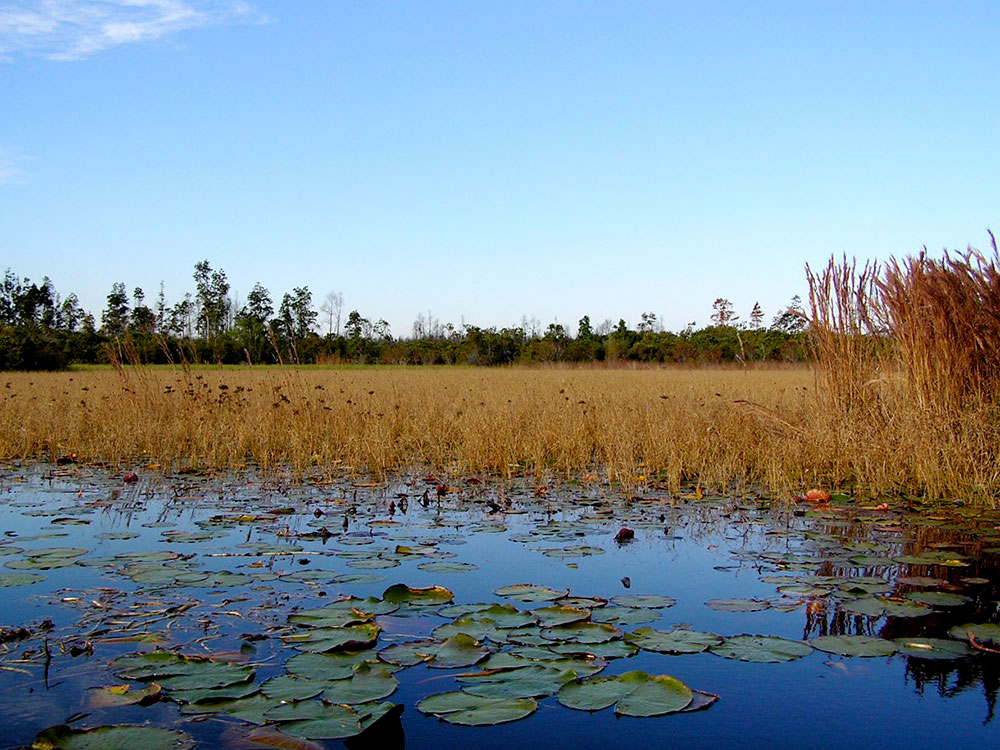
The swamp contains numerous islands and lakes, along with vast areas of non-forested habitat. Prairies cover about 60,000 acres (240 km2) of the swamp. Once forested, these expanses of marsh were created during periods of severe drought when fires burned out vegetation and the top layers of peat. The prairies harbor a variety of wading birds: herons, egrets, ibises, cranes, and bitterns.
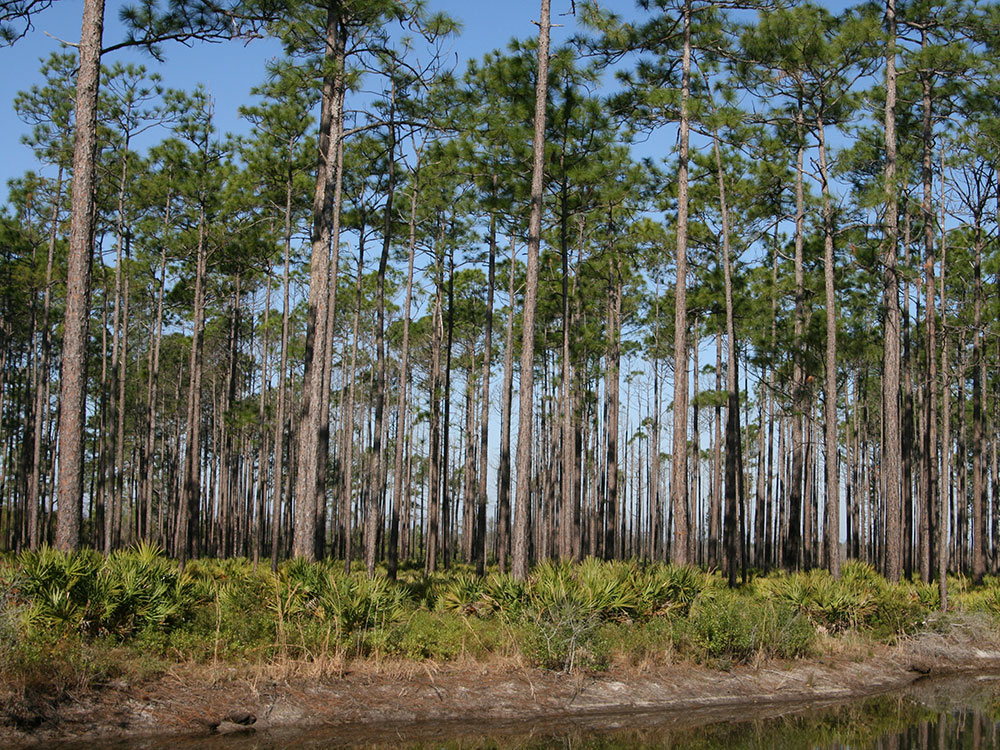
Refuge staff manages 33,000 acres (130 km2) of uplands which are being restored to once-abundant longleaf pine and wiregrass habitat.
Refuge staff and volunteers work to preserve the natural qualities of the swamp, provide habitat for a variety of wildlife, and provide recreational opportunities for visitors. They also conduct prescribed burns in upland areas, thin forests, create wildlife openings, plant longleaf pines, and monitor, manage, and improve wildlife populations and habitat.
With its varied habitats, the Okefenokee has become an area known for its abundance of plants and animals. There are 621 species of plants growing in the swamp, including the Longleaf Pine tree. Animals include 39 fish, 37 amphibian, 64 reptile, 234 bird, and 50 mammal species.
Wildlife species include Florida raccoons, wading birds, ducks, American alligators and other reptiles, a variety of amphibians, North American river otters, Florida bobcats, raptors, Eastern American red foxes, wild boars, common minks, Virginia white-tailed deer, gray foxes, Florida skunks, Florida black bears, and songbirds.
The swamp habitat also provides for threatened and endangered species, such as red-cockaded woodpeckers, wood storks, indigo snakes, gopher tortoises and a wide variety of other wildlife species.
There are opportunities for hiking, hunting, fishing, canoeing, boating, photography and wildlife observation.
The Richard S. Bolt Visitor Center at Okefenokee National Wildlife Refuge (NWR) was built in 1967, with an auditorium addition in the early 1980s. The 5,000-square-foot (460 m2) building is cedar-sided with open, vaulted ceilings and flagstone floors. It houses exhibits, Okefenokee Wildlife League bookstore sales area, office space for staff and volunteers, storage, and a 100-seat surround-sound auditorium.
In the late 19th century, W.T. Chesser and his family settled a small island on the eastern edge of the Okefenokee Swamp. He settled on a 592-acre (2.4 km2) island, now known as Chesser Island. The Chesser homestead still stands on the island. The last of the Chessers left the island in 1958, but many members of the Chesser family remain in the local area.
Lakes and slow-flowing water trails, called "runs,"cover much of the Okefenokee. More than 60 lakes dot the refuge, with depths ranging from a few feet to 15 feet (4.6 m). The largest, Billy's Lake, is 3½ miles long and 100 to 250 yards (230 m) wide.
There are 121 miles (195 km) of trails in the swamp, of which 70 are open to day-use motorboat 10 horsepower (7.5 kW) and under. Seven overnight shelters are available in the swamp's interior. The refuge has six different boating trails (Red, Green, Blue, Purple, Orange, and Brown) giving users a choice of twelve different overnight canoe trips.
Swamp Island Drive - a 9-mile (14 km) driving, biking and walking loop. Scattered throughout the drive are walking trails, wildlife openings and hardwood plots. Additionally, the drive leads you to the Chesser Homestead, Boardwalk and Observation tower.
There are several canoe trails and camping shelters for visitors to enjoy.
There are three major entrances to Okefenokee National Wildlife Refuge, each with its own facilities and special character. From the open, wet "prairies" of the east side to the forested cypress swamps on the west, Okefenokee is a mosaic of habitats, plants, and wildlife.
Entrance fees are required at each entrance.
East Entrance - Main U.S. Fish and Wildlife Service entrance, located 11 miles (18 km) southwest of Folkston, Georgia.
West Entrance - Stephen C. Foster State Park, located 17 miles (27 km) east of Fargo, Georgia
North Entrance - Okefenokee Swamp Park, located eight miles (13 km) south of Waycross, Georgia
This article uses material from the Wikipedia article "Okefenokee National Wildlife Refuge" which is released under the Creative Commons Attribution-Share-Alike License 3.0
Featured Locations
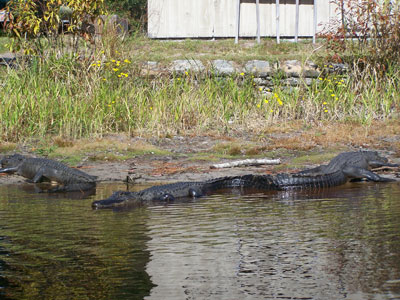
Florian Pépellin, Public domain, via Wikimedia Commons; Image Size Adjusted

Okefenokee Swamp Park
Most extensive blackwater swamp in North America and covers over 438,000 acres
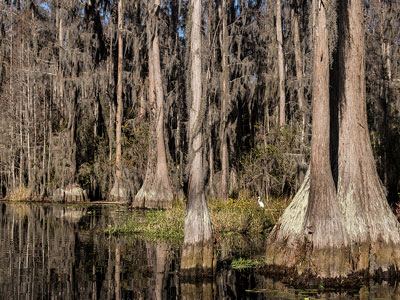
Tabetha Moe, CC BY-SA 4.0, via Wikimedia Commons; Image Size Adjusted

Stephen C Foster State Park
State park located in the Okefenokee Swamp offering visitors several ways to explore the swamp's unique ecosystem
-1000.jpg)
.jpg)

 pseabolt, CC BY 3.0, via Wikimedia Commons ; Image Size Adjusted

 pseabolt, CC BY 3.0, via Wikimedia Commons ; Image Size Adjusted

 Fsendek1904, CC BY-SA 4.0, via Wikimedia Commons; Image Size Adjusted