Group of four barrier islands and the mainland port city of Brunswick on the 100-mile-long coast of Georgia on the Atlantic Ocean
General Information
How to Get There
Overview
The Golden Isles of Georgia are a group of four barrier islands and the mainland port city of Brunswick on the 100-mile-long coast of Georgia on the Atlantic Ocean. They include St. Simons Island, Sea Island, Jekyll Island, Little St. Simons Island, and Historic Brunswick.
Mild winters, together with natural beaches, vast stretches of marshland, maritime forests, historical sites, and abundant wildlife on both land and sea have made the Golden Isles a travel destination for families, nature-lovers, fishing and water sports enthusiasts, golfers, and history buffs.
All the islands are located within Glynn County and make up the lower middle section of Georgia's eleven barrier islands. Annual mild temperatures average 68 °F, with July highs of 90 °F. St. Simons is the largest of the four. Curled around its north end and accessible only by boat is Little St. Simons Island—privately owned and maintained in its natural state with a small capacity guest lodge and cottages. Jekyll Island is owned by the state of Georgia and operated as a state park, with limited residential areas. Sea Island is owned by Sea Island Acquisitions, LLC, and is home to the world-famous Cloister resort and residential homes valued in the millions of dollars.
The City of Brunswick traces its history back to early Colonial times, and the founding of the Georgia colony by General James Oglethorpe. From its earliest days, the port of Brunswick was important to the growth and economy of the new nation. In 1789, George Washington named Brunswick one of the five original ports of entry for the thirteen colonies. During World War II, Brunswick hosted an important construction site for Liberty ships, and Naval Air Station Glynco, a major operational base for blimps.
Tourism is the most important economic driver in the Golden Isles, with an estimated 2.4 million visitors in 2014. Other key components of the local economy include the Port of Brunswick, Federal Law Enforcement Training Center, aviation support services, and manufacturing.
St. Simons Island is the largest of the Golden Isles. Reachable via the F. J. Torras Causeway, the Island is a tourist destination for its beaches, water sports, boating and fishing, golf, nature trails, historical landmarks, shopping, restaurants and nightlife.
The St. Simons Lighthouse, located on the south end of the Island, has been in operation since 1872 (an earlier lighthouse, completed in 1810, was destroyed during the Civil War). Today, the Lighthouse and Museum are open to the public on a daily basis. Adjacent to the Lighthouse is Neptune Park which has a public pool and playground. The nearby Pier is a draw for anglers, tourists, and sightseers. The Pier Village on Mallery Street is lined with boutiques and a variety of restaurants.
Not far from the village, beaches include Massengale Park and the Coast Guard Station Beach, which also features the Maritime Center Museum. Near the Coast Guard beach is the Bloody Marsh battle site where in 1742, a small garrison of British troops defeated a much larger Spanish force and in the process, put an end to Spain's influence north of Florida.
Farther to the north are the ruins of Fort Frederica, established by Gen. James Oglethorpe in 1736 as protection for the Georgia colony, and Cannon's Point, a 600-acre nature preserve that includes maritime forest, marshland, hiking trails and plantation ruins.
Housing on St. Simons Island consists primarily of single-family homes and condominiums, many of which are rented during peak visitation periods. Due to the mild climate, outdoor activities are common year-round, including hiking, bicycling, canoe and kayaking, paddle-boarding, offshore and inshore fishing and beachcombing. Golf is among the Island's most popular attractions, highlighted by the PGA's RSM Classic (formerlyMcGladrey Classic) in November.
Sea Island is a privately owned resort and residential community, located to the east of St. Simons Island and reachable by causeway. The upscale resort operates properties on Sea Island: The Cloister, Beach Club, Cottages; and on St. Simons Island: The Lodge, and The Inn at Sea Island. With the exception of special events, access is restricted to guests of any Sea Island property, island home owners and their guests, and Sea Island Club members. The resort also includes three championship golf courses, one of which, the Seaside course on St. Simons Island, hosts the annual PGA tour event, The RSM Classic (formerly The McGladrey Classic).
Little St. Simons Island lies to the north and east of St. Simons Island and is accessible only by boat. Privately owned, it is the only island in the group virtually untouched by development. Its 10,000 acres (4,000 ha) include maritime forests, marshland, and seven miles of unspoiled, natural beach.
The Lodge on Little St. Simons, a rustic retreat originally built as a hunting lodge offers the only available accommodations, with a limit of 32 guests per night. A staff of naturalists conduct guided tours along the beach and inland. Available activities include birding, kayaking, bicycling, hiking, fishing and nature photography. Guests depart on a private boat from the Hampton River Marina on St. Simons Island. The Lodge is one of only two properties in the U.S. to be awarded a Benchmarked Certificate by Green Globe 21, a global certification organization dedicated to sustainable tourism.
Little St. Simons Island has been declared an "Important Bird Area" by the Audubon Society.
Jekyll Island is wholly owned by the state of Georgia and managed by the Jekyll Island Authority. Located south of St. Simons Island, it is reachable via the Downing Musgrove Causeway (GA 520) off US 17 in Glynn County. Purchase of a parking pass is required to drive onto the island.
The island includes 10 miles of beach, four golf courses, a Nature Center, boat tours, the Jekyll Island Convention Center, and a variety of lodging options. The Jekyll Island Museum operates tours of the Historic Landmark District which includes homes built during the late nineteenth and early twentieth centuries by wealthy Northern businessmen, including J. P. Morgan, William Vanderbilt, Joseph Pulitzer, and Marshall Field.
The Georgia Sea Turtle Center on Jekyll is a rehabilitation hospital, research center and education facility devoted to conservation and protection of sea turtles. Open to the public year-round, the Center offers exhibits, viewing of turtle patients, and a variety of educational programs and field trips.
Brunswick's first English settler was Capt. Mark Carr, who established a plantation on the site in 1738, while serving under Gen. James Oglethorpe. Four years later, Capt. Carr would participate in the Battle of Bloody Marsh on St. Simons Island. In 1771, Carr's property was acquired by the Royal Province of Georgia, and the city was laid out in the "Oglethorpe grid" pattern, similar to Savannah. Listed on the National Register of Historic Places, the Brunswick Old Town Historic District contains several landmarks and 19th century homes.
Mary Ross Park on the East River hosts a variety of events including concerts, weddings, a farmer's market, and the annual Brunswick Stewbilee. Passenger cruise ships dock at the park and nearby, local shrimp boats await their next trip to the area's prolific offshore shrimping grounds. Festivities at the park and the town's "overall historic vibe" were cited by Travel + Leisure readers who, in June, 2014 voted Brunswick one of America's Best Small Towns for July 4.
The City of Brunswick and its four barrier islands are located on the south Georgia coast, about midway between Savannah and Jacksonville. The islands lie between the Altamaha River delta to the north and the Satilla River to the south. This location is the center point of the Georgia Bight, the inward curve of the east coast that stretches from Cape Fear, North Carolina to Cape Canaveral, Florida.
This article uses material from the Wikipedia article "Golden Isles of Georgia" which is released under the Creative Commons Attribution-Share-Alike License 3.0
Featured Locations
-400.jpg)
Judson McCranie, CC BY-SA 3.0, via Wikimedia Commons; Image Size Adjusted
.jpg)
Fort Frederica National Monument
Preserves the archaeological remnants of a fort and town built between 1736 and 1748 to protect Georgia from Spanish raids
Dsdugan, CC0, via Wikimedia Commons; Image Size Adjusted

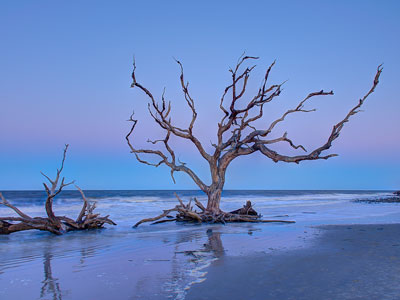
Jekyll Island
One of the Sea Islands, one of the Golden Isles of Georgia barrier islands and a popular tourist destination with beaches frequented by vacationers
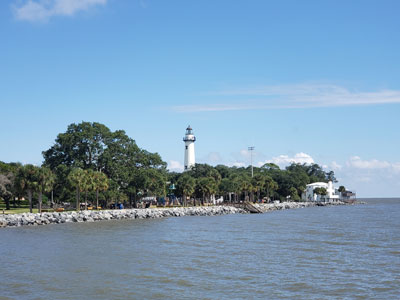
St. Simons Island
Largest of Georgia's renowned Golden Isles known for its warm climate, beaches, variety of outdoor activities, shops and restaurants, historical sites, and its natural environment