National Preserve located in South Florida, about 45 miles (72 kilometers) west of Miami on the Atlantic coastal plain
General Information
How to Get There
Big Cypress National Preserve is a National Preserve located in South Florida, about 45 miles (72 kilometers) west of Miami on the Atlantic coastal plain. The 720,000-acre (2,900 km2) Big Cypress, along with Big Thicket National Preserve in Texas, became the first national preserves in the United States National Park System when they were established on October 11, 1974.
Big Cypress borders the wet freshwater marl prairies of Everglades National Park to the south, and other state and federally protected cypress country in the west, with water from the Big Cypress flowing south and west into the coastal Ten Thousand Islands region of Everglades National Park.
Archaeology at Platt Island in the preserve shows humans settled there more than two thousand years ago. The Calusa people had an extensive presence in the area when Europeans arrived. Big Cypress was historically occupied by various cultures of Native Americans; the last were the Seminole of the nineteenth century. Their descendants include the federally recognized Miccosukee Tribe of Indians of Florida and the Seminole Tribe of Florida.
Big Cypress National Preserve differs from Everglades National Park in that, when it was established by law in 1974, the Miccosukee, Seminole and Traditional people were provided with permanent rights to occupy and use the land in traditional ways; in addition, they have first rights to develop income-producing businesses related to the resources and use of the preserve, such as guided tours. They and other hunters may use off-road vehicles, and home and business owners have been permitted to keep their properties in the preserve.
Flora and fauna
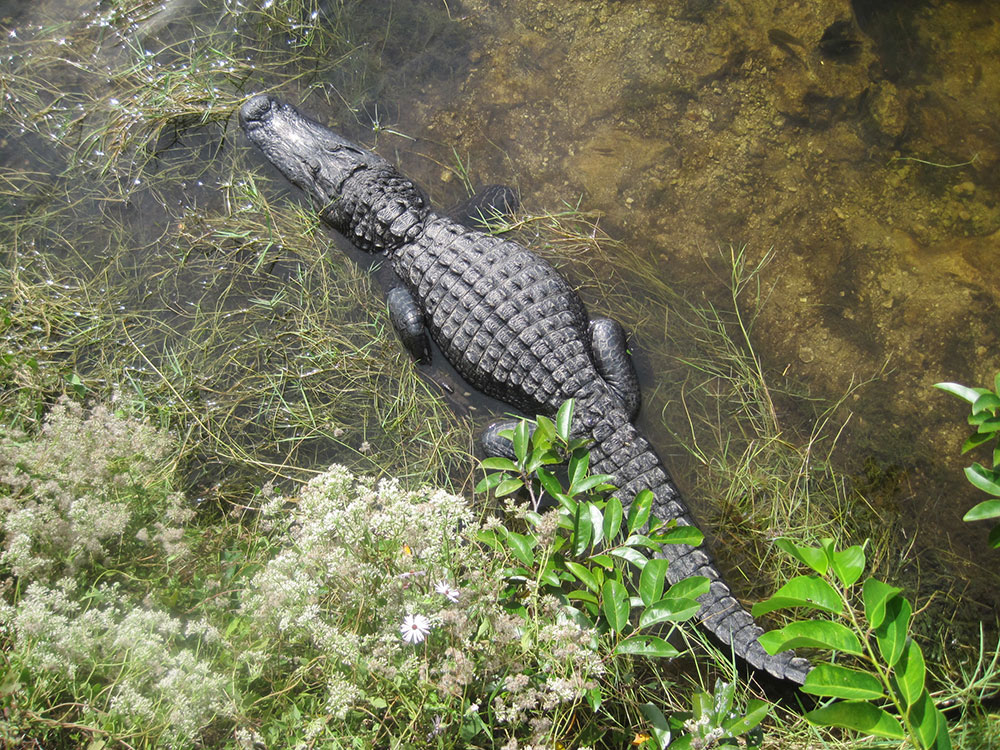
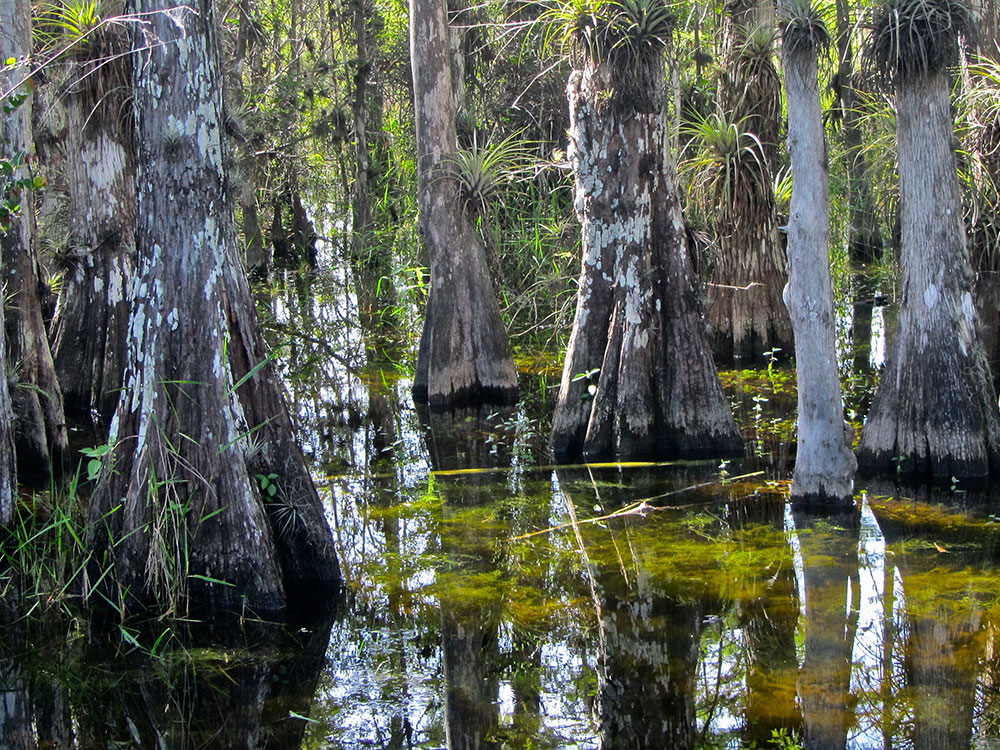
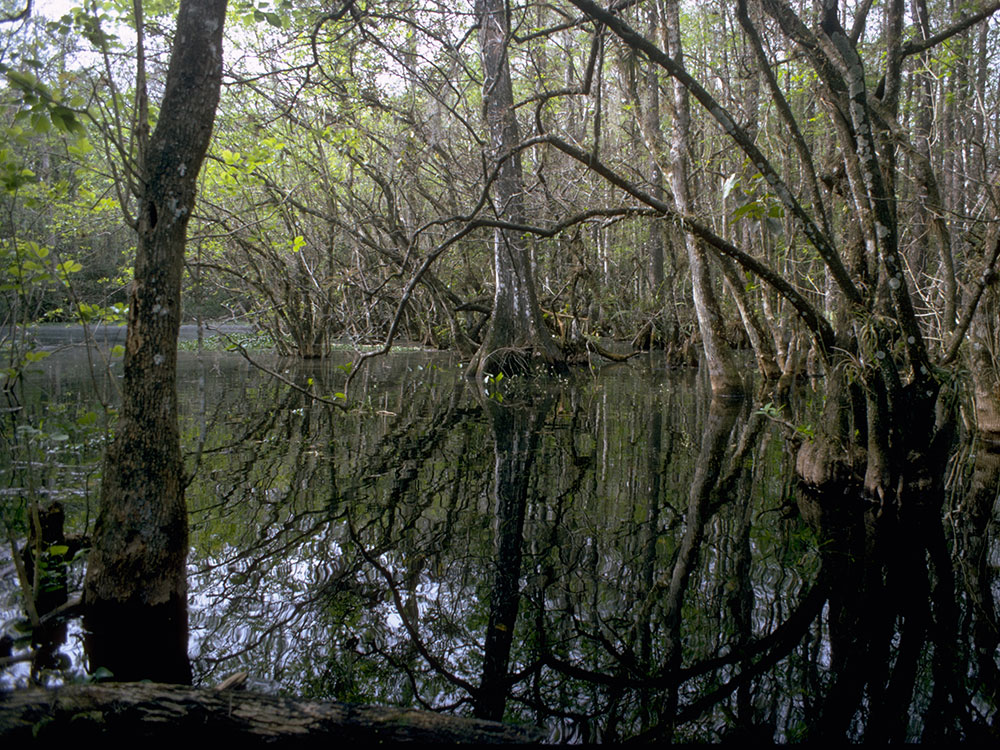
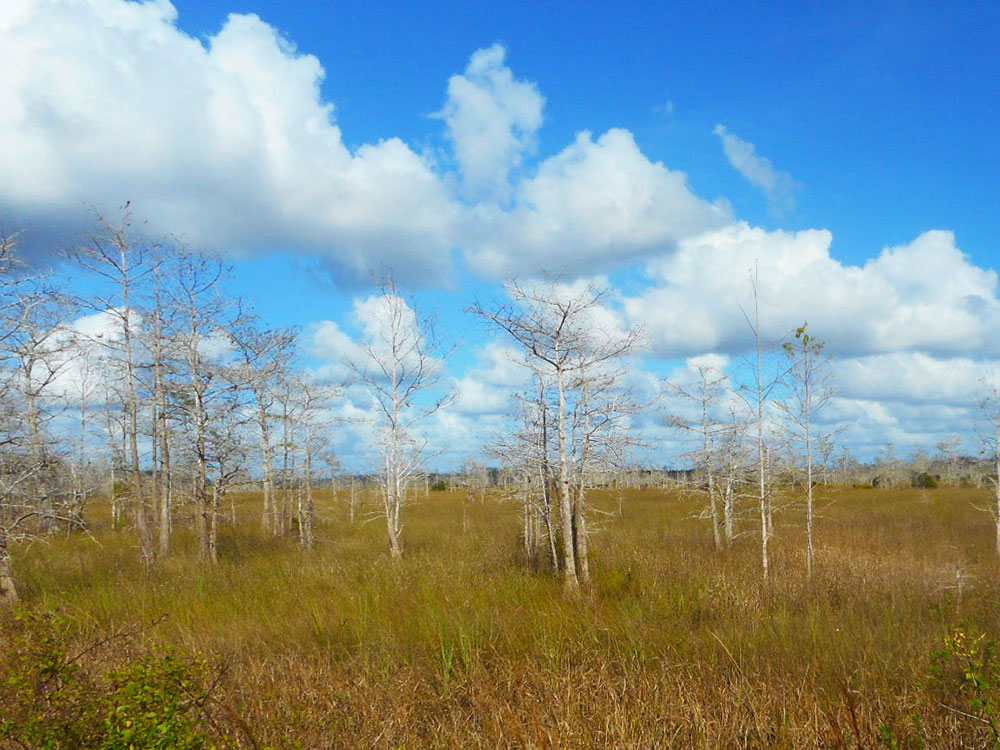
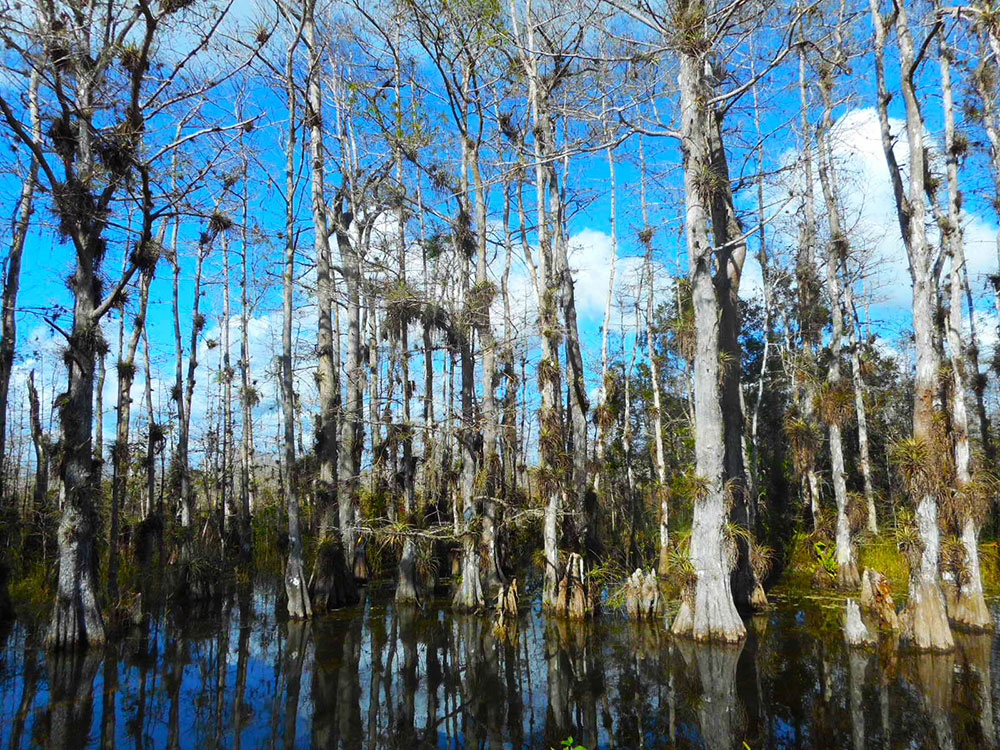
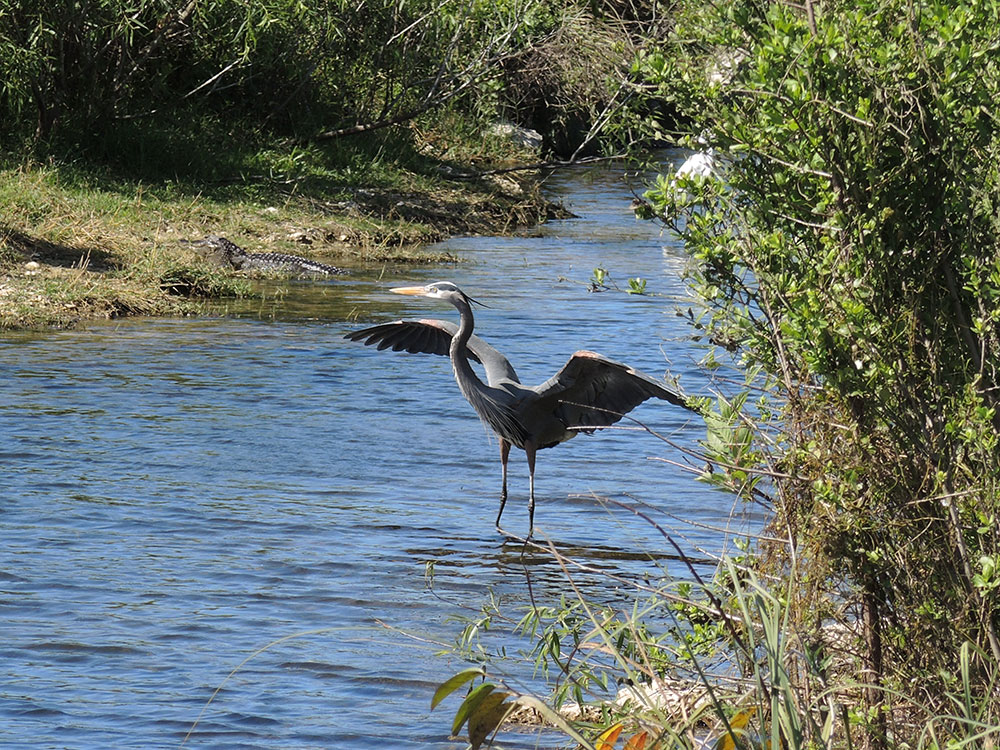
The preserve is highly diverse biologically. It is dominated by a wet cypress forest, but while "few giant cypress remain...one third of the swamp is covered with dwarf pond cypress." It is host to an array of flora and fauna, including mangroves, orchids, alligators, crocodiles, venomous snakes like the cottonmouth and eastern diamondback rattlesnake, a variety of birds, river otter, deer, bobcat, coyote, black bear and cougar.
The preserve is also home to federally listed endangered species including the eastern indigo snake and the Florida sandhill crane.
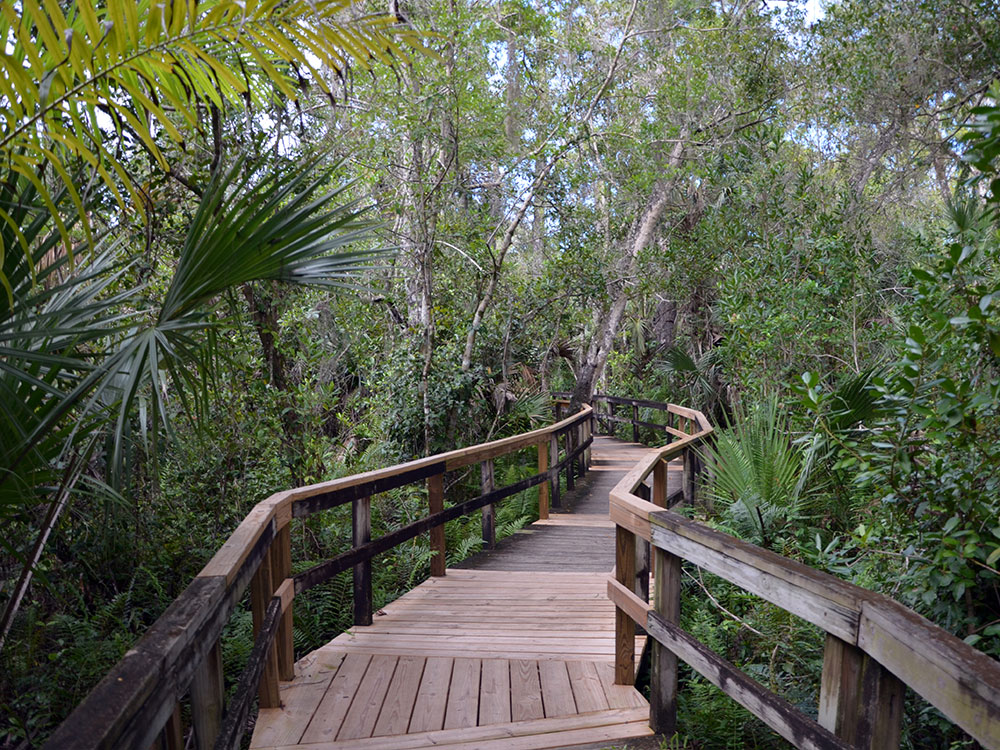
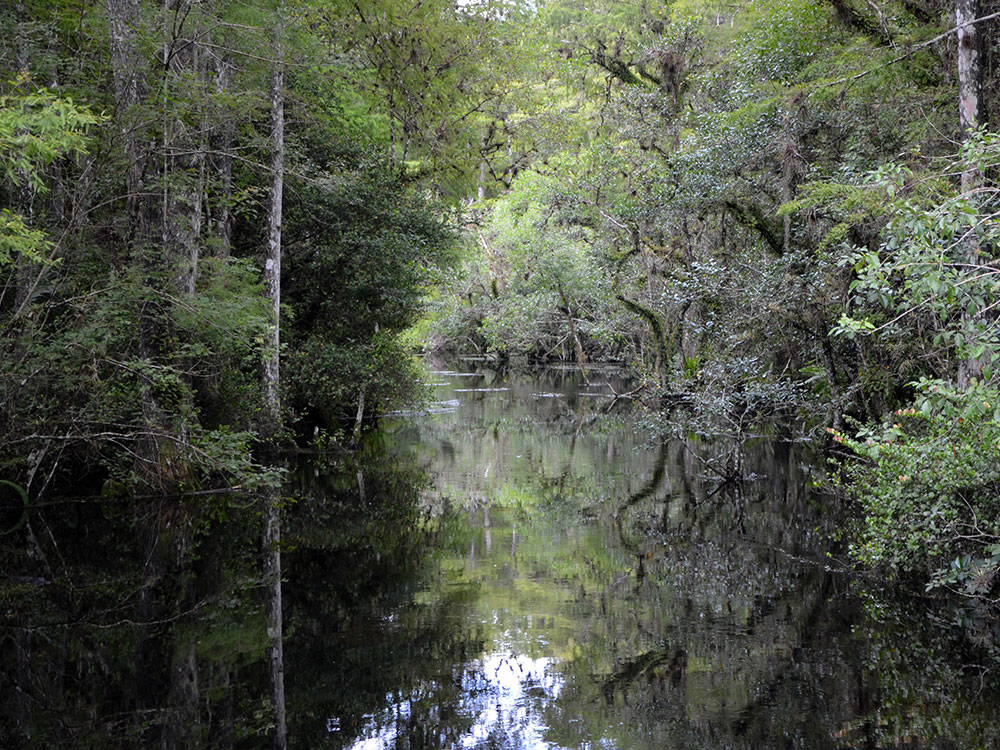
Twelve campgrounds in Big Cypress are tailored to motor vehicles, where tourists planning overnight stays can park their vehicles and off-road vehicles in designated areas. The southern terminus of the Florida National Scenic Trail is located in Big Cypress, and provides hiking opportunities during the winter months. Hiking throughout Big Cypress is enjoyable in all seasons, with most of the cypress country more hospitable to hikers than the dense sawgrass prairies of the central Everglades. Some of the most beautiful wading and walking can be found in cypress strands and prairies between the Loop Road and the Tamiami Trail.
Wildlife is abundant in the preserve. Most notable and regularly seen, the American alligators can be up to around 12 feet in length. Another notable and endangered animal, the Florida panther calls the Preserve home. Rangers often lead swamp walk hikes in the dry winter months, as well as canoe trips, and boardwalk talks.
Hunting is a long-established recreational activity in the area and is protected in the designation of the area as a Preserve. Hunters were instrumental in protecting this corner of remote, wild Florida. Hunting activities continue today and include seasons for archery, muzzle loading and general gun. Typical game species are white-tailed deer, turkey and hogs. Alligator hunting is not allowed within the national preserve. Hunting within the preserve is managed cooperatively between the National Park Service and the Florida Fish and Wildlife Conservation Commission.
This article uses material from the Wikipedia article "Big Cypress National Preserve", which is released under the Creative Commons Attribution-Share-Alike License 3.0