.jpg)
Paleontological site preserving the fossil remains of Columbian mammoths and other Ice Age animals, featuring guided tours, exhibits, and nature trails through wooded parkland.
General Information
Closed Thanksgiving Day, Christmas Day, and New Year's Day
Dig Shelter Tour Adults: $6
Seniors (62+): $5
Military: $5
Youth (4-17): $5
Children 3 and under: Free
How to Get There
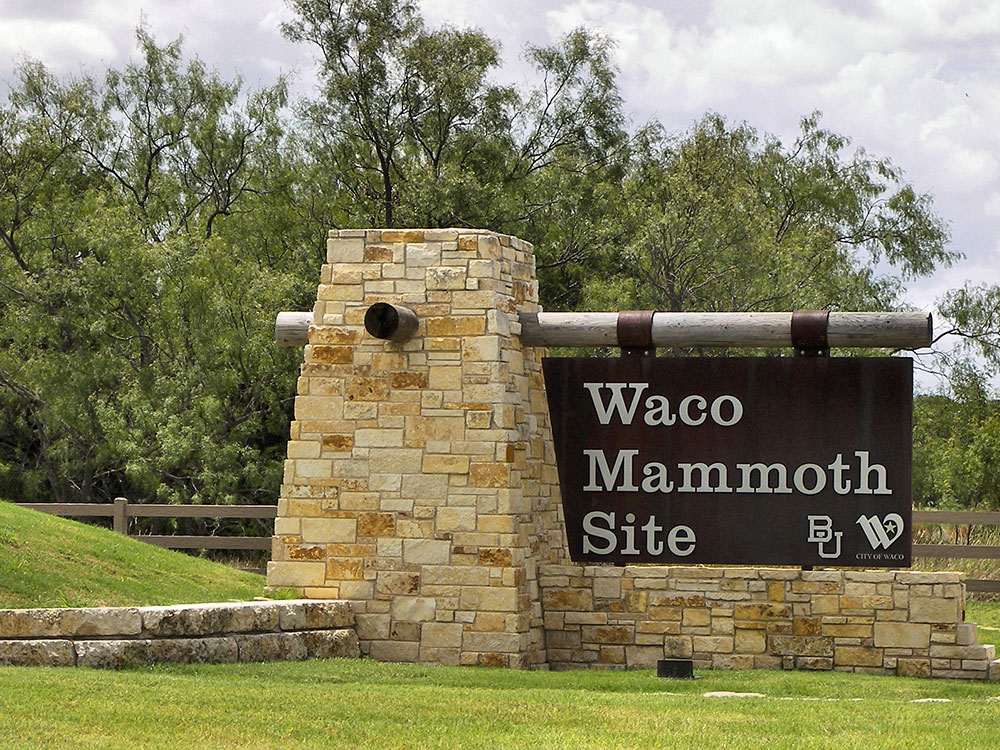
From Waco (6 mi): Take Lake Shore Drive northwest, turn onto Steinbeck Bend Drive, and continue directly to the monument entrance at 6220 Steinbeck Bend Drive.
The Waco Mammoth National Monument is a paleontological site and museum in Waco, Texas, where fossils of 24 Columbian mammoths (Mammuthus columbi) and other mammals from the Pleistocene Epoch have been uncovered. The site is the largest known concentration of mammoths dying from a (possibly) reoccurring event, which is believed to have been a flash flood. The mammoths on site did not all die at the same time but rather during three separate events in the same area. A local partnership developed around the site after the initial bone was discovered. The Waco Mammoth Foundation worked in partnership with the city of Waco and Baylor University to develop the site. Baylor's involvement mainly included the research, preservation, and storage of materials from the site, while the city of Waco contributed to the protection of the land. In 2015, they successfully sought the National Monument designation to bring the expertise of the National Park Service into the partnership.
Things to Do
See Mammoth Fossils in the Dig Shelter
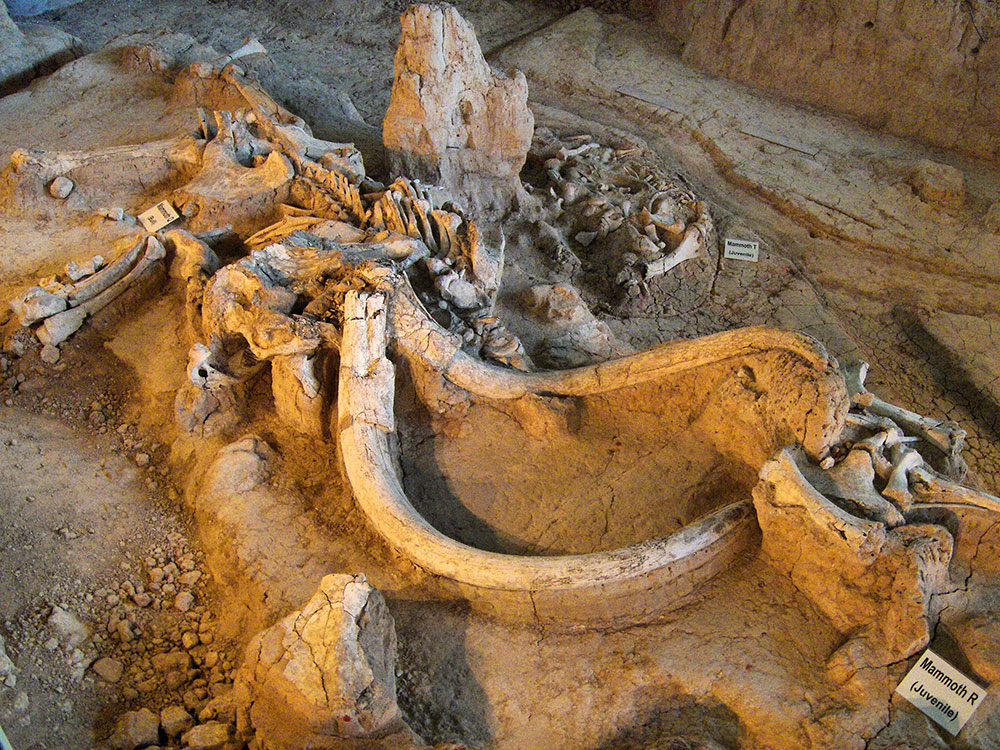
Visit the climate-controlled Dig Shelter and view the preserved remains of Columbian mammoths exactly where they were discovered. The site contains the nation's first and only recorded nursery herd of Ice Age Columbian mammoths.
Take a Guided Fossil Tour
Join a guided tour of the excavation site to learn how the mammoths were discovered, what scientists have uncovered, and how researchers continue to study the fossils.
Explore the Welcome Center
Learn about Ice Age animals, paleontology, and the monument's history through exhibits, displays, and educational information.
Walk the Mammoth Trail
Follow the paved, accessible path connecting the Welcome Center and Dig Shelter while enjoying the natural surroundings of the monument.
Hike Through Wooded Parkland
Explore trails that wind through more than 100 acres of forested land along the Bosque River, offering a peaceful outdoor experience.
Visit the Museum Store
Browse books, educational materials, fossil-themed gifts, toys, and souvenirs related to the monument and Ice Age history.
Top Trails
Mammoth Trail
Difficulty: Easy
Highlights: Fully paved and accessible pathway connecting the Welcome Center to the Dig Shelter and fossil excavation area.
Monument Nature Trail
Difficulty: Easy
Highlights: Short wooded loop through the monument's natural landscape with opportunities to enjoy local vegetation and wildlife.
Bosque River Area Trails
Difficulty: Easy
Highlights: Forested scenery, shaded pathways, and views of the surrounding natural environment.
Columbian mammoths lived 10,000 to 1 million years ago. They migrated to North America and as far south as Nicaragua. The Columbian mammoth was a herbivore, with a diet consisting of varied plant life ranging from grasses to conifers. At this time, the Central Texas landscape consisted of temperate grasslands and savannahs surrounded by river floodplains.
How the animals at the site died is unknown, but there is no evidence that humans were involved. The current theory is that approximately 68,000 years ago, at least 19 mammoths from a nursery herd were trapped in a steep-sided channel during a flash flood and drowned and/or were buried by mud. A camel was also trapped and killed during this event. Later floods buried the remains. A second event took place sometime later. During this event, an unidentified animal associated with a juvenile saber-toothed cat (genus Smilodon) died and was buried. The third event claimed the lives of a bull mammoth, two juvenile mammoths, and an adult female. Approximately 15,000 years after the nursery herd was trapped, these animals also appear to have been victims of rising water, unable to escape due to the slippery slopes of the surrounding channel.
The age of the fossils was determined using Luminescence dating, specifically optically stimulated luminescence (OSL), of the sediment. OSL uses light to excite electrons and cause the emission of photons. The photons can be sensed and measured to calculate when the sediment was last exposed to the sun. The soil near the mammoths' remains was examined using OSL to determine how long the minerals were buried. As the soil was buried at the same time as the mammoths, determining when the soil was last exposed to the sun would correlate to the time when the mammoths perished.
The site was discovered in 1978 by Paul Barron and Eddie Bufkin, who were searching for arrowheads and fossils near the Bosque River. The men found a large bone and took it to the Strecker Museum at Baylor University for analysis. Once the bone was identified as Columbian mammoth, the museum staff organized a formal dig at the site. Between 1978 and 1990. In 1979 Sr. George F. Naryshkin (then an undergraduate at Baylor) began work on his 2+1⁄2-year excavation and study of the site.
He asked for and received permission from the owners of the property to excavate the area. George named the site "The Waco Mammoth Site" and uncovered 5 mammoths at the time and in 1980 completed his senior thesis on the site titled "The Significance of the Waco Mammoth site to Central Texas Pleistocene History". He aged the site to about 40,000 before present based on terrace dating. Following his graduation, 16 mammoths were discovered. These first remains were protected with plaster jackets and stored at the Strecker Museum (now the Mayborn Museum Complex). The other remains were excavated between 1990 and 1997. These remains include a large male (bull), a female, two juveniles and a camel (Camelops hesternus) and are in situ at the site.
Though the first bones at the site were discovered in 1978, the site remained closed to the public until the end of 2009. That year, a shelter was completed to protect the bones and allow the site to be viewed by the general public. The site, now run by the City of Waco, Baylor University, and the National Park Service, sits in a 100-plus acre stretch of wooded parkland along the Bosque River.
On July 10, 2015, President Barack Obama used his authority under the Antiquities Act to designate the site as Waco Mammoth National Monument, to be managed by the National Park Service in collaboration with the City of Waco and Baylor University.
This article uses material from the Wikipedia article "Waco Mammoth National Monument", which is released under the Creative Commons Attribution-Share-Alike License 3.0