Historic Spanish mission and fortress compound founded in the 18th century by Roman Catholic missionaries and was the site of the Battle of the Alamo in 1836
General Information
Peak Season (May 28 to Sept. 6): 9am to 7pm
Off-Peak Season (Sept. 7 to May 27): 9am to 5:30pm
Closed Christmas Day
Alamo Guided Tour: 9:30am, 10:30am, 11:30am, 1pm, 3pm
Touring the Alamo Church is free. Visitors will need to reserve their free ticket to enter the church ahead of their visit. A maximum of 100 people will be allowed inside at once and visitors will have 30 minutes to explore the inside of the church. Afterwards, visitors are free to explore the rest of the grounds as long as they like.
Alamo Guided Tour
Adult: $40.00
Child (12 and under): $30.00
Adult Military (w/ID): $36.00
Child Military (12 and under w/ID): $27.00
Head east on Dolorosa toward Main Plaza. Continue onto W Market St. Turn left onto S Alamo St. Continue onto Alamo Plaza
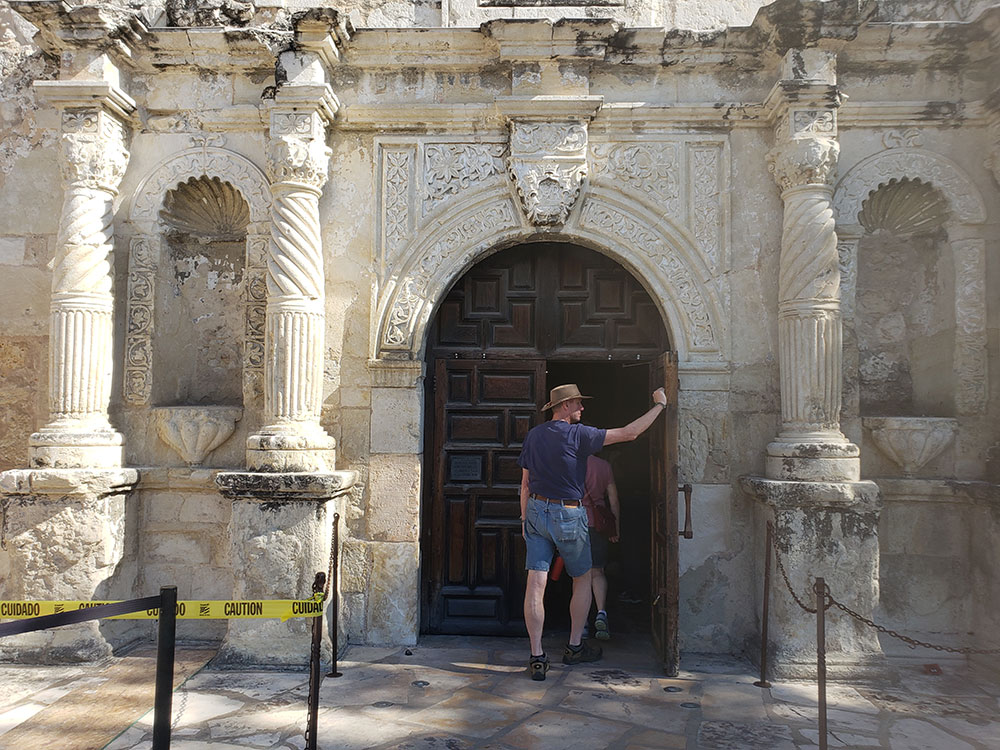
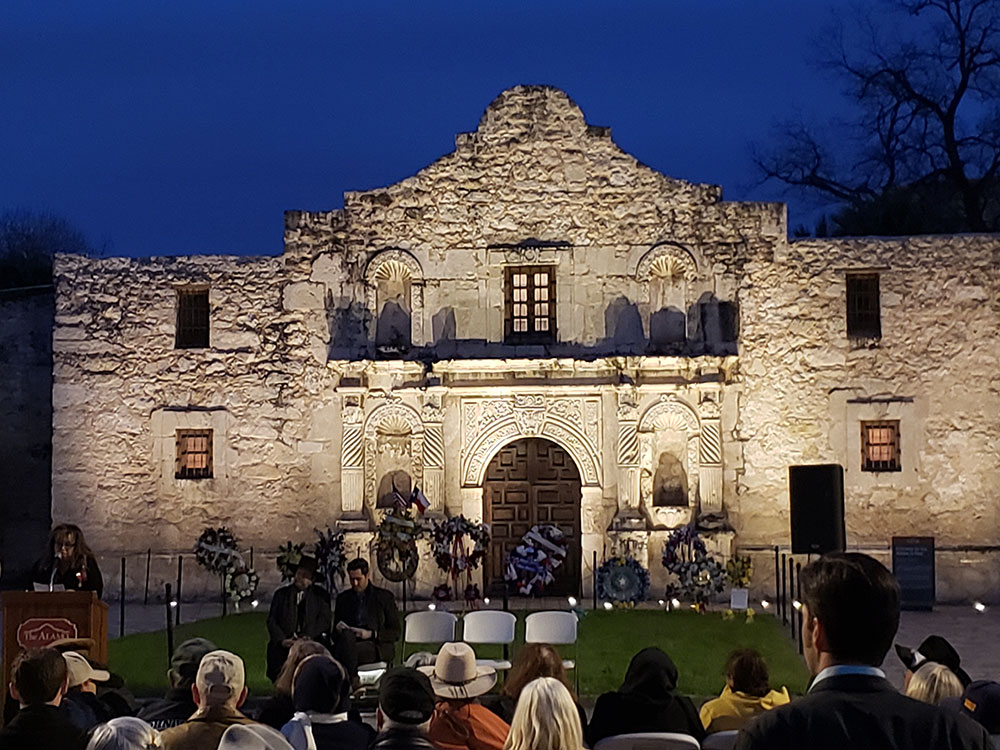
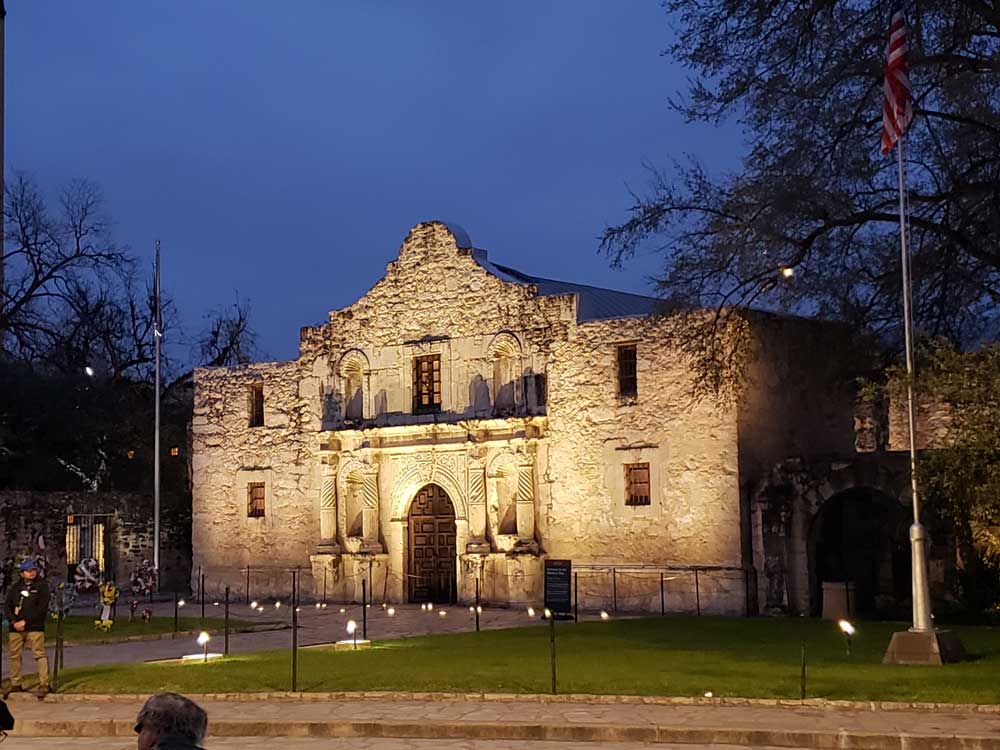
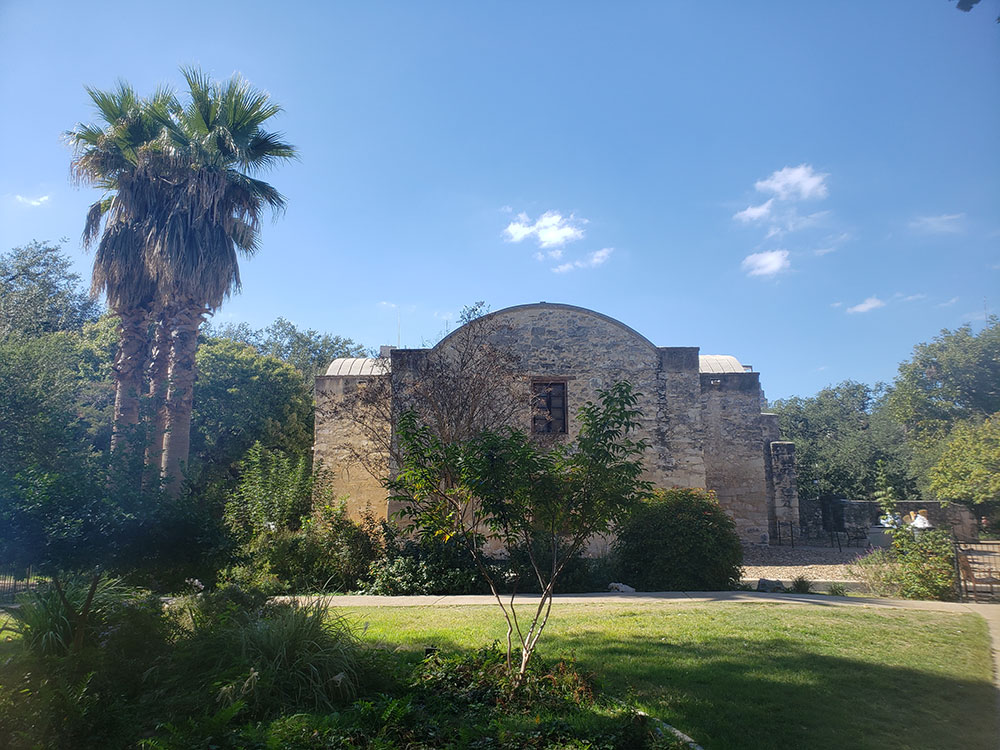
The Alamo Mission (Spanish: Misión de Álamo), commonly called the Alamo and originally known as the Misión San Antonio de Valero, is a historic Spanish mission and fortress compound founded in the 18th century by Roman Catholic missionaries in what is now San Antonio, Texas, United States. It was the site of the Battle of the Alamo in 1836. Today it is a museum in the Alamo Plaza Historic District and a part of the San Antonio Missions World Heritage Site.
The historic district was one of the early Spanish missions in Texas, built for the education of local American Indians after their conversion to Christianity. The mission was secularized in 1793 and then abandoned. Ten years later, it became a fortress housing the Second Flying Company of San Carlos de Parras military unit, who likely gave the mission the name Alamo. During the Texas Revolution, Mexican General Martín Perfecto de Cos surrendered the fort to the Texian Army in December 1835, following the Siege of Béxar. A relatively small number of Texian soldiers then occupied the compound for several months. The defenders were wiped out at the Battle of the Alamo on March 6, 1836. As the Mexican Army retreated from Texas several months later, they tore down many of the Alamo walls and burned some of the buildings.
The Daughters of the Republic of Texas (DRT) formed in 1895 and began trying to preserve the Alamo. Adina Emilia De Zavala and Clara Driscoll successfully convinced the state legislature in 1905 to purchase the remaining buildings and to name the DRT as the permanent custodian of the site. Over the next century, periodic attempts were made to transfer control of the Alamo from the DRT. In early 2015, Texas Land Commissioner George P. Bush officially removed control of the Alamo to the Texas General Land Office. The Alamo and the four missions in the San Antonio Missions National Historical Park were designated a UNESCO World Heritage Site on July 5, 2015.
As of 2002, the Alamo welcomed over four million visitors each year, making it one of the most popular historic sites in the United States. Visitors may tour the chapel, as well as the Long Barracks, which contains a small museum with paintings, weapons, and other artifacts from the era of the Texas Revolution. Additional artifacts are displayed in another complex building, alongside a large diorama that recreates the compound as it existed in 1836. A large mural, known as the Wall of History, portrays the history of the Alamo complex from its mission days to modern times.
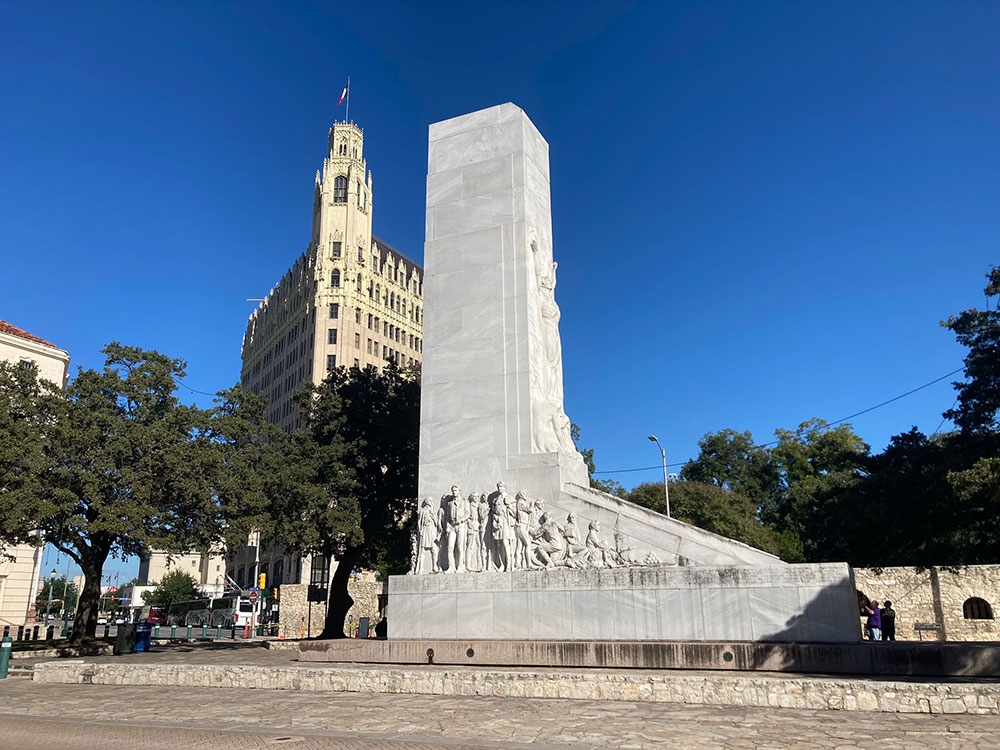
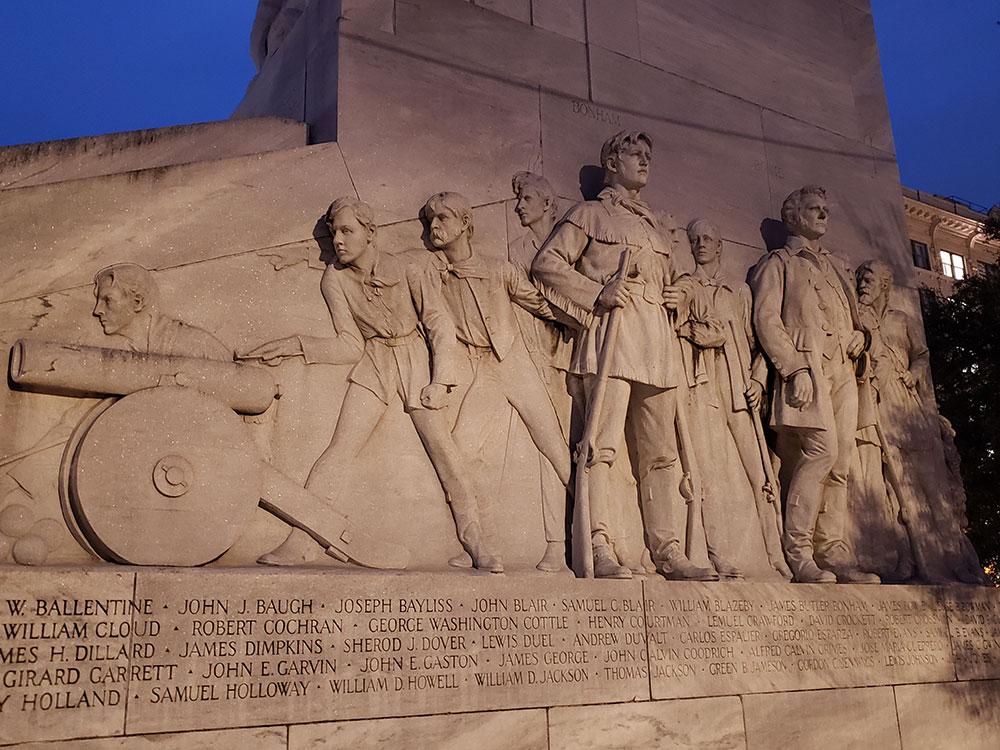
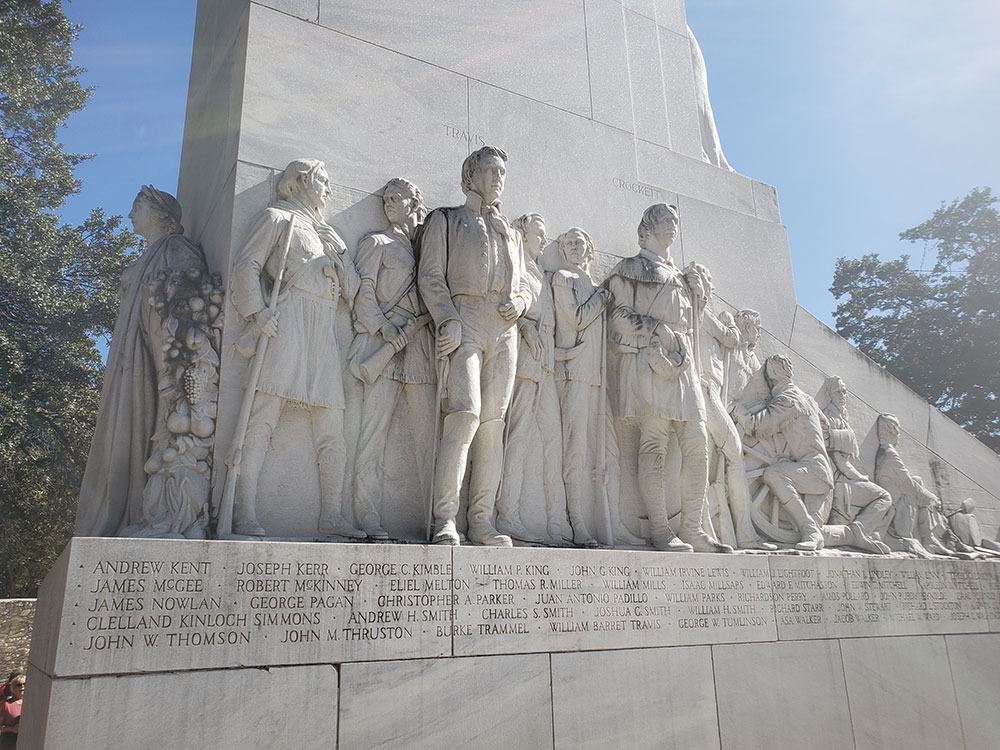
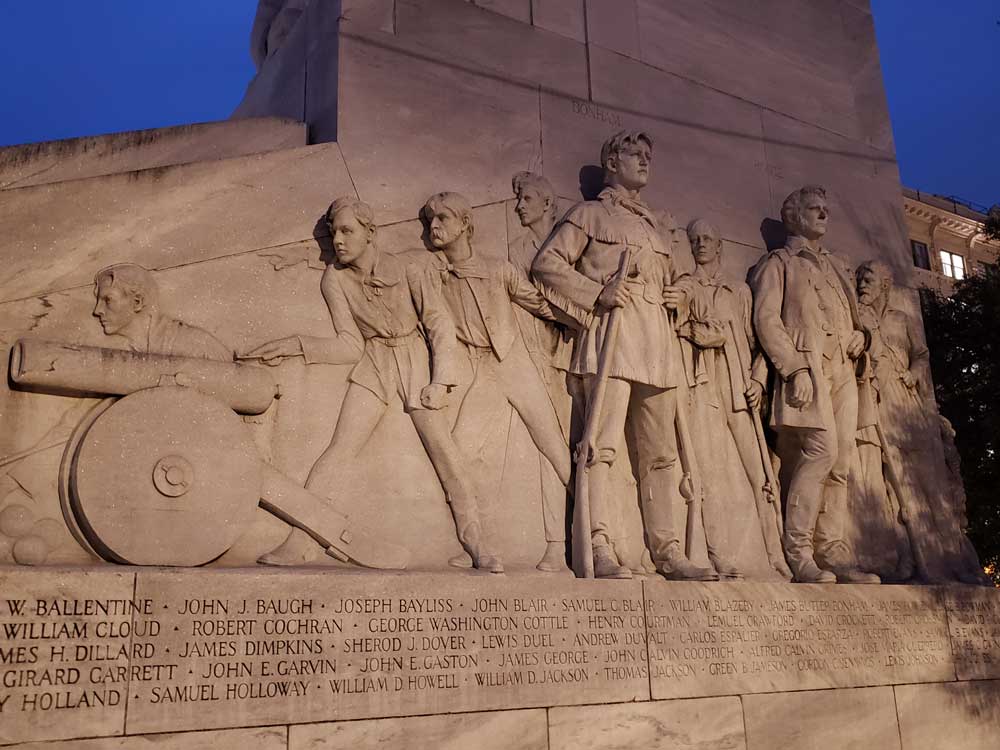
The Alamo Cenotaph, also known as The Spirit of Sacrifice, is a monument in San Antonio, Texas, commemorating the Battle of the Alamo of the Texas Revolution, which was fought at the adjacent Alamo Mission. The monument was erected in celebration of the centenary of the battle, and bears the names of those known to have fought there on the Texas side.
As of 2002, the Alamo welcomed over four million visitors each year, making it one of the most popular historic sites in the United States. Visitors may tour the chapel, as well as the Long Barracks, which contains a small museum with paintings, weapons, and other artifacts from the era of the Texas Revolution. Additional artifacts are displayed in another complex building, alongside a large diorama that recreates the compound as it existed in 1836. A large mural, known as the Wall of History, portrays the history of the Alamo complex from its mission days to modern times.
The Alamo Cenotaph, also known as The Spirit of Sacrifice, is a monument in San Antonio, Texas, commemorating the Battle of the Alamo of the Texas Revolution, which was fought at the adjacent Alamo Mission. The monument was erected in celebration of the centenary of the battle, and bears the names of those known to have fought there on the Texas side.
Although there had been previous plans for Alamo monuments, starting in the late 1800s, the Alamo Cenotaph was the first such erected in San Antonio. During the 1936 Texas Centennial celebration, the state of Texas provided $100,000 for the monument, commissioned from local sculptor Pompeo Coppini. San Antonio mayor Maury Maverick held a dedication ceremony on November 11, 1940.
The shaft rises sixty feet from its base which is forty feet long and twelve feet wide. The monument was erected in grey Georgia marble and pink Texas granite. It was entitled The Spirit of Sacrifice and incorporates images of the Alamo garrison leaders and 187 names of known Alamo defenders, derived from the research of historian Amelia Williams. Later research has shown some listed on the cenotaph were not there, and the total of Alamo combatants has risen with newer research.
The marker on the cenotaph reads:
Erected in memory of the heroes who sacrificed their lives at the Alamo, March 6, 1836, in the defense of Texas. They chose never to surrender nor retreat; these brave hearts, with flag still proudly waving, perished in the flames of immortality that their high sacrifice might lead to the founding of this Texas.
This article uses material from the Wikipedia article "Alamo Mission in San Antonio", and "Alamo Cenotaph"which is released under the Creative Commons Attribution-Share-Alike License 3.0