Expansive rolling sand dunes and desert landscapes offering free-form exploration, sand sledding, camping, wildlife viewing, and horseback riding across a unique dune environment.
General Information
Gate locks at 10pm nightly
Children 12 and under: Free
How to Get There
From Monahans (4 mi): Take I-20 to Exit 86, head north on Park Road 41, and continue directly to the park entrance.
The Monahans Sandhills State Park is a 3,840-acre (1,550 ha) state park located in the southern Llano Estacado in Ward County and Winkler County, Texas. The closest major town is Monahans, Texas, and the closest limited-access highway ingress is Exit 86 on Interstate 20.
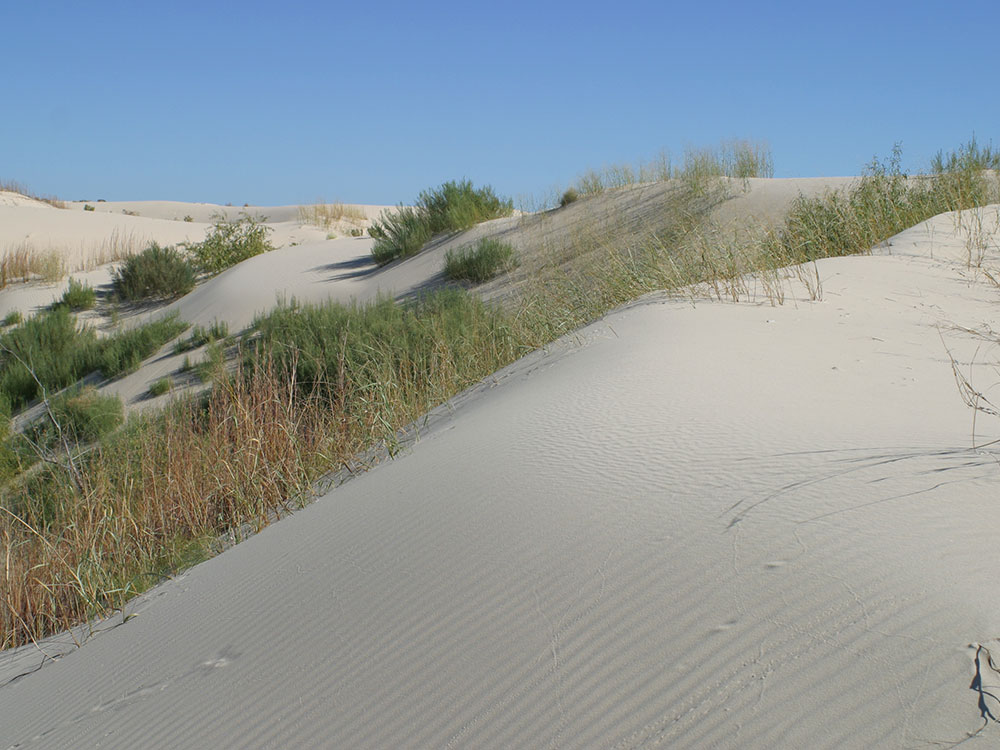
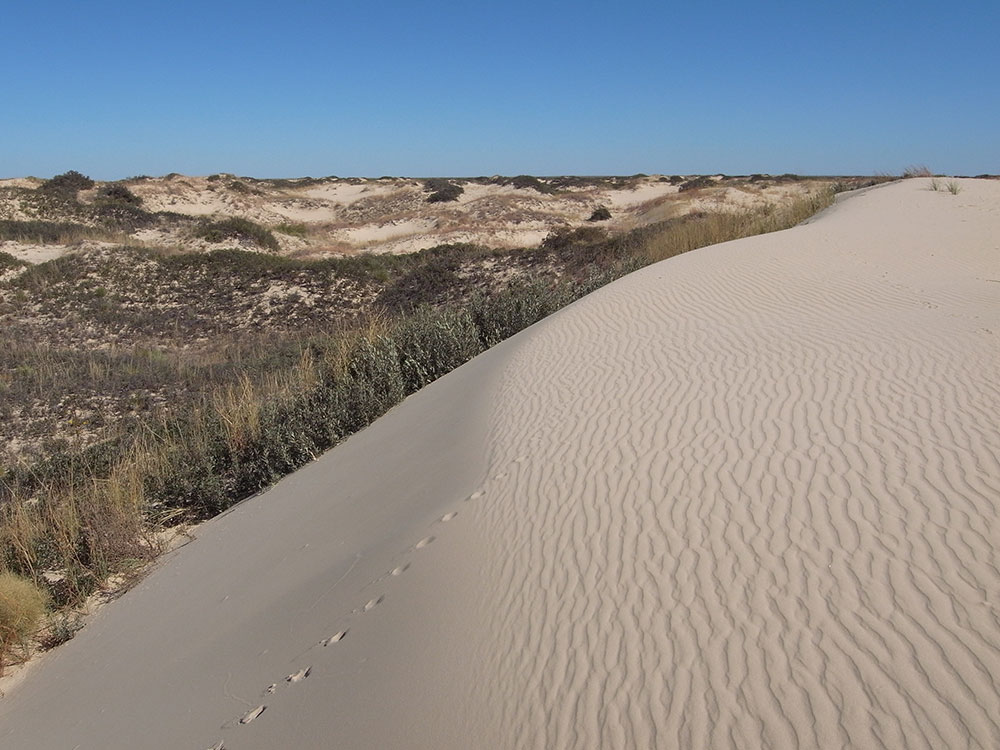
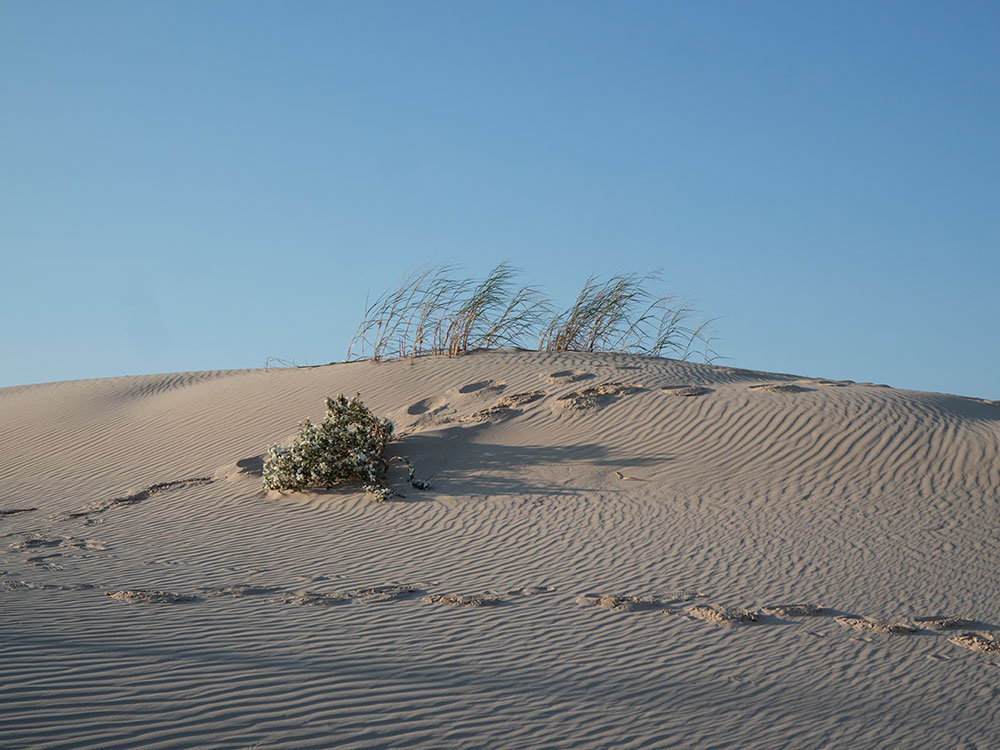
Monahans Sandhills State Park is noted for the presence of sand dunes up to 70 feet (21 m) high. Although desert-like, the Monahans Sandhills are not a desert; they are a part of a semi-arid ecosystem (average annual rainfall 12.3 inches (310 mm)) characterized by the presence of both groundwater and relatively nutrient-poor windblown sand. The Shinoak (Quercus havardii) is a local climax shrub, an unusual type of oak tree which because of local conditions often achieves full growth of only 4 feet (1.2 m) in height. Most of a Shinoak's biomass exists in the form of a lengthy root system reaching down to groundwater. If a Monahans sand dune has become stabilized and has stopped blowing about in the wind, that is often because a small grove of Shinoaks have stabilized the dune with their extensive root systems.
The Monahans Sandhills are part of the Permian Basin of hydrocarbon formations, and some oil production continues in and around the state park.
Visitors practice several local forms of recreation at the Monahans Sandhills, such as sandboarding, 'sand football', 'sand surfing', and sand tobogganing.
Things to Do
Sand Surf and Sand Sled
The park's most popular activity is sliding down the massive dunes on sand discs and sleds. Visitors can rent sand discs at the visitor center or bring their own equipment for hours of fun on the shifting dunes.
Explore the Sand Dunes
Wander across thousands of acres of active and semi-stabilized dunes that continually change shape as winds reshape the landscape.
Hike Through the Dune Field
Unlike many parks with defined trail networks, visitors can freely explore much of the dune area while enjoying panoramic views of the surrounding desert landscape.
Walk the Nature Trail
The short nature trail introduces visitors to the unique plants and animals that survive in this harsh yet beautiful dune environment.
Learn at the Dunagan Visitor Center
Explore exhibits explaining the park's geology, ecology, history, and the formation of the vast sand dunes.
Watch Sunrise or Sunset
The dunes take on dramatic colors as the sun rises and sets, creating some of the park's most memorable scenery.
Top Trails
Monahans Sandhills Nature Trail
Difficulty: Easy
Highlights: Family-friendly trail featuring native plants, wildlife habitat, and views of the surrounding dunes.
Monahans Sand Dunes Loop
Difficulty: Moderate
Highlights: Ranger-recommended route traversing dune ridges, high points, and iconic dune scenery throughout the park.
Additional Details
The Monahans Sandhills consist of a sand deposits 70 miles long and 20 miles wide from Crane County, Texas to Andrews County, Texas. The Llano Estacado escarpment to the east is a barrier to further wind transport of sediment. The sand probably reached its greatest areal extent in the Late Pleistocene, 16,000 years before the present, with an earlier period of dune building 25,000 years before the present. The dunes consist of almost pure quartz grains with an average diameter of less than 0.22 mm, which is fairly uniform for all of the grains. Dune types include coppice, wind-shadow, Akle, Barchan, and parabolic. Winds from the southeast in the summer, from the northwest in the winter, and the southwest during spring, influence dune shape. These changes in wind directions change the shapes of the dunes and their position, but in general the dunes don't migrate, retaining their position and form when measured year to year.
This article uses material from the Wikipedia article "Monahans Sandhills State Park", which is released under the Creative Commons Attribution-Share-Alike License 3.0