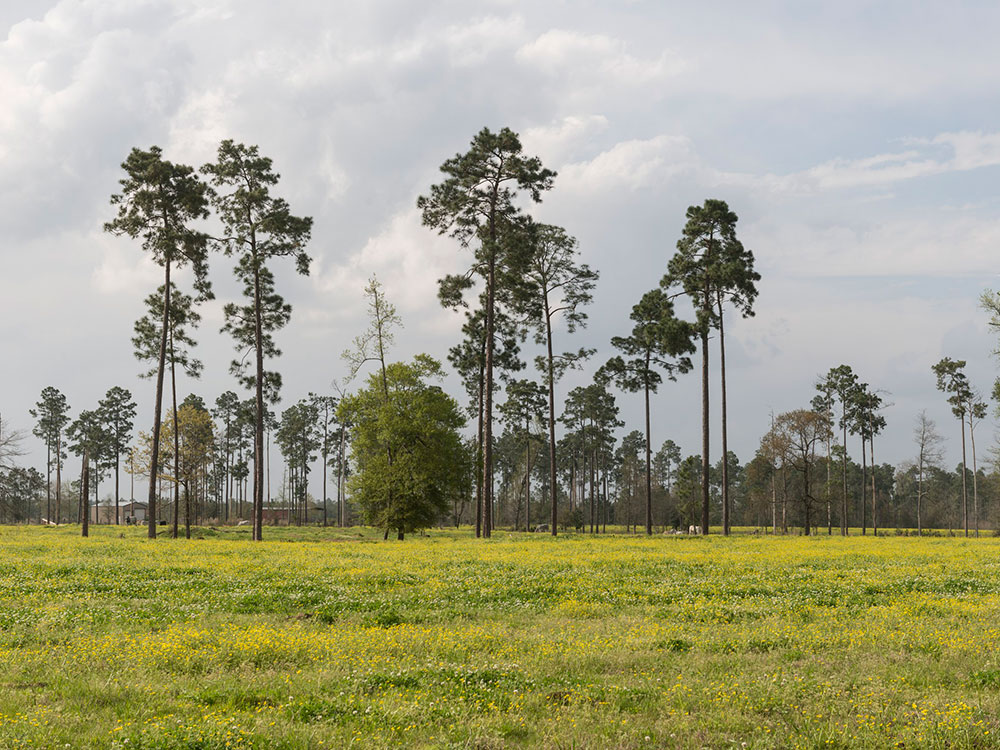
,_photographed_on_1_May_2020,_Tyler_County,_Texas,_USA,_by_William_L._Farr.jpg)
Protected expanse of forests, bayous, wetlands, and waterways preserving one of the most biologically diverse ecosystems in North America.
General Information
Visitor Center: Daily 9:00am to 5:00pm except major holidays
Most recreational activities are free
Some special permits may be required for certain activities
How to Get There
From Beaumont (30 mi): Take US-69 N toward Kountze, continue north to the junction with FM 420, and follow signs to the visitor center and preserve headquarters.
The Big Thicket is a region of a heavily-forested area of Southeast Texas. This area represents a portion of the mixed pine-hardwood forests of southeast US. The National Park Service established the Big Thicket National Preserve (BTNP) within the region in 1974 and it is recognized as a biosphere reserve by UNESCO. Although the diversity of animals in the area is high, with over 500 vertebrates, it is the complex mosaic of ecosystems and plant diversity. Biologists have identified at least eight, and up to eleven, ecosystems in the Big Thicket area. More than 160 species of trees and shrubs, 800 herbs and vines, and 340 types of grasses are known to occur in the Big Thicket, and estimates as high as over 1000 flowering plant species and 200 trees and shrubs have been made, plus ferns, carnivorous plants, and more. The Big Thicket has historically been the most dense forest region in Texas.
While no exact boundaries exist, conservatively the area occupies all of Hardin County, most of Polk, and Tyler counties, and parts of Jasper, Liberty and San Jacinto counties, including areas between the Neches River on the east, the Trinity River on the west, Pine Island Bayou on the south, to the higher elevations and older Eocene geological formations to the north.
The Big Thicket Basin has been described as shallow bowl or dish, tilted to one side, with the high rim on the interior north and low rim on the coastal south. Eastern and western rims consist of the low ridges that divide the Neches River and Sabine River drainages on the east and the Neches River and Trinity River drainages on the west. Elevations range from about 350 feet (110 m) in the north to 25-35 feet (7.6-10.7 m) in the south, dropping as low as 3 feet (1 m) at confluence of the Neches River and Pine Island Bayou. Northern regions are characterized by low gently rolling hills and well-formed drainage systems of streams and creeks in the landscape. The southern regions are comparatively flat, with poor drainage and support moderately extensive wetlands.
The headquarters of Big Thicket National Preserve (BTNP) are located 8 miles (13 km) north of Kountze, Texas, and approximately 30 miles (48 km) north of Beaumont via US 69/287. It is administered by the National Park Service, U.S. Department of the Interior. It consists of nine separate land units as well as six water corridors and as of October 22, 2019, the preserve includes 113,122 acres (457.79 km2) spread over seven counties. Centered about Hardin County, Texas, the BTNP extends into parts of surrounding Jasper, Jefferson, Liberty, Orange, Polk, and Tyler counties. It was established in 1974 in an attempt to protect the many plant and animal species within. Along with Big Cypress National Preserve in Florida, the BTNP became the first national preserve in the United States National Park System when both were authorized by the United States Congress on October 11, 1974.
The BTNP was also designated as a biosphere reserve by UNESCO in 1981.
Top Trails
Kirby Nature Trail
Length: 2.5 miles loop
Difficulty: Easy
Highlights: Bald cypress trees, wetlands, forest habitat, and the historic Staley Cabin near the trailhead.
Best For: Families, casual hikers, and first-time visitors.
Pitcher Plant Trail
Length: 1 mile loop
Difficulty: Easy
Highlights: One of the best places in the preserve to view carnivorous pitcher plants and wetland ecosystems.
Best For: Botanists, photographers, and anyone interested in unique plant life.
Big Thicket Sundew Trail
Length: About 1 mile
Difficulty: Easy
Highlights: Boardwalk sections, sundew plants, pitcher plants, and seasonal wildflowers.
Best For: Families and wildlife enthusiasts.
Turkey Creek Trail
Length: Up to 17.8 miles one way
Difficulty: Moderate
Highlights: Longleaf pine forests, streams, wildlife viewing, backcountry camping opportunities, and solitude.
Best For: Experienced hikers and backpackers.
Woodlands Trail
Length: 5.2 miles
Difficulty: Easy
Highlights: Collins Pond, Big Sandy Creek, forest scenery, birdwatching, and diverse habitats.
Best For: Day hikers looking for a longer but relatively easy outing.
Carnivorous Plants
Big Thicket is one of the few places in Texas where several species of carnivorous plants grow naturally. These plants evolved to obtain nutrients from insects because they often live in nutrient-poor, acidic soils. The preserve is home to four types of carnivorous plants.
Pitcher Plants
The yellow pitcher plant is the most famous carnivorous plant in the preserve. Its tube-shaped leaves attract insects with nectar and collect rainwater. Insects become trapped inside and are digested by the plant. The Pitcher Plant Trail offers some of the best viewing opportunities.
Sundews
These small plants are covered with sticky, glistening droplets that resemble dew. Insects become trapped on the sticky surface, allowing the plant to digest and absorb nutrients from its prey.
Bladderworts
These aquatic carnivorous plants use tiny underwater traps that create suction to capture microscopic aquatic organisms.
Butterworts
Butterworts produce sticky leaves that trap small insects. Digestive enzymes break down the prey and absorb nutrients through the leaf surface.
Best Time to See Carnivorous Plants
Late spring, especially from April through June, is generally the best time to view pitcher plants and seasonal wildflowers. The Pitcher Plant Trail and Sundew Trail provide the most reliable opportunities to observe these unique species. Visitors should remain on designated trails and boardwalks to help protect these fragile wetland habitats.
This article uses material from the Wikipedia article "Big Thicket", which is released under the Creative Commons Attribution-Share-Alike License 3.0
_Polk_Co._TX;_12_May_2020-(1)-1000.jpg)
_Polk_Co._TX;_12_May_2020.jpg)


_CR_2077,_Liberty_Co._TX;_22_May_2020-1000.jpg)
_CR_2077,_Liberty_Co._TX;_22_May_2020.jpg)
-1000.jpg)
.JPG)


_photographed_in_Hardin_County,_Texas,_USA_(11_May_2012)-750.jpg)
_photographed_in_Hardin_County,_Texas,_USA_(11_May_2012).jpg)
-1000.jpg)
.jpg)