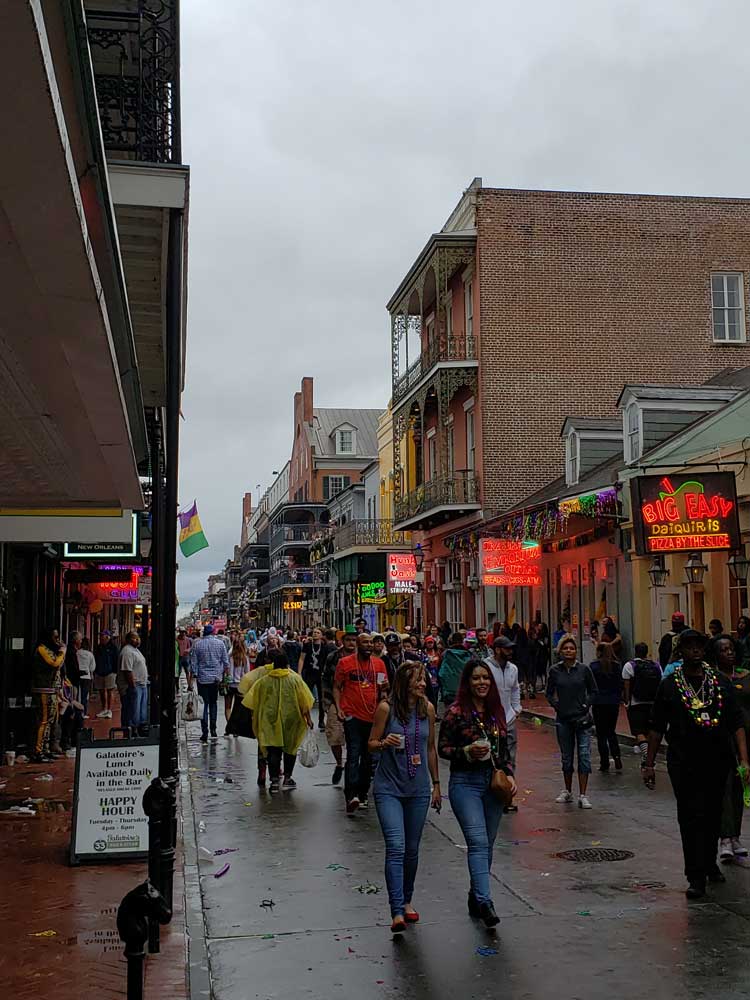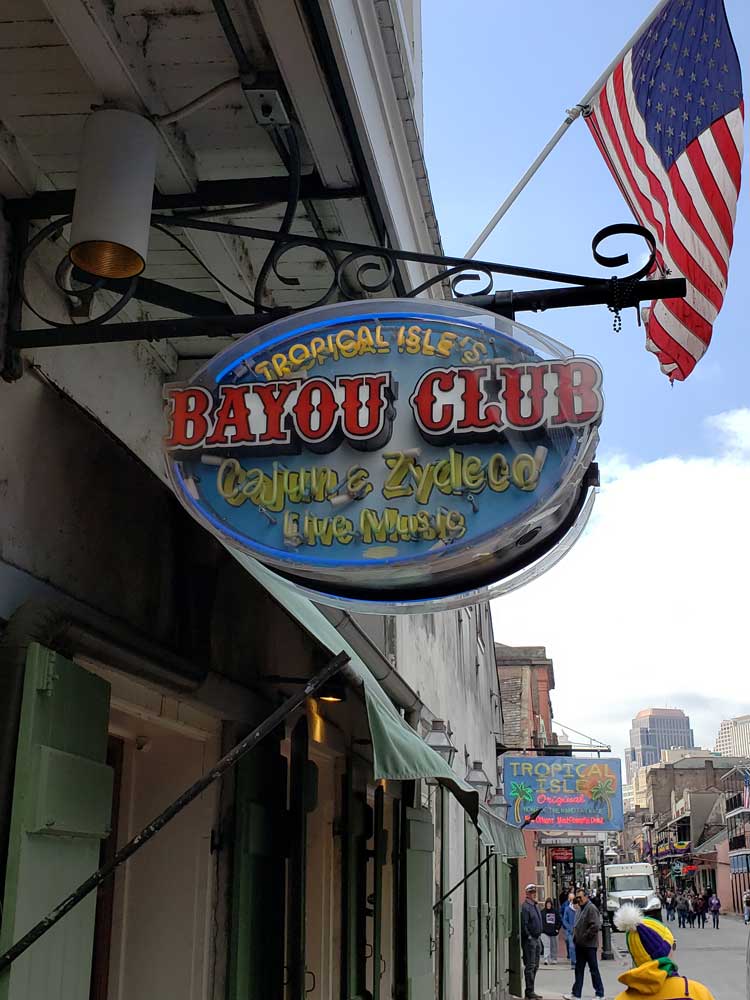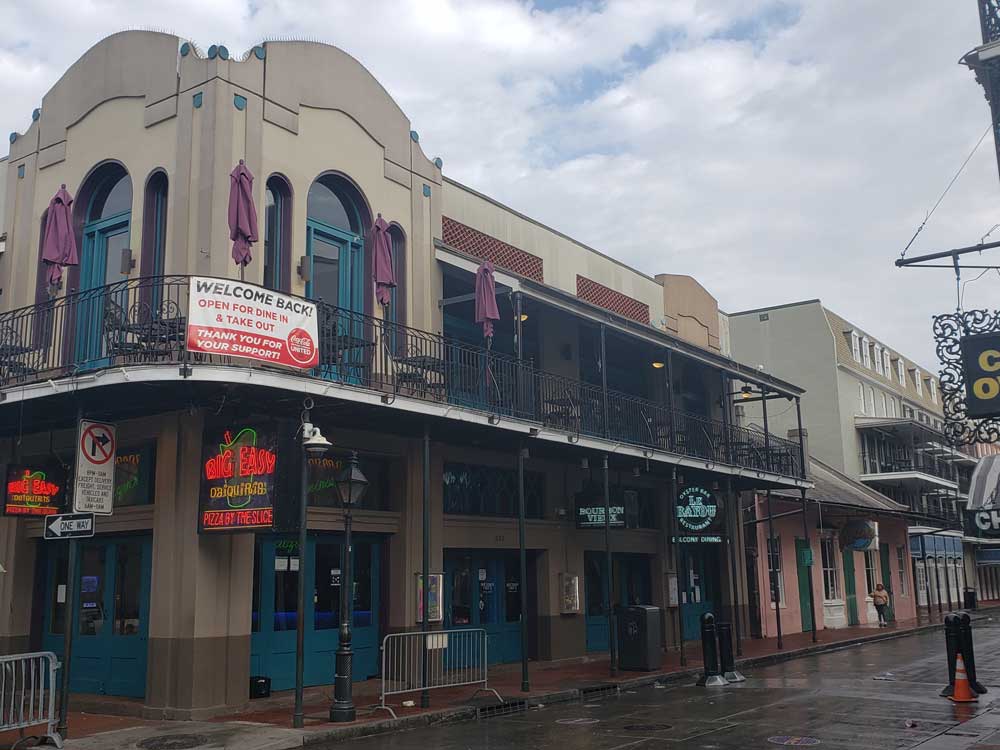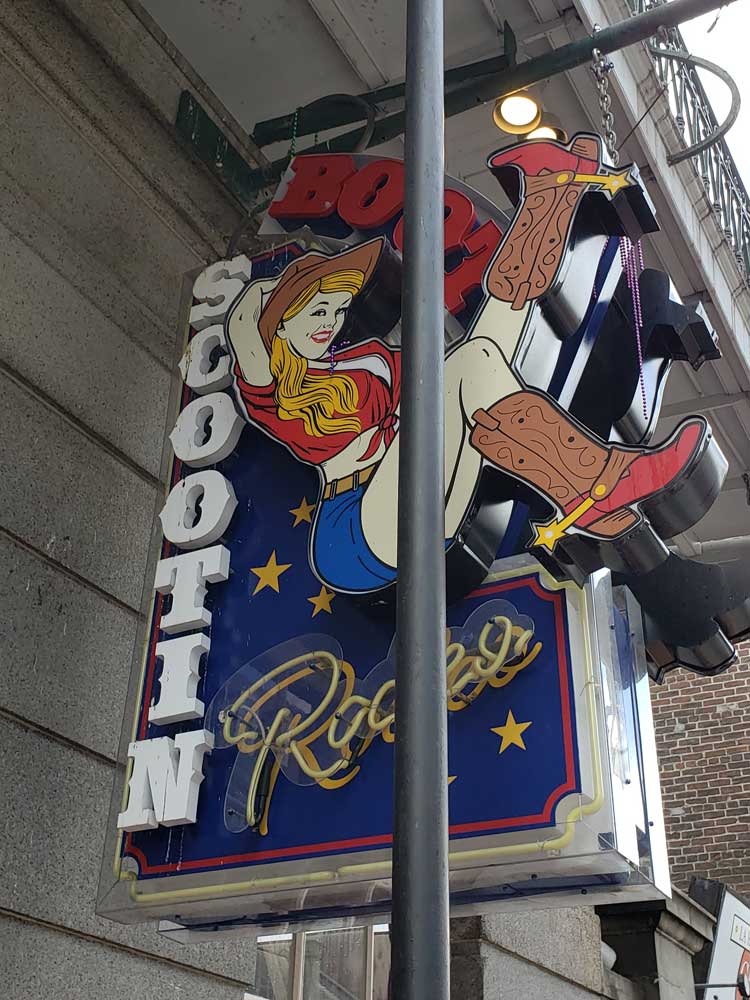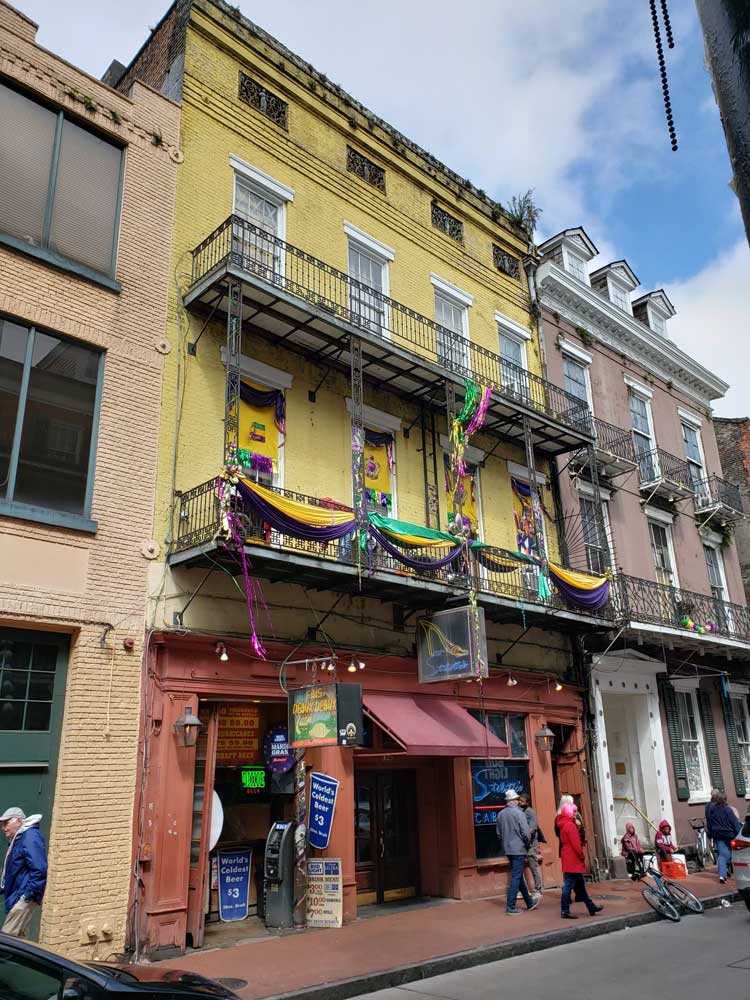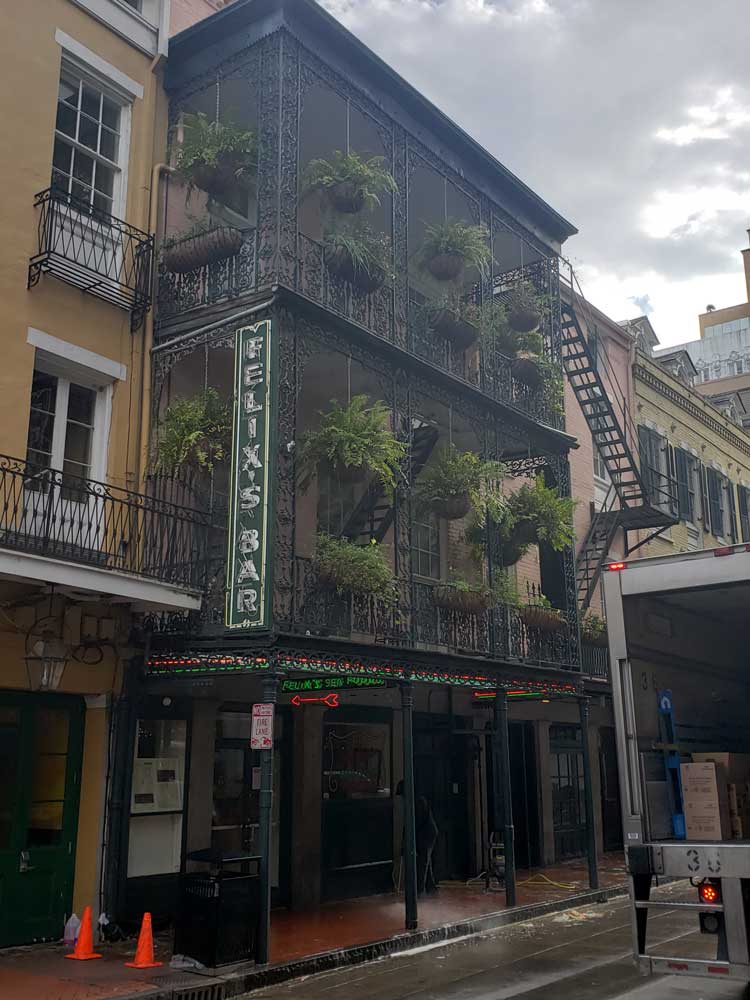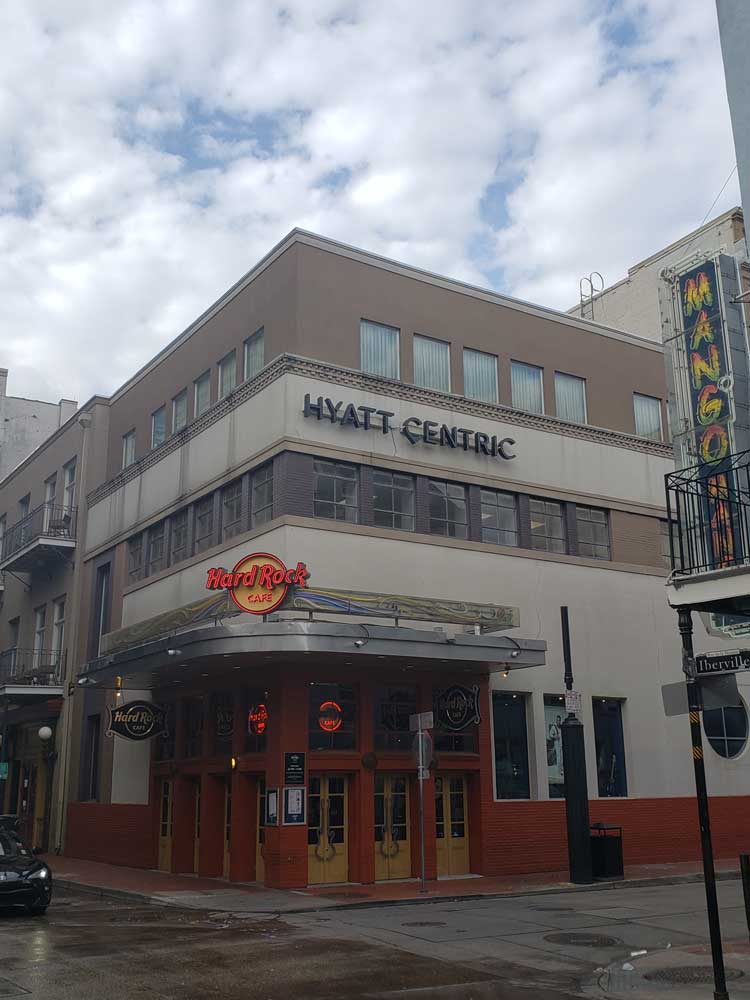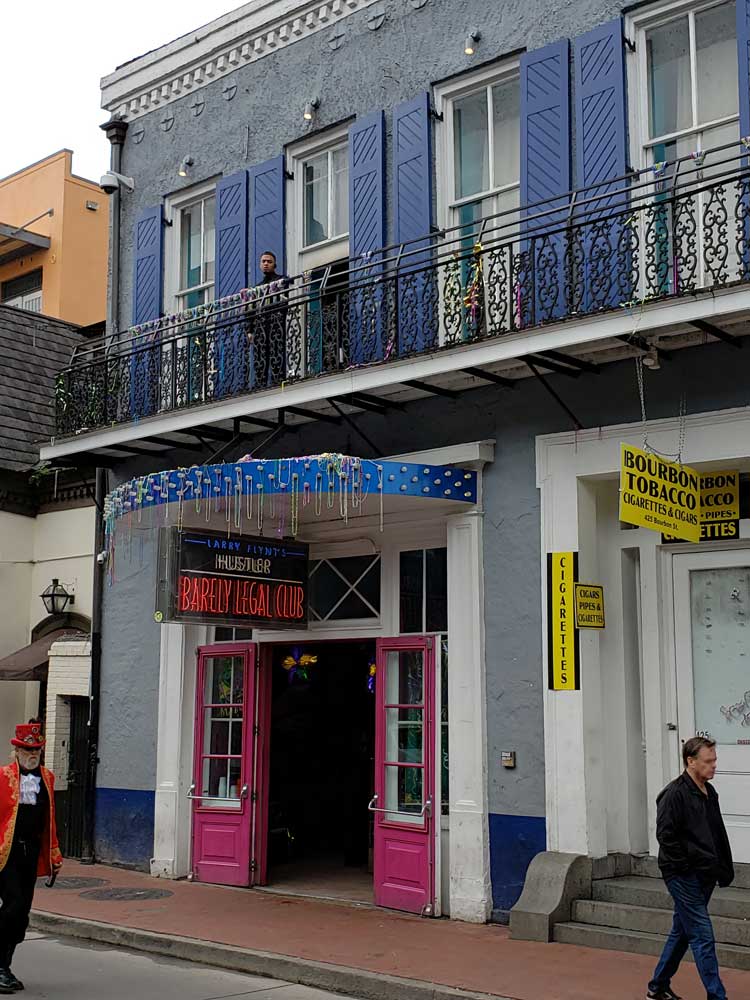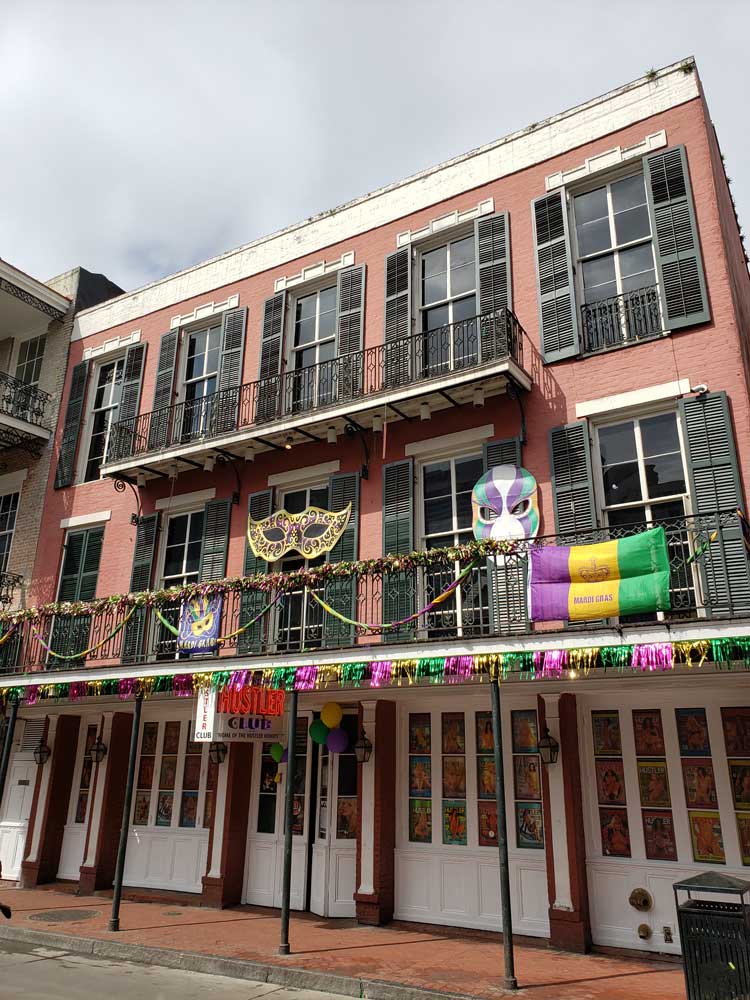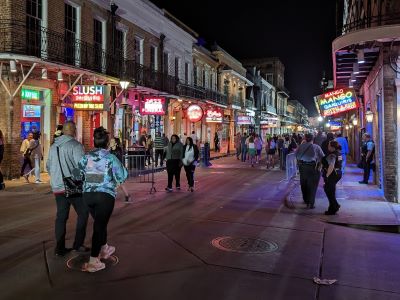
Historic street in the heart of the French Quarter of New Orleans. Extending thirteen blocks from Canal Street to Esplanade Avenue, Bourbon Street is famous for its many bars and strip clubs.
Places to See on Bourbon Street
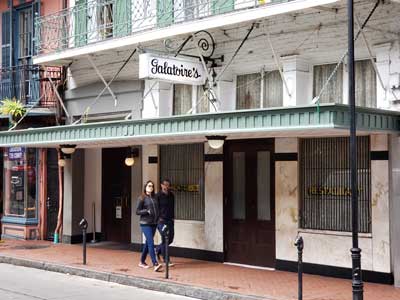
Galatoires
Fine-dining century-old institution serving French-Creole fare in upscale space
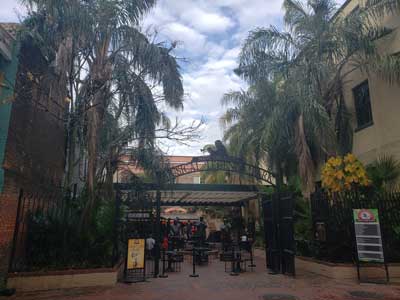
Musical Legends Park
Small park on Bourbon Street features life-size bronze statues of New Orleans musicians
Bourbon Street (French: Rue Bourbon, Spanish: Calle de Borbón) is a historic street in the heart of the French Quarter of New Orleans. Extending thirteen blocks from Canal Street to Esplanade Avenue, Bourbon Street is famous for its many bars and strip clubs.
In 1721, the royal engineer Adrien de Pauger designed the city's street layout. He named the streets after French royal houses and Catholic saints. He paid homage to France's ruling family, the House of Bourbon, with the naming of Bourbon Street. New Orleans was given to the Spanish in 1763 following the Seven Years' War. The Great New Orleans Fire of 1788 destroyed 80 percent of the city's buildings. The Spanish rebuilt many of the damaged structures, which are still standing today. For this reason, Bourbon Street and the French Quarter display more Spanish than French influence.
Following a brief restoration of French rule, the Americans gained control of the colony with the 1803 Louisiana Purchase. They translated the French street names into English, with Rue Bourbon becoming Bourbon Street.Bourbon Street was a premier residential area prior to 1900. This changed in the late 1800s and early 1900s, when the Storyville red-light district was constructed on Basin Street adjacent to the French Quarter. The area became known for prostitution, gambling and vaudeville acts. Jazz is said to have developed here, with artists such as King Oliver and Jelly Roll Morton providing musical entertainment at the brothels.
This was also the era when some of New Orleans' most famous restaurants were founded, including Galatoire's, Known for years by its characteristic line snaking down Bourbon Street, patrons waited for hours just to get a table — especially on Fridays. Simultaneously, with the wartime influx of people, property owners opened adult-centered nightclubs to capitalize on the city's risqué image. After the war, Bourbon Street became the new Storyville in terms of reputation. By the 1940s and 1950s, nightclubs lined Bourbon Street. Over 50 different burlesque shows, striptease acts and exotic dancers could be found.
Largely quiet during the day, Bourbon Street comes alive at night - particularly during the French Quarter's many festivals. Most famous of these is the annual Mardi Gras celebration, when the streets teem with thousands of people. Local open container laws allow drinking alcoholic beverages on the Quarter's streets. Popular drinks include the hurricane cocktail, the resurrection cocktail, the hand grenade and the so-called "huge-ass beers" - a large plastic cup of draft beer marketed to tourists at a low price. The most heavily visited section of Bourbon Street is "upper Bourbon Street" toward Canal Street, an eight-block section of visitor attractions including bars, restaurants, souvenir shops and strip clubs.
In the 21st century, Bourbon Street is the home of New Orleans Musical Legends Park, a free, outdoor venue for live jazz performances. The park has sculptures and other tributes to the city's legendary music personalities.
Most of the bars are located in the central section of Bourbon. Popular spots include Pat O'Brien's, Johnny White's, the Famous Door, Spirits on Bourbon, Channing Tatum's Saints and Sinners, Razzoo and The Cat's Meow. Marie Laveau's House of Voodoo is located on the corner of St. Ann Street.
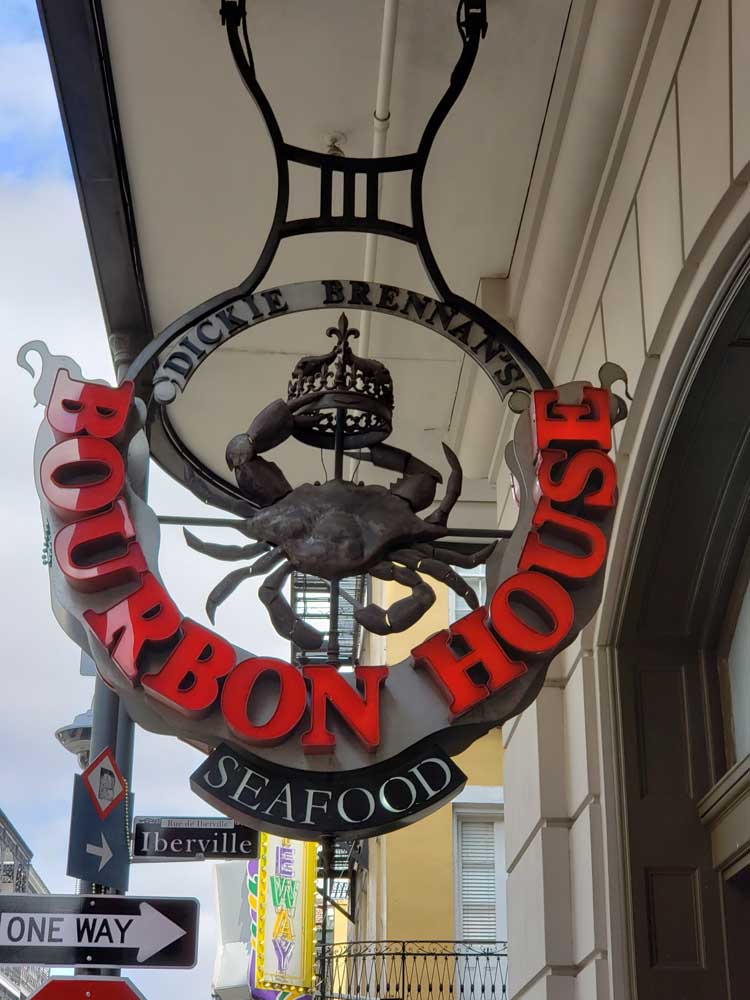
The most renowned restaurant on Bourbon Street is Galatoire's; it represents traditional New Orleans dining and has a dress code. Lafitte's Blacksmith Shop and the Old Absinthe House are two of the many casual eateries. Also notable is the locals' hangout, the Bourbon House.
"Lower Bourbon Street" (lower being a reference to downriver, or downstream Mississippi River), from the intersection of St. Ann Street, caters to New Orleans' thriving gay community. Featuring such establishments as Oz and the city's largest gay nightclub, the Bourbon Pub, St. Ann Street has been referred to as "the Velvet Line" or "the Lavender Line," the edge or approximate boundary of the French Quarter's gay community. Cafe-Lafitte-in-Exile is the oldest gay bar in the nation. The intersection of Bourbon and St. Ann Streets is also the center of the Labor Day weekend event Southern Decadence, commonly referred to as the Gay Mardi Gras, which attracts upwards of 100,000 participants.
This article uses material from the Wikipedia article "Bourbon Street" which is released under the Creative Commons Attribution-Share-Alike License 3.0