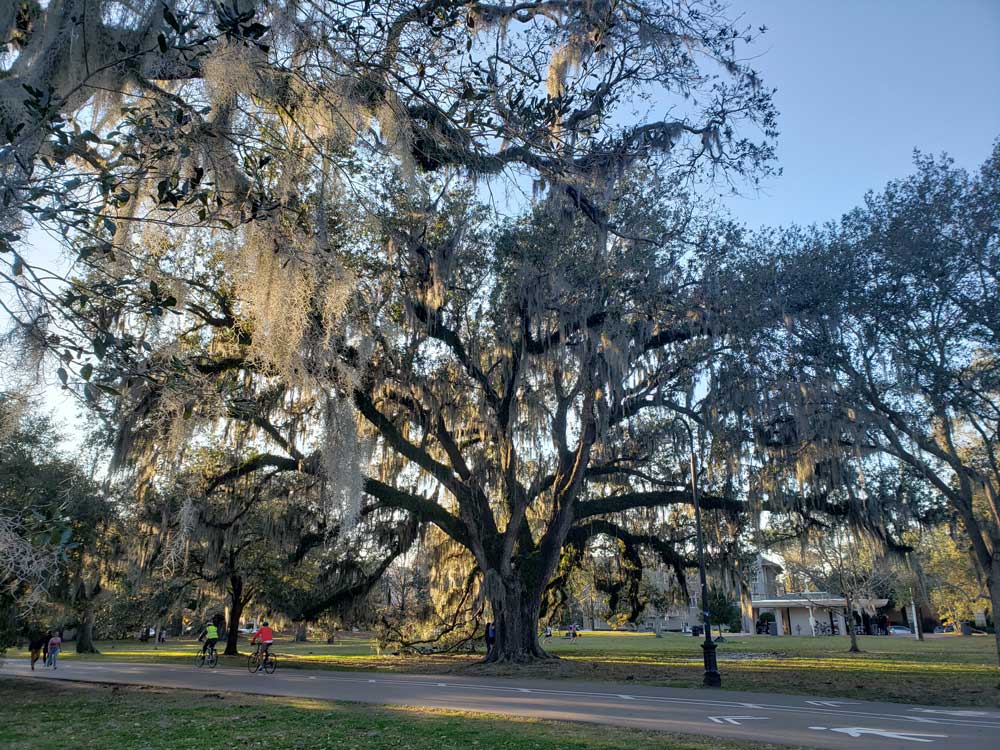
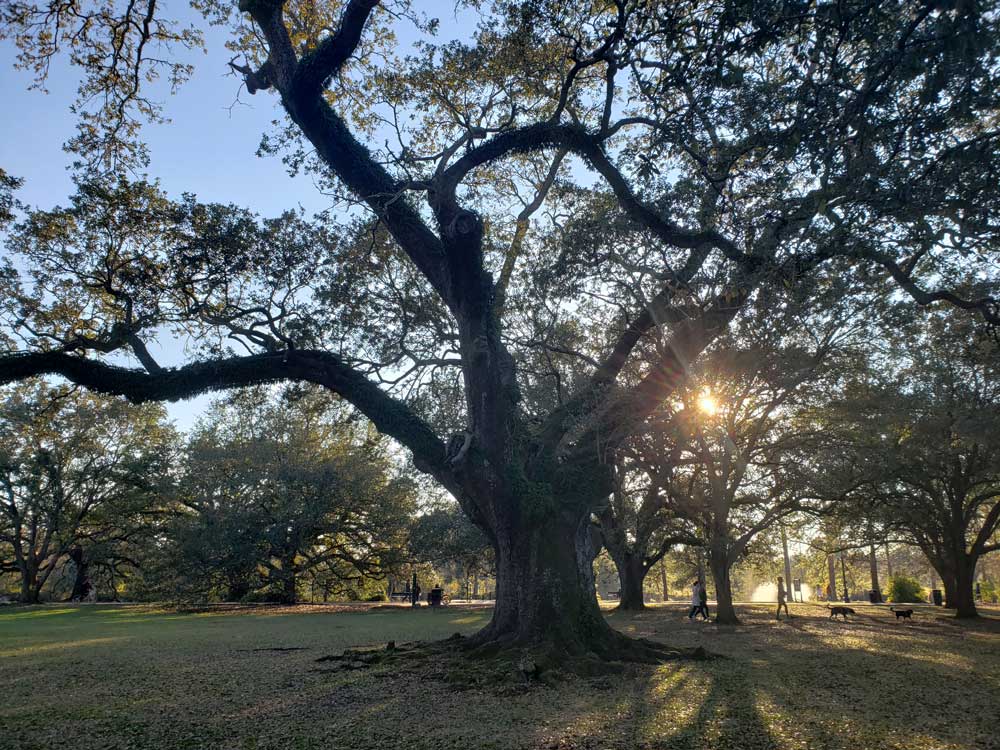
City park located in the Uptown neighborhood of New Orleans
General Information
How to Get There
Take Union St and Baronne St to Poydras St. Continue on Poydras St. Take S Broad Ave to Broadway St. Turn left onto Broadway St. Turn left onto St Charles Ave
Overview
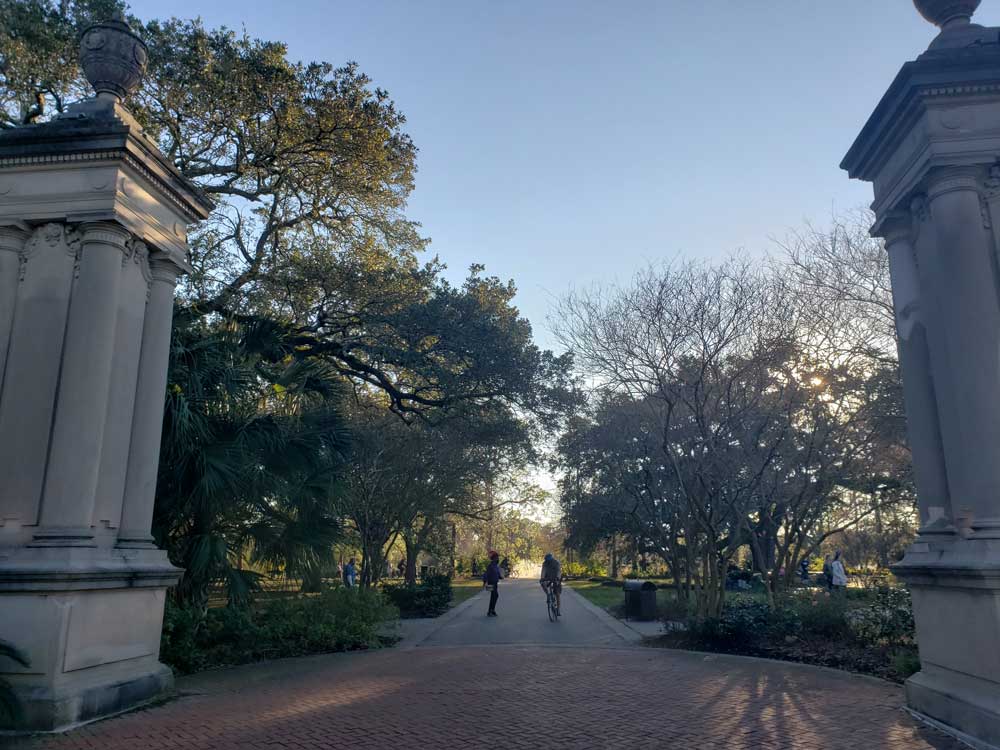
Audubon Park is a city park located in the Uptown neighborhood of New Orleans. It is bordered on one side by the Mississippi River and on the other by St. Charles Avenue, directly across from Loyola University and Tulane University. The park is named in honor of artist and naturalist John James Audubon, who began living in New Orleans in 1821.
History and Features
The land now housing the park was a plantation in the colonial and early statehood days. It was used by both the Confederate and the Union armies in the American Civil War, and as a staging area for the Buffalo Soldiers. At the time of its establishment it was the last large undeveloped parcel of what was to become uptown New Orleans. The area was annexed by the City of New Orleans, along with the surrounding communities of Jefferson City and Greenville in 1870, and the following year the city purchased the land. The ring road around the park was closed to automobile traffic at the start of the 1980s and became a popular 1.7-mile (2.7 km) walking, jogging and biking route. A 2.2 mile dirt path located around the perimeter of the park is also popular for runners seeking a less congested route. In 1898 the Audubon golf course opened within the park.
Wildlife
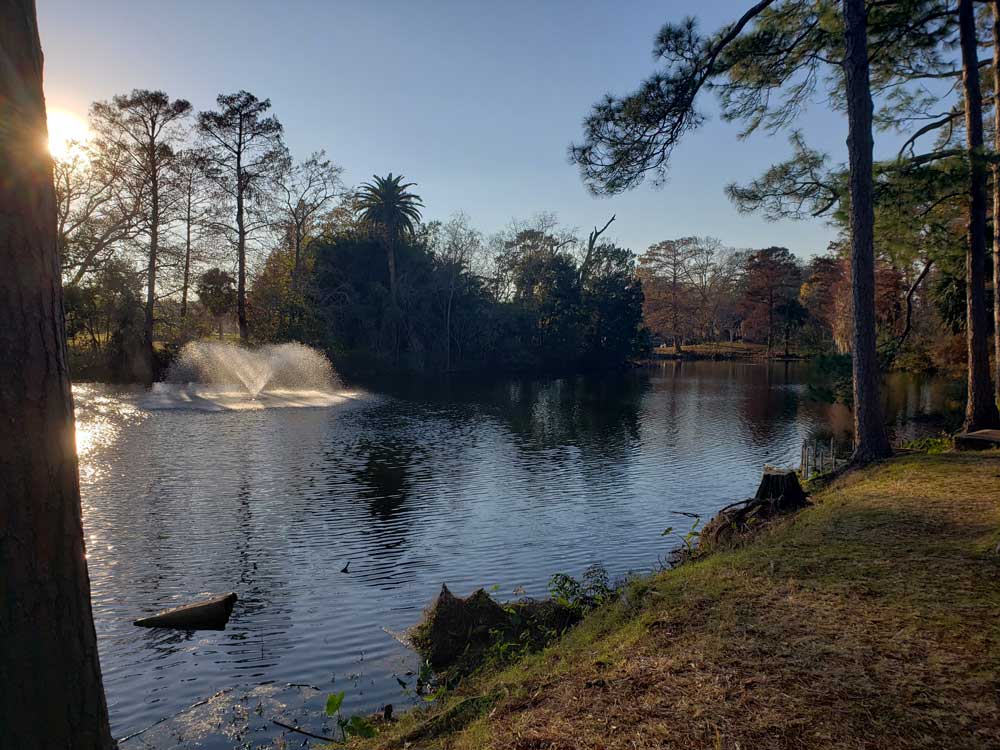
Ochsner Island on the east side of the park features a rookery that is one of the prime birding spots in Greater New Orleans. The island attracts hundreds of wading birds, including great egrets, cattle egrets, snowy egrets, ibis, little blue herons, green herons, night herons and others. The park is also home to diving double-crested cormorants and anhingas, as well as to many species of ducks. Recently, black-bellied whistling ducks have begun using the park's lagoons as a stopover on their migrations.
This article uses material from the Wikipedia article "Audubon Park (New Orleans)" which is released under the Creative Commons Attribution-Share-Alike License 3.0