
Historic site preserving former military forts, a federal courthouse, jail, and Trail of Tears history through exhibits, restored structures, and riverside walking trails.
General Information
Park grounds: Open daily from 30 minutes before sunrise until 30 minutes after sunset
Closed New Year's Day, Thanksgiving Day, and Christmas Day
How to Get There
From Fort Smith (2 mi): Follow Garrison Avenue toward downtown, turn south onto 4th Street, then continue to Parker Avenue and the historic site entrance.
Overview
Fort Smith National Historic Site is located in Fort Smith, Arkansas, along the Arkansas River. The first fort at this site was established by the United States in 1817, before this area was established as part of Indian Territory. It was later replaced and the second fort was operated by the US until 1871. This site was designated as a National Historic Landmark in 1961.
The fort was the first site of the United States District Court for the Western District of Arkansas, which had jurisdiction over western Arkansas and all of Indian Territory. It began operations in 1875 with the appointment of Isaac C. Parker as the first federal district judge here. The town of Fort Smith, Arkansas developed around the fort.
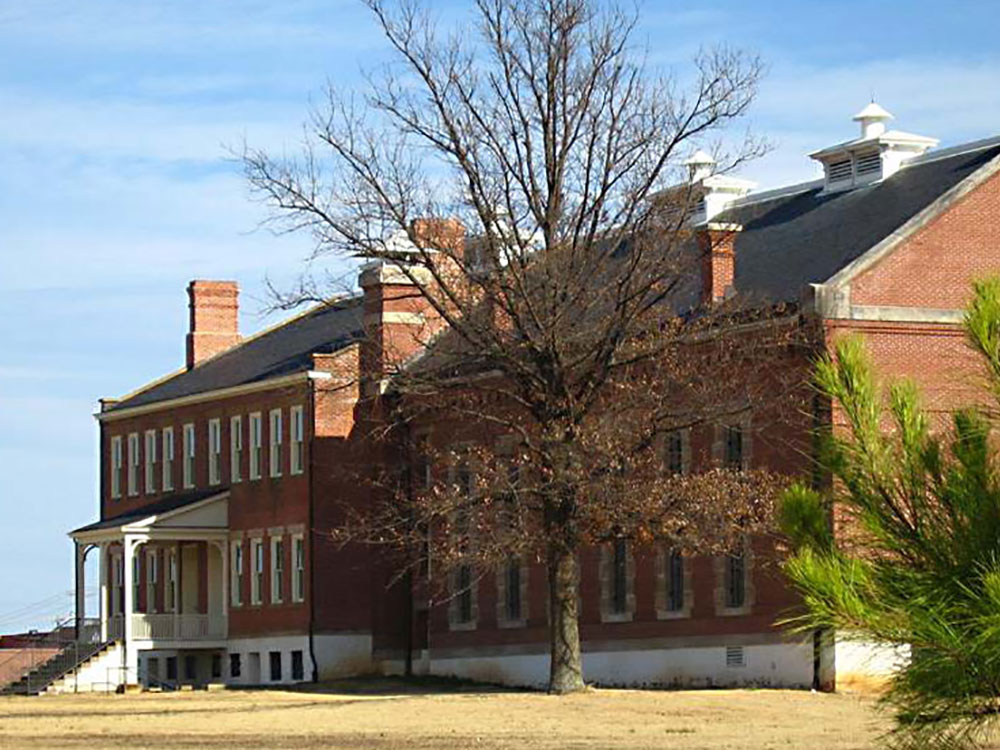
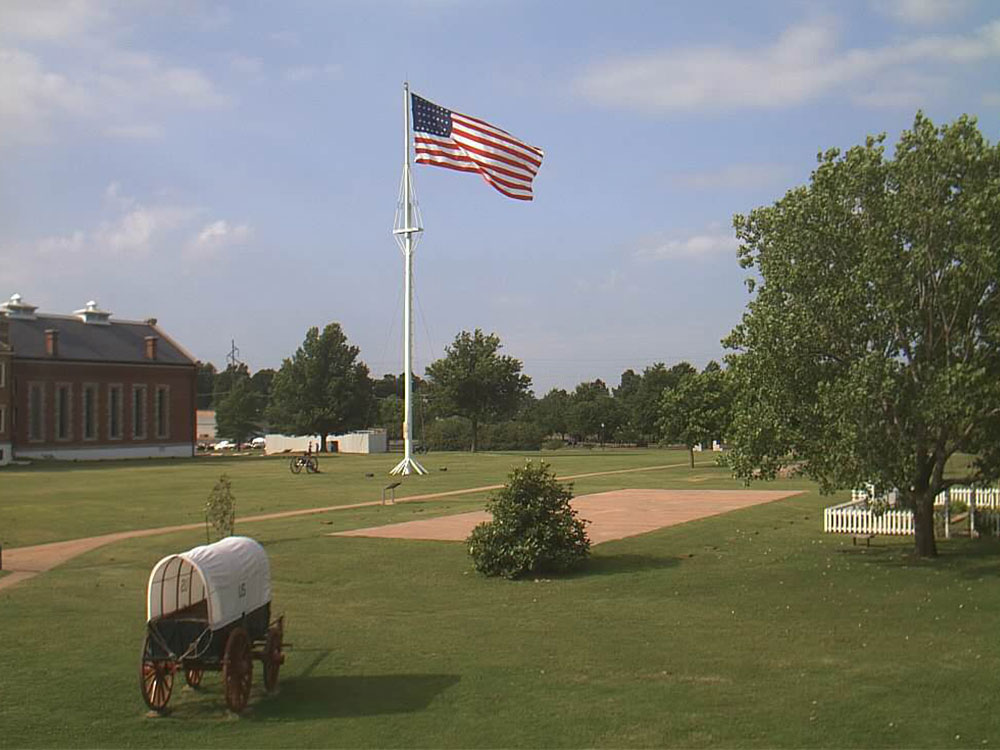
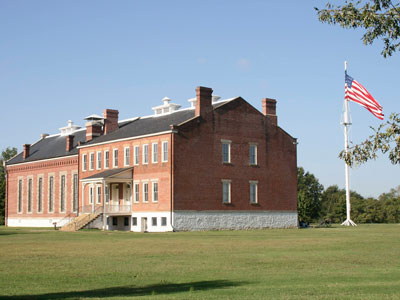
The site includes the second historic fort constructed at this place. In addition, located on the grounds are the foundation remains of the first Fort Smith (1817-1824), the commissary building (c. 1838) and a reconstruction of the gallows used by the federal court. A walking trail along the Arkansas River includes wayside exhibits on the Trail of Tears.
The park visitor center is now located in the old Barracks/Courthouse/Jail building. Exhibits in the visitor center focus on Fort Smith's military history from 1817-1871, its role in the western expansion of the United States, Federal District Judge Isaac Parker and the federal court's effects on justice in Indian Territory, the U.S. Deputy Marshals and outlaws, Federal Indian policy, and Indian Removal, including the Cherokee Trail of Tears.
Things to Do
Explore Historic Fort Smith
Fort Smith National Historic Site preserves the location of two frontier forts that played important roles in westward expansion, military history, and the opening of the American West. Visitors can explore restored buildings, fort foundations, and exhibits that tell the story of soldiers, settlers, Native Americans, and lawmen who shaped the region.
Visit Judge Parker's Courtroom and the Jail
One of the site's most popular attractions is the restored courtroom of Judge Isaac C. Parker, known as the "Hanging Judge." Visitors can also tour the historic jail and learn about law enforcement in the Indian Territory during the late nineteenth century.
Walk the Trail of Tears Overlook
The site commemorates the forced relocation of Native American tribes along the Trail of Tears. Interpretive exhibits and overlooks help visitors understand the significance of Fort Smith's location and its connection to this important chapter of American history.
Top Trails
Historic Grounds Walking Trail
Length: Approximately 1.0 mile round trip
Elevation Gain: Minimal
Difficulty: Easy
This self-guided route connects the fort remains, Judge Parker's Courthouse, historic jail, gallows site, and interpretive exhibits while providing a comprehensive overview of the site's history.
Riverfront Trail
Length: Approximately 1.5 miles round trip
Elevation Gain: Minimal
Difficulty: Easy
The trail follows portions of the Arkansas River waterfront, offering scenic views and interpretive information about river transportation, frontier commerce, and Fort Smith's strategic location.
Sources: National Park Service official Fort Smith National Historic Site information, including frontier fort history, Judge Parker's courtroom, Trail of Tears interpretation, historic buildings, and visitor resources. https://www.nps.gov/fosi/index.htm Additional historical, trail, and visitor information verified through National Park Service planning and interpretive resources. https://www.nps.gov/fosi/planyourvisit/index.htm https://www.nps.gov/fosi/learn/historyculture/index.htm
This article uses material from the Wikipedia article "Fort Smith National Historic Site", which is released under the Creative Commons Attribution-Share-Alike License 3.0