_10_(31876683447).jpg)
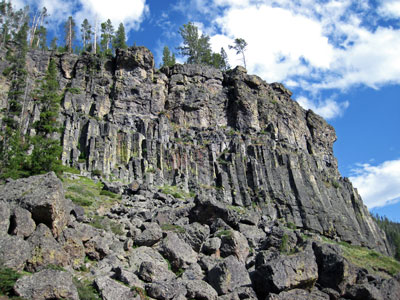
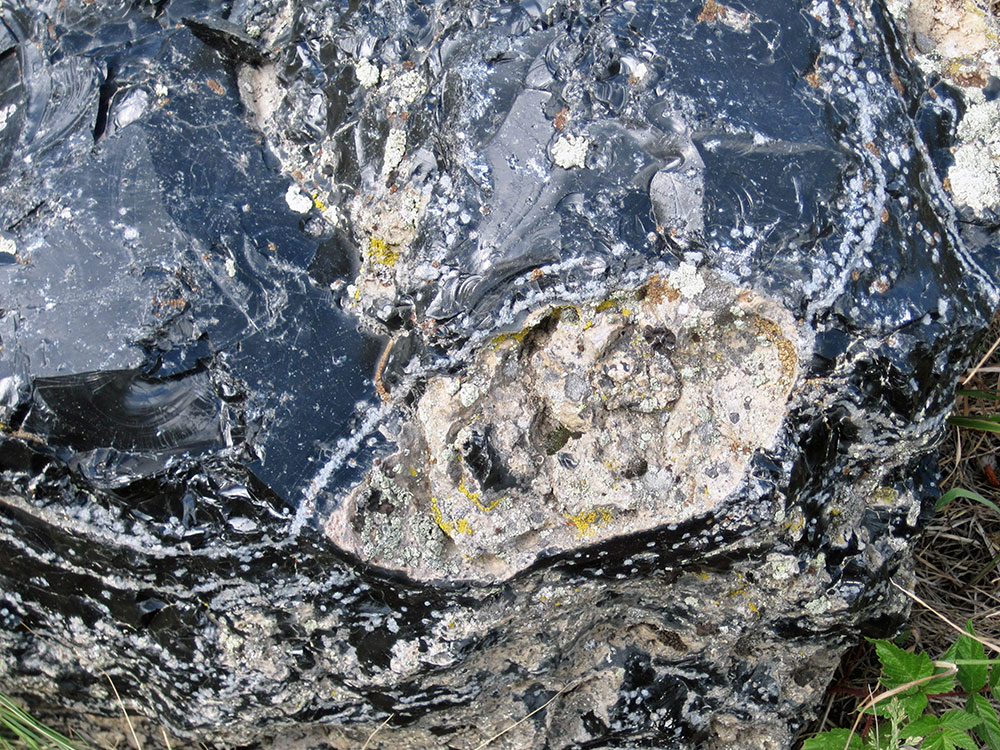
Volcanic glass cliff formed from rapidly cooled rhyolitic lava, historically quarried by Native Americans for tool-making and traded across much of North America.
General Information
Obsidian Cliff was an important source of lithic materials for prehistoric peoples in Yellowstone National Park near Mammoth Hot Springs. It was declared a National Historic Landmark in 1996.
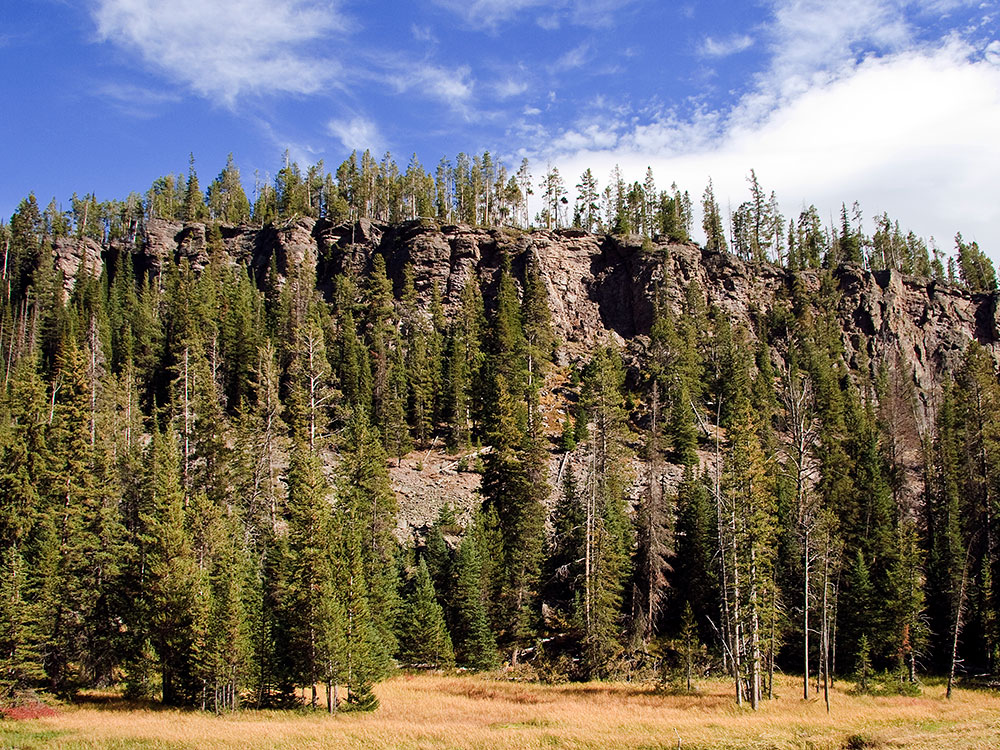
The cliff was formed from thick rhyolite lava flow that occurred about 180,000 years ago. The vertical columns are cooling fractures that formed as the thick lava flow cooled and crystallized. The Cliffs stands at an elevation of nearly 7,400 feet (2,300 m) above sea level and goes on for about half a mile. The cliffs also extend between 150 and 200 feet above Obsidian Creek. The flow consists of obsidian, a dark volcanic glass. The obsidian is most abundant at the base of the cliff and slowly tapers off to larger concentrations of pumice at the top. Obsidian from this site was first quarried here about 12,000 years ago. Early natives of North America placed a high value on the obsidian that came from this cliff as well as other similar obsidian deposits in the area because numerous tools could be fashioned from obsidian—most popularly, knives, spear/arrow tips, and other sharp-edged objects.
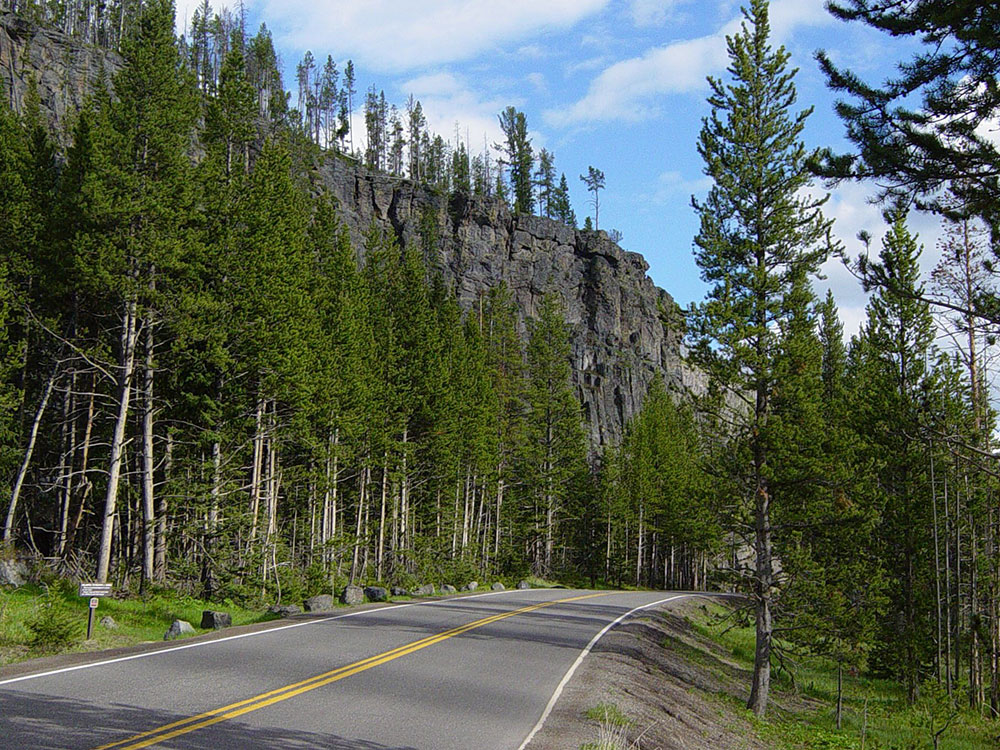
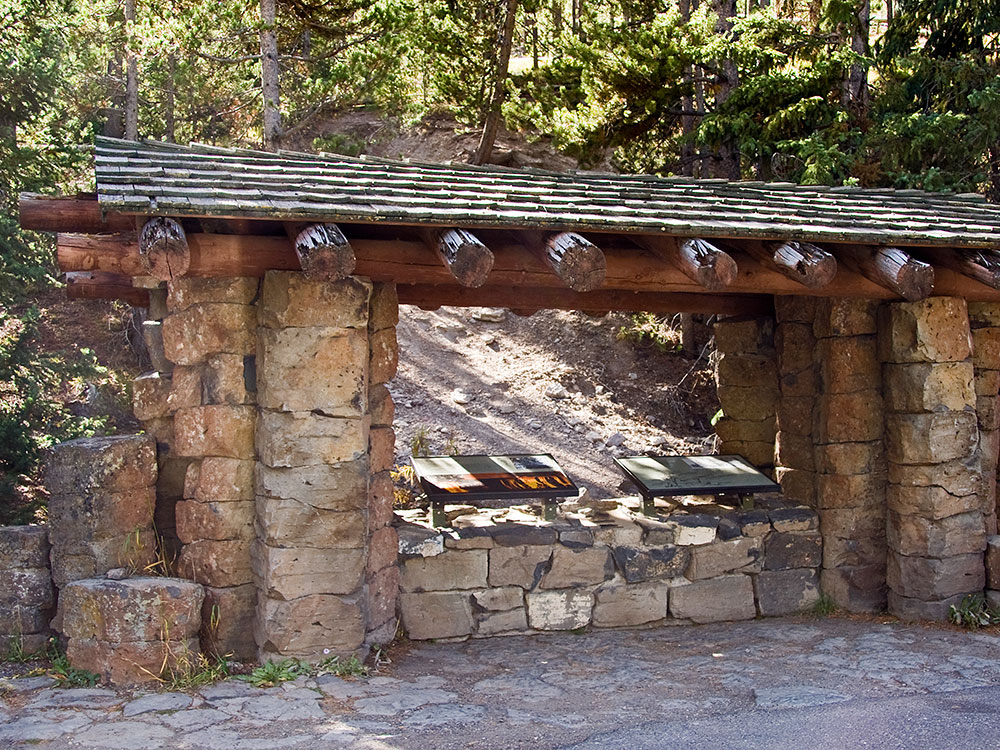
It is located about 13 miles (21 km) south of Mammoth Hot Springs, on the east side of the Mammoth-Norris section of the Grand Loop Road. The Obsidian Cliff Kiosk, just north, is also listed on the National Register. Obsidian Cliff is also located on the northern end of Beaver Lake in Yellowstone National Park.
This article uses material from the Wikipedia article "Obsidian Cliff", which is released under the Creative Commons Attribution-Share-Alike License 3.0



_6_(45894579765).jpg)