.jpg)
Largest geyser basin in area, covering approximately 11 square miles, including Fountain Paint Pots, a hot spring mud pot that contains boiling mud instead of water, and other geothermal features.
General Information
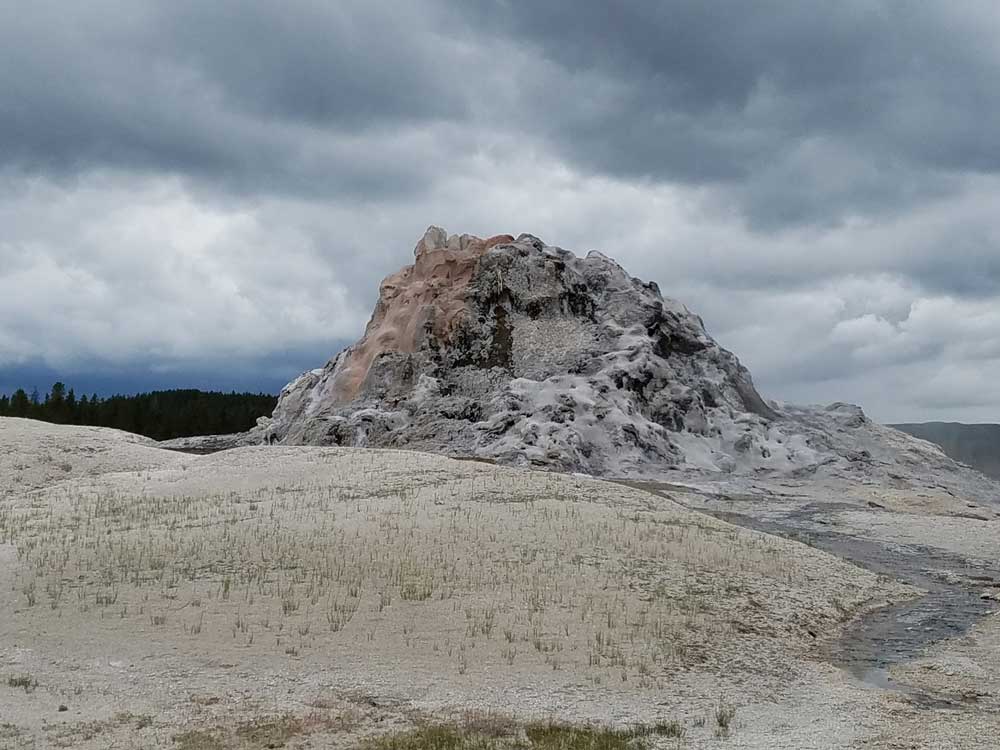
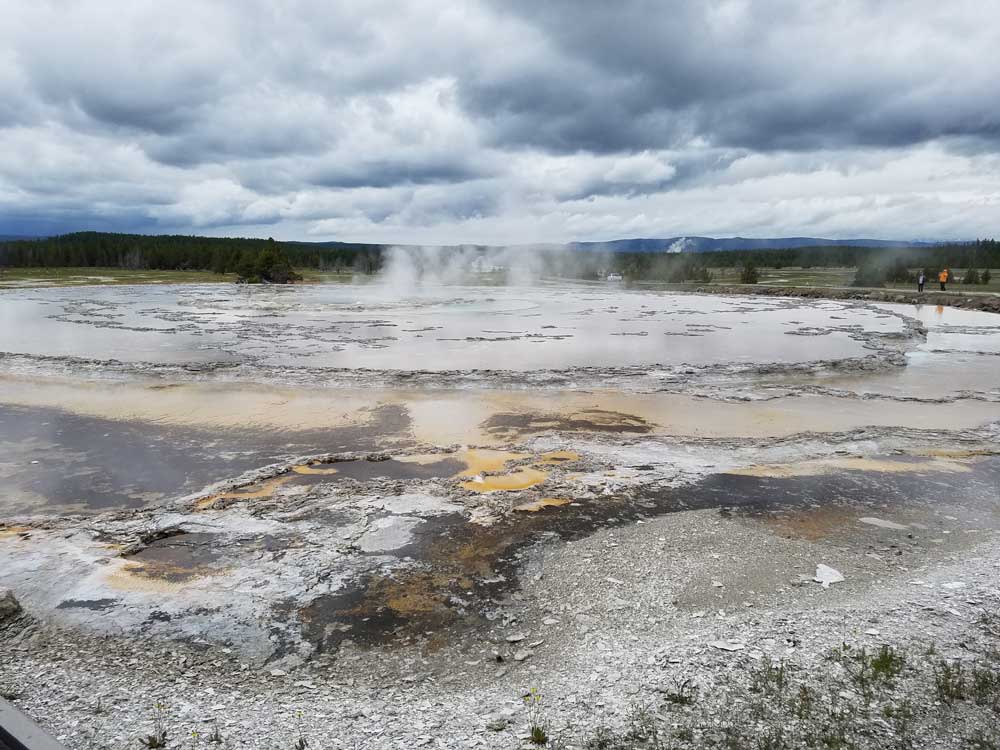
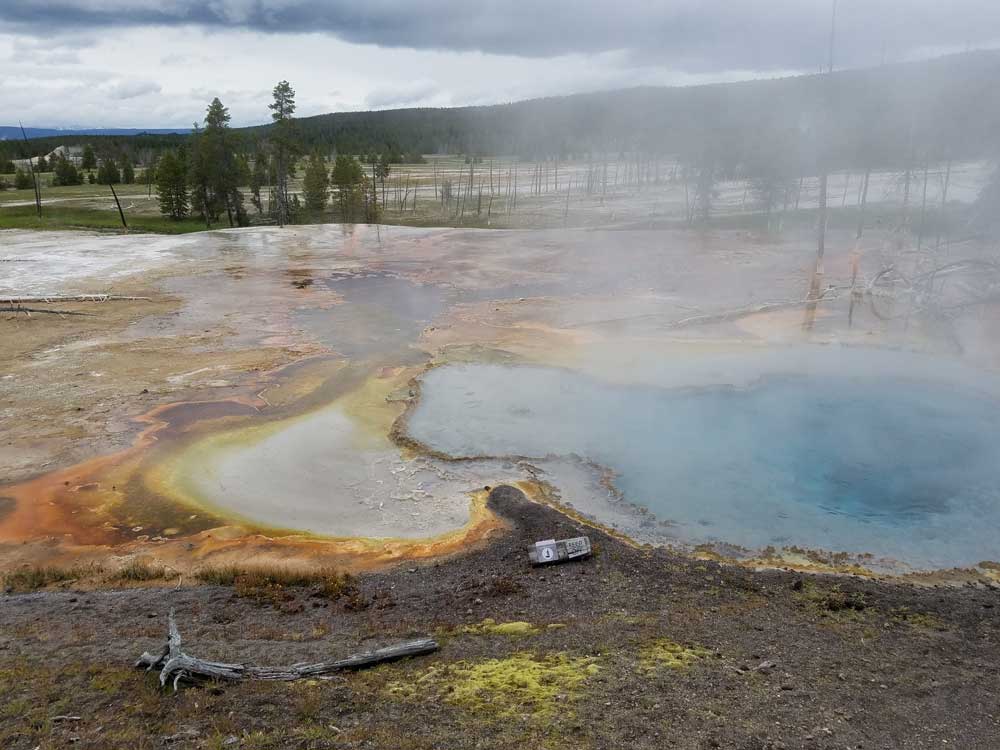
The Lower Geyser Basin, which is the largest geyser basin in area, covers approximately 11 square miles. Due to its large size, it has a much less concentrated set of geothermal features, including Fountain Paint Pots. Fountain Paint Pots are mud pots, that is, a hot spring that contains boiling mud instead of water. The mud is produced by a higher acidity in the water which enables the spring to dissolve surrounding minerals to create an opaque, usually grey, mud. Also there is Firehole Spring, Celestine Pool, Leather Pool, Red Spouter, Jelly spring, and a number of fumaroles.
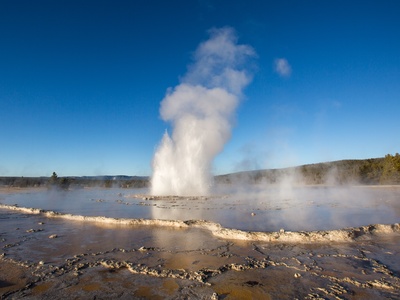
Geysers in Lower Geyser Basin include Great Fountain Geyser, whose eruptions reach 100 to 200 feet (30-61 m) in the air, while waves of water cascade down its sinter terraces, the Fountain group of Geysers (Clepsydra Geyser which erupts nearly continuously to heights of 45 feet (14 m), Fountain Geyser, Jelly Geyser, Jet Geyser, Morning Geyser, and Spasm Geyser), the Pink Cone group of geysers. ( Dilemma Geyser, Labial Geyser, Narcissus Geyser, Pink Geyser, and Pink Cone Geyser), the White Dome group of geysers( Crack Geyser, Gemini Geyser, Pebble Geyser, Rejuvenated Geyser, and White Dome Geyser), as well as Sizzler Geyser.
Clepsydra plays nearly continuously to heights of 45 feet (14 m). It was named by T. B. Comstock during the 1878 Captain Jones expedition, with its nomenclature derived from the Greek word for water clock. Prior to the 1959 Hebgen Lake earthquake, it erupted regularly every three minutes.
The Fountain Paint Pot is named for the reds, yellows and browns of the mud in this area. The differing colors are derived from oxidation states of the iron in the mud. As with all hot springs, the heat in the caldera forces pressurized water up through the ground, which is expelled here. Also, rising gasses cause the bubbling action. The bubble action in the mud varies with the seasons. In the early summer, the mud is watery from the high water table due to rain and snow melt. By the end of summer, the mud is much thicker as the water table drops.
Several significant geysers erupt near the Paint Pots, notably Fountain Geyser, which usually has several large eruptions a day; Clepsydra Geyser, which is active most of the time except following an eruption of Fountain; and powerful but erratic Morning Geyser, active in the latter part of 2018 following a dormancy of nearly five years. These features and others are reachable by a short boardwalk trail from the parking lot on the main road through Lower Geyser Basin.
Fountain is the dominant member of a group of geysers at the Fountain Paint Pots thermal area. Morning Geyser, which erupts from a vent close to Fountain's, is larger, but is inactive during most years. Fountain, by contrast, is usually active. It is a fountain-type geyser that erupts jets ranging in height up to 80 feet (24 m) or more, with most eruptions containing at least a few bursts that reach 40 to 50 feet. Intervals (= eruption start to eruption start) vary from year to year but are commonly about 4.5 to 6 hours, with occasional longer intervals of 11 to 12 hours. Durations of eruptions are typically about 30 minutes. Occasionally, Fountain departs from its usual behavior and enters so-called "wild-phase" eruption, during which the height is much reduced but the duration can be as long as two weeks.
Fountain is not to be confused with similarly named, and nearby (and larger), Great Fountain Geyser, another of the major features of Lower Geyser Basin, adjacent to the Firehole Lake road.
This article uses material from the Wikipedia articles "Geothermal areas of Yellowstone", "Clepsydra Geyser", "Fountain Geyser", "Fountain Paint Pot", which are released under the Creative Commons Attribution-Share-Alike License 3.0
Featured Regions
Clepsydra Geyser
Highly active geyser that erupts almost continuously, producing frequent bursts of water and steam beside a colorful geothermal landscape.
Fountain Group
Large cluster of geysers, hot springs, and mud pots featuring some of the park's most powerful and predictable hydrothermal eruptions amid expansive geothermal terraces.
-400.jpg)
Yellowstone National Park, Public domain, via Wikimedia Commons; Image Size Adjusted
Fountain Paint Pot
Self-guided thermal area containing all four types of geothermal features—geysers, hot springs, fumaroles, and bubbling mudpots—within a single boardwalk loop.